Southeast Asia Humidity’s Impact on Dining Tables
Singapore’s warm, humid climate can change the dimensions, finish, and appearance of a solid wood dining table within a single season. Outdoor relative humidity often rises above 80% during the monsoon period, while air-conditioned interiors may fall below 50%. That repeated swelling and contraction can make a poorly made dining table crack, cup, or develop gaps between its boards.
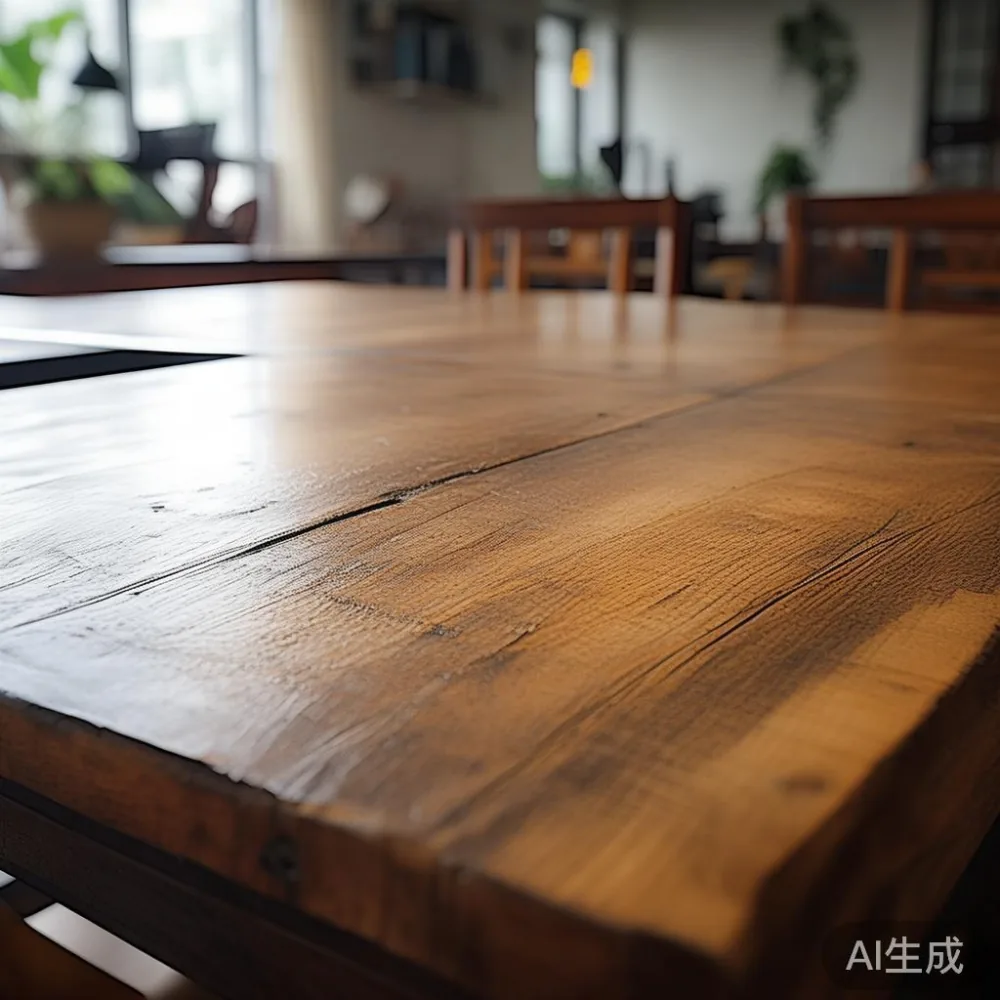
For Singapore households, furniture selection should account for more than colour and design. Humidity control, timber movement, protective finishes, delivery access, and long-term maintenance all affect how a dining table performs in an HDB flat or condo. MIDHILL makes solid wood furniture for international markets and supports Singapore buyers with a 10-year structural warranty, lifetime refinishing, delivery in approximately 7–14 days, and free shipping on orders over US$350, equivalent to about SGD460 at a reference exchange rate of roughly SGD1.37 per US$1.
Why does humidity affect a solid wood dining table in Singapore?
Wood is hygroscopic: it absorbs moisture when the surrounding air is humid and releases moisture when the air becomes dry. A dining table assembled in a dry factory may expand after reaching a humid Singapore home. Its top can become uneven, drawer fronts can catch, and a tight tenon may exert pressure on its joints. The movement is natural, but the amount and whether it remains controlled depend on species, construction, and finish.
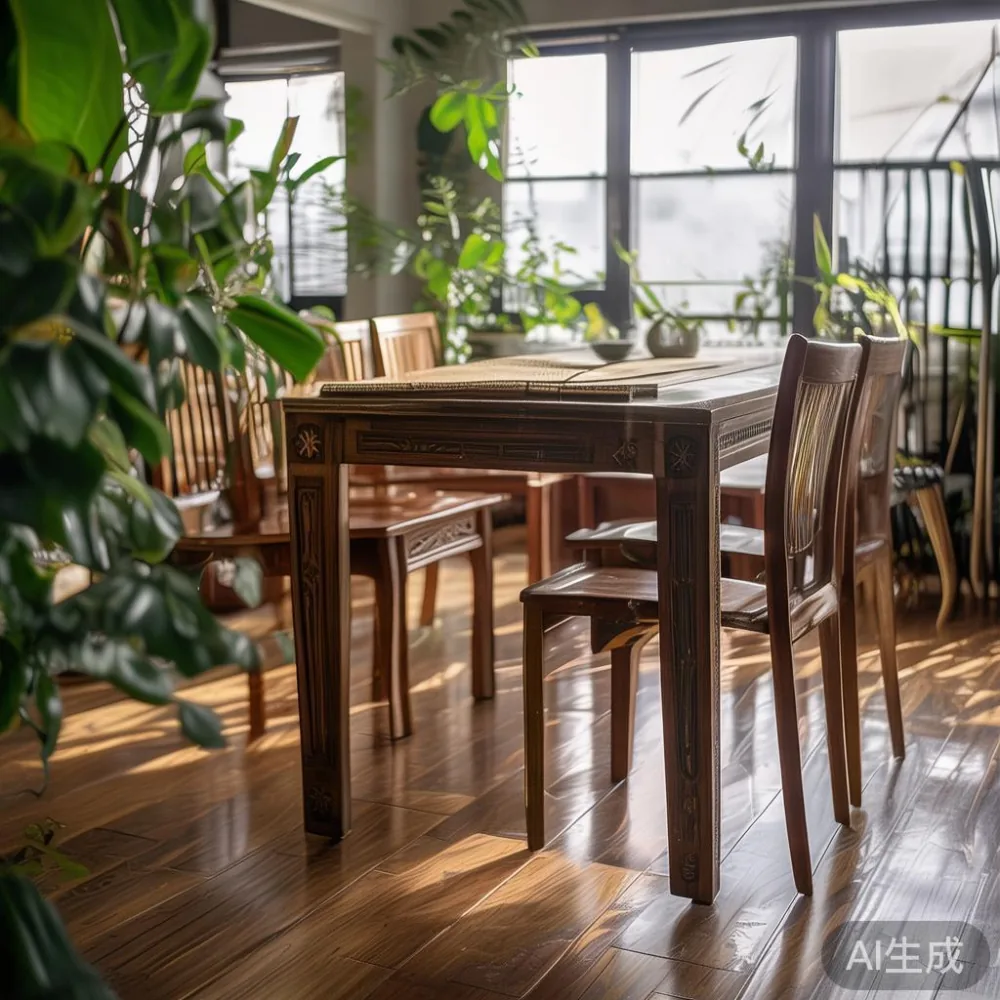
Singapore sits close to the equator, with average temperatures near 27°C and high humidity throughout much of the year. During wet periods, timber can gain roughly 2–6% moisture; in dry, air-conditioned rooms, it can lose enough moisture to shrink by about 1–3%. These are practical planning ranges rather than guaranteed measurements, because a slab’s reaction varies by species, thickness, grain direction, and edge treatment.
Air movement matters too. A dining table beside an open window, next to a bathroom, or under a ceiling fan may experience larger daily swings than one positioned away from direct airflow. Condensation can also form on chilled glasses and marble surfaces, so a marble table used as a buffet needs coasters and prompt wiping.
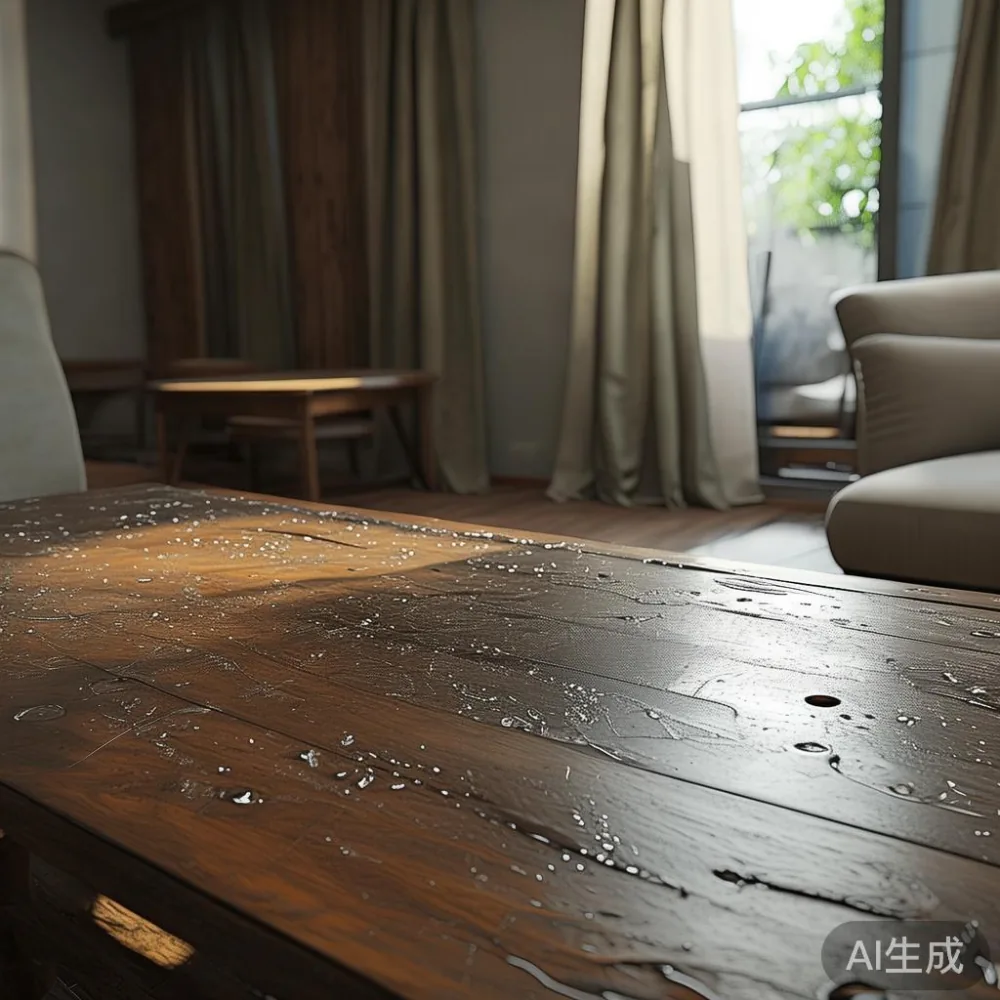
How much space should a dining table have in an HDB flat or condo?
A dining table should not be selected only for its visual footprint. In a compact dining area, allow at least 90 cm behind a seated chair for movement and approximately 60 cm of clearance from a wall when no chair is occupied. For everyday access in a lift or corridor, a top wider than 90 cm may be difficult to manoeuvre, even if it fits comfortably within the flat.
Consider a dining table measuring 140–160 cm long and 80–90 cm wide for a household of four. A round dining table with a 120 cm diameter can work better in a narrow Tampines or Punggol dining zone because it avoids sharp corners in circulation routes. At least 60 cm should remain between the table edge and nearby furniture for chair pull-out, while 90–120 cm provides a more generous path.
Older HDB blocks may have a lift door around 90 cm wide and a lift car measuring roughly 140 × 110 cm. A dining table top must enter diagonally, and the packaging may add several centimetres. In newer estates such as Bedok, building management rules and reserved loading bays can affect delivery timing. Measure the lift door, turning corners, corridor width, stair access, and the actual route to the dining area before ordering.
For a condo, the loading bay, basement turns, and service lift dimensions may be more restrictive than the apartment itself. A flat-pack dining table can reduce carriage size, but solid components still require careful unpacking. Check whether the supplier can deliver assembled or flat-packed, and whether the packaging is removed after placement. A 70 kg table may need 2–3 people, a moving blanket, and a lifting plan.
Which wood species and construction handle tropical humidity better?
No wood is completely immune to moisture. Dense hardwoods such as teak, oak, ash, and walnut can perform well when the top is built to accommodate movement. Stability depends as much on joinery and seasoning as on the species label. Furniture dried for the intended humidity zone should move predictably rather than split abruptly.
Look for a dining table with a top made from boards of a workable width, joined with floating tenons or another expansion-friendly joint. Avoid a solid top held together by rigid fasteners across its full width. Also check the underside: a dining table with ventilation clearance can release moisture more evenly than one stored against a damp wall or enclosed panel.
Thickness matters, although “thicker” does not automatically mean “better.” A top around 18–25 mm can be suitable for many residential dining tables, while a wide plank top may be made from several laminated or joined strips. The surface treatment should cover all faces and edges with compatible products. Applying only a thin layer to the top can leave the underside and end grain vulnerable to rapid moisture exchange.
Oak and ash offer a clear, light appearance suited to Scandinavian, post-modern light luxury, and French light luxury interiors. Walnut brings warmer grain for American light luxury schemes. Teak has a naturally oily character and is often selected for humid regions, but it still requires sensible indoor care. These visual descriptions do not guarantee moisture performance; construction quality remains a deciding factor.
What humidity level should I maintain inside my home?
A relative humidity range of about 40–60% is a practical target for solid wood furniture in Singapore. Air conditioning and dehumidification can help during humid months, while a humidifier may be useful in very dry, air-conditioned rooms. Avoid abrupt changes: moving a dining table from a 75% humid balcony area into a 40% conditioned room in one hour is less desirable than gradual acclimatisation over 3–7 days.
Use a calibrated hygrometer placed near the dining area, not one sitting in a bathroom or directly against an exterior wall. A digital model costing around SGD25–80 can display current relative humidity and help identify daily patterns. If readings remain above 65% for several weeks, improve ventilation and run a dehumidifier. If readings repeatedly fall below 40%, reduce direct airflow and consider moderate humidification.
Do not wipe a dining table with a soaked cloth. A lightly damp microfibre cloth, followed by a dry cloth, is more suitable. Spills should be removed within 10–20 minutes. Coasters with a diameter of at least 8 cm reduce condensation rings, and felt pads can prevent scratches. Place the table away from air-conditioning vents that blow continuously across the surface, because rapid moisture loss can produce small checking lines.
Should I buy a solid wood dining table or a marble table for humid homes?
Both materials can work in Singapore, but they react differently. Solid wood dining tables offer warmth, repairability, and a more forgiving surface when small marks appear. Marble tables provide a cool, stone-like appearance and do not expand through moisture absorption, although the stone and supporting frame still need protection from spills and impact. Marble is porous, so acidic liquids such as wine, lime juice, and vinegar can etch the surface if left for long.
A dining table is often more heavily used than a decorative marble table. Families may prefer solid wood because small scratches can be refinished. Marble requires an understanding of cleaning and may show etching, stains, and chipped edges more visibly. For a mixed material interior, a marble side table can add contrast without becoming the main surface for hot meals.
Finishes also change the care routine. Water-based polyurethane or lacquer may make maintenance convenient, while oil and wax offer a tactile natural finish but need periodic renewal. Ask the supplier which system was used, how many coats were applied, and whether refinishing is available. MIDHILL’s lifetime refinishing service is relevant here because it can restore a solid wood dining table rather than replacing it after ordinary wear.
How do I prevent mould, odours, and finish failure around the dining table?
Mould is usually connected to persistent surface moisture and poor ventilation, not simply to solid wood. Keep the table at least 15–30 cm from exterior walls where practical, clean the underside twice yearly, and address condensation from nearby drinks or appliances. A dining table should not be used as a laundry-drying surface or placed where damp laundry repeatedly surrounds it.
Inspect every 3–6 months for white spotting, musty odours, darkened joints, or finish that feels tacky. Mild surface marks can often be cleaned with a product approved for the finish; stronger solvents can remove the coating or dull the sheen. Test any cleaner on a concealed 5 × 5 cm area and wait 24 hours before treating the full top.
Keep furniture and packaging separate from damp building materials. New timber may release a natural aroma for several weeks as it adjusts to the room. Persistent chemical odours, however, should be investigated. Adequate ventilation, controlled humidity, and careful cleaning are usually more effective than covering the table with plastic, which can trap moisture.
How long should delivery, assembly, and warranty checks take?
In Singapore, allow approximately 7–14 delivery days for a made-to-order dining table after order confirmation, although peak periods, building access, and custom dimensions can extend the schedule. Confirm GST treatment at checkout. Singapore’s GST is 9%; displayed prices may exclude GST unless the seller explicitly states otherwise.
Inspect the package within 24 hours of arrival. Photograph the table before assembly, checking for dents, cracks, loose joints, finish marks, and shipping damage. Retain the invoice and care instructions. A 10-year structural warranty can provide confidence for a long-term purchase, but the customer should still understand its scope for movement-related issues, misuse, and finish maintenance.
Allow 2–4 hours for unpacking and assembly, with extra time if the top weighs 60–90 kg. Assemble on a clean, level floor and avoid dragging the dining table by its legs. Use a furniture consultant or professional mover when staircase turns are tight. For coordinated rooms, a solid wood sofa, bed frame, wardrobe, or nightstand should share a controlled finish and compatible wood tone so humidity-related maintenance remains consistent.
What do real buyers ask about humidity and furniture?
Last month, I visited a customer’s dining area in Tampines with my colleague to check a solid wood dining table delivered from Foshan. The flat had two east-facing windows and a relative-humidity reading of 71% beside the table, while the adjoining bedroom measured 49%. We placed the hygrometer on the dining table for 7 days. The reading ranged from 58% to 68%, and the top developed no visible cracking or joint movement.
The customer asked why the same table could feel different in Bedok, where nearby construction and a larger balcony opening had increased nighttime humidity. We moved the hygrometer to the dining table for another 5 days; the minimum reading rose to 61%, with condensation forming after two dinners. We recommended closing the balcony door during rain, using the dehumidifier for 2 hours each evening, and adding coasters. The table remained stable.
That experience reinforced a simple point: indoor measurements and short observation periods can reveal local problems, but no 5–7 day test replaces a properly seasoned product and stable indoor environment. The customer also asked about coordinating the dining table with other pieces. Searches for how to style American sofa in room and how to style American wardrobe in bedroom are useful for wider planning, while European sofa vs Japandi sofa can help settle the visual direction. Italian light luxury for bedroom is another route for warm, refined spaces. Buyers comparing the best Vintage wardrobe for 2026 or the best light luxury sofa for 2026 should still verify dimensions, wood moisture stability, and delivery access before ordering.
How can I choose a dining table that will age well in Singapore?
Choose a dining table with stable construction, a finish suited to your habits, and enough clearance for the room. Ask for the wood species, top thickness, joint method, finish type, and expected humidity conditions. Confirm that expansion joints are designed into wide tops. Then measure the entire delivery path, including the lift door and dining-room turn.
Budget for a hygrometer, coasters, felt pads, and controlled maintenance rather than assuming any solid wood dining table is maintenance-free. A dining table should feel substantial without demanding unnecessary handling. For a 4-person home, a 140–160 cm rectangular model or a 120 cm round model usually balances seating and space; test chair pull-out before purchase.
Design direction should support the furniture rather than replace practical checks. French light luxury can suit a pale oak dining table with curved upholstered seating. American light luxury often pairs walnut-toned timber with clean proportions, while post-modern light luxury can combine sculptural geometry with restrained materials. The “light” in this context refers to visual restraint and balanced detailing, not to weak construction.
Product details are available at www.midhill.co. Compare specifications, delivery arrangements, and care requirements, then request guidance for your specific flat or condo. With the right construction and 40–60% relative humidity, a dining table can remain stable and attractive for many years of daily use.