Caring for a Lacquered Dining Table in a Tropical Climate
I keep a 1.6 m solid ash dining table in my Tampines HDB flat, and the first six months of ownership taught me more about lacquer care than any brochure could. Between afternoon thunderstorms rolling in from the east, year-round humidity hovering between 70 and 85 percent, and air-con cycles that swing the room from 24 °C to 30 °C, the tabletop went through constant micro-expansion. I learned, after one small cloudy ring under a teapot, that a tropical home is a workshop for finishes, not a showroom. If you are weighing a new dining table for your BTO or resale flat, or you have just taken delivery of one and want to keep it looking new for the next decade, this guide is built around what actually happens in a Singapore home — corridor width, lift clearance, GST receipts at SGD 69 to SGD 89 delivery, and all.
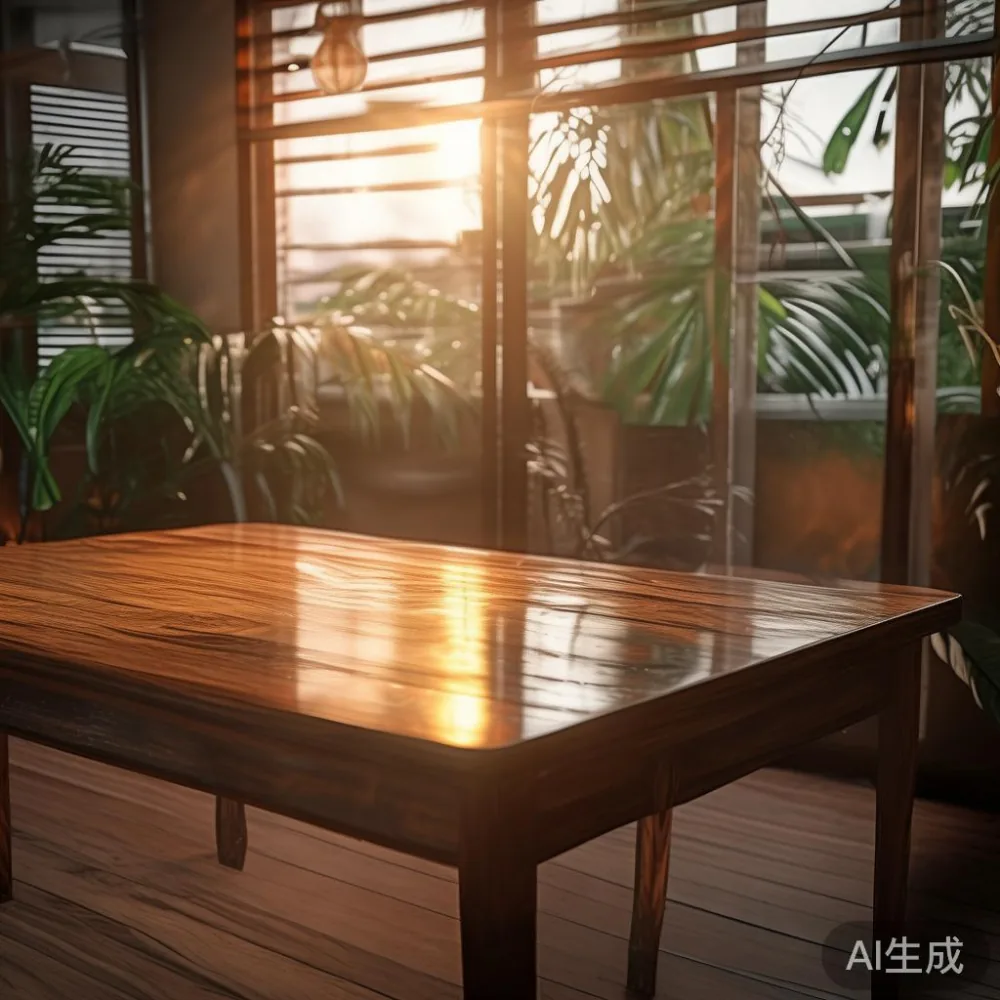
Why a lacquered dining table behaves differently in Singapore
Singapore sits about 1.3 degrees north of the equator, with an average relative humidity of 79 percent and a daily UV index that often hits 8 to 11 between February and April. A dining table in a Tampines or Punggol flat is rarely “indoors” in the European sense: open-concept kitchens, balcony doors, and the way HDB ventilation pushes air around a unit mean that wood finishes experience real moisture cycling. A 1.8 m oak top can gain or lose roughly 0.5 to 1.2 mm across its width during a single wet-dry cycle. Lacquer — whether a 7-layer open-pore matte from a Foshan workshop, a 5-layer piano gloss, or a 4-layer post-modern light luxury satin — adds a plastic-like film on top of that movement, and that film is what you have to protect.
My dining table was finished with seven coats of acid-cured lacquer, each cured under UV lamps in a controlled workshop. That factory result is fragile for the first 30 days, which is why a 14-day settling period (in air-con or at least shaded conditions) is sensible before the first heavy dinner. After 30 days, the lacquer reaches about 90 percent of its final hardness, and after 90 days, around 99 percent. Knowing those numbers has stopped me from making panic decisions when I saw a small ring on day 12.
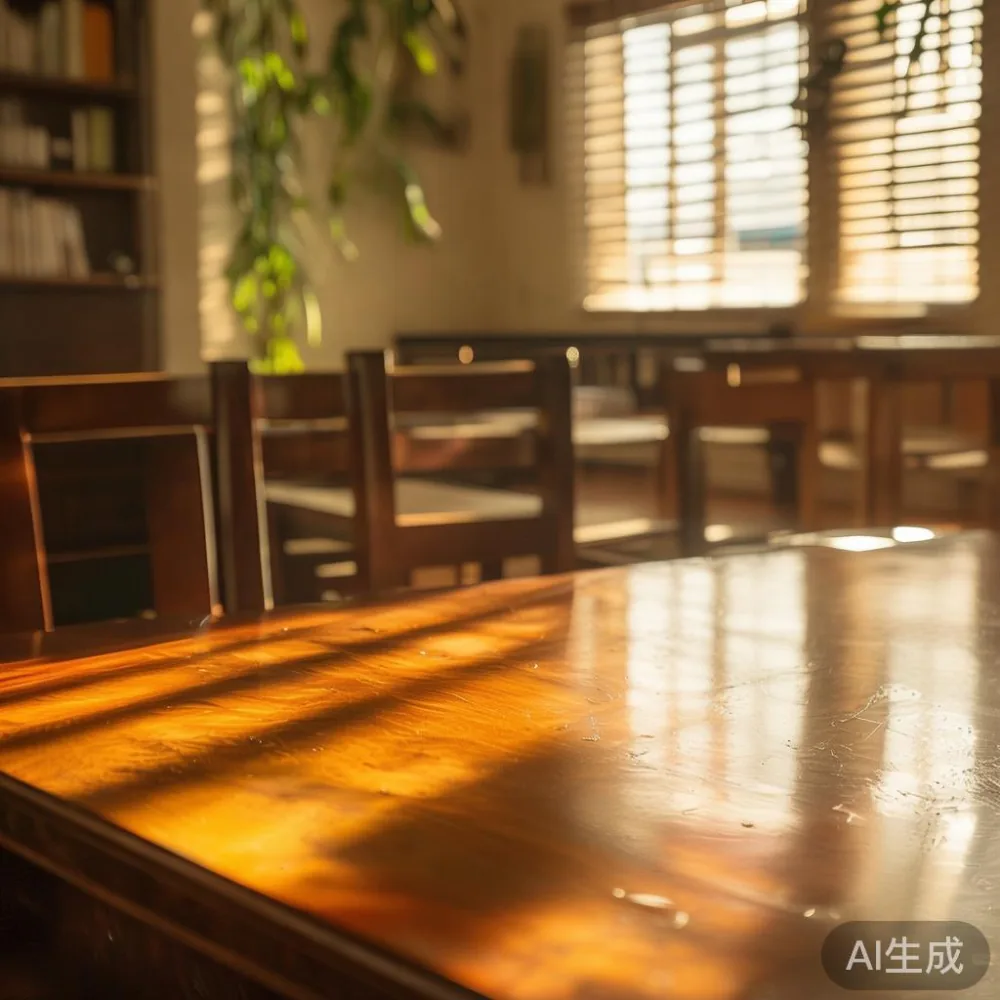
What does a Singapore owner actually need to clean a lacquered dining table every week?
For the weekly routine on a lacquered dining table, you do not need more than four things: a microfibre cloth at 250 to 300 gsm, a pH-neutral soap at 6.5 to 7.5 pH, a second dry cloth, and one litre of room-temperature water. Wipe in the direction of the grain, never across it. Use roughly 5 ml of soap per 250 ml of water. Dry the surface within 60 seconds. That is the whole method. Anything more aggressive — vinegar, lemon, ammonia, baby wipes, “antibacterial” sprays with quaternary ammonium compounds — will strip the wax feel of the topcoat over four to eight weeks. I learned this after a well-meaning relative used a lemon-water mix for a week and I watched the satin finish go chalky under the pendant lamp.
Skip the silicone polishes sold at IMM or Taobao. They create a temporary shine that bonds poorly to acid-cured lacquer, and the next refinishing will cost you. The standard cost for a light buff and re-coat at a Singapore workshop is around SGD 180 to SGD 280 per square metre. The standard cost for a full strip and re-lacquer on a 1.6 m table is between SGD 480 and SGD 720 depending on coats and gloss level.
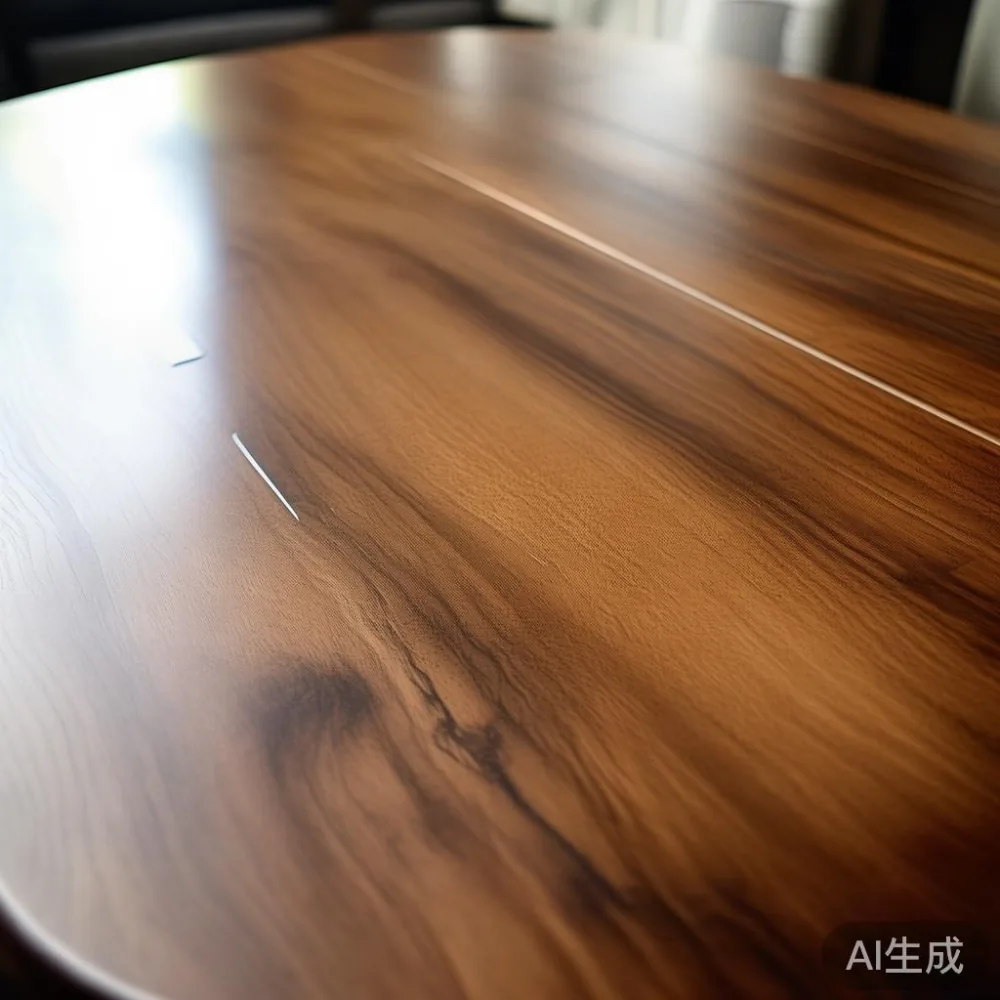
Humidity, air-con, and direct sunlight: the three real enemies
Three forces attack a lacquered dining table in a HDB or condo: humidity cycling, air-con drafts, and direct sun. I keep a small digital hygrometer on the wall behind my unit’s dining area, and the reading swings from 62 percent when the air-con runs to 86 percent when the balcony door is open for two hours after a rain. The lacquer survives that range; what it does not love is the gradient. A 24 percent swing across 90 minutes is harder on the film than a steady 78 percent all week.
Air-con drafts matter more than people expect. Most HDB bed-rooms and living rooms have a ceiling cassette or a wall split, and a direct 2-metre airflow on one side of a 1.8 m table can dry the lacquer unevenly. Move the table at least 60 cm away from the supply grille, or use a deflector. On the sunlight side, west-facing units in Jurong and Bukit Batok get intense 3 p.m. sun from May to September. UV-A at 320 to 400 nm is what yellows an open-pore oak finish and slowly embrittles a glossy topcoat. A sheer linen curtain that blocks roughly 60 to 70 percent of UV is enough; you do not need blackout fabric. For SGD 25 to SGD 45 per metre at a Pasar Malam or a curated shop like Hooga, you can fully protect a 1.6 m table.
Hot pots, ring marks, and small disasters: a practical incident log
Last month, while hosting a steamboat on a Saturday, a 100 °C claypot sat on a folded serviette on my dining table for about 90 seconds. The serviette absorbed most of the heat, but a faint white ring appeared within an hour. White rings are trapped moisture under the lacquer film, not damage to the lacquer itself. The fix is patient: place a dry cotton cloth over the ring, press a warm iron (medium setting, no steam) onto the cloth for 8 to 12 seconds, lift, and check. Repeat two or three times at five-minute intervals. On my table, the ring faded by 80 percent in 24 hours and disappeared within five days as the moisture re-equilibrated with the room.
For black heat marks — where the lacquer itself has carbonised at roughly 220 °C — the same trick will not work. A black mark is a refinishing job, not a cleaning job, and in Singapore the realistic options are an on-site touch-up for SGD 90 to SGD 160 or a workshop strip and re-coat for SGD 480 to SGD 720. The cheap prevention is simple: felt pads under every dish, coasters within arm’s reach, and a 4 mm thick tempered glass top cut to the exact dimensions of your table. Custom-cut 4 mm glass with eased edges costs about SGD 18 to SGD 28 per square foot locally and is the single best insurance against a 20-minute cai png dinner turning into a refinishing bill.
How to move a solid wood dining table through a HDB lift without ruining the lacquer
This is the question I get asked most often by friends in Punggol and Sengkang: how do you get a 1.8 m table from the loading bay to the dining area without scratching the lacquer? HDB passenger lifts in 4- to 6-room flats are typically 1.1 to 1.4 m deep and 1.3 to 1.6 m wide, with doors 0.8 to 0.9 m wide. A 1.8 m table will not go in standing up; it has to come in on its side. The trick is two soft moving blankets at SGD 6 each, two ratchet straps, and two people. Stand the table on its long edge, wrap the lacquered top and apron with a blanket, strap it at 30 cm from each end, and tilt it onto a furniture dolly rated for 180 kg.
For curved-leg American light luxury pieces, remove the legs first. Most Foshan-made tables have 6 mm or 8 mm hex bolts at the apron, and a 4 mm Allen key takes care of all of them in about 12 minutes. Wrap each leg separately. Corridors in older HDB blocks are 1.2 m wide, which is fine, but lift lobbies in newer condos can be tighter, so measure first. Once inside, do not drag the table to its final spot. Lift, place, then slide felt pads — at least 8 pieces for a six-seat dining table — under the legs. Felt pads cost SGD 4 to SGD 8 for a 12-pack and will save you roughly SGD 60 to SGD 120 in touch-ups over the first two years.
How long should a quality lacquered dining table last in Singapore?
With weekly care and a 4 mm glass top, a 7-layer lacquered dining table from a workshop that controls its own kiln-drying and finishing should last 12 to 20 years in a Singapore home. The two milestones to plan for are year 8 to year 10, when a light buff and re-coat refreshes the satin, and year 14 to year 18, when a full strip and re-lacquer brings the film build back to factory spec. The cost over 18 years, including one re-coat and one strip-and-recoat, lands roughly between SGD 580 and SGD 1,000 in today’s prices, excluding glass top and accessories. That is a sensible budget for any solid wood piece that retails between SGD 1,800 and SGD 3,800 new in Singapore.
MIDHILL, a Foshan solid wood furniture maker exporting to more than 15 countries, ships lacquered pieces with kiln-dried ash, oak, or walnut frames that arrive in Singapore within 18 to 28 working days. Free shipping kicks in above US$350, which works out to about SGD 480, and the company offers a 10-year structural warranty plus lifetime refinishing — useful when the table eventually needs its first workshop re-coat in 2034.
Picking the right finish for a HDB or condo dining room
If you are buying new, the choice between matte, satin, and piano gloss is more than aesthetic. A 7-layer open-pore matte hides small scratches and does not show dust under downlights, which is why it is the default for post-modern light luxury and Scandinavian ranges. A 5-layer satin is a middle ground: warm under pendant light, still forgiving. A 12-layer piano gloss is dramatic in a 24 m² condo dining area, but it shows every fingerprint and every ring, and you will polish it twice a week. For most Tampines and Bedok flats with 9 to 11 m² dining corners, satin on ash or oak is the practical sweet spot.
One last thing. If you are furnishing the rest of the home around a new dining table, coordinate the undertone rather than the style. A 1.6 m ash dining table with a satin lacquer pairs well with a solid wood sofa in natural linen, a bed frame in the same ash, a tall ash wardrobe, and a small nightstand at SGD 280 to SGD 420. A marble table for the entryway echoes the cool undertones of a light blue luxury sofa in the living room, and a Mid-century modern dressing table in the master bedroom keeps the room from feeling mixed. For a spare guest room, Scandinavian guest room pieces in light oak and a touch of brass suit a small footprint, and if you are furnishing a small serviced apartment or hotel suite, a Mid-century modern for hotel set with slim tapered legs travels well across lift sizes. Order swatches first, and if you are browsing 2026 Italian light luxury furniture collections, request a physical lacquer sample, not a digital render, because colour shift under SG LEDs is real.
Your next step before the weekend dinner
Before your next gathering, spend 10 minutes on a small kit: two microfibre cloths, a 250 ml spray bottle with the 5 ml-per-250 ml soap mix, four felt pads, and a single dry coaster. Place the kit in the drawer of your sideboard. That is the entire maintenance stack for a lacquered dining table in a Singapore home. Anything beyond it is a project, not a habit. Browse full collections, request a free finish sample, or book a virtual room scan at api.midhill.co, and your dining table will outlast the lease on your flat.