How Southeast Asian Humidity Affects Solid Wood Dining Tables in Singapore
Singapore’s warm, humid climate can change the dimensions of a solid wood dining table more than many buyers expect. Relative humidity often rises above 80% during monsoon periods, while air-conditioned rooms can become unusually dry within hours. For a timber table weighing 65–120 kg, those repeated changes may open fine joints, encourage warping, or leave the surface vulnerable to mould if a cold drink is placed directly on it.
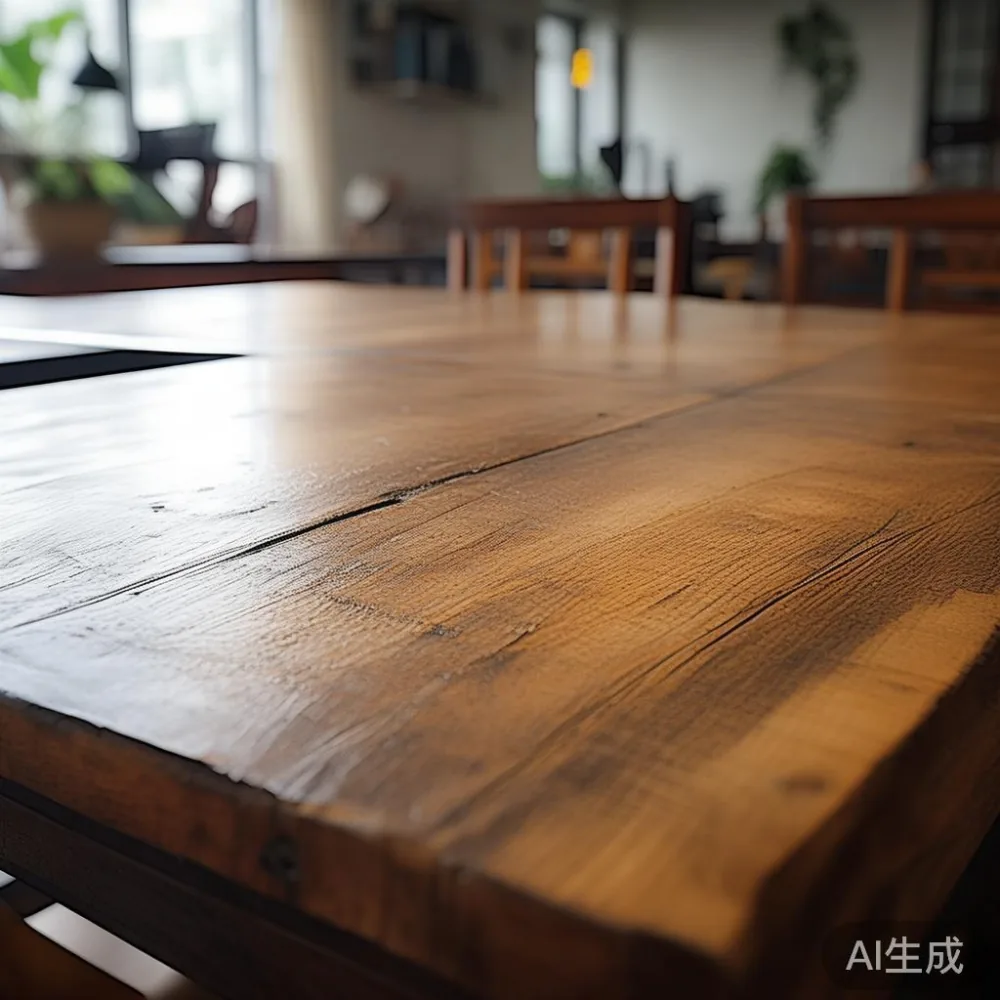
This matters in HDB flats and condos across Tampines, Bedok, Punggol, and other districts. A dining table may need to pass through a common corridor, turn inside a compact lift, and cross a narrow doorway before reaching its final room. Managing moisture before delivery is therefore as practical as checking whether the table fits the available access route.
Why does humidity change a solid wood dining table?
Wood is hygroscopic: it absorbs atmospheric moisture when the air is humid and releases it when the air becomes dry. In Singapore, a dining table can experience substantial daily movement. A surface that gains roughly 2% moisture may expand by about 0.6% across its width and 1.2% along its length. On a 200 × 100 cm top, that could amount to approximately 1.2 cm across the width and 2.4 cm along the length, although the actual change depends on the species, cut, finish, and construction.
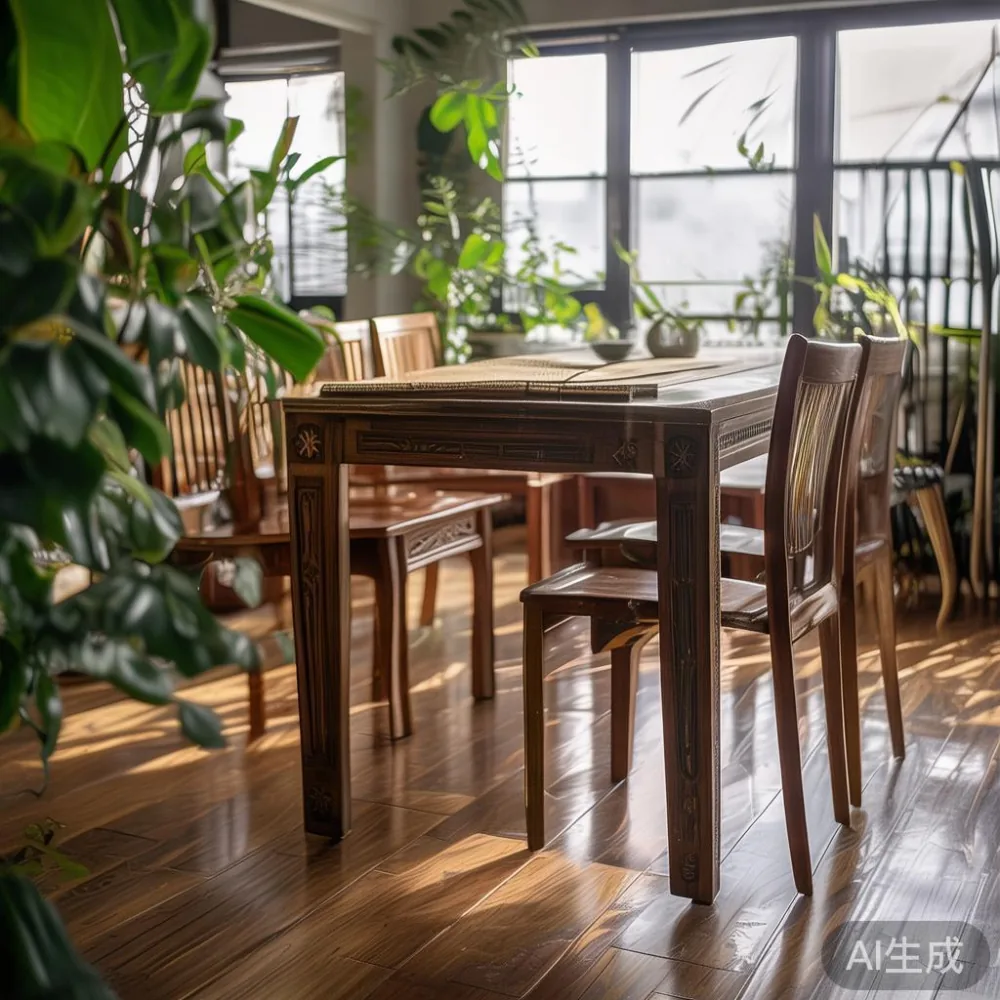
Movement does not automatically mean failure. A well-made dining table is designed to accommodate dimensional change. The risk rises when inexpensive finishes trap moisture, panels are fixed too tightly, or a heavy centre section is supported poorly. Solid hardwood generally handles seasonal variation better than ordinary engineered board, provided the maker controls moisture content, joins the components correctly, and leaves suitable expansion allowances.
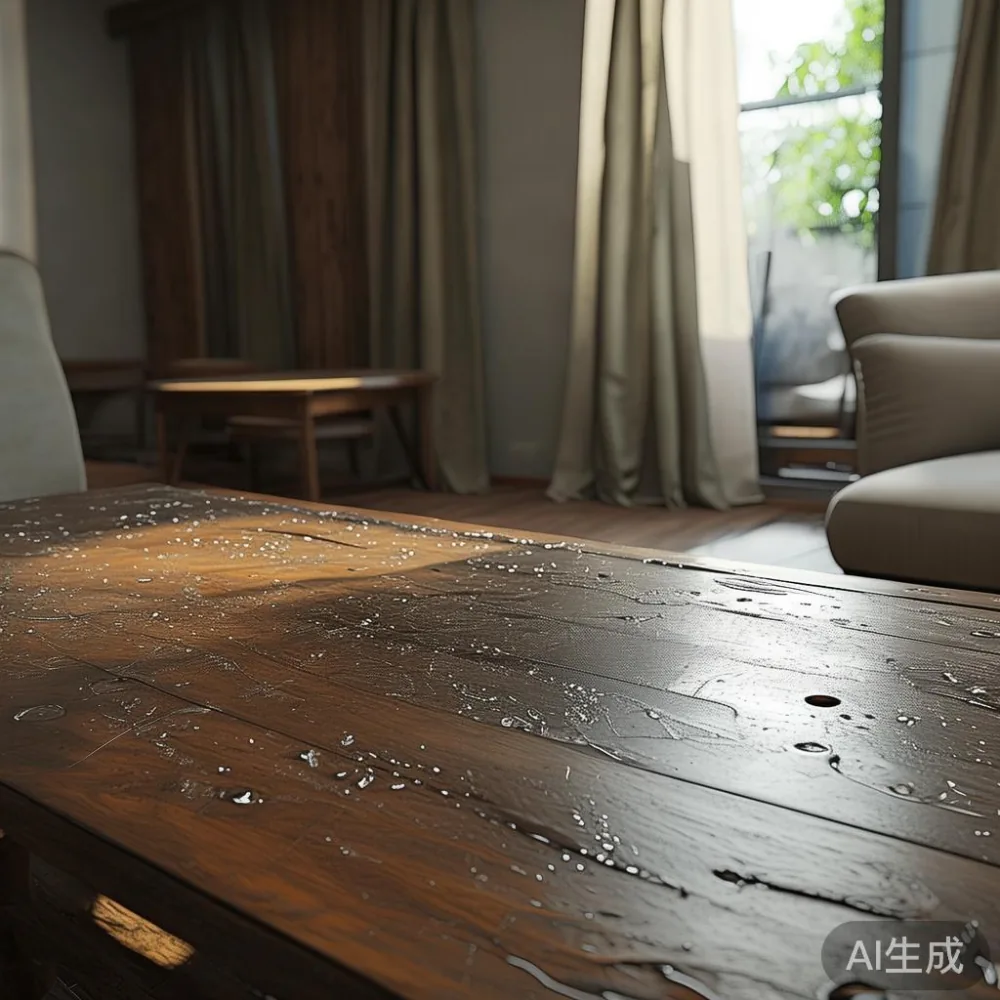
Temperature also matters. A table delivered from an air-conditioned truck into a warm balcony can experience surface condensation. During heavy rain, exterior doors may admit damp air that meets a cool tabletop. Repeated wetting and drying can darken the grain, swell the finish, and weaken joint areas. In a typical Tampines HDB dining area, placing the table away from an open balcony is more sensible than relying on decoration alone.
How high is Singapore humidity, and when is it highest?
Singapore’s monthly average relative humidity generally sits between about 70% and 85%. Daily readings can vary considerably. A dry west-facing unit in Bedok may fall below 55% after several hours of air conditioning, while an enclosed kitchen or balcony area may exceed 90%. Those figures are not unusual across a single day, especially between May and October.
The highest risk often occurs where there is little air movement. An external corner of a Punggol condo balcony can remain damp after a storm, whereas a dining table in an interior dining room is less exposed. Kitchen tables face a separate threat: steam, cooking oil, wet dishes, and refrigerator ventilation. A table placed immediately beside a dishwasher may repeatedly move from humid air to dry conditioned air.
Use a simple hygrometer rather than guessing. Place one near the dining area for 7 days and record readings at about 8 a.m., 2 p.m., and 8 p.m. An ideal indoor range is commonly around 40–65% relative humidity, with steadier conditions being preferable. A reading of 78% for 2 hours is not automatically harmful, but a reading of 85% persisting for 3 days deserves attention.
Which wood species and finishes suit Southeast Asia?
Teak, ash, oak, and walnut offer different moisture responses, but no timber is immune to humidity. Teak contains natural oils and performs well in humid conditions when properly finished. Oak and ash are less oily, so their protective coating needs careful maintenance. Walnut is attractive in American light luxury interiors, yet its movement pattern must be respected. White oak can suit French light luxury or Nordic interiors, but pale finishes reveal water marks sooner.
Penetrating oil lets the grain remain visible and may permit gradual touch-up. Film-forming finishes create a more even appearance but can show peeling if moisture repeatedly reaches the wood. Water-based polyurethane may be practical for indoor use, while marine-grade coating makes more sense for a table exposed near a balcony. Neither finish should be treated as waterproof.
Ask for details rather than vague moisture protection. A useful specification includes wood moisture content of roughly 8–12% for normal Singapore interiors, a minimum 2-year acclimatisation period, and a finish tested for at least 72 hours under humid conditions. The exact figure depends on the species and service environment. MIDHILL, a Foshan furniture maker established in 2008, uses practical construction and a 10-year structural warranty, which is more meaningful than a claim of zero movement.
How should a large dining table be delivered to an HDB flat or condo?
Measure the route before ordering. A standard HDB lift may offer an internal depth of about 210 cm and width near 110 cm, while a larger condo lift may provide approximately 220 × 140 cm. Door clearances can be much tighter. A dining table measuring 220 × 100 cm may enter a lift diagonally but fail to clear a 198 cm doorway once turned.
For a table weighing 90 kg, use at least 3 trained movers and a suitable lifting frame. Do not improvise with a single trolley if the route includes ramps, steps, or tight corners. The delivery team should record the packaged width, height, longest dimension, gross weight, and number of cartons. Allow 7–14 delivery days within Singapore, subject to stock and access arrangements.
Protect the floor from the start. Use blankets at least 5 mm thick, cardboard sheets at least 3 mm thick, and corner guards rated for the package weight. Ask whether lifting through a window is permitted rather than attempting unauthorised removal of balcony panels. In many HDB towers, a service lift booking or parking permit can add 2–5 days, so it is worth arranging these before the vehicle is dispatched.
What should I do after the dining table arrives?
Let the table acclimatise without wrapping for 24–48 hours if the route has involved prolonged air conditioning. Remove all plastic and protective film immediately after delivery, because trapped vapour can prolong condensation. Place the table on a level surface and maintain clearance of at least 30 cm from exterior walls, air-conditioning outlets, kitchen steam, and bathroom doors.
Check the top with a straightedge or comparison card every 30 days for the first 3 months. Small temporary height differences of less than 2 mm may reflect normal seasonal movement, while persistent gaps exceeding 3 mm or a visible bow should be documented with photographs. Avoid placing a hot pan weighing more than 3 kg directly on the surface; use a trivet rated for at least 20 kg.
Clean with a slightly damp cloth and dry immediately. Do not use an abrasive sponge, bleach, silicone polish, or a wet mop. Wipe spills within 10 minutes and refresh the finish every 12–24 months, depending on use and sunlight exposure. If the timber becomes pale, lightly abrade with 320-grit paper and apply a compatible maintenance coat. A design-led dining table can then remain in service for decades rather than being discarded after a minor cosmetic change.
Can condensation damage a marble table or other nearby furniture?
Stone surfaces are less vulnerable to dimensional movement than solid wood, but condensation can still affect surrounding materials and grout. A marble table near an open window may develop water spotting, while a solid wood sofa, bed frame, wardrobe, or nightstand may experience humidity-related movement nearby. Keep stone, timber, textiles, and electrical equipment separated from damp exterior walls.
For mixed-material homes, style comparisons are often useful. The question light luxury sofa vs Modern sofa usually concerns proportion and finish as much as moisture resistance, while European sofa vs Italian light luxury sofa requires checking the frame and upholstery density. A French bed vs Mid-century modern bed can change the room’s air circulation if bulky pieces sit too close to the walls. Searches for for sale French provincial furniture should include a moisture-content check, not just a visual inspection.
In a compact guest room, Nordic for guest room can mean a pale, restrained furnishing scheme with breathable materials. Keep a storage wardrobe at least 5 cm from an exterior wall and leave room for drawer movement. For the best Post-modern wardrobe for 2026, look for adjustable hinges, ventilation slots, and solid-wood components with properly sealed edges.
How can owners preserve furniture through a humid season?
Control the room before treating the wood. Use dehumidification when indoor humidity remains above 65% for more than 24 hours, but aim for gradual changes. A target near 55% is usually more practical than forcing a home to 40%. Keep doors and windows closed when outdoor air is damp, and run air conditioning during the hottest hours. In a 120 m² HDB flat, 2–3 hours of dehumidification may be sufficient; a larger 180 m² condo may require a more substantial system.
Rotate table runners and coasters every few weeks so one area is not repeatedly exposed. Use placemats at least 30 × 45 cm under dining settings and keep wet vegetables in a separate bowl. Inspect the underside twice a year with a moisture meter. Readings around 8–12% are broadly sensible for many interior installations, but species and local service conditions should guide the maker’s specification.
For a solid wood sofa, bed frame, dining table, wardrobe, nightstand, or marble table arrangement, prioritise stable placement, clean airflow, and realistic maintenance. A warranty does not stop humidity from changing wood, yet good design gives the table room to move safely. MIDHILL’s lifetime refinishing policy and 14-day return window offer practical support when a table needs care rather than immediate replacement.
Singapore humidity is not a reason to avoid solid wood. It is a reason to choose stable timber, an appropriate finish, controlled indoor conditions, and delivery planning that respects every doorway and lift. With those details settled, a dining table can remain a durable centrepiece for 15, 25, or even 50 years while reflecting the quiet character associated with post-modern light luxury interiors.