Humidity and Your Solid Wood Dining Table: A Southeast Asia Owner's Guide
I keep a small digital hygrometer clipped to the inside of my kitchen cabinet, and on any given week in Tampines the reading swings between 62% and 88%. That single habit has saved me more in furniture repairs than any warranty card ever could. If you live in an HDB in Bedok, a condo in Punggol, or a landed terrace anywhere between these neighborhoods, you already know the air here feels like a warm towel pressed against your face from May to September. What you may not realize is how much that same air is quietly working on the solid wood dining table you chose for your open-plan living room.
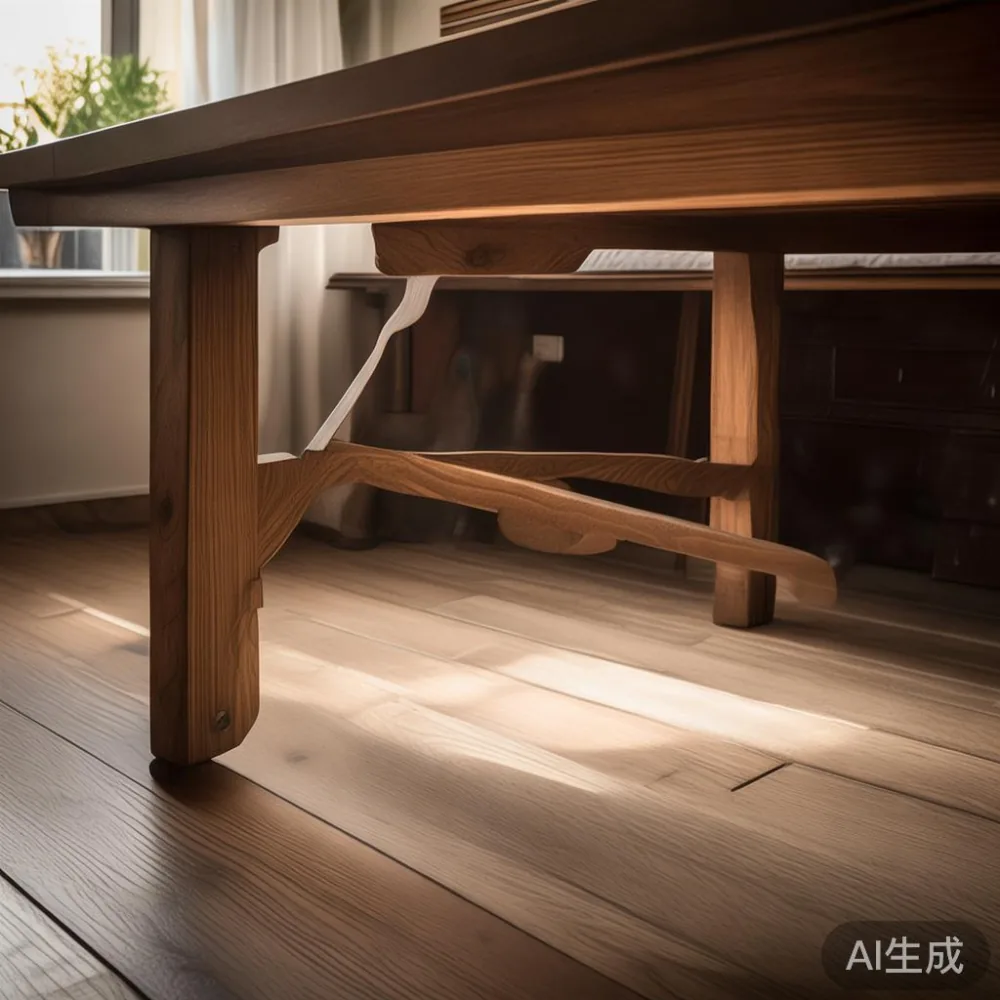
MIDHILL has been crafting solid wood pieces out of Foshan since 2008, exporting to more than 15 countries and standing behind a 10-year structural warranty plus lifetime refinishing. Their pieces are designed with the realities of tropical climates in mind, but no factory can fully substitute for the habits a homeowner builds in their own home. This guide walks through what humidity actually does to hardwood, how to measure and manage it in a typical Singapore flat, and what to look for when you are shopping for a dining table that will still look good a decade from now.
What Does Tropical Humidity Actually Do to a Solid Wood Dining Table?
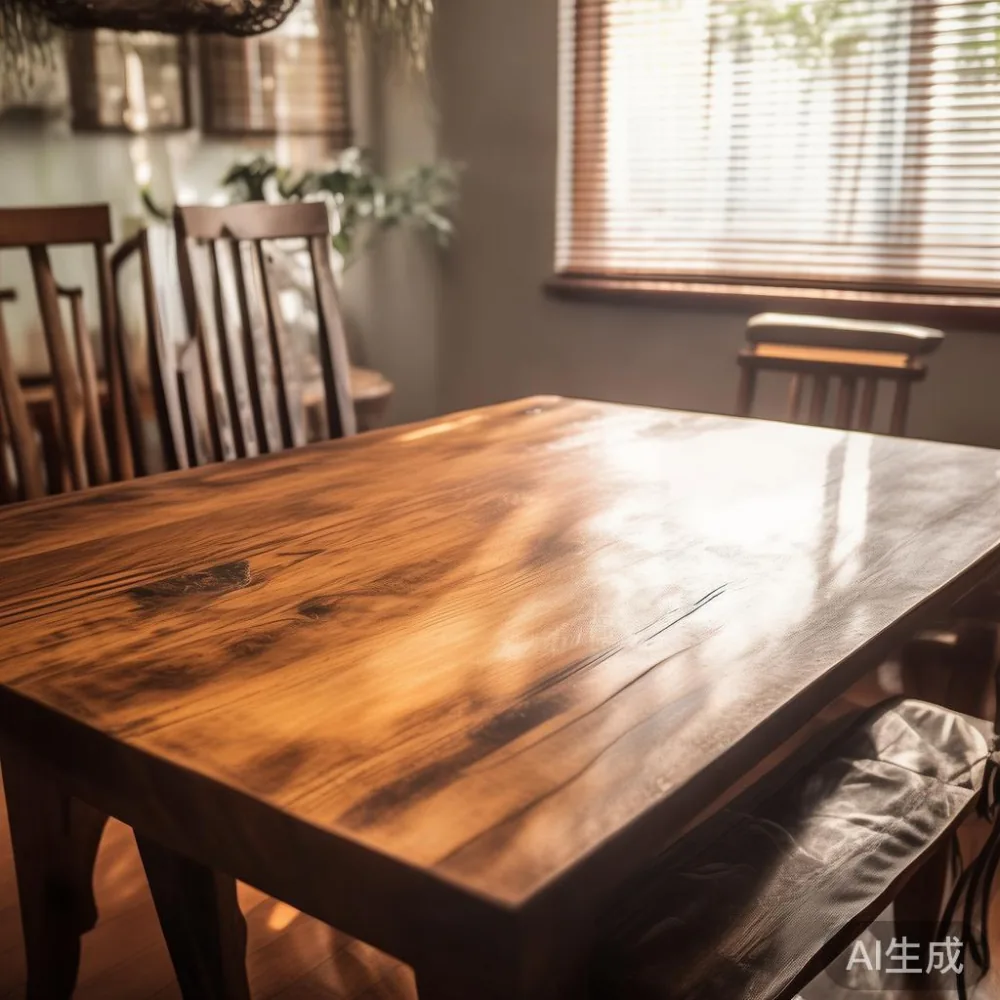
Wood is hygroscopic, which is a technical way of saying it breathes. Every board in your dining table is exchanging tiny amounts of moisture with the air around it, all day, every day. When the relative humidity climbs from 60% to 85%, a slab of solid oak can swell by as much as 2% across its width. That sounds tiny on paper, but on a 180 cm table top it can translate into 3 to 4 mm of expansion, which is more than enough to stress a glue joint or push a leaf insert out of alignment.
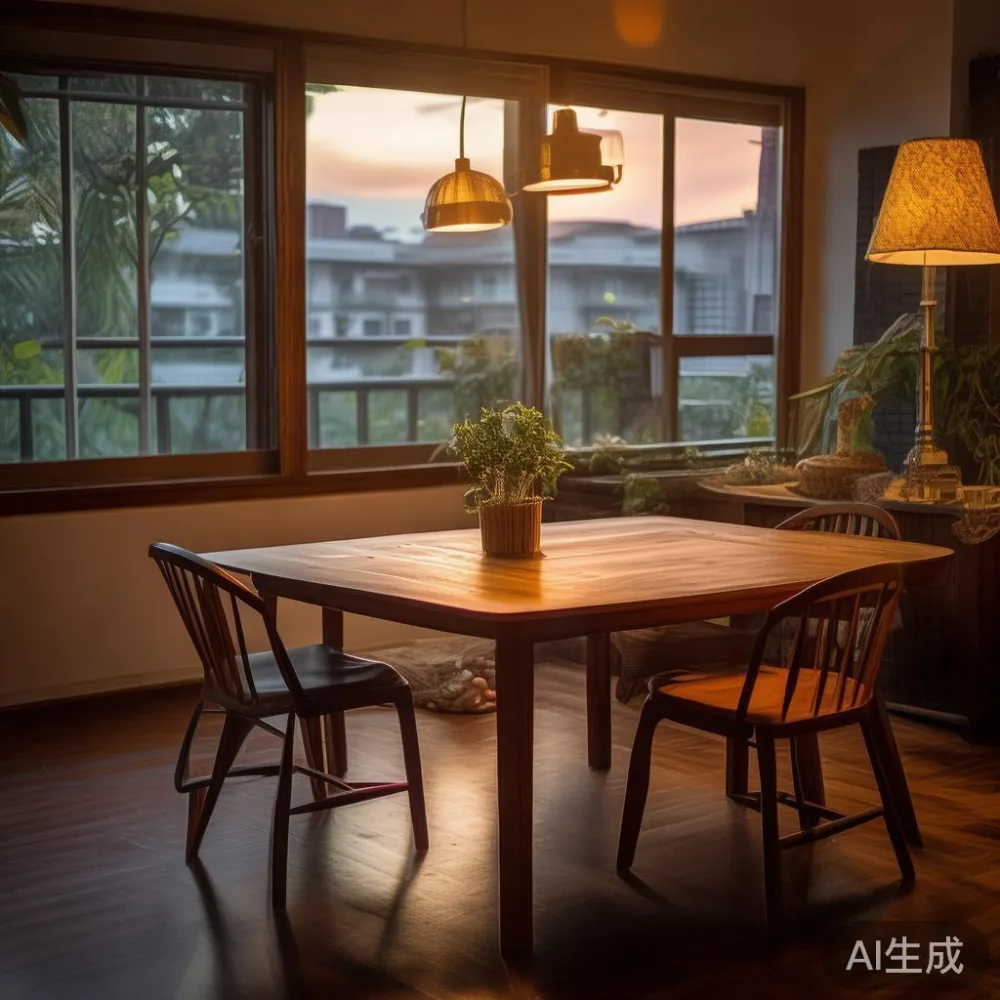
Conversely, when the air gets very dry, usually during a long stretch of air-conditioned days in January or a trip away with the windows closed, the same board will shrink. The shrinking does not always happen evenly, so you can end up with hairline cracks along the grain or small gaps where two leaves meet. A wardrobe door that fit perfectly in October may start rubbing by February if the bedroom runs the air-conditioner at 22°C every night.
How Bad Is the Problem in Singapore, Really?
Singapore's average relative humidity sits around 78 to 82% year-round, with afternoon peaks above 90% during the southwest monsoon from June to September. Indoor humidity in a non-air-conditioned HDB corridor unit can mirror those numbers almost exactly, especially if you dry clothes indoors or run a rice cooker without ventilation. I visited a friend's resale flat in Bedok last month where the dining table had visibly cupped across its 150 cm span after only 18 months of use, with no air-conditioning in the dining area and windows kept shut for energy savings.
Condos with central air handling, like many of the newer developments in Punggol, typically maintain 55 to 65% indoor humidity, which is much friendlier to wood. The lift and corridor widths in most 2018-onwards HDB blocks measure around 1.1 m and 1.5 m respectively, plenty wide for a flat-pack dining table to be delivered without forcing the cartons onto their edges. If you are ordering a 1.8 m solid wood dining table from an overseas maker, the crated dimensions usually land around 190 cm by 95 cm by 25 cm, well within those limits.
Is Solid Wood Still a Good Choice in a Tropical Climate?
Yes, and here is why. Solid wood, when properly kiln-dried and acclimatized, is far more forgiving than MDF, particleboard, or even most plywood constructions. A solid wood dining table can be sanded and refinished when surface damage appears, something you simply cannot do with a veneered wardrobe or a marble table wrapped over a chipboard core. MIDHILL builds its tables from woods like white oak and ash that are dried to between 8% and 10% moisture content, then shipped with a stabilization period in a Singapore warehouse before final delivery. That buffer alone reduces the average homeowner's first-year headaches dramatically.
Price ranges for a quality solid wood dining table in SGD run from about S$1,200 for a four-seater in rubberwood, to S$2,800 to S$4,500 for a six-seater in ash or oak, to S$6,500 and up for a statement piece in walnut with a French light luxury finish. Marble tables, often paired with a dining set in post-modern light luxury interiors, are stunning but require sealing every 12 to 18 months in this climate and can develop surface etching from acidic foods like sambal and lime juice within weeks if neglected.
What Humidity Level Should I Keep My Home At?
Try to hold your living and dining areas between 45% and 60% relative humidity. Below 40% and solid wood shrinks enough to invite cracking; above 65% and you invite cupping, mildew on leather sofa cushions, and musty smells in closed wardrobes. A small dehumidifier rated at 6 to 8 litres per day costs around S$180 to S$260 and can cover a 40 sqm HDB living-dining area comfortably. Run it during the day when humidity peaks and empty the tank, or hook it to a continuous drain if your condo utility ledge allows.
If you work from home, the same rule applies to the room holding your desk and your solid wood bed frame. A Modern work from home setup in a tropical city really does need a small dehumidifier or at the very least a passive silica-gel canister in the wardrobe and nightstand drawers. I keep two 500 g silica tubs in my own bedroom wardrobe, replaced every three months at roughly S$8 a refill, and the difference in how my oak bed frame behaves between February and August is noticeable.
How Do I Choose a Bean Bag for a Small Apartment?
Pick a bean bag with a removable, washable outer cover made of breathable cotton or linen, a weight between 4 and 6 kg for easy shifting, and dimensions no larger than 90 cm wide so it clears typical HDB corridor turns of about 1.5 m and fits beside a compact two-seater sofa without crowding a dining table in an open-plan layout.
That sentence is your anchor when you are shopping online at 11 pm and every listing starts to blur together. Bean bags do not interact with humidity the same way a solid wood dining table does, but a foam-filled bag in a Tampines flat can absorb ambient moisture, grow heavier by 10 to 15% over a wet week, and develop a faint sour smell if the cover is not breathable. Cotton covers breathe, faux leather does not. A 6 kg bag with cotton outer and EPS bead filling will set you back around S$90 to S$160 locally, and a washable cover adds maybe S$25 to the order.
Can Air-Conditioning Damage My Dining Table?
Air-conditioning protects wood more than it harms it, as long as you avoid blasting cold, dry air directly onto a tabletop for hours. Set your dining area thermostat between 23°C and 25°C, which usually keeps indoor humidity in the 50 to 60% range, and keep the air-con vents angled so the airflow does not hit the table edge straight on. Direct cold drafts can cause localized shrinkage along one side of a 180 cm top, leaving it slightly banana-shaped until humidity recovers.
If your dining table sits within 1.5 m of a wall-mounted split unit, consider angling the louver upward or placing a slim floor screen between the unit and the table. The same logic applies to your solid wood bed frame and nightstand in the bedroom; aim for a 1 m clearance from the air-con outlet if you can arrange it. MIDHILL finishes its dining tables with a multi-layer conversion varnish that resists checking, but no factory finish is a substitute for sensible placement.
How Should I Clean and Maintain a Wood Table in Singapore?
Wipe with a barely damp microfiber cloth once a week, dry immediately with a second cloth, and avoid any cleaner containing silicone, ammonia, or bleach. For a deeper clean every three months, use a pH-neutral wood soap diluted at roughly 5 ml per litre of water, then buff dry. Once a year, apply a thin coat of hard wax oil to the top and edges; a 250 ml tin costs around S$25 and covers a six-seater table with one application to spare.
Never place a hot pot, a steaming claypot of bak kut teh, or a sweaty glass directly on the surface. Use coasters, placemats, and trivets. Felt pads under vases and table lamps prevent ring marks. If a white heat ring does appear, a paste of baking soda and non-gel toothpaste, rubbed gently with a soft cloth, will often lift it without damaging the finish.
What About Delivery, Warranty, and Returns?
MIDHILL ships from its Foshan factory to Singapore via a consolidated sea route that takes roughly 18 to 25 days, then white-glove delivery to your door within another 5 to 7 working days. Lift access must be confirmed before dispatch, since a crated 1.8 m dining table weighs between 45 and 60 kg and cannot be left in a 1.1 m wide corridor under HDB by-laws. Free shipping kicks in over US$350, which is roughly S$480 at current rates, well below the price of any solid wood dining table in the catalogue.
Returns are accepted within 14 days of delivery for pieces in original packaging, and the 10-year structural warranty covers joint failure, severe warping beyond 5 mm across the span, and hardware defects. Lifetime refinishing means you can send the table back to the Singapore service hub for a sand-and-refinish at a flat fee of about S$280, a service that is genuinely useful around year eight or nine when the original wax has long since worn away.
Are There Furniture Pieces I Should Avoid Buying in Solid Wood?
Skip solid wood for anything that lives in a permanently wet zone, like a bathroom vanity or an outdoor balcony dining set. For the kitchen-to-balcony transition, a powder-coated aluminum dining table with an HPL top will outlast solid wood at a quarter of the maintenance. Inside the home, though, a solid wood dining table remains one of the few purchases that genuinely improves with age if you give it basic care.
Likewise, a marble table can anchor an American light luxury dining room beautifully, but plan on sealing it twice a year and using coasters religiously, or pick a quartz composite instead. For wardrobes and nightstands, solid wood again beats veneer on longevity, since a sanded-down wardrobe door after fifteen years of service can look almost new with a fresh coat of oil.
What Is the One Habit That Protects Every Wood Piece I Own?
Buy a S$15 hygrometer for each room that holds wood furniture, check it once a week, and run a dehumidifier whenever the reading climbs past 65%. That single habit, repeated for a year, will do more for your dining table, bed frame, and wardrobe than any wax, polish, or product guarantee ever could. It also helps your leather sofa hold its shape and keeps musty smells out of closed storage.
I learned this the slow way, after a 160 cm oak dining table developed a 3 mm cup across its width in my first Punggol rental. The replacement, a MIDHILL ash six-seater with a hard wax oil finish, has now sat at a steady 55% humidity for thirty-two months with no movement I can detect with a straightedge. The piece cost S$3,400 delivered, which works out to about S$106 a year over a thirty-year expected service life, cheaper than replacing a flat-pack table every five years and far easier on the eye.