Warm Minimal, Warm Wood: Matching Your Dining Table to Singapore's Coziest Interiors
Walking into a Tampines walk-up last month, I watched my colleague pause in her own dining room. The space was 28 square metres of plaster-and-laminate HDB standard, lit by a single fluorescent tube, and the owner had layered two rugs, four stools, and a small round table into the corner. She had tried to build warmth. What she had, instead, was clutter competing with the light. The fix was not more pieces. The fix was teaching her eye what warm minimal really asks of a room, and how a single solid wood dining table can carry the whole palette when the surrounding pieces step back.
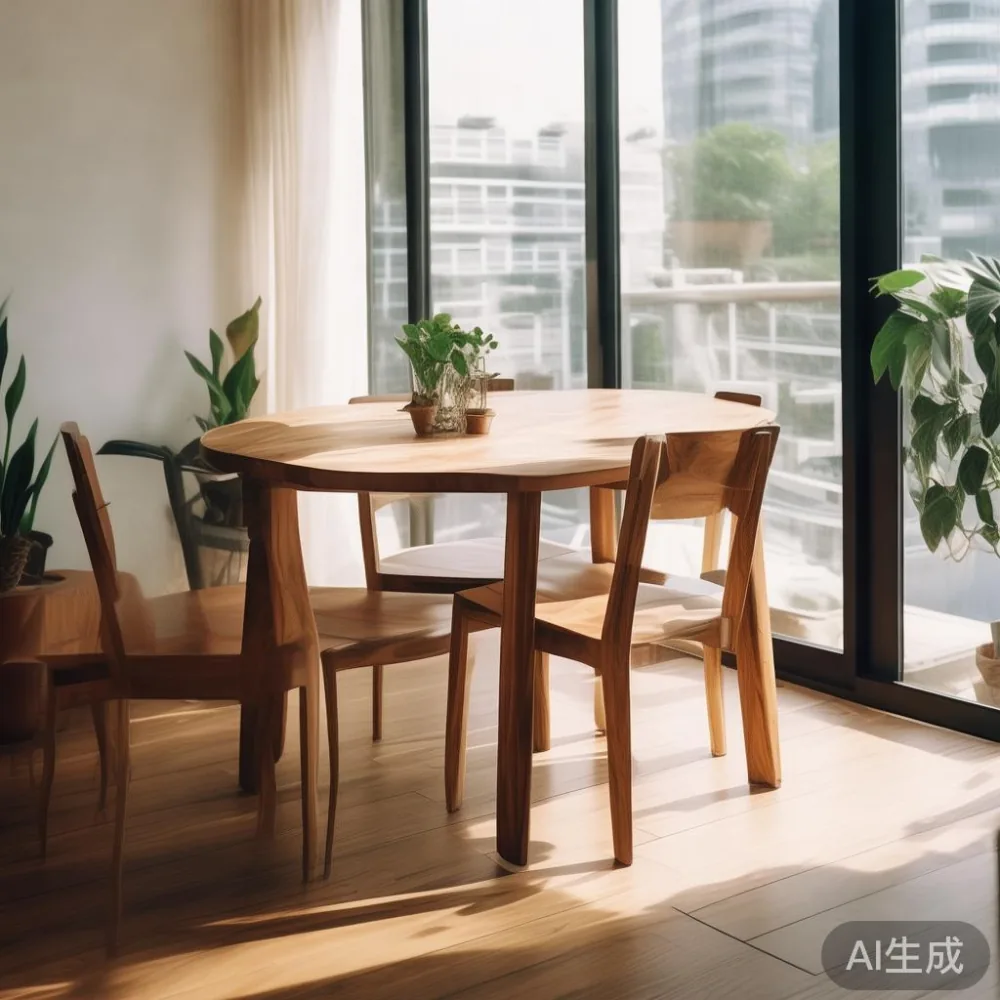
Warm minimal is not beige-on-beige. It is a controlled dialogue between pale walls, natural timber, and one confident material story repeated across a few pieces. In Singapore's HDB flats and newer condos, where ceiling heights sit between 2.6 m and 3.0 m and where the main door corridor often narrows to 0.9 m, the discipline matters even more. The room must breathe so the air-con feels cooler, the morning light feels softer, and the wood reads as the warmth, not as one more loud voice. For buyers searching the wider category of for sale Coastal furniture alongside minimalist timber pieces, the goal is the same: softness without sentimentality.
What does warm minimal actually look like in a 4-room HDB?
Picture a Punggol BTO where the original white laminate floor has been replaced by 12 mm engineered oak in a 190 mm plank width, the walls are painted in a warm off-white at around NCS S0500-N, and the only metal in the room is the slim black track of a ceiling fan. A 160 cm oval solid oak dining table sits on the rug, six chairs tucked under, a single ceramic vase on the centreline, and a low walnut sideboard against the back wall. That is warm minimal. It is roughly 60% soft neutrals, 25% mid-tone timber, 10% matte black, and 5% textured linen. The numbers are old interior-design shorthand, but they are useful when you stand in an empty room and do not know what to buy first.
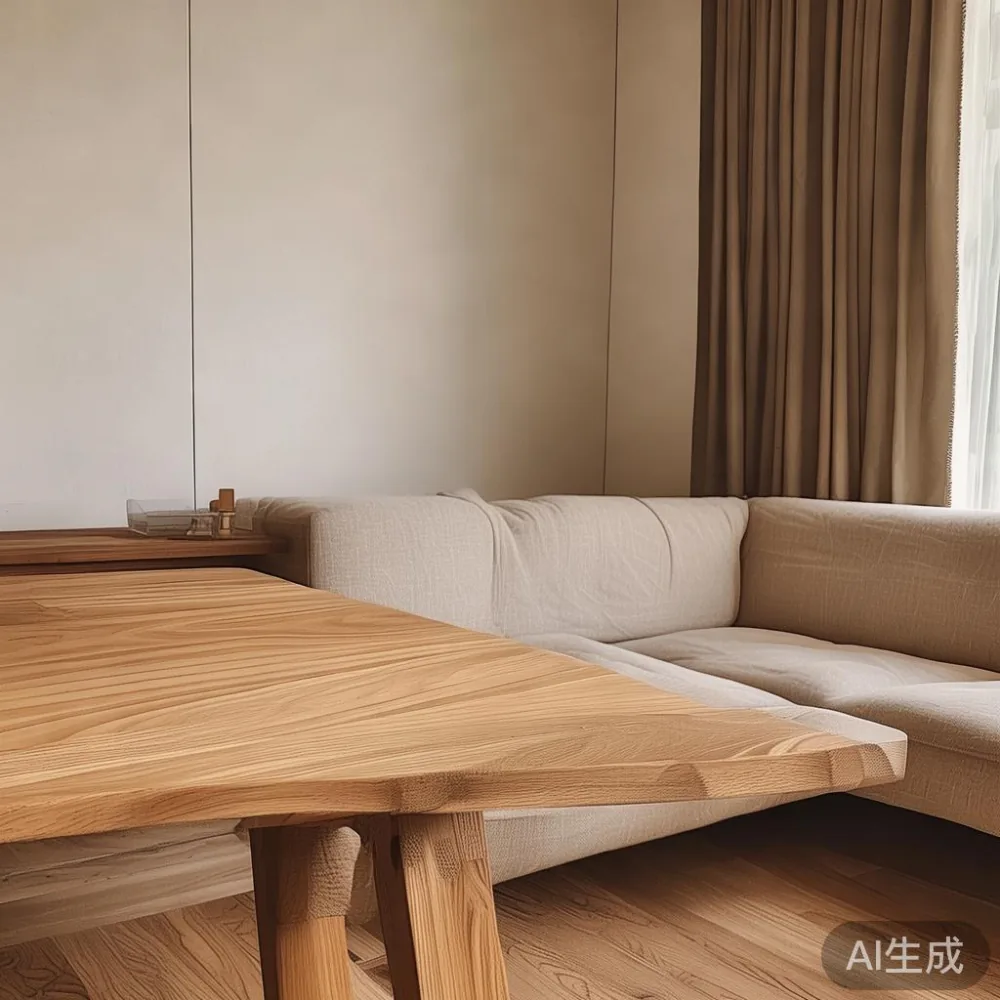
The dining table is the anchor because it is the largest single plane in the room, after the floor. Choose its timber species first, then match everything else to that tone. White oak reads quiet and slightly pinkish when oiled; ash reads cooler and almost Scandinavian; walnut reads chocolate and instantly warmer. In an East-side resale flat at Bedok Reservoir, where afternoon sun pushes through east-facing windows, I would lean toward ash or oak. In a north-facing unit at Treasure Crest or The Tapestry, walnut compensates for the cooler light. The same principle explains why the front-of-catalogue pieces tagged as 2026 light luxury furniture lean toward lighter oak, brushed brass, and ivory bouclé: those finishes photograph well against warm minimal palettes and let the timber do the storytelling.
How do you keep warm minimal from tipping into plain?
Texture. A room filled with one flat finish, no matter how tasteful, will feel like a show flat that nobody has lived in. The way out is to mix two or three timber tones rather than one, and to let one textile in every seating zone break the smoothness. A plain linen curtain, a wool-b boucle dining chair, and a rattan pendant will all carry different weaves against the same wall. A solid wood sofa in a wheat-toned fabric against an oak wall reads differently than the same sofa on a white wall, because timber absorbs the light around it and gives the textile room to feel cosy.
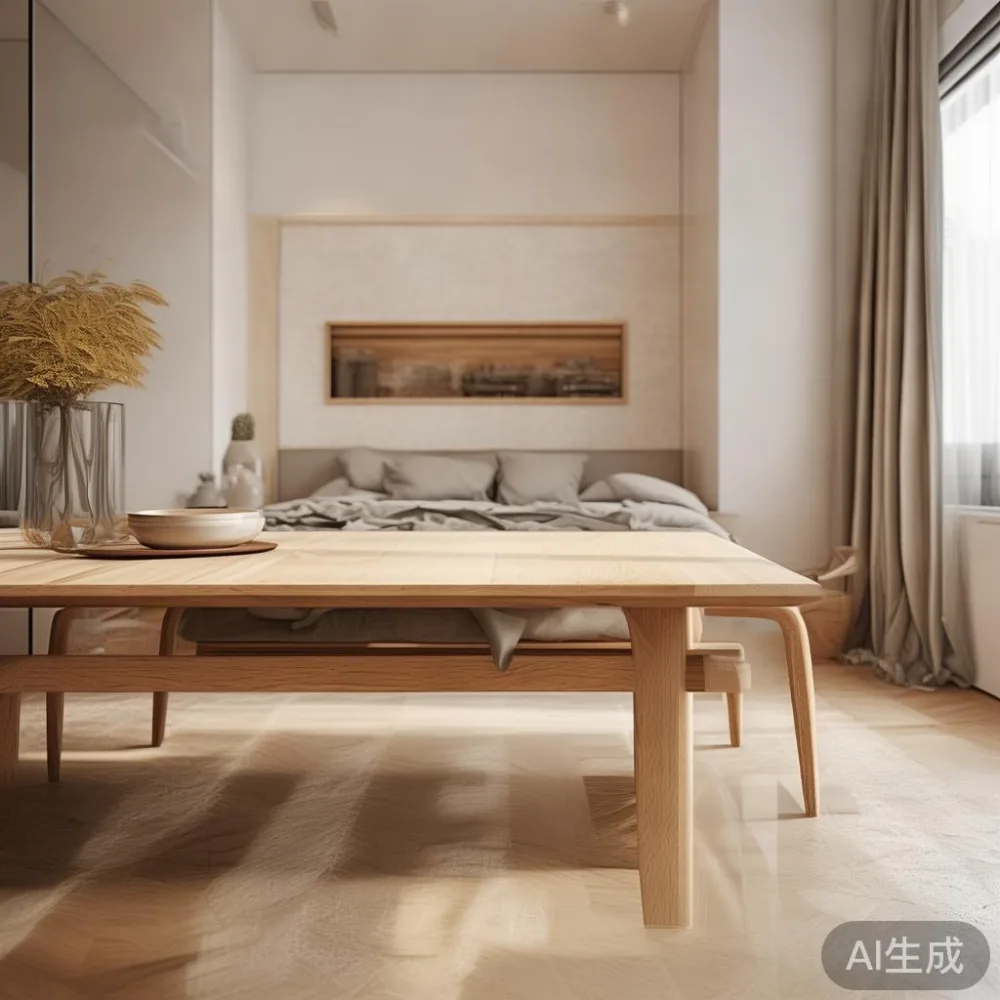
For Singapore buyers weighing for sale Japanese furniture alongside Scandinavian oak, the trick is to think in terms of joinery rather than style. Japanese pieces tend to expose clean tenons, finger joints, and slim tapering legs in ash or pine; they reward tight, quiet rooms. Scandinavian oak tends to be heavier in the apron and rounder in the leg. Both work in warm minimal, but you do not want to mix a round-tapered Aalto-style stool next to a square Japanese leg. Pick the joinery grammar, then stick to it across the dining chairs, the low TV console, and the nightstand in the master bedroom, so the eye reads one continuous hand.
Where do MIDHILL pieces fit into a warm-minimal dining room?
This is the question I am asked most often by readers, so let me answer it with specifics rather than slogans. MIDHILL has been making solid wood furniture out of Foshan since 2008, and what struck me on a factory-floor visit two years ago was their discipline on timber grade and moisture control: boards are kiln-dried to roughly 8 to 12 percent moisture content, then acclimatised for 7 to 10 days before assembly, which is why their solid wood dining tables do not cup in Singapore's 80 percent humidity. Their 10-year structural warranty covers frame joinery on dining tables, bed frames, wardrobes, and similar casework, and they offer lifetime refinishing, which matters for a market where heat and daily use wear timber surfaces within five to seven years.
For warm minimal, I would pair a 160 cm to 180 cm rectangular oak dining table from their light-luxury collection with low-back upholstered chairs in oatmeal bouclé, then add one of their slim walnut sideboards as the visual counterweight along the back wall. If the household prefers a softer, French-inflected reading, their French light luxury line runs post-modern cabriole legs in pale ash with brushed-bronze sabots; pair that with a small marble coffee table in a Crema Marfil or Carrara finish to pick up the bronze. The line between light brown luxury sofa silhouettes and minimal Scandinavian sofas is thin in a warm-minimal room, so the sofa should be one tone lighter than the dining table or share its grain direction, never both at once.
What dimensions should you actually measure before ordering?
In Singapore, you measure three times: door, lift, and corridor. Most HDB service lifts have a clear opening of 0.9 m wide by 2.1 m high, and the internal cab is roughly 1.1 m by 1.4 m. A 180 cm rectangular dining table in two cartons will usually clear the lift if the longest side is 180 cm or under and the top is shipped unassembled; anything 200 cm and above needs the legs removed. The main door of a typical 4-room HDB is 0.9 m by 2.1 m; corridor widths from the lift lobby to the door range from 1.2 m to 1.5 m in older blocks, narrower in some refubs. Always check your block's lift size before paying a deposit, and ask the supplier for a packing list with carton dimensions.
Within the room itself, leave 90 cm behind each chair so someone can push back without hitting a wall, and 120 cm between the table edge and any sideboard so dishes can be passed comfortably. A round 120 cm table seats four with about 60 cm of personal elbow room per diner; a round 140 cm table seats six. Rectangular tables are kinder in narrow rooms because the eye reads the long axis down the wall rather than across the corridor. For lifts and doorways, budget at least one delivery helper; two is safer for any piece over 60 kg.
Which secondary pieces earn their place in a warm-minimal room?
Choose three supporting pieces at most, and let them share one timber family. A dining table in white oak pairs well with a low oak sideboard, an oak-framed bed in the adjacent bedroom, and a small oak nightstand; the wardrobe can be painted off-white to recede. If the family prefers walnut, repeat walnut across those four pieces and keep the wardrobe, walls, and curtains in linen whites. The point is repetition with a single deviation per zone, so the room reads warm, calm, and considered. Avoid mixing three different timber species in one room, because the eye treats each as a new voice and the room feels busy even when there are only six pieces.
For lighting, pick one warm-white statement piece (a rattan pendant, a paper lantern, or a brass-and-opaline ceiling lamp) and keep the rest of the room at 2700 K. That single colour-temperature decision does more for a warm-minimal interior than any single furniture purchase. Curtains should be linen or sheer, hung just below the ceiling track so the wall reads taller; a heavy velvet drape looks glamorous in a show flat photograph but quickly traps Singapore's humidity and dust in a HDB. Rugs belong under the dining chairs to soften the footfall, with the rug 60 cm wider than the table on every side so chairs stay on the rug when pulled back.
How much should you budget in SGD, including GST and delivery?
For a complete warm-minimal dining setup of one 160 cm to 180 cm solid wood dining table, six chairs, one sideboard, and one pendant light, a realistic Singapore budget in 2025 is S$3,800 to S$7,500 retail before GST. Adding 9 percent GST brings a S$5,000 setup to about S$5,450, with delivery typically between S$80 and S$250 for a single trip. Import-duty rates on finished wood furniture sit at 0 percent under Singapore's standard tariff schedule, but GST applies on the landed cost. Lead times from Foshan run 35 to 50 days by sea to Singapore; air freight cuts that to 10 to 14 days at roughly 1.6 times the sea cost. Some makers, including MIDHILL, quote free delivery above US$350 to most Singapore addresses, which lands around S$470 in today's FX, and offer 14-day returns on standard pieces.
Factor in a small monthly maintenance budget for oiling or waxing the dining tabletop twice a year, around S$40 to S$70 per session using Osmo Polyx-Oil or Fiddes, and plan a light sanding and refinish every four to six years. That is where a lifetime refinishing offer from the maker becomes valuable, because shipping a tabletop back to Foshan for a sand-and-restore costs roughly S$280 to S$420 round-trip, a saving you would not see on a piece without the service.
Is French provincial bed worth it in a warm-minimal home, or does it clash?
This is a fair question, because French provincial silhouettes sit at the opposite end of the furniture grammar from Japanese and Scandinavian minimal. The short answer is that the language clashes only when you try to mix a cabriole-leg bed with square-tapered dining chairs. The longer answer is that a French provincial bed can absolutely work in a warm-minimal bedroom if the dining room stays disciplined in oak or ash, the bedroom carries the French tone in one piece, and the rest of the bedroom remains linen and pale oak. The expensive mistake is buying a matching French provincial dining set on top of the bed: it doubles the visual weight of curves in one home and pushes the room toward country, not minimal. Pick one room for the French accent, and let the dining room stay quiet.
Where to buy coffee table from MIDHILL without breaking the warm-minimal tone?
For readers also asking where to buy coffee table from MIDHILL that fits the same warm-minimal palette, the answer is to pick a low rectangular oak piece with a solid 4 cm top, matched to the dining table's grain direction. Avoid high-gloss lacquer and avoid dark stains; both will read heavy next to a pale oak dining table. A square 90 cm oak coffee table pairs well with a 180 cm rectangular dining table because the two rectangles share an axis and the room feels composed. Add one marble table in the foyer if the home needs a single moment of polish, but keep it small and let it stand alone.
Beyond coffee tables, the same rules govern sideboards and wardrobes: match the timber grade, match the finish, and let one accent material - brushed brass, paper rope, or oiled oak - speak across the home. A four-piece warm-minimal family across a 4-room HDB - dining table, sideboard, bed frame, and nightstand - usually lands between S$4,200 and S$8,800 retail, GST and delivery included. That is roughly the price of a single Italian-brand sofa, which is a useful yardstick when you compare spend per piece rather than per room.
A short checklist before you click order
Measure door, lift, and corridor with a tape measure in centimetres, not inches. Photograph the empty room at midday and at night to confirm the light direction. Pick the dining table's timber species first, then match two supporting pieces to it. Keep textile count to three: linen, bouclé, and one accent weave. Choose one colour temperature for every lamp, ideally 2700 K. Budget 9 percent GST and S$80 to S$250 delivery on top of retail. Confirm lead time in writing, and ask whether re-staining is offered for pieces bought direct from the maker. With those eight items checked, the warm-minimal interior reads as quiet, warm, and a little easier to live in than a styling photograph - which is, after all, the point.