Choosing the Right Dining Table Size for a Singapore HDB Living Room
Walk into any Tampines or Punggol HDB flat on a Sunday afternoon and you will see the same scene: a four-seat dining table pushed against the wall, a pair of solid wood dining chairs tucked in tight, and barely 60 cm of walkway left between the table edge and the sofa. It is the room I grew up in, and it is the room I keep seeing when I visit friends across Bedok, Sengkang, and Toa Payoh. Sizing a dining table for a Singapore HDB living room is less about taste and more about centimetres, corridor widths, and how many people you actually host during Chinese New Year.
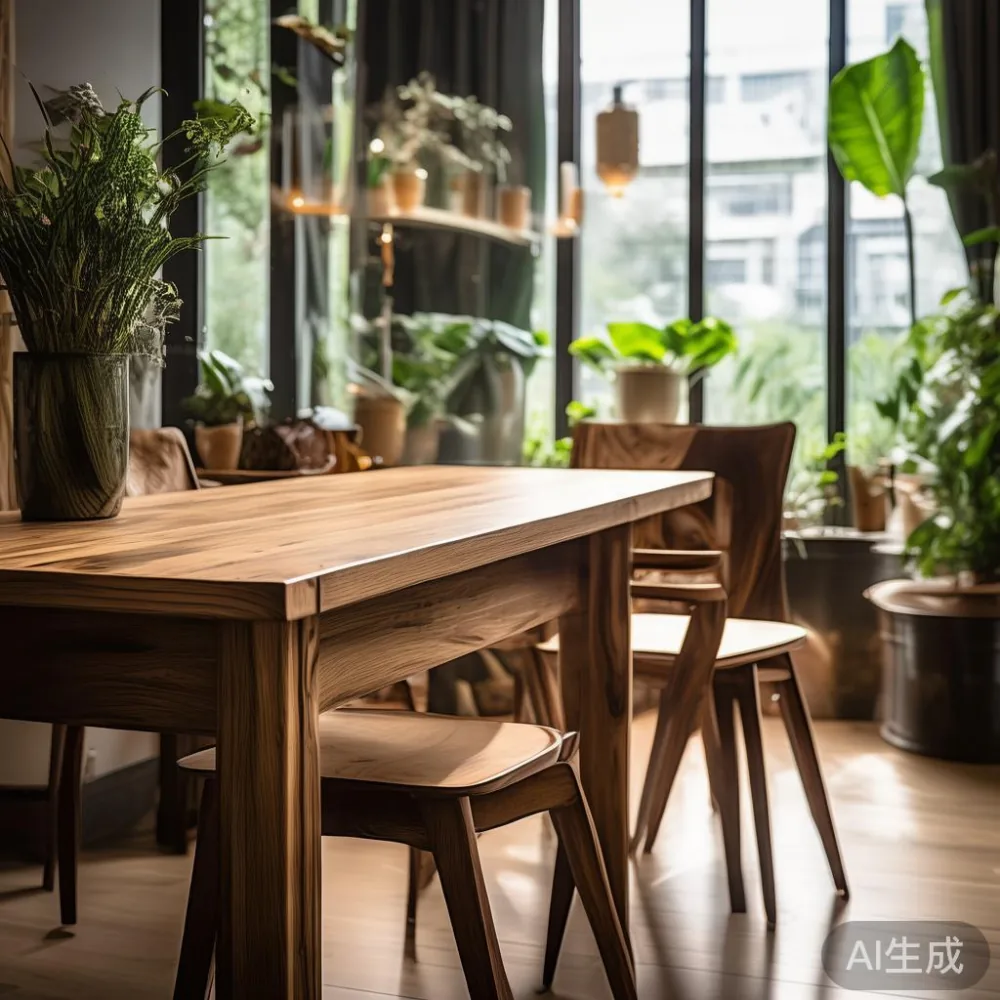
This guide is written from the workshop floor rather than a marketing deck. We make solid wood dining tables, bed frames, wardrobes, nightstands, and marble side tables at our Foshan facility, exporting to more than fifteen countries, and the questions Singapore customers send us are remarkably consistent. They want a dining table that seats six on Saturday, four on Monday, fits through a service lift, and still leaves enough light to read by on a Tuesday evening. The answers below are based on those conversations, our showroom measurements, and one particularly tricky delivery I handled last month to a 4-room HDB in Punggol.
How big is a Singapore HDB living room, in actual centimetres?
Most 3-room HDB flats in estates built after 2010 offer a combined living-and-dining footprint of roughly 10 to 12 square metres. A 4-room flat typically gives you 13 to 16 square metres, and a 5-room flat around 17 to 22 square metres. These are usable floor areas, not the brochure number on the resale listing. After you deduct 40 to 50 cm of skirting, a TV console depth of 35 to 45 cm, and a circulation gap of 90 cm in front of the corridor door, the practical rectangle left for a dining table is usually narrower than owners expect.
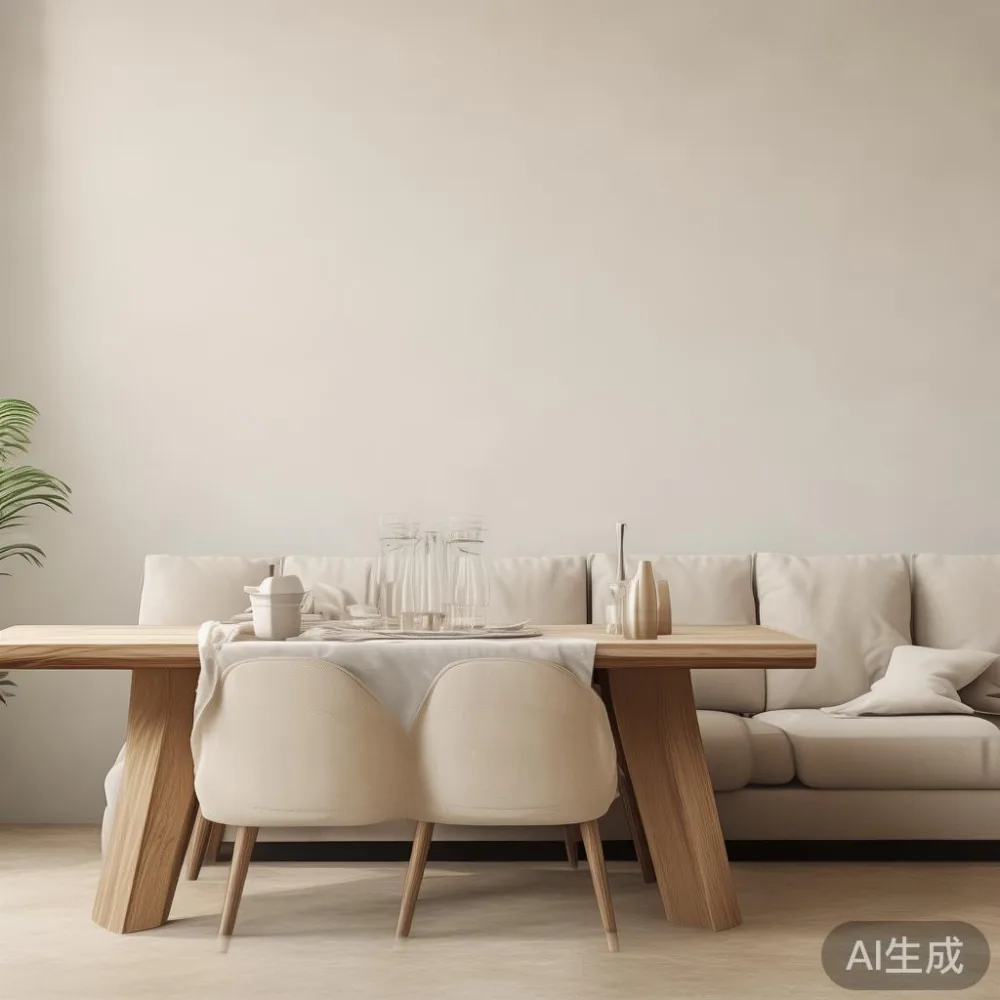
I keep a tape measure in my bag for site consultations. Last month I visited a resale 4-room flat in Punggol Waterway terrace with a stated living-and-dining area of 14.8 square metres. Once we measured between the dry kitchen ledge and the wall opposite, the clear span was 285 cm wide by 240 cm deep. That sounds like plenty until you remember that a comfortable dining chair needs 55 to 60 cm of pull-out clearance behind it, and a six-seat dining table demands at least 75 cm on every side for people to pass behind seated guests.
If your living room opens directly onto the service yard or the kitchen entrance, subtract another 10 to 15 cm for the door swing. Tampines GreenRidges and Bedok Reservoir flats often have this layout. The point is simple: measure the wall-to-wall or wall-to-furniture clearance after wall is, not the planroom figure.
What dining table dimensions actually fit an HDB living room?
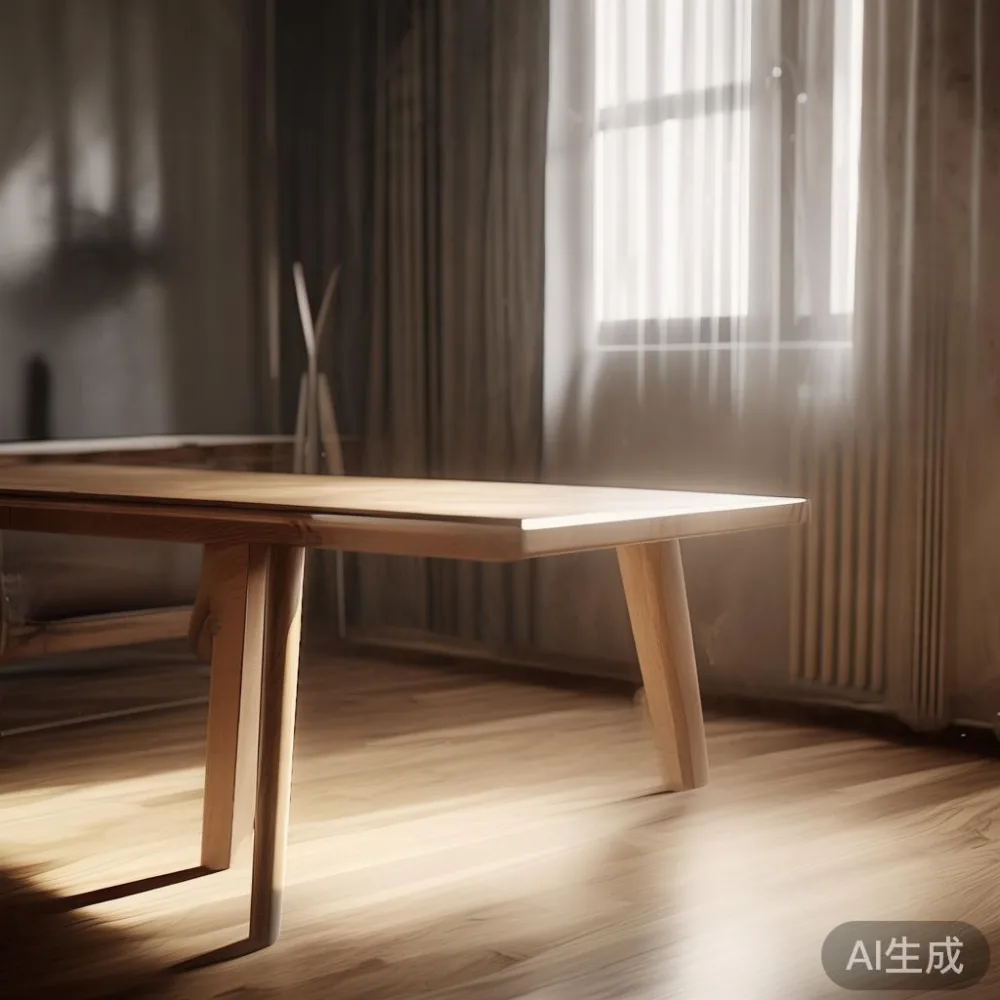
For most 3-room HDBs, a rectangular dining table of 120 cm by 70 cm seating four comfortably is the practical ceiling. For 4-room flats, a 140 cm by 80 cm dining table seating four to six is workable, provided you keep at least 75 cm of behind-chair clearance. For 5-room flats and most condos, a 160 cm by 85 cm or 180 cm by 90 cm dining table seats six to eight without crowding the circulation path.
Round and oval dining tables behave differently. A round dining table of 90 cm diameter seats four snugly, 110 cm seats four with elbow room, and 130 cm seats six. Oval shapes give you the same seating capacity as a rectangle but with a smaller footprint, which is why we recommend them for compact HDB living rooms in Toa Payoh and Queenstown where the corridor between the dining zone and the sofa is narrow.
Height matters as well. The Singapore Standard dining height is 73 to 76 cm, which pairs with a seat height of 45 to 48 cm. Anything below 70 cm feels like a coffee table, anything above 78 cm feels like a bar counter and will leave your elbows lifted uncomfortably. If you plan to pair the dining table with a bench instead of chairs, allow 90 cm of bench length per adult and the user enjoys a 25 percent space saving over individual chairs.
How much walking space do you really need around a dining table?
Allow 60 cm of clearance between the dining table edge and any wall or tall cabinet to push a chair back. Allow 75 to 90 cm if that zone is also a passage from the front door to the kitchen, which is the typical HDB layout. Allow 100 to 110 cm if two people need to pass each other behind a seated diner, for instance when carrying hotpot from the kitchen to a six-seat dining table.
These numbers are not theoretical. The HDB corridor outside your unit door is generally 1.2 to 1.5 m wide, but the corridor between the lift lobby and the stairwell can narrow to 1.1 m on older blocks in Bedok and Tampines. We have measured every one of them with a steel tape. The reason this matters for your dining table choice is that an extendable dining table stored at 140 cm can sometimes feel cramped, while its fully extended 200 cm length is fine for hosting because guests only gather around it twice a year. Plan for the extended configuration when measuring circulation, not the everyday footprint.
If your living room doubles as a home office, add another 60 cm of depth for an office chair behind the workstation, and keep the dining table at least 1.2 m away so the office chair does not collide with seated diners. This is a frequent conflict in Punggol studio apartments and one-room flats rented to young couples.
Will the dining table fit through the lift and the corridor?
This is the question that decides whether a beautiful dining table ends up in your home or back at the warehouse. Singapore HDB lift cars come in two common sizes. The smaller single-leaf lift on older 3-room blocks offers a door width of 80 cm and a cabin depth of 130 cm. The larger double-leaf lift on most 4-room and 5-room blocks offers a door width of 90 to 100 cm and a cabin depth of 160 to 180 cm.
A 180 cm long dining table will not enter a 130 cm deep lift. A 160 cm dining table will enter most modern lifts only if it is tilted vertically, which works for solid wood but not for marble table tops. Marble dining tables or marble-top tables weighing over 80 kg should be delivered as a single slab only after the lift has been measured. Corridors inside HDB blocks are generally 1.2 to 1.5 m wide, which accommodates a 1.6 m dining table carried flat if the table legs are removable.
At MIDHILL, every dining table over 150 cm long ships with detachable legs and a two-piece base. Last month I dispatched a 180 cm by 90 cm solid wood dining table with a French light luxury finish to a customer in Punggol. The cabin depth was 150 cm. We removed the four legs, stood the tabletop vertically, padded the edges with 10 mm felt, and loaded it into the lift in under four minutes. The same tabletop laid flat would have required a stairwell climb, which most HDBs discourage for safety and insurance reasons.
Where can I buy a corner sofa in Singapore?
Yes, you can find a corner sofa in Singapore through international solid wood furniture makers that ship directly from the factory, and the typical lead time is 25 to 40 days from order to doorstep. A corner sofa is a logical companion to a four-seat dining table in a 4-room HDB because both pieces share the same modular footprint and can be reconfigured when you move flats.
For a typical 4-room HDB living room of 14 square metres, a corner sofa measuring 240 cm by 180 cm leaves a comfortable L-shaped seating arrangement around a 140 cm dining table, with the open end of the L facing the TV console. The total seating capacity reaches seven, matching the six-seat dining table beside it, which is the natural pair for weekend hosting. Many Singapore buyers pair the corner sofa with the same wood tone as the dining table for visual cohesion, for example a French light luxury oak finish on both pieces. If you are browsing for a corner sofa locally, the same factory-direct makers who supply the dining table will also build the sofa, nightstand, and bed frame to match, which solves the colour-matching problem that confuses most buyers at multi-brand showrooms.
One caveat: a corner sofa deeper than 95 cm will eat the circulation path you measured for your dining table. Keep the sofa depth at 85 to 90 cm and choose firm cushions over feather if you intend to use the dining table beside it every day, because soft cushions slump and the sofa edge creeps forward by 5 to 8 cm within six months.
How does light luxury styling change the dining table size you need?
Light luxury styling, whether French light luxury, American light luxury, or post-modern light luxury, tends to use lighter wood tones such as white oak, ash, and pale walnut. These finishes visually expand a room by 10 to 15 percent compared with dark rosewood or mahogany, which is why they suit HDB living rooms. A 140 cm dining table in pale oak reads as smaller than the same table in dark walnut, even though the centimetres are identical.
French light luxury tends toward slim 6 to 8 cm tabletops, cabriole or sabre-tooth profiles, and subtle carvings on the apron. American light luxury goes chunkier, with 10 to 12 cm tops and shaker-style legs. Post-modern light luxury, which is the line we have expanded most in 2024, uses geometric pedestal bases that free up legroom underneath, allowing you to seat two extra diners at the corners of a 150 cm table that would otherwise seat only four.
If you are pairing the dining table with a marble table or a marble-top side table, the marble adds 18 to 22 kg of weight per square metre. A 140 cm by 80 cm marble-top dining table weighs roughly 65 kg empty, versus 38 kg for the same table in solid ash. Confirm the lift weight limit before ordering: HDB lifts typically carry 630 to 1,000 kg, and a move-in day with a marble dining table, a solid wood bed frame, and a wardrobe can approach that ceiling. We have refused to ship marble tops above 90 kg into lifts rated below 800 kg for safety reasons.
How do you decide between a 4-seat, 6-seat, or extendable dining table?
Start with the number of people in your household, then add the largest group you host at least four times a year. A couple who occasionally hosts their parents should buy a 4 to 6-seat extendable dining table that runs from 120 cm to 170 cm. A family of four who hosts the extended family during Chinese New Year should buy a 6-seat fixed table of 150 to 160 cm, since extendable tables develop lippage in the centre over five to seven years.
Extendable dining tables use a butterfly leaf or two end leaves. Butterfly leaf tables are stronger because the extension sits in a cavity, but the joinery must be precise to within 0.5 mm or the leaf rocks. End-leaf tables are simpler and cheaper, but they require a 60 cm storage space along the longest wall when not in use. For a typical 4-room HDB, an end-leaf table with a 140 cm closed length and a 200 cm open length is the most practical compromise.
Round extendable dining tables exist but the mechanism is heavier and the table gains roughly 40 cm of diameter when opened, which often exceeds the available clearance in a 4-room flat. We recommend fixed round tables for HDBs and reserve extendable mechanisms for rectangular shapes.
What does a quality solid wood dining table cost in SGD?
A factory-direct solid wood dining table of 140 cm by 80 cm in ash or oak, with a French light luxury profile, currently lands in Singapore between SGD 1,150 and SGD 1,750 landed, inclusive of GST at 9 percent and door-to-door delivery for orders above SGD 350. The same table in solid walnut lands between SGD 2,150 and SGD 2,950. A marble-top variant of the same size lands between SGD 2,400 and SGD 3,250.
Larger 160 cm to 180 cm tables in solid wood run SGD 1,850 to SGD 3,400 landed. Extendable models with butterfly leaf mechanisms add SGD 350 to SGD 600 to the price. A matching solid wood bench in the same finish costs SGD 380 to SGD 650 depending on length. A set of six solid wood dining chairs in ash, upholstered in fabric, costs SGD 95 to SGD 160 per chair.
For context, a comparable solid wood dining table from a Singapore showroom brand of similar size typically retails between SGD 2,600 and SGD 4,200 before GST, which is roughly 35 to 60 percent above our factory-direct landed price. The structural warranty on our tables runs ten years against frame cracking and joint failure, and refinishing is offered for the lifetime of the piece at cost. We have refinished tables from customers who bought from us in 2012.
How long does delivery and installation take, and what about returns?
From order confirmation in Singapore, a stocked in-stock or made-to-stock dining table ships from our Foshan warehouse in 7 to 10 days and arrives at the HDB doorstep 18 to 25 days after order, including Singapore customs clearance. Custom sizes add 10 to 15 days to the production schedule. Marble-top tables add 7 to 10 days because the stone is sourced and cut to order.
Installation is included for every dining table over 140 cm. Two delivery specialists carry the legs and tabletop to the unit, assemble the base on a protective blanket, level the table using shims, and remove all packaging. The visit takes 45 to 75 minutes. For high-floor HDBs without a service lift, a surcharge of SGD 80 to SGD 180 applies depending on the floor level, because the legs and tabletop are walked on stairs.
Returns are accepted within 14 days of delivery for stocked sizes in original packaging. Custom sizes and marble-top tables are non-returnable unless the piece fails inspection at delivery, which covers visible defects, unevenness greater than 3 mm across the tabletop, and joint gaps exceeding 1 mm. We have replaced fewer than 0.6 percent of dining tables shipped to Singapore over the past three years, most of them because the customer remeasured after delivery and the table was 5 cm too long for the intended wall.
How should you measure before ordering, and what is the one mistake to prevent?
Measure the wall-to-wall or wall-to-furniture clearance at three points: the narrowest point, the widest point, and the height of any air-conditioner ledge or window sill between 70 cm and 90 cm from the floor. A dining table taller than the ledge will not slide into position. Photograph the path from the lift lobby to your dining room, including any turns tighter than 90 degrees, and send the photos to the supplier before ordering.
The single most common mistake is buying a dining table that fits the dining zone but blocks the corridor between the living room and the back door. I saw this last month in a 4-room flat in Sengkang where the owner had chosen a 180 cm dining table for a 285 cm dining zone. The table fit beautifully, but its 90 cm width combined with the door swing reduced the corridor between the table and the kitchen to 35 cm, which is below the 60 cm minimum needed to push a chair back. We exchanged it for a 160 cm by 80 cm extendable model and the room breathed again.
A second frequent mistake is ignoring the air-conditioner condensing unit on the service yard wall. The drain pipe and cabling often intrude 12 to 18 cm into the room. A dining table pushed flush against that wall will block access to the service panel. Leave at least 25 cm between the dining table edge and the AC piping.
Finally, remember that a solid wood dining table will move seasonally by 1 to 2 mm in width and length as humidity shifts between Singapore's dry February and wet November. Order 10 mm smaller than your tightest clearance and the piece will live happily in your flat for the next decade. A correctly sized dining table is the piece of furniture you stop noticing after a week, and that is exactly the point.