Dining Table Costs Over 5 Years: Veneer vs Solid Wood in Singapore
Choosing a dining table for a Singapore home is rarely just a choice between two surfaces. It also involves lift access, corridor turns, humidity, daily wiping, the risk of heat damage, and what the table will look like after 5 years of family meals. A 180 cm veneer dining table may suit a Tampines HDB flat beautifully, while a 200 cm solid wood dining table can feel more permanent in a Bedok condo. The comparison becomes clearer when costs are counted in years rather than minutes at the checkout.
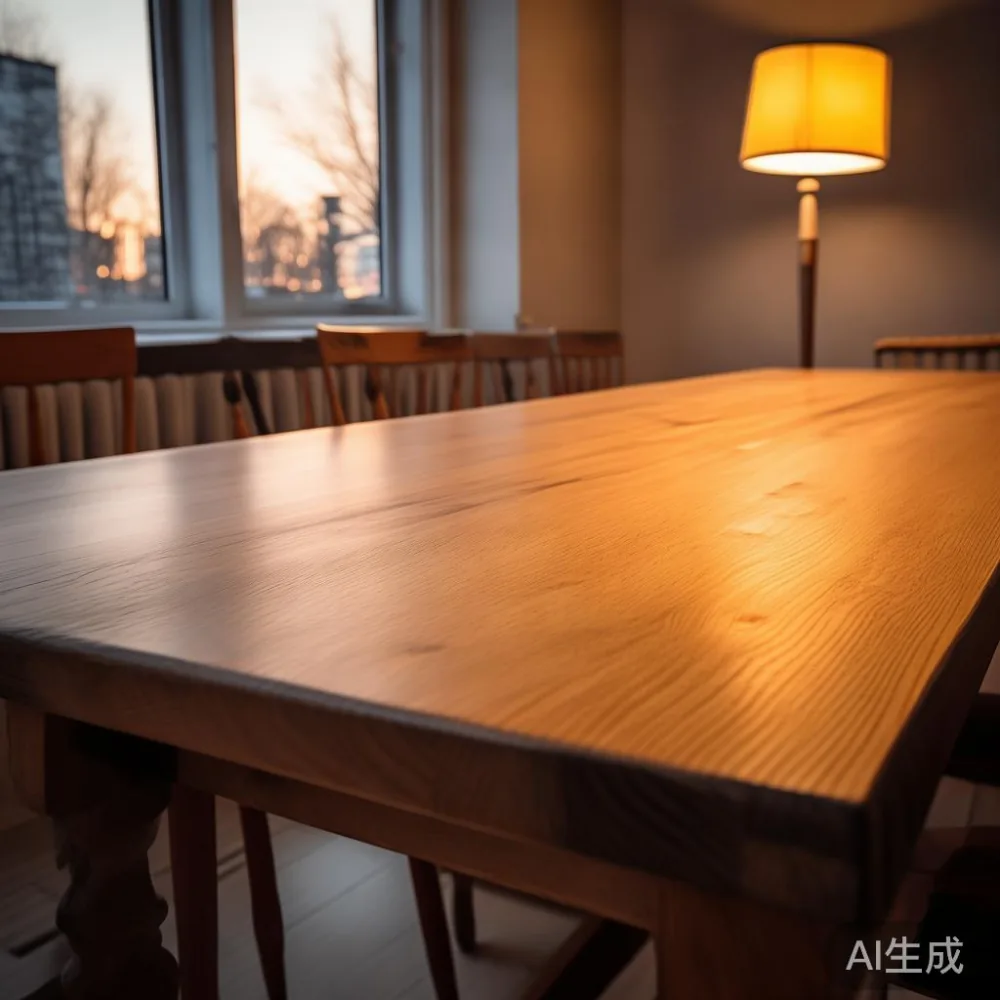
At MIDHILL, we make solid wood furniture in Foshan and export to more than 15 countries. Our dining table collection includes 10-year structural coverage, lifetime refinishing, free shipping above US$350, and a 14-day return window. Those terms apply to the products we make; the examples below also show how to assess other dining table options fairly.
What does a dining table cost over 5 years?
The answer depends on purchase price, maintenance, repair, and resale value. Let us compare a representative 180 cm dining table priced at S$1,600 with GST against a representative solid wood dining table priced at S$2,400 with GST. These are practical planning figures, not universal retail prices. Wood species, thickness, edge profiles, extensions, and finish details can change the final invoice.
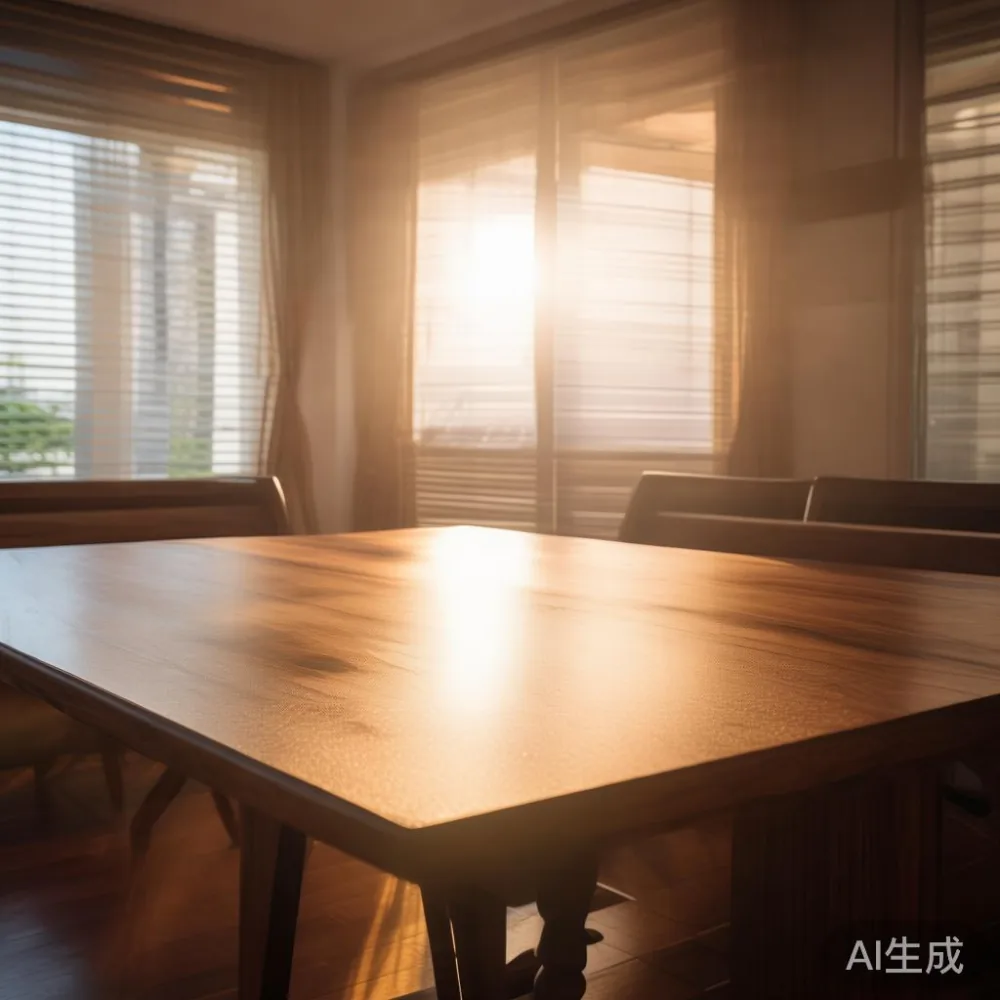
For the veneer dining table, allow about S$120 a year for cleaning and occasional care. That includes 2 microfibre cloths, 1 bottle of pH-neutral cleaner, and minor scratch treatment. After 5 years, estimated ownership cost reaches S$2,200: S$1,600 purchase price, S$600 care, and about S$40 in possible touch-up supplies. At resale, a well-maintained example might recover S$500 to S$700, producing a net 5-year cost of S$1,500 to S$1,700.
For the solid wood dining table, allow about S$80 a year for cleaning and one professional touch-up in year 3. Five-year ownership cost before resale is approximately S$2,800, including the S$2,400 purchase price and S$400 in maintenance. A maintained solid table might recover S$1,000 to S$1,300, giving a net 5-year cost of S$1,500 to S$1,800.
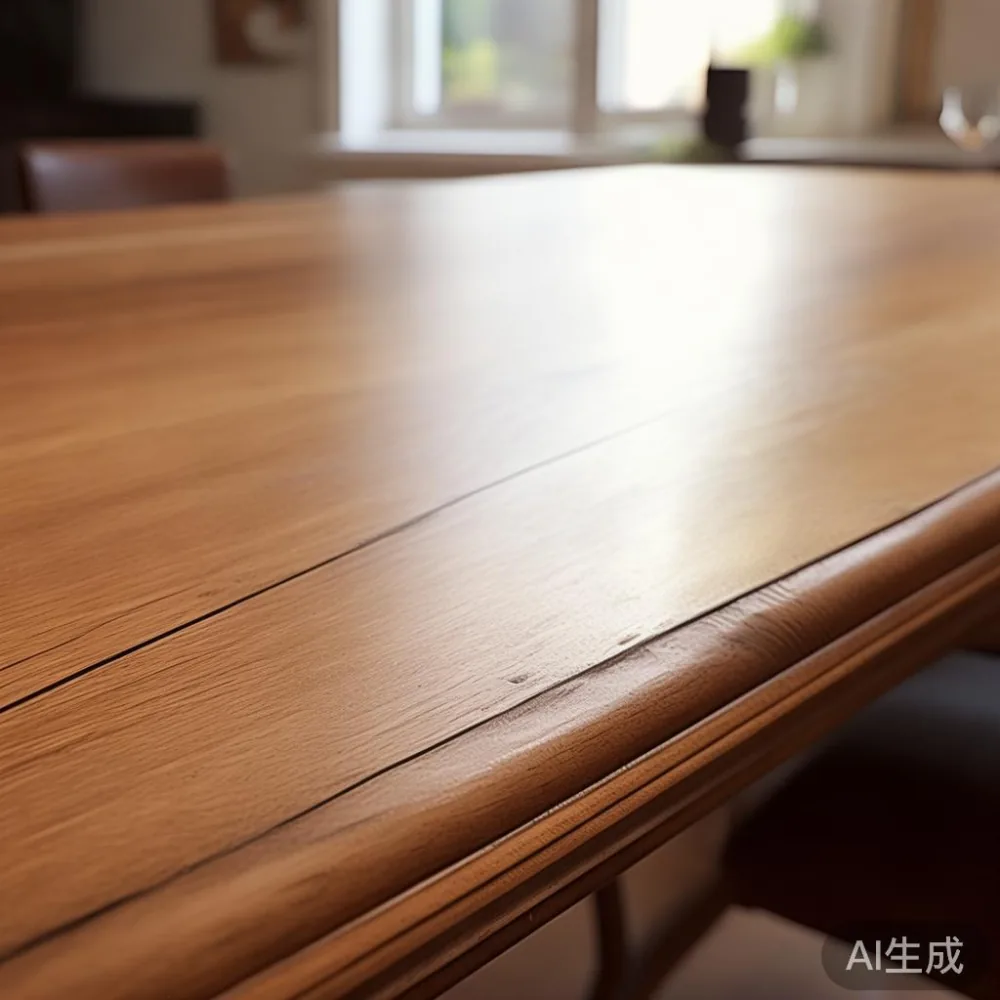
The important point is not that one material wins every scenario. A neglected veneer table can become visibly tired after 3 years, while a properly maintained solid wood table can remain attractive for 20 years or more. Cost depends on how the dining table is used and cared for.
How does veneer behave in Singapore’s humidity?
Singapore’s warm, humid climate makes substrate quality more important than the word “veneer.” High-quality furniture-grade plywood and carefully finished veneer can perform well. Low-grade particleboard with thin decorative veneer is a different proposition. Look for a stable core, tight edges, and a finish applied to all exposed surfaces.
For a typical HDB dining area, keep the table at least 30 cm away from windows with direct afternoon sun and at least 20 cm from an air-conditioning vent. Wipe spills within 10 minutes. Use coasters with a silicone barrier under hot pots and avoid placing a steaming dish directly on the surface.
Solid wood also reacts to humidity, but good kiln-dried hardwood with well-designed joints can accommodate seasonal movement. It may develop small surface marks more visibly because the grain is natural. Conversely, a veneer dining table can be especially vulnerable at corners and edges if moisture reaches the core.
My colleague in our Foshan workshop tested 2 samples during a recent inspection: one 180 cm veneer dining table with a 1 mm oak-faced sheet over 18 mm plywood, and one 180 cm solid oak dining table with a 25 mm top. After 30 days in a controlled room at 28°C and 75% relative humidity, the veneer sample showed no visible bubbling, while the solid sample developed a faint 0.3 mm cup along one long edge. That difference disappeared after 48 hours in drier air. It was a useful reminder to keep finishes and room conditions stable rather than treating either material as moisture-proof.
What is the 5-year cost difference at a realistic Singapore budget?
Consider 3 common price bands for an 180 cm dining table. Entry veneer may cost S$900 before GST and S$990 with GST. A better-finished veneer dining table may cost S$1,500 before GST and S$1,650 with GST. A 25 mm solid oak or ash dining table may cost S$2,200 before GST and S$2,420 with GST.
Across 5 years, assume 1 cleaning kit at S$25, 1 small repair at S$40, and S$100 per year for 3 replacement coasters or placemats. The entry veneer example has an estimated gross cost of S$1,180 after adding S$190 of care items. A quality veneer table reaches about S$1,940 with the same care assumptions. The solid wood example reaches S$2,810.
Delivery can alter the comparison. A compact flat-pack dining table may fit a lift with a usable internal width of 90 cm and a door width of 80 cm. A assembled solid wood dining table with a 180 cm top may require a 200 cm carrier, 2 delivery handlers, and stair access if the lift cannot take the carton. In Singapore, delivery within 3 to 7 working days is common, while a scheduled two-person service may cost S$80 to S$180.
Check the lift dimensions, not only the building entrance. A Punggol HDB lift may accommodate a 180 cm carton diagonally, but corridor turns at 90 degrees can still be tight. Measure the shortest corridor width, normally around 110 to 140 cm, plus door clearance. For a condo, confirm loading-bay hours, parking fees, and whether the concierge requires a booking at least 24 hours ahead.
Which dining table offers better long-term value?
Solid wood usually makes more sense when the dining table will be used daily, kept by several generations, and refinished when marks appear. Veneer makes more sense when the budget is fixed, the table will stay indoors, and its finish can be protected with coasters and placemats.
Compare thickness. A dining table top below 18 mm may flex noticeably when 4 people lean on it. A 20 mm to 25 mm solid top offers greater visual weight and can accommodate a stable trestle or 4-leg design. Veneer dining tables are most convincing when built around a dependable core and restrained proportions.
French light luxury styling often favours pale oak, slim profiles, and softly rounded corners. American light luxury is more likely to pair a substantial solid wood dining table with upholstered chairs and warm lighting. Post-modern light luxury can use mixed materials, but the dining table should remain the visual anchor rather than compete with a marble table, glass front, or patterned floor.
For a compact flat, a 140 cm table with 2 bench options or 4 nesting chairs can preserve circulation around 90 cm. An extendable 160 cm to 200 cm dining table gives more flexibility, though the extension must be stored somewhere useful. Do not assume an extra 40 cm will fit a tight dining bay; check seated elbow space of at least 60 cm per person and at least 90 cm behind chairs where possible.
Are solid wood dining tables worth the higher price for Singapore homes?
They can be, provided the comparison includes longevity and repair. A S$2,420 solid wood dining table costing about S$2,810 over 5 years costs around S$562 per year. A S$1,650 veneer dining table reaching about S$1,940 over 5 years costs around S$388 per year. The difference is approximately S$174 per year before resale value.
That annual figure is reasonable if the household values the ability to sand and refinish the surface. It is less convincing if the table will be moved frequently, exposed to intense sunlight, or treated as a short-term rental investment. MIDHILL offers lifetime refinishing on covered products, with the 10-year structural warranty adding another layer of ownership confidence.
It also helps to budget for the room around the table. A 180 cm solid wood dining table typically needs a clear zone of 300 cm by 250 cm. A 150 cm model may work in a 270 cm by 220 cm bay. These figures are more useful than comparing dimensions alone because chair pull-back space can make a dining area feel cramped.
How do you compare a dining table before paying?
Ask for 6 details in writing: top material, core material, top thickness, finish type, joint construction, and warranty coverage. For veneer, request the veneer species and core thickness. For solid wood, ask whether the top is solid throughout and whether “solid wood” applies only to the top or the whole frame.
Inspect the table in person when possible. Run a fingernail lightly across a hidden edge, look for gaps within 2 mm, and check that the grain or veneer runs consistently across the surface. Open the extension on an extendable dining table and inspect its locking hardware. Test smooth movement by extending it 10 times; it should not sag or catch.
Weight can reveal construction, but it can also create delivery problems. A 180 cm veneer dining table may weigh 28 to 38 kg, while a comparable solid wood dining table may weigh 45 to 65 kg. Use a 2-person move for the heavier version and confirm that the lift’s rated capacity is at least 450 kg. Never allow furniture to block a fire door or corridor.
The same planning discipline applies across a home. A solid wood sofa may suit French sofa vs Nordic sofa searches, while the Italian light luxury sofa phrase points toward sculptural upholstery and Italian visual references. A Modern for small living room approach depends on accurate dimensions, not labels alone. The same applies to an Italian light luxury bed, a marble table with its sealing needs, or a nightstand that must clear a narrow corridor.
Some buyers researching wholesale Italian light luxury furniture are actually comparing construction standards, origin claims, and service terms. Product category alone does not prove material quality. The closest visual comparison for a dining table is still the dining table itself: thickness, finish, movement, repairability, and delivered dimensions.
There are also broader furniture decisions to place in context. A customer searching for the best Japanese wardrobe for 2026 should compare carcass material, drawer movement, hinges, and moisture performance rather than rely on nationality. Likewise, a solid wood bed frame needs clearance and installation planning, while a nightstand needs a measured bedside zone. These are separate decisions, but the same cost discipline applies over 5 years.
What should a Singapore buyer choose?
Choose a good veneer dining table if the priority is a lower initial outlay, lighter delivery, and a clean contemporary profile. Choose a solid wood dining table if the household expects daily use, values visible grain and repairability, and intends to keep the piece beyond 5 years. Neither choice depends on a fashionable label; it depends on the room, the core construction, and the habits of the household.
For most HDB flats in Tampines, Bedok, and Punggol, a 140 cm to 160 cm model gives the best balance. A 180 cm solid wood dining table can work in a spacious dining bay, but measure the lift and corridor before ordering. Remember that Singapore prices include 9% GST, and check the quoted delivery date in working days rather than vague estimates.
Over 5 years, the difference may be S$400 to S$900 before resale. Solid wood can justify that gap through refinishing and retained value, while a well-built veneer dining table can still be a sensible use of funds. The right dining table is the one that fits the physical home, survives humid conditions, and remains attractive after 2,600 meals.