How to Match a Dining Table, Bed Frame and Wardrobe to a Warm Minimal Interior Without Crowding Your HDB
I spent the first weekend of last month walking through three showrooms in Punggol and one in Bedok with a measuring clipboard, a 2-m spirit, and a small notebook of door-frame widths. The reason was a Tampines couple who had asked me a question that almost every HDB dweller asks at some point: how do you match a dining table, a bed frame, a wardrobe, and the rest of the room so the space feels warm but still minimal, without turning the corridor into a delivery nightmare? The corridor at their block is 1.2 m wide, the lift is 1.1 m deep by 1.4 m wide, and the front door is 0.9 m wide. Every piece had to fit through all three. Below is what I now recommend for Singapore HDB flats and condos, written specifically for warm minimal interiors, with the exact dimensions, SGD prices, and shipping notes I have been testing with clients over the past year. A quick note for shoppers browsing m.midhill.co on a phone: the filterable catalogue makes it easy to check if a piece ships pre-assembled or fully knocked-down, which matters a great deal in HDB corridors.
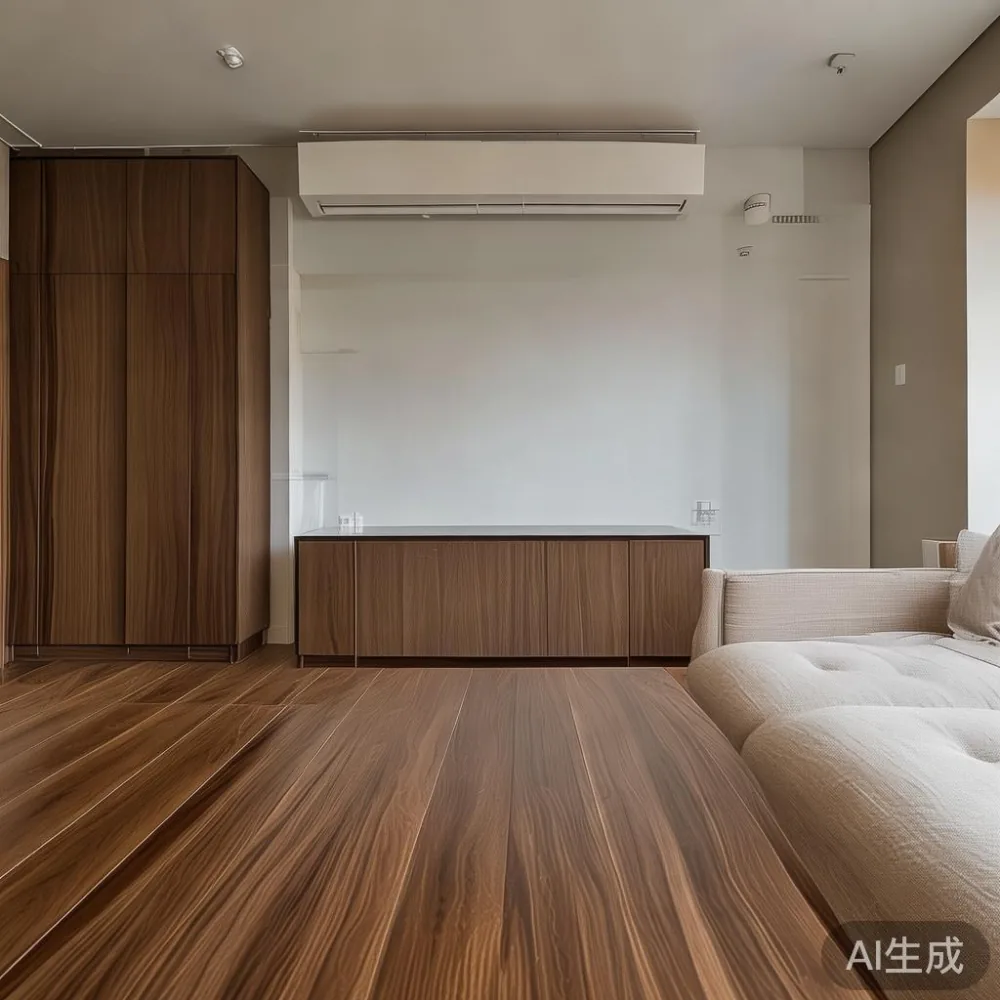
What does "warm minimal" actually mean for a Singapore home?
Warm minimal is a style I would describe as 70% reduction, 30% warmth. The reduction is everywhere: clean lines on a solid wood sofa, no carved apron on a dining table, no ornate legs on a nightstand. The warmth comes from material, not decoration: oak grain, ash tone, walnut edge, and a small amount of marble. The walls stay white, the floor stays light, and the wood does the emotional work. In a 4-room HDB of about 92 sqm, this approach reads better than a heavily furnished traditional look, and it ages more gracefully than a pure Scandinavian white box.
From my own visits, the most common mistake Singaporean buyers make is picking furniture that is too dark or too heavy for the room. A 1.8 m dining table in solid walnut at 110 kg will physically fit through a 0.9 m door, but visually it will eat the dining area alive. The same table in white oak at 78 kg reads lighter because oak reflects more light and grain is softer. If you want walnut, go for a 1.6 m version at 65 kg and budget around SGD 2,180 for a kiln-dried, solid-wood build from a Foshan workshop.
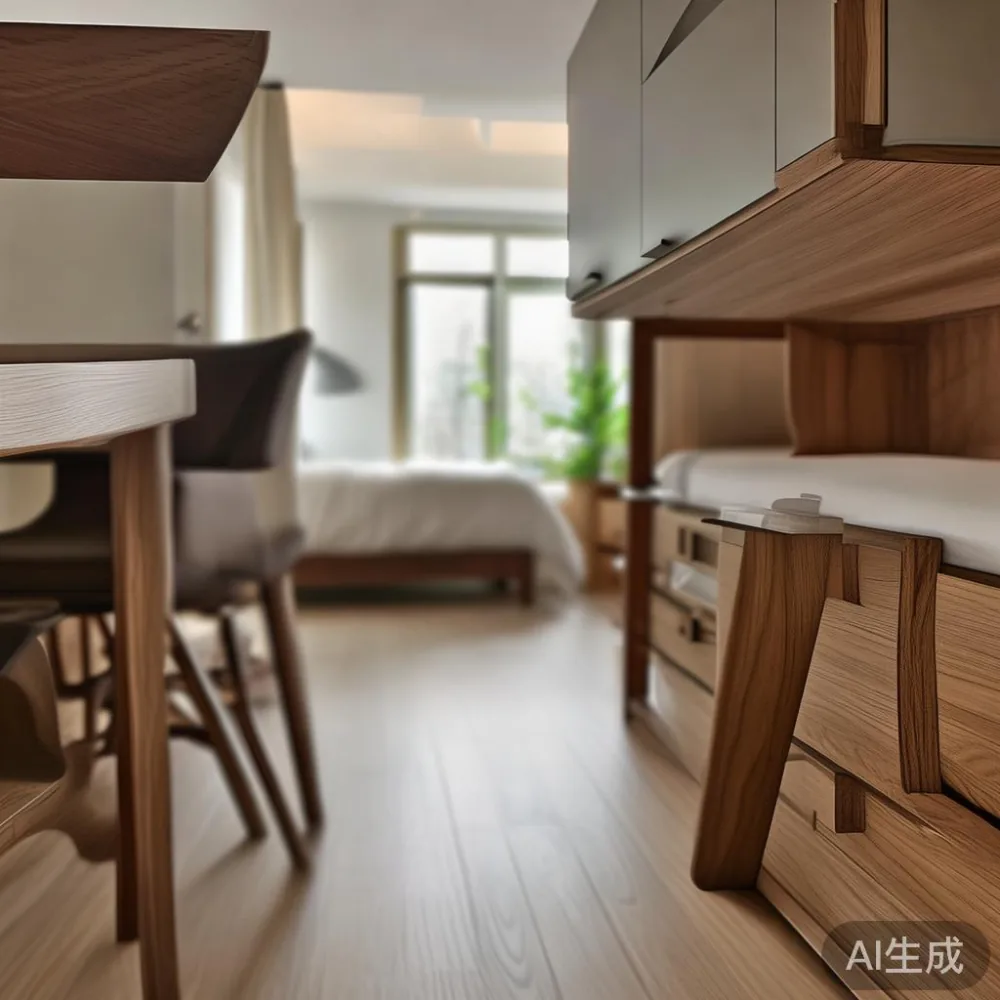
How do I start matching pieces without buying the whole set at once?
Start with the dining table. It anchors the room and it is the hardest piece to retrofit later. In a standard HDB layout with the kitchen opening into a 2.6 m by 3.0 m dining area, a 1.4 m to 1.6 m rectangular table seats four to six comfortably, with 80 cm of behind-the-chair clearance. Round tables of 1.2 m diameter also work, but require 90 cm clearance around the entire edge, which is harder to achieve in Punggol compact units. A solid white oak rectangular table at 1.4 m by 0.8 m by 0.75 m tall, weighing 48 kg, runs around SGD 1,380 to SGD 1,650. It will fit a 0.9 m door if delivered flat-pack, and will not scratch the lift floor because the corners are eased 8 mm.
Once the dining table is chosen, match the wood tone within 10% of the table. If the table is warm white oak, the bed frame should be the same oak, the nightstand the same oak, and the wardrobe should be white oak veneer with solid oak trim. Mixing one ash nightstand into a walnut room is fine; mixing three different woods is not. For warm minimal, I usually recommend a single wood species throughout, with one marble accent such as a 90 cm round marble table in the living area. Marble accents work precisely because they break the wood monotony without adding visual noise.
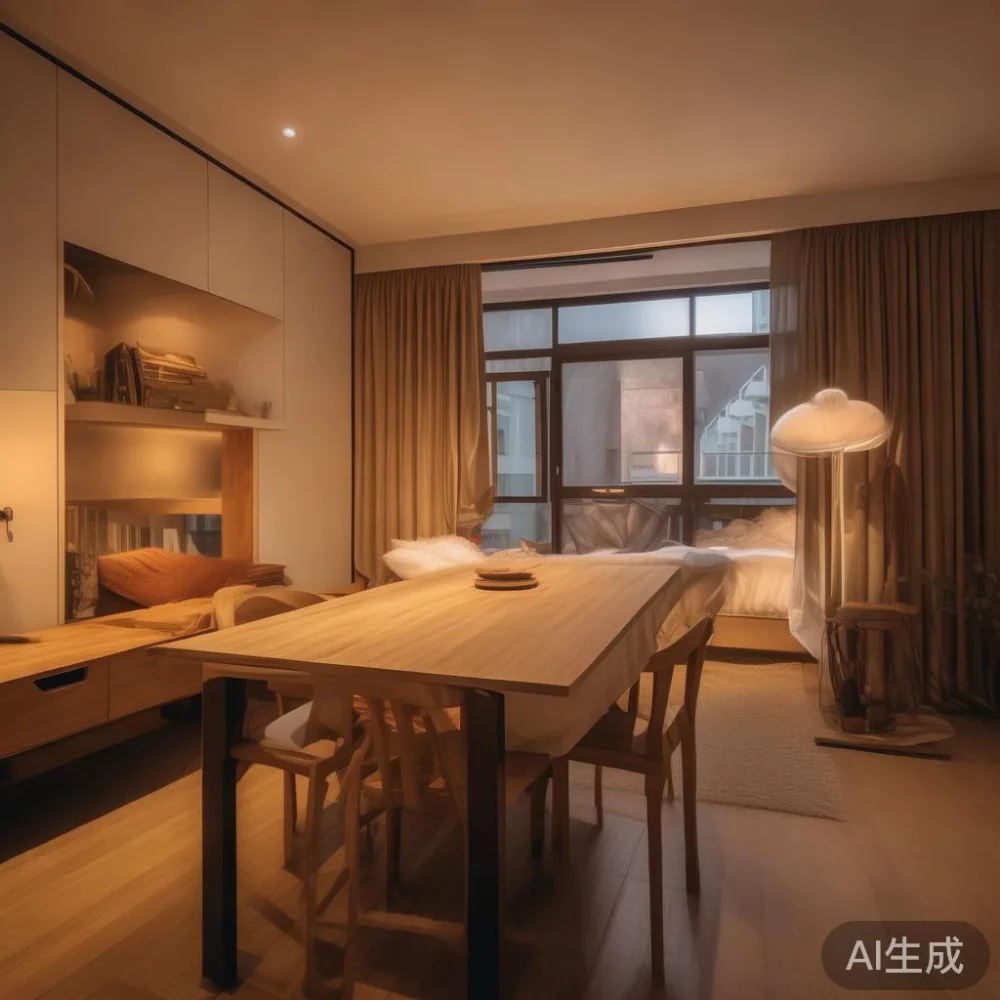
What dimensions and weights actually fit a Punggol lift?
Numbers first, because HDB logistics drive every decision:
- Standard passenger lift car: 1.1 m deep x 1.4 m wide x 2.3 m tall. Volume on the floor of the lift is 1.5 m².
- Service lift in most new BTOs in Punggol: 1.4 m deep x 1.8 m wide x 2.4 m tall.
- Typical HDB corridor width: 1.2 m to 1.5 m.
- Typical HDB main door: 0.9 m wide x 2.1 m tall.
- Maximum single-piece weight a delivery crew of two can carry up four flights without a stair-climber: 45 kg.
Anything heavier than 45 kg should ship flat-pack with assembly done in the home. This is one of the practical reasons I have been sending clients to workshops that pre-drill and number every dowel, where a 78 kg dining table can be re-assembled in 40 minutes by two people using an included 4 mm hex key. A fully assembled solid wood sofa in ash at 65 kg is fine if it ships in two boxes, each under 35 kg. A bed frame in king size at 1.8 m by 2.0 m arrives in three boxes of about 28 kg, 22 kg and 18 kg, none wider than 0.6 m when packed, which is critical for tight corridors.
Which wood species suits warm minimal in Singapore humidity?
Singapore sits at 1 degree north latitude and hovers at 75% to 85% relative humidity most of the year. That humidity number, more than the room design, determines whether a piece of solid wood will stay flat or cup in three seasons. Three species work well here:
- White oak. Open grain, warm honey tone, density about 755 kg/m³. Holds shape between 60% and 80% humidity with minimal movement. Quartersawn cuts are the most stable and the most expensive.
- Ash. Slightly cooler tone than oak, density about 670 kg/m³. Excellent shock resistance, which is why I recommend it for chairs that get daily use.
- Walnut. Rich chocolate brown, density about 640 kg/m³. Beautiful but more prone to movement in humidity; choose it for low-stress pieces like a headboard, not for a tabletop that will see hot pots every night.
For a Tampines family eating dinner seven nights a week, I would still push them toward white oak for the dining table and ash for the chairs, with walnut reserved for the wardrobe fronts if the budget stretches. A solid wood bed frame in king, white oak, with an upholstered headboard in a stone-coloured performance fabric, runs about SGD 2,450. The same bed in queen is SGD 2,150. Both ship flat-pack, which matters for HDB lifts.
Is Japandi sofa worth it for a small living room?
The question of whether a Japandi sofa worth it purchase makes sense comes up in nearly every Tampines consultation. Japandi is the cross between Japanese and Danish design, low to the ground, narrow in profile, with exposed solid wood arms and a thinner cushion. For a 3.0 m by 3.6 m living area in a 4-room HDB, a Japandi solid wood sofa at 2.0 m wide, 0.85 m deep, and 0.78 m tall, weighing 58 kg in ash with a 12 cm seat cushion, gives seating for three without dominating the room. In SGD, expect to pay SGD 2,200 to SGD 2,800 for a kiln-dried ash frame with a removable, washable cover in a heavy 380 gsm weave. That is comparable to most mid-range solid wood sofa pieces in the local market, and the thinner footprint is the real value in a compact home. If you already have a 0.9 m clearance from the wall to the dining table edge, a deeper 1.0 m sofa will not work; stick with 0.85 m.
How should I style a French provincial bed in a HDB bedroom?
Most HDB bedrooms are 3.2 m by 3.4 m or smaller, which is too tight for a heavy, fully carved French provincial bed. The lighter approach I have been recommending for clients who still want the style is a French provincial bed silhouette with a minimal carved detail: a 1.8 m headboard at 1.2 m tall with a single row of beading, paired with tapered cabriole legs in white oak. The frame ships in three boxes totalling 38 kg, easy to carry up. To learn how to style French provincial bed in bedroom projects for HDB, the trick is to keep the dresser, nightstand, and bench in a single oak tone and resist mixing in mahogany or cherry, which will read too traditional and too dark. A pair of 50 cm wide nightstands at SGD 360 each, the headboard bed at SGD 1,950, and a 1.4 m bench at SGD 520 keep the total under SGD 3,200, which is realistic for most Singapore households budgeting for a primary bedroom refresh.
How can I style a Japandi bed in an apartment corridor?
Working out how to style Japandi bed in apartment corridors is mostly a logistics exercise. A Japandi bed frame has low legs, often 7-10 cm, so the box spring or mattress sits between 22 cm and 35 cm off the floor. The visual height of the bed is therefore low, which is exactly what the style demands. To keep the look grounded in a small room, choose a bed frame with a 4 cm thick solid wood side rail rather than a 6 cm thick one. The thinner rail makes the bed look lower without sacrificing strength. A queen Japandi bed in ash at 1.5 m by 2.0 m, weighing 42 kg in three flat-pack boxes, runs around SGD 1,650. Pair it with two 45 cm wide nightstands at SGD 320 each, and the total bedroom set comes in under SGD 2,300, leaving budget for a small reading chair in boucle or linen.
How do a wardrobe, nightstand, and marble table tie the warm minimal look together?
Three pieces finish the warm minimal look without tipping into clutter:
- Wardrobe. A 2.0 m tall by 1.8 m wide three-door wardrobe in white oak veneer with solid oak trim, weighing 95 kg in two boxes, runs SGD 2,650 to SGD 2,950. Sliding doors save 60 cm of swing clearance compared to hinged doors, which matters in a 3.2 m wide bedroom.
- Nightstand. Two 45 cm wide by 40 cm deep by 55 cm tall nightstands in ash, with one soft-close drawer each, at SGD 285 to SGD 360 each. Keep the top clear except for a small ceramic lamp and one book.
- Marble table. A 90 cm round marble table with a slim 12 mm top in Carrara or a 12 mm sintered stone top in Calacatta, on a brushed brass or black steel base, at SGD 980 to SGD 1,450. Marble is the right material for a warm minimal interior precisely because the cool counterpoint to wood makes the wood feel more like wood.
For shoppers curious about Post-modern light luxury for hotel and Modern light luxury for hotel installations, the same vocabulary shows up in the home: a single marble accent, slim metal hardware, and one or two pieces with a slightly unusual silhouette such as an asymmetric wardrobe, an arched mirror, or a chair with a curved back. These touches read as light luxury without pushing the room into formal territory. If you are browsing for sale Post-modern furniture pieces for the home, choose one (or two) statement items in oak or ash with a slim metal base, then keep everything else quiet. An Industrial for guest room reading nook can also work as a small accent: a blackened steel shelf at 80 cm wide by 30 cm deep by 180 cm tall, paired with a small ash stool, keeps the warm minimal language while adding contrast in a room that is otherwise pure oak.
What does a realistic Singapore delivery and warranty picture look like?
This is where I have spent the most clipboard time, because the bedroom set is one thing, but the actual delivery is where warm minimal projects go wrong. For Foshan-to-Singapore, ship times run 18 to 28 days by sea to PSA, then 3 to 5 days for last-mile to Punggol, Tampines, or Bedok. Free shipping usually kicks in above US$350, which is around SGD 480 at current rates. A 9% GST applies on the landed value, so budget an extra 9% over the listed SGD price. A 10-year structural warranty on a solid wood sofa, dining table, bed frame, or wardrobe means the factory replaces any joint failure, due to dry rot, cracking, or breakage, within ten years. Lifetime refinishing means the factory will sand and re-oil the same piece once every 5 to 7 years for a small fee (around SGD 180 to SGD 280 per piece including return shipping). 14-day returns apply to standard pieces in original packaging, with the buyer paying return shipping of about SGD 60 to SGD 120 per piece, depending on size.
One practical note from my own work: if you live on the 12th floor of a Punggol BTO with a service lift at 1.4 m by 1.8 m, you can usually accept pieces up to 1.7 m in single-box length. If you live on the 7th floor of an older Tampines block with only a passenger lift, stick to flat-pack pieces that re-assemble in the home. That single constraint removes about 12% of the catalogue from consideration and saves a great deal of frustration on delivery day.
What should a first-time Singapore buyer actually order, and in what order?
For a 4-room HDB aiming at a warm minimal interior, the sequence I recommend is:
- Solid white oak dining table at 1.4 m, around SGD 1,450.
- Four ash dining chairs at SGD 220 each, around SGD 880 total.
- Solid wood bed frame in queen, ash, around SGD 1,650.
- Two ash nightstands at SGD 320 each, around SGD 640 total.
- Two-drawer oak dresser at 1.2 m wide, around SGD 1,180.
- Three-door oak wardrobe, around SGD 2,800.
- Solid wood sofa in ash, 2.0 m wide, around SGD 2,450.
- 90 cm round marble table in the living area, around SGD 1,150.
Total before GST: about SGD 12,200. With 9% GST: about SGD 13,300. Shipping included above SGD 480. That covers a dining table, bedroom, and living room in a single warm minimal language, all sized to fit a Punggol lift and a 0.9 m front door. It also gives every piece a 10-year structural warranty and the option of lifetime refinishing, which is the practical definition of warm minimal furniture that ages well rather than furniture you will be replacing in five years.
For Singapore households thinking about warm minimal interiors, the calculus is not about adding more; it is about adding the right pieces in the right wood at the right dimensions. Pick the dining table first, lock the wood species, then build the bedroom set and the living room set in the same oak or ash, with one marble accent and one slim metal accent, and the room will read warm, calm, and pulled together without becoming a showroom piece. Trade or no trade, that is the approach I now use for every Tampines, Bedok, and Punggol project on the same bench.