Veneer or Solid Wood? A Five-Year Dining Table Cost Comparison for Singapore Homes
A dining table is one of the hardest-working surfaces in a Singapore home. It carries hot meals, homework, laptop bags, board games and family conversations, often within a compact HDB flat or condo. Choosing between veneer and solid wood is therefore not only a question of appearance. It also affects the purchase price, cleaning routine, repair prospects and long-term cost.
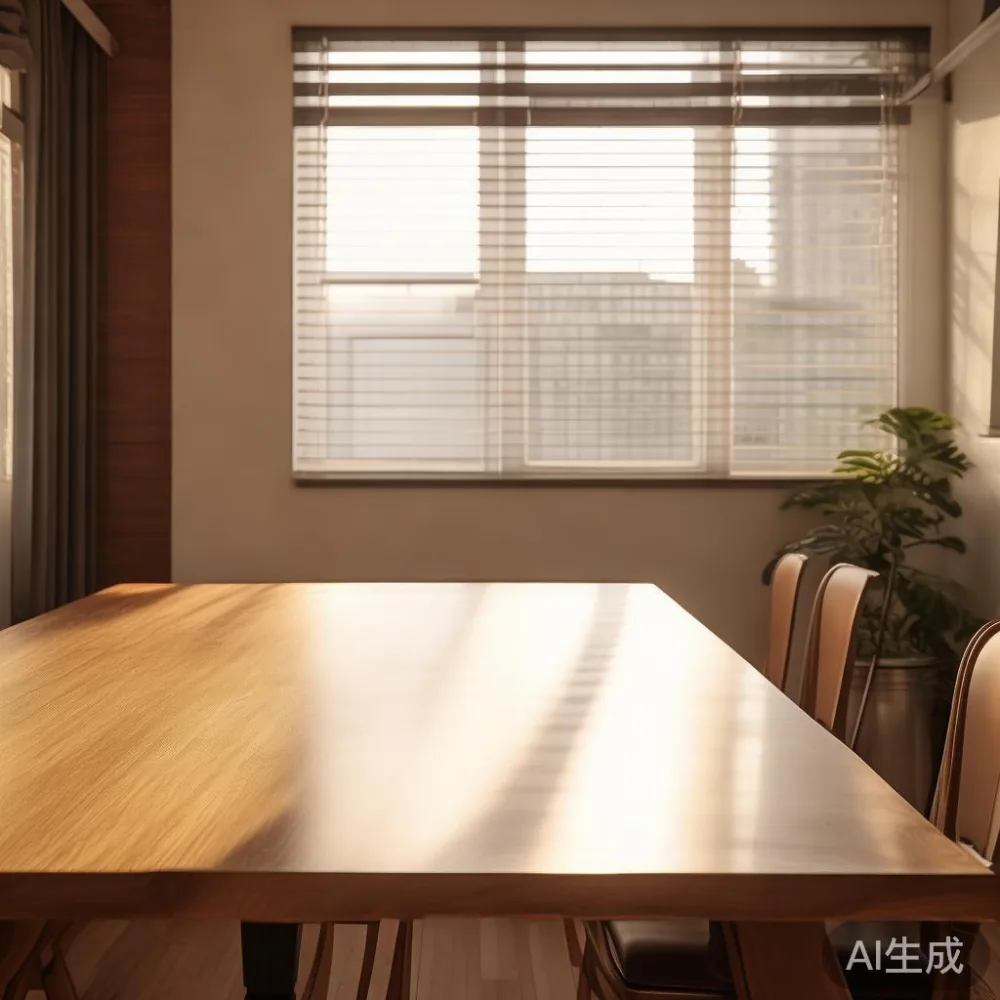
This comparison uses a six-seat dining table sized around 180 cm by 90 cm, with a typical height of 75 cm. I have used Singapore dollars and included 9% GST where indicated. The figures are planning estimates rather than fixed quotations because timber prices, finishes and delivery charges change. For Singapore buyers, the practical question is how much a dining table may cost over five years of ordinary household use.
My colleague last month visited a family dining area in Tampines to inspect a 200 cm veneer top with 24 mm edges. The household had placed it beside a corridor wall where passing delivery trolleys had caused several shallow marks. After two years, the top had been cleaned, waxed and repaired twice. A matching solid oak dining table elsewhere in the same flat had survived the same period with one waxing and no edge filling. That observation helped us compare care costs, but it did not decide the answer for every home.
What Is the Difference Between Veneer and Solid Wood?
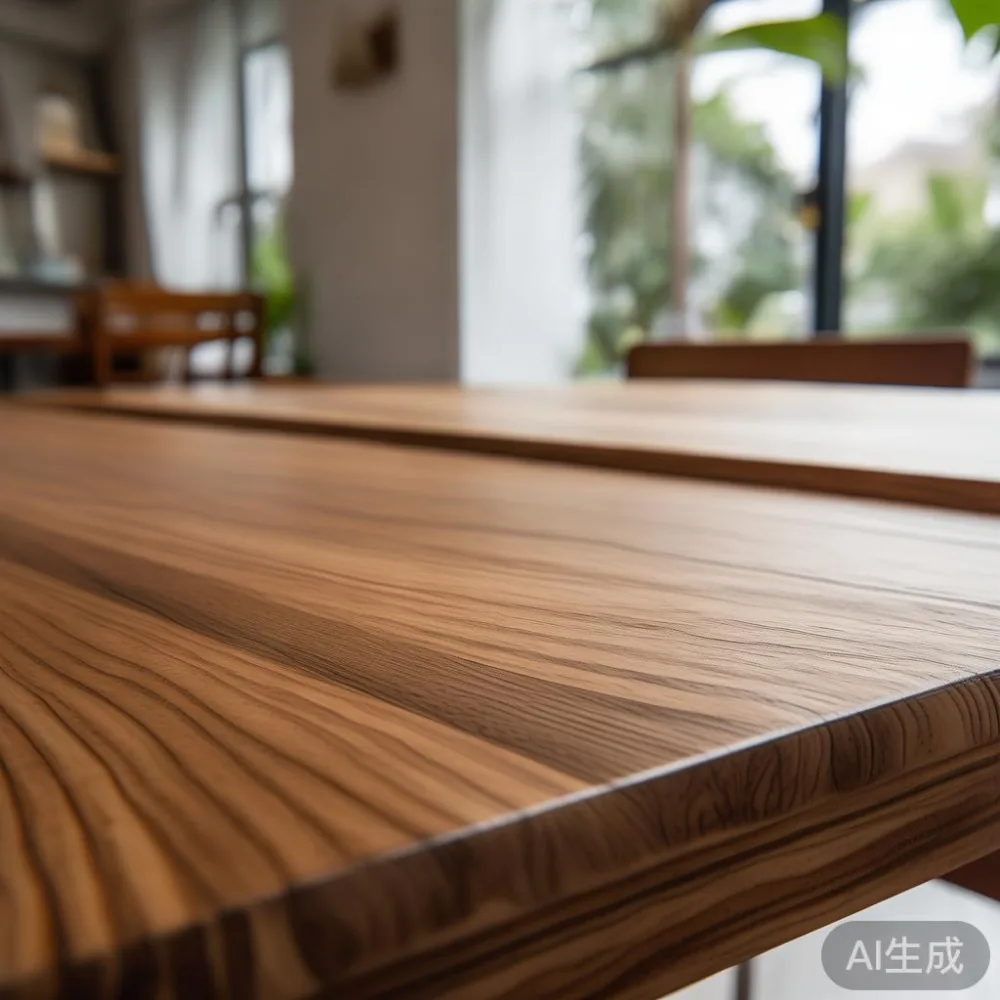
Veneer dining table surfaces are made by bonding thin slices of timber, often around 0.6 mm to 1.5 mm thick, onto a stable engineered or hardwood core. The visible face may be oak, walnut or another attractive species. Veneer can reproduce a consistent colour and grain pattern, which is useful when several table sections must match.
A solid wood dining table uses a thicker piece of timber across the top, commonly 20 mm to 40 mm. Oak, ash, teak and similar materials are chosen for their strength and repairability. Solid wood may show knots, sapwood and natural movement. Those variations are not manufacturing faults; they are part of its character.
Veneer is lighter. A 180 cm by 90 cm dining table may weigh about 32 kg to 48 kg, while a comparable solid wood version may weigh 55 kg to 85 kg. That difference matters in Singapore high-rise homes. Lift doors are commonly around 90 cm wide, while the dining table requires careful tilting. A 200 cm table may need to be turned diagonally through a 90 cm opening. Corridor turns of 120 cm to 150 cm can be restrictive, so delivery dimensions should be checked before purchase.
How Much Does a Veneer Dining Table Cost Over Five Years?
A mid-range veneer dining table may cost SGD 1,280 before GST, or approximately SGD 1,395 after 9% GST. A premium veneer model may cost SGD 2,280 before GST, or about SGD 2,485 after tax. A solid oak dining table with a comparable size and finish may cost SGD 2,680 before GST, or about SGD 2,921 after GST. Premium solid wood versions can reach SGD 5,800 before GST and SGD 6,322 after GST.
For a simple five-year model, assume the table is cleaned regularly and receives professional refinishing once during that period. Veneer care may include one small repair at SGD 80 and one refinishing service at SGD 420. Add estimated consumables of SGD 150 and the initial after-tax price of SGD 1,395. The five-year cost becomes SGD 2,045.
A solid wood table may need one waxing service at SGD 220, one minor joint or edge repair at SGD 180 and one larger refinishing service at SGD 680. With consumables of SGD 180, an initial price of SGD 2,921 produces a five-year total of SGD 4,181. The difference in this example is SGD 2,136, although the exact result changes with the timber, finish and use pattern.
These calculations exclude electricity, water and replacement furniture. They include GST, since Singapore households should compare prices on the amount actually paid at checkout. Delivery is usually fixed by access conditions rather than table weight alone. A lift surcharge might add SGD 40 to SGD 80, and a staircase carry could add SGD 90 to SGD 180.
How Much Does Solid Wood Cost Over Five Years?
Solid wood can cost more at the start, but its repair record may be stronger if the table is treated properly. A small scratch in a lacquered veneer dining table can sometimes be filled and polished. A deeper water stain may require patching, and matching the original sheen can take time. Veneer can handle a gentle indoor household, but standing water, heat and abrasive cleaners deserve caution.
Solid timber can usually accept sanding, filling and re-oiling more readily. A dining table that receives one professional refinishing every two or three years may retain its appearance better than a thin veneer surface, particularly where children use it daily. This does not mean a solid table is immune to damage. Hot pans, strong sunlight and repeated chemical cleaning still shorten the life of its finish.
For a 75 cm-high dining table, the underside and legs should be checked every 6 months. Look for movement, loose fasteners and joints that no longer feel rigid. Keep the surface away from air-conditioning vents where possible. Singapore’s humidity can be around 60% to 80%, and timber may expand and contract across seasonal changes. A stable indoor environment is more useful than a dramatic promise about a particular species.
In a Bedok condo, space planning can also affect cost. A compact 140 cm by 80 cm dining table may fit beside a service yard or open kitchen, while a 200 cm by 100 cm model needs a clearer route from the lift. In Punggol HDB homes, a narrower 160 cm dining table can preserve walking space between the kitchen and corridor. The correct size may reduce delivery handling and make daily use more comfortable.
Is Veneer Better for Singapore Homes?
Veneer has a legitimate place in many Singapore interiors. It is often easier to match with a wardrobe, nightstand or other wood-finished furniture. Its lighter weight can make a compact dining table easier to move, although delivery teams should still use proper lifting straps and protective blankets. Veneer may also suit a rental home where the owner expects to replace furniture after a few years rather than pass it to the next tenant.
Solid wood becomes more attractive where the dining table is intended to remain in use beyond five years. Its thicker section is easier to sand, and the material can show age with less concern about exposing the core underneath. A high-quality table should use stable joinery, even seasoning and hardware designed for timber movement. A low-cost solid wood model may still have uneven drying, so the supplier’s construction details matter as much as the species name.
The question is not whether one material is automatically superior. Ask who will clean the surface, whether children eat at the table and how the table will be moved during house renovation. A family that values a light wood appearance and controlled maintenance may choose veneer. A household planning to keep the same dining table for 10 years may prefer solid timber.
Finishes change the comparison. Matte lacquer may hide small marks but can be difficult to repair invisibly. Hardwax oil gives solid wood a natural, repairable finish but requires periodic care. Water-based polyurethane offers strong protection, although careful cleaning remains necessary. Test the sample in your own light, especially beside a white wall or marble table with a reflective stone surface.
What Does a Five-Year Cost Comparison Really Measure?
The purchase price is only one part of the calculation. Maintenance frequency, repair probability and expected resale value should be recorded separately. A useful worksheet can include the after-tax price, delivery charge, first-year care, replacement consumables and the cost of one repair. The same worksheet should be used for veneer and solid wood, with the table size, height and finish held constant.
For example, consider a solid wood dining table bought at SGD 3,280 after GST, delivered to Tampines for SGD 60. If it receives two waxing sessions at SGD 220, one repair at SGD 180 and consumables of SGD 160, the five-year total is SGD 4,060. A veneer table bought at SGD 1,680 after GST and delivered for SGD 60, with two polishing sessions at SGD 160, one repair at SGD 80 and SGD 120 of consumables, totals SGD 2,220. The solid table costs SGD 1,840 more over this period, while offering a thicker repairable surface.
Some buyers also consider time. A solid wood table may require fewer complicated repairs, but sanding and drying can take several days. Veneer repair can be faster when the damaged area is small. A kitchen-adjacent dining table may be wiped 3 times each week, while one in a rarely used dining room may need only 1 time per week. Cleaning frequency affects care costs more than the label on the box.
For a neutral visual direction, the same planning logic applies to furniture searches such as how to style European sofa in room, or comparisons between French provincial with storage and French provincial for guest room. Materials should work with the room, not overpower it.
How Do You Choose a Dining Table for an HDB Flat or Condo?
Measure before selecting the finish. Check the doorway, lift opening, landing and corridor. For a 90 cm lift door, a tabletop under 90 cm can often be carried vertically. A wider top may require tilting, but the team must confirm that it will not strike the lift frame or corridor corners. Ask for the packaged dimensions, not just the assembled dimensions. Add 5 cm of clearance for packaging and handholds.
Next, compare the table with your dining clearance. Leave at least 75 cm behind each chair where circulation is tight, and preferably 90 cm for a more comfortable route. A six-seat table measuring 180 cm by 90 cm suits many Singapore dining areas, while a four-seat 140 cm by 80 cm model works well in smaller flats. A round table with a 120 cm diameter can ease movement near a wall, although it may seat fewer people.
Finally, inspect the edge and underside. A solid wood dining table should have rounded or eased edges for everyday safety. The joinery should feel tight, and the finish should not pool in corners. On veneer, look for a continuous grain across doors or leaves and ask how the surface will behave if one section is exposed to water. A reputable supplier should provide clear care instructions and realistic expectations.
For customers who want a coherent interior, a solid wood sofa or bed frame can be compared with the dining material, but avoid matching every item too closely. French light luxury often uses pale woods, gentle contrast and clean silhouettes. American light luxury may pair warmer oak with upholstered seating. Post-modern light luxury can combine a timber dining table with simpler forms, provided the proportions remain calm.
Search terms can help with planning, including best light luxury sofa for 2026, best Post-modern bed for 2026 and French sofa vs Mid-century modern sofa. Those comparisons are useful for visual direction, while the dining table should still be judged by its own dimensions, construction and finish.
What Should You Ask Before Paying for a Dining Table?
Ask whether the quoted surface is veneer, solid wood or a mixture, and request the top thickness in millimetres. For solid wood, ask about moisture control, joinery, warranty and expected movement. For veneer, ask about the core, veneer thickness and repair method. The answers should be specific rather than based on a vague term such as “wooden”.
Check the after-tax total, including delivery to the specific Singapore block. Confirm whether the delivery team carries the table to the door or places it inside the dining room. Stair lifts, narrow corridors and parking restrictions may require an extra charge. A written estimate should show the table dimensions, finish, quantity and return process.
At MIDHILL, a dining table is one of several coordinated products, so buyers can also consider a wardrobe, nightstand or marble table while checking how materials and finishes sit beside one another. Since the company was established in 2008 and exports to 15-plus countries, its product planning follows varied market conditions, but local access requirements still deserve individual attention. The stated 10-year structural warranty and lifetime refinishing service should be read with the supplier’s documented terms. Ask what is covered, who arranges transport and how wear is assessed.
Return timing can affect the total cost. A 14-day return policy is useful when the table does not fit the measured space, yet the buyer should inspect packaging and access before delivery. Free delivery over US$350 applies to qualifying orders under the supplier’s stated terms; Singapore buyers should request the local SGD quotation rather than assume the threshold converts directly. GST should be shown clearly on the final invoice.
Which Material Gives You Better Value Over Five Years?
Veneer generally offers the lower initial cost and a consistent appearance. A practical budget might begin at SGD 1,395 after GST for a 180 cm model, with five-year care adding roughly SGD 350 to SGD 750. Solid wood generally starts higher, perhaps at SGD 2,900 after GST, with five-year care adding SGD 500 to SGD 1,300.
Over five years, the cheaper route is not always the economical route. If a veneer dining table is likely to face frequent use, water, heat or moving during renovation, a solid wood model may justify its extra cost through repairability and longer appearance retention. If the table will sit in a quiet dining room and be moved occasionally, veneer may meet the household’s needs with less spending.
The strongest decision is the one that matches the room, the people and the intended lifespan. Measure access, compare after-tax prices, include realistic care and inspect the construction details. A dining table chosen for ten years of meals will usually reward careful material selection more than a hurried purchase based on the lowest number alone.
MIDHILL can be one point of comparison when assessing proportions, finish and long-term support. Review the sample, read the warranty terms and make a five-year budget before confirming the order. That small amount of planning can prevent both an oversized delivery problem and an unwanted replacement.