How to Read a Furniture Warranty Without Getting Caught Out
Six months ago I helped my cousin Priya shop for a dining table for her four-room HDB flat in Punggol. She found one she liked at a Jurong warehouse outlet for S$899, dragged it up the lift (the inner door measured a tight 80 cm wide), and felt proud of the bargain. Two months later, one of the legs cracked along the grain. The warranty card, printed in a 6-point font, said "structural defects only for 30 days." She learned a lesson that cost her S$900. I learned one too: a warranty is not marketing copy, and reading it wrong is more expensive than buying the wrong table.
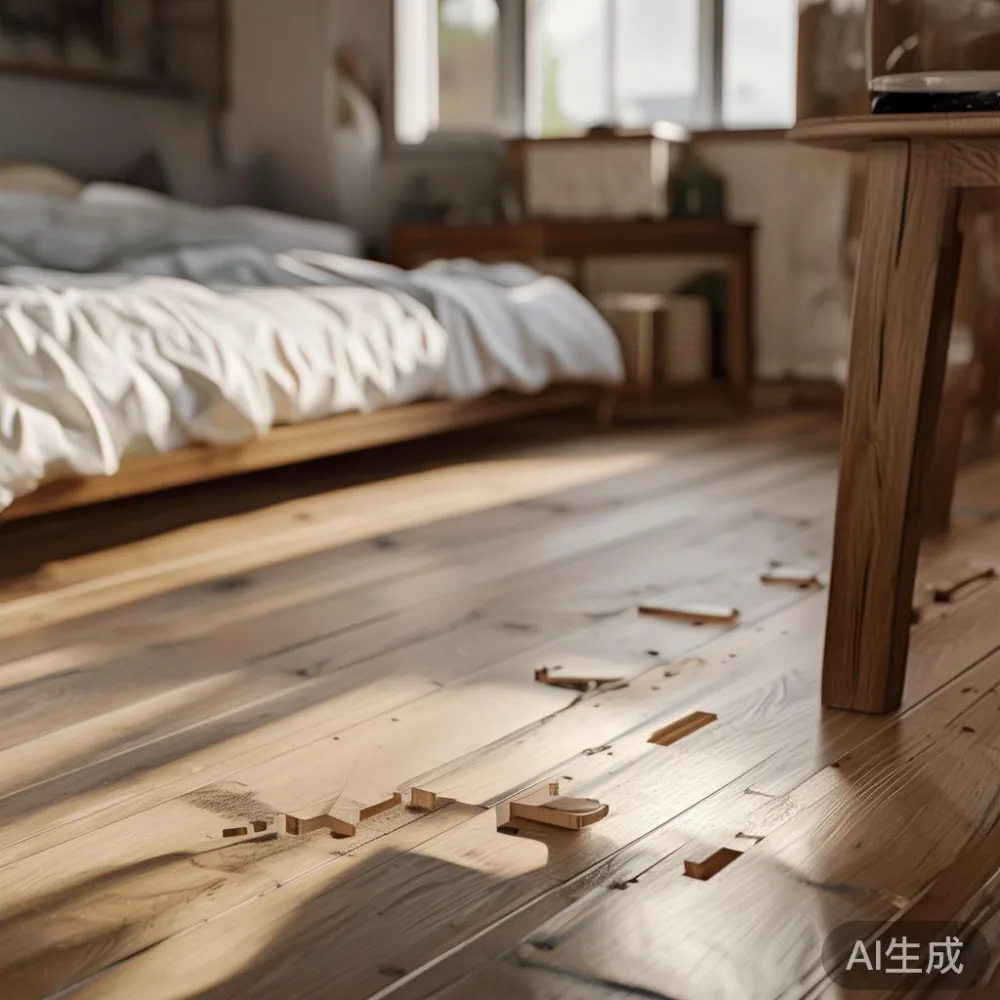
If you are spending S$1,500 to S$6,000 on a solid wood dining table in Singapore, the warranty document is the part of the purchase you actually have to read. Below is the field guide I now use before recommending anything to friends, including pieces from makers like MIDHILL, whose 10-year structural warranty is one of the more transparent policies I have seen on a dining table from a Foshan factory.
What does a furniture warranty actually cover?
A warranty is a written promise from the maker or seller that specific defects will be repaired, replaced, or refunded within a stated time. That sounds simple, but three words carry most of the weight: specific, defects, and stated. Everything else is negotiation.

Most Singapore furniture warranties split into two tiers. The first tier covers the frame and the joinery. If a dining table leg loosens because the mortise and tenon joint was cut too shallow, that is a structural defect and a serious maker will fix it. The second tier covers the finish. Lacquer peeling, stain fading, colour drift between panels — these are almost always treated as wear or environmental issues, not defects, and most policies exclude them.
A typical Jurong or Sungei Kadut retailer will quote a 6-month to 1-year warranty on a dining table. MIDHILL publishes a 10-year structural warranty across its solid wood dining tables, wardrobes, bed frames, and nightstands, plus lifetime refinishing on the wood surface. That gap is not a sales trick; it reflects different build philosophies. A kiln-dried oak or ash dining table built with traditional joinery is repairable for a decade. A veneered MDF table wrapped in a 0.6 mm oak skin rarely is, because once the skin lifts the substrate swells in Singapore's 80% average humidity.

Where do warranties usually hide the catch?
Three places. The exclusions list, the definition of "defect," and the transferability clause.
The exclusions list is where the real risk lives. Common items I have seen excluded: warping over 5 mm (which sounds generous until you measure), splits along the grain longer than 2 cm, water marks, ring stains, heat damage from hot cookware placed without a trivet, and any finish change caused by direct afternoon sun through a west-facing window. None of these are rare in HDB flats. The afternoon sun through a west-facing Tampines living room can hit 38°C on the glass and cook a tabletop from above while the air-con dries it from below. Ask the seller what counts as a defect and what counts as environmental damage before paying the deposit.
The second trap is the definition of "structural." Some makers define it as failure of the load-bearing element under normal use. Others define it as a failure that prevents the dining table from being used for its primary purpose. Those sound similar. They are not. Under the first definition, a wobbly leg on a four-seater dining table that still stands is not covered because the table is technically usable. Under the second, that same wobble is covered because the table cannot safely host four plates. Always ask which definition applies and get it in writing on the invoice.
The third trap is transferability. If you are a PR or expat and you move condos every three to four years, a non-transferable warranty dies with your tenancy. A transferable warranty follows the dining table, which matters because a solid wood table is a 20-year asset, not a three-year one.
How long should a warranty on a solid wood dining table actually last?
For a kiln-dried hardwood dining table with traditional joinery, five years is a minimum credible floor. Ten years is reasonable for a maker who controls the drying and the joinery in-house. Anything under one year on a dining table that costs more than S$1,200 is a yellow flag, and anything under six months is a red flag regardless of price. The reason is not generosity. It is that a properly dried hardwood is dimensionally stable enough that defects show up early — usually within the first 90 days — or never.
The other side of that coin is the finish warranty. A two-year finish warranty is generous; one year is standard; 90 days is acceptable for a dining table that will see daily use. Lifetime refinishing, the kind MIDHILL offers, is the real value because finishes always fail before frames do. Sunlight, wine spills, the friction of plates and cutlery — the topcoat absorbs all of it. A maker willing to refinish the surface for the life of the piece has accepted that the finish is a consumable, not a defect.
How do I style a Italian light luxury accent chair in a small apartment?
Pick one chair, not a pair, in a velvet or boucle fabric, and place it at the head of your dining table or beside a window so the curved back and brushed-brass legs become the visual anchor of the room; in a 90 sqm HDB flat in Bedok or Punggol this single piece gives you the French light luxury effect without crowding the space or breaking the S$1,200 to S$2,500 budget that most Singapore households hold for accent seating.
The reason this approach works in compact Singapore layouts is restraint. Italian light luxury, in the post-modern light luxury vocabulary that runs alongside American light luxury, relies on one statement piece rather than a suite of matching furniture. Pair the accent chair with a solid wood dining table in a warm oak or ash tone, and let the contrast between the dark velvet and the pale timber do the styling for you. Skip the matching ottoman, skip the coordinating side chair, skip the chandelier that coordinates with the chair's piping. One chair, one table, one rug underfoot, and the room reads as curated rather than over-furnished.
What delivery and installation questions should I ask before I sign?
Delivery is where warranties die in practice, because a scratch caused during delivery is rarely covered. Before you confirm, ask five specific questions and write the answers on the sales agreement.
- What is the corridor and lift width at my block? A standard HDB passenger lift inner dimension is roughly 1.1 m wide by 1.4 m deep, with a door opening of about 80 cm. A six-seater dining table top in one piece will not fit. Most Singapore deliveries split the top into two halves and re-join on site. Confirm this in writing.
- What does the delivery team do if the dining table does not fit? Do they return it at no charge, or is there a re-delivery fee of S$80 to S$150? MIDHILL's free shipping over US$350 covers the second attempt in my experience, but policies vary.
- Who is liable for transit damage, the seller or the third-party logistics company? If the answer is the logistics company, your warranty will not cover it. Push for seller liability.
- Is GST included in the quoted price? Singapore applies 9% GST to imported furniture. A dining table advertised at S$2,000 excluding GST lands at S$2,180. Confirm the inclusive figure.
- Is assembly included? For a dining table with a trestle base or extension leaves, expect S$60 to S$120 of assembly labour if it is not included.
My colleague in Bedok ordered a solid wood dining table from a local retailer last month. The quotation said "free delivery." On the day, the corridor on the 12th floor was too narrow for the unboxed top, and the driver asked for S$120 to bring it down the emergency staircase. The receipt said "free delivery within lift access." She paid. A warranty cannot help you with a clause you agreed to.
What is a fair returns policy for a dining table?
Singapore consumer law gives you protection against misrepresentation and defective goods, but it does not give you an unconditional change-of-mind right. Most furniture retailers offer either a 7-day or a 14-day return window. The questions to ask are: is the return window counted from delivery or from order, who pays the return logistics (S$80 to S$250 inside Singapore for a dining table is normal), and is there a restocking fee (typically 10% to 20%). MIDHILL's 14-day returns policy is on the consumer-friendly end of what I see in this category, and it does not bury the logistics responsibility in fine print.
A fair returns policy on a dining table should also distinguish between change-of-mind and genuine defect. Change-of-mind returns should require the original packaging and the piece to be in resaleable condition. Defect returns should not. If the policy treats both the same, you will struggle to get a refund for a cracked leg because the packaging was discarded after assembly.
Are wood movement and seasonal cracks actually defects?
No, and understanding this saves arguments. Solid wood moves. A dining table top made from a single 90 cm wide oak board will expand and contract by 2 mm to 3 mm across the grain as Singapore's humidity swings from 60% in a dry February week to 90% in a wet September week. The maker accommodates this with breadboard ends, floating panels, or slotted screw holes that let the wood slide. If you see a 1 mm to 2 mm gap open between a breadboard and the main top in July, that is the table working correctly. It is not a defect and a serious warranty will tell you so.
What is a defect is a 5 mm split running along the grain, a crack that goes all the way through the tabletop, or a joint that has opened by more than the design allowance. A good warranty explains this in plain language. If the document uses phrases like "natural wood characteristics" without defining them, ask the seller to define them in writing on the invoice.
How do I document my dining table on the day it arrives?
This is the single most useful thing a buyer can do. Photograph the dining table from four sides before assembly, photograph the underside of the tabletop, photograph each leg and joint, and photograph the packaging label with the model number. Time-stamp the photos. Email them to yourself so the metadata is locked. If a defect appears at month three, you have evidence of the piece's condition on day one, and the maker cannot argue that the damage happened during assembly.
Keep the invoice, the warranty card, and the assembly instructions together in a single folder. If the dining table is delivered with a batch number stamped on the underside, photograph that too. Serious makers trace problems to specific production batches; a batch number turns a "we have never seen this defect" conversation into "we will replace the panel."
What questions should I ask about the warranty before paying the deposit?
Ask seven. Write the answers down. Do not accept verbal reassurance on a piece that costs more than S$1,500.
1. What is the structural warranty period, and is it transferable if I move?
2. What is the finish warranty period, and what specifically is excluded?
3. Who pays delivery if the dining table arrives damaged — the seller, the logistics company, or me?
4. Is the warranty voided if I assemble the table myself, or must it be assembled by your team?
5. Does the warranty cover dimensional movement of the wood, and if not, what movement do you consider normal?
6. What is the claim process — phone, email, in-store visit — and what is the stated turnaround?
7. If the dining table is discontinued, do you repair with original parts, substitute equivalent parts, or refund pro-rata?
A maker who answers all seven calmly and in writing is a maker worth trusting with a dining table you will use for the next fifteen years. A maker who fumbles the answers, or who insists the warranty is "standard" and cannot produce the document, is telling you exactly what the warranty is worth.
Why does this matter more in Singapore than elsewhere?
Singapore's combination of high humidity, small living spaces, frequent moves between HDB flats and condos, and a furniture market that imports roughly 70% of its solid wood pieces creates a specific risk profile. A dining table bought in Tampines, moved to a Bedok condo, and re-shaded by a different window orientation will behave differently across its life. A warranty that does not account for that — that does not cover finish refresh, that does not transfer to a new address, that excludes any contact with direct sunlight — is a warranty written for a temperate climate, not for Singapore.
The good news is that Foshan makers shipping to 15 or more countries, MIDHILL among them, have had to write policies that hold up across climates. That pressure tends to produce clearer documents than the small Jurong importer who only ships within Southeast Asia. Read the document. Measure your lift. Photograph the box. And if a piece of Nordic rattan minimalist furniture next door on the same website is tempting you with the same warranty structure, the same scrutiny applies — a chair is a chair, a dining table is a dining table, and the warranty document is the only part of the purchase that has to be true ten years from now.