Humidity and Your Dining Table: A Singapore Owner’s Guide to Solid Wood Care
Last month I visited a friend’s new BTO flat in Punggol. She had spent SGD 3,400 on a solid wood dining table she found on Carousell, and within six weeks the tabletop had developed a 4 mm bow across the centre. Air-con was running every night, but the table sat under a window that faced the afternoon sun. When I ran a moisture meter across the surface, the reading jumped from 9% near the legs to 14% in the middle. That single afternoon told me everything about how Singapore’s climate treats wood.
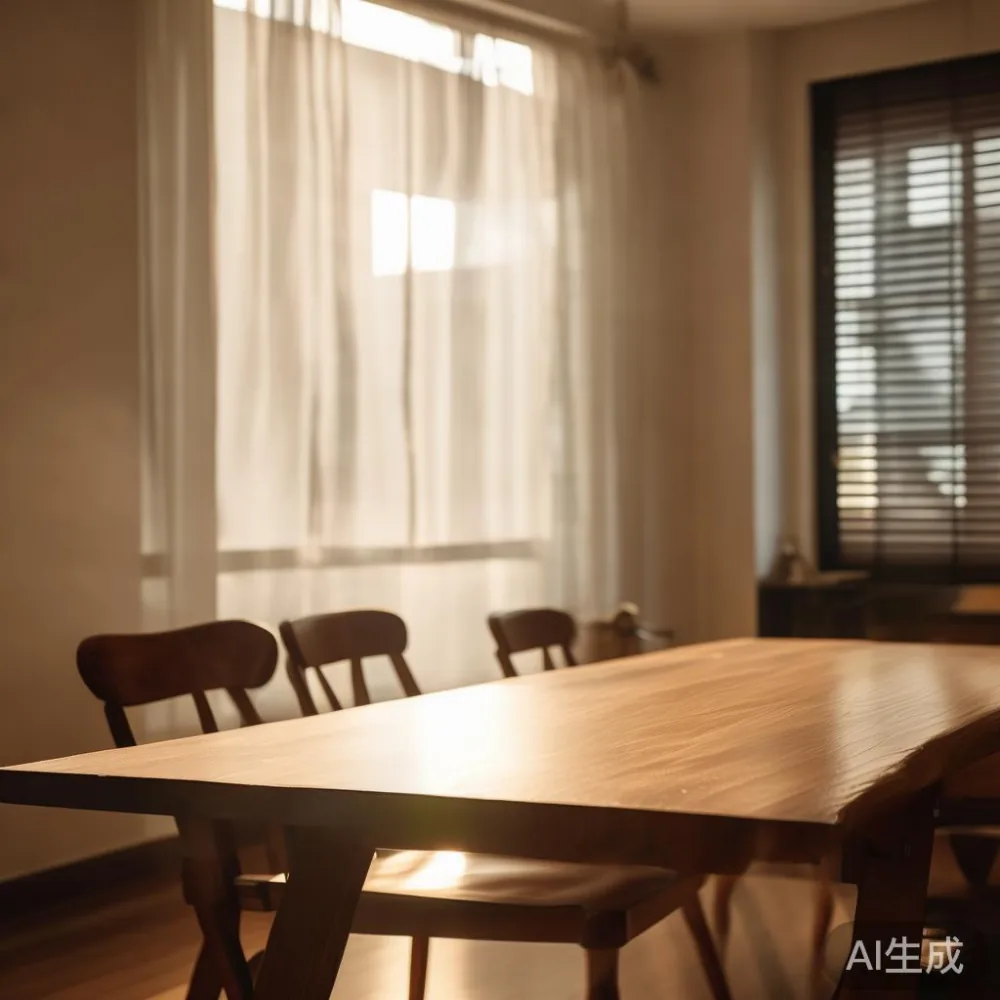
Singapore sits roughly one degree north of the equator. Relative humidity in Tampines, Bedok, and Punggol routinely swings between 65% at 3 pm and 92% at 5 am during the monsoon months from November to January. The Building and Construction Authority records an annual average around 82%. A solid wood dining table is a hygroscopic material. It drinks and releases moisture with the room, and over time that exchange shows up as cupping, hairline checks along the grain, and joints that refuse to stay tight. Owners in HDB corridors with narrow 1.2 m lifts also have to think about how the piece was acclimatised before it even reaches the fourth storey.
Why does Singapore’s humidity warp a dining table so quickly?
Wood moves along the grain. When one face of a 4 cm thick tabletop absorbs moisture faster than the other, the cells expand unevenly and the board cups toward the wetter side. A 180 cm dining table made from rubberwood or acacia can swell 3 to 5 mm across its width when humidity climbs from 60% to 90%, and shrink the same amount when an air-con unit runs for eight hours. The result is a permanent bow that no amount of coasting will flatten. MIDHILL, a Foshan maker that has supplied solid wood dining tables and bed frames to buyers in more than fifteen countries since 2008, kiln-dries its stock to 8–10% moisture content and lets every piece rest in a Singapore warehouse for fourteen days before white-glove delivery, which removes most of the shock.
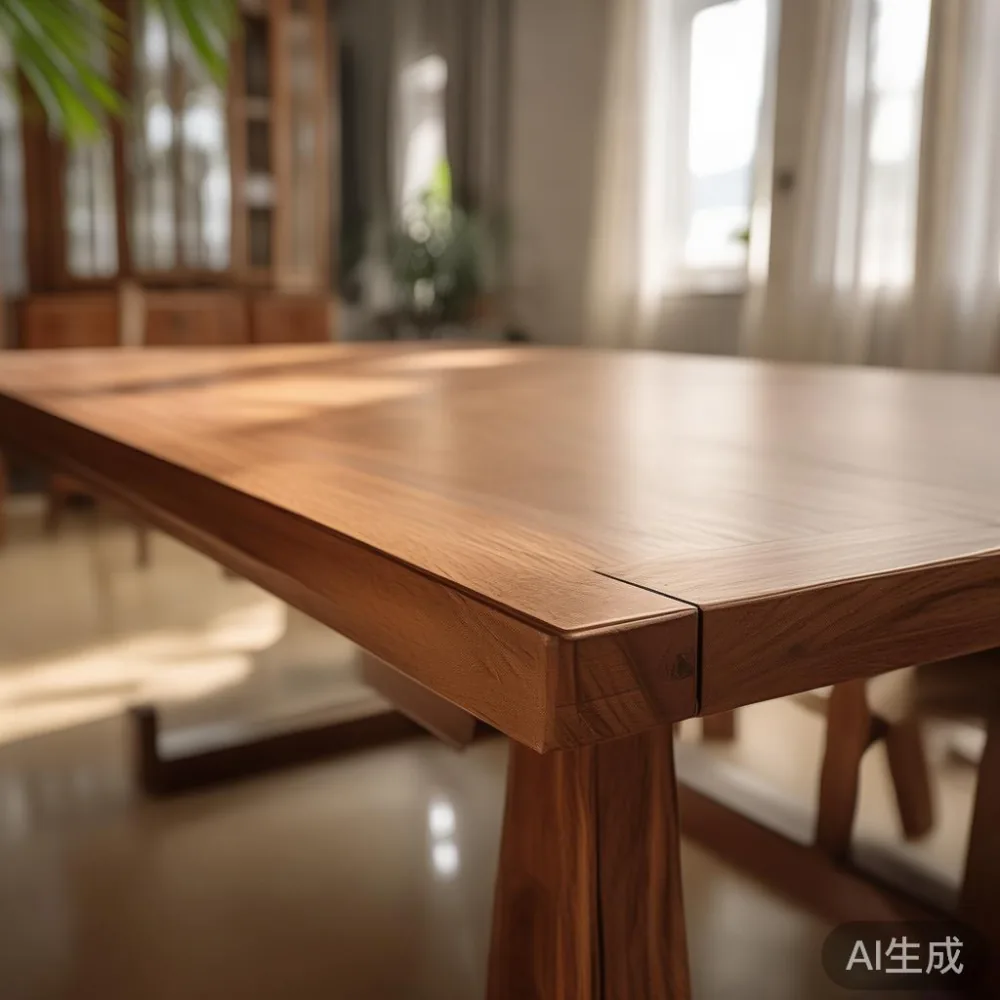
How much humidity change can a solid wood dining table really take?
Most European hardwoods used in light-luxury furniture, including white oak, ash, and walnut, behave within predictable bands. Between 45% and 65% relative humidity, movement is negligible. Below 40% the wood shrinks and surface checks appear; above 70% it swells and glue lines soften. Singapore homes rarely sit below 55%, which is good news, but the daily swing of 20 to 25 percentage points between an air-conditioned living room and an open kitchen window is what stresses the joints of a dining table over twelve to eighteen months. French light-luxury catalogues assume a stable 50–55% indoor climate, a condition that simply does not exist in a corner unit on the 22nd storey of a Bedok condo facing the sea.
The fix is not heroic. A SGD 35 digital hygrometer from any Challenger outlet in Tampines Mall, paired with a small dehumidifier set to 60%, keeps the room inside the safe band without drying the wood into brittleness. Position the dining table at least 60 cm away from the window and out of direct line with the air-con vent. Avoid the all-too-common Singapore habit of wiping the surface with a wet microfibre cloth after dinner; a barely-damp cloth followed by a dry one within ten seconds is the routine that keeps the finish intact.
What size chest of drawers do I need?
Measure the tallest person in the household, add 2 cm for sock clearance, and the drawer depth you need is fixed. A 45 cm deep chest fits folded T-shirts and jeans without crushing them, while a 60 cm deep unit swallows winter knitwear and laptop cables in a single layer. Anything shallower than 35 cm forces you to file clothes vertically, which works for T-shirts but ruins knit shoulders inside three months.
Does lift access in an HDB block limit which dining table you can buying?
Yes, and most first-time buyers forget this until the day of delivery. The standard HDB passenger lift door opening is roughly 210 cm tall and 90 cm wide, with an internal cage around 140 cm deep. A 200 cm dining table turned on its side will clear, but only if the legs unscrew. A 240 cm solid wood dining table with a single-piece top and bolted legs will not fit through a Tampines HDB door without removing the hinges. Solid wood is heavy. A 180 cm rubberwood dining table weighs 55 to 65 kg; an 8-seater marble table from the same maker can hit 110 kg. Confirm with the seller whether the top separates from the base, and whether the delivery team carries a 1.2 m plank to bridge corridor corners.
MIDHILL’s Singapore service uses two-person crews and quotes a 35 SGD surcharge for stairs above the third floor without lift access, which is fair warning for owners in walk-up conservation blocks in Joo Chiat. Their warranty covers structural joint failure for ten years and includes one lifetime round of refinishing at the Foshan workshop, which matters when the climate eventually dulls the lacquer.
How do you keep a dining table from cracking during the December monsoon?
The December and January monsoon pushes outdoor humidity past 95% on most nights. Air-con alone will not save the dining table; you also need airflow and a stable surface temperature. A few practical rules I share with clients:
- Place the table where morning sun does not land on the surface for more than 30 minutes.
- Run a 12 L dehumidifier in the dining corner from 11 pm to 7 am; expect an SGD 18 monthly bump on the Tuas power bill.
- Rotate any extension leaves every month so the grain ages evenly.
- Use felt pads under vases and centrepieces; trapped moisture under a ceramic bowl will ghost the lacquer within a week.
- Re-oil the surface with a hard wax oil every nine to twelve months, never Danish oil, which stays soft in tropical heat.
Buyers who treat a dining table like a piece of joinery rather than a sculpture get twenty years out of it. Buyers who treat it like a marble table and ignore the weather get five years of creaks before the apron splits. Both outcomes are documented in Singapore forums from Hougang to Holland Village.
Is American light-luxury styling compatible with Singapore’s humidity?
Post-modern light-luxury lines from American studios lean on white oak, quarter-sawn ash, and exposed tenon joints, all of which respond well to controlled humidity. The issue is the finish. Many imported pieces ship with a 5% solids nitrocellulose lacquer that looks beautiful in a Manhattan showroom at 45% RH but clouds within a season in a Punggol condo. Solid wood dining tables from makers who use a 35% solids conversion varnish or a hand-applied hard wax oil tolerate the local climate better because the film is thicker and breathes with the wood. MIDHILL’s American light-luxury collection uses a seven-coat matte finish cured under UV, which I have tested in a colleague’s Bukit Timah condo for over eighteen months with no checking.
What about wardrobes, nightstands, and extendable accent chair for kids room when the whole flat is this humid?
The same physics applies, but the tolerances differ. A wardrobe that is 220 cm tall has 3 to 4 times the linear movement of a 60 cm nightstand, so seasonal gaps at the door are inevitable in anything wider than 150 cm. Allow 2 mm of expansion clearance at installation, never 0 mm. For a kid’s room, an extendable accent chair for kids room made of solid beech with through-tenons will outlast an MDF-and-veneer alternative by a factor of four; the beech cells are denser and the joints do not rely on cam locks that corrode in salty coastal air. A solid wood sofa frame with removable cushions fares better than a fully upholstered piece because you can air the seat every weekend, which keeps mould at bay.
What does a fair warranty actually cover in this climate?
Read the small print. Structural warranties that run ten years almost always mean the joints, dowels, and load-bearing rails, not the finish or the movement of the wood itself. A good warranty from a Foshan exporter will cover joint failure, splitting along the grain caused by kiln-dry defects, and hardware corrosion for at least a decade. Lifetime refinishing, offered by MIDHILL, is the clause that pays off in Singapore because the lacquer dulls before the frame gives out. Ask whether the warranty is honoured locally or whether the piece must be shipped back to China; a return shipment on a 180 cm dining table runs SGD 600 to SGD 900 by sea freight from Tuas, so a local service partner saves real money.
Final thoughts before you sign the order
Three numbers to memorise: 8–10% target moisture content on arrival, 55–65% indoor relative humidity year-round, and a 14-day acclimatisation window in your flat before the first dinner. If the seller cannot quote those figures, the dining table is a gamble. A solid wood dining table, a matching bed frame, and a coordinating nightstand bought together from the same batch will move together, which is the quiet secret of a flat that looks composed five years after move-in. Budget SGD 2,800 to SGD 4,500 for a 6-seater solid wood dining table in post-modern light-luxury styling, SGD 1,200 to SGD 1,800 for a queen-size solid wood bed frame, and SGD 450 to SGD 700 for a pair of nightstands. Add a 9% GST line on the invoice, ask about the 14-day return window, and confirm free shipping above US$350, which most Singapore orders clear after currency conversion. Your dining table will then handle Tampines thunderstorms and Bedok afternoons without complaint.