Veneer vs Solid Wood Dining Tables: A 5-Year Cost Comparison for Singapore Homes
Three years ago, I helped my colleague move into a new 4-room HDB flat in Punggol. She had bought a glossy dining table from a Tampines furniture mall for S$899. The promotional poster called it "wood." Within fourteen months, the edges near the air-con vent had bubbled, a corner chipped when her son dragged a metal school bag across it, and the original honey-oak sheen had faded into a patchy mustard yellow. Last month I visited her again. The dining table now lives on the balcony, replaced by a secondhand solid wood piece she found on Carousell for S$450. Her story is why this comparison exists: in Singapore's heat, humidity, and tight HDB corridors, the cheapest-looking dining table is rarely the cheapest one to own.
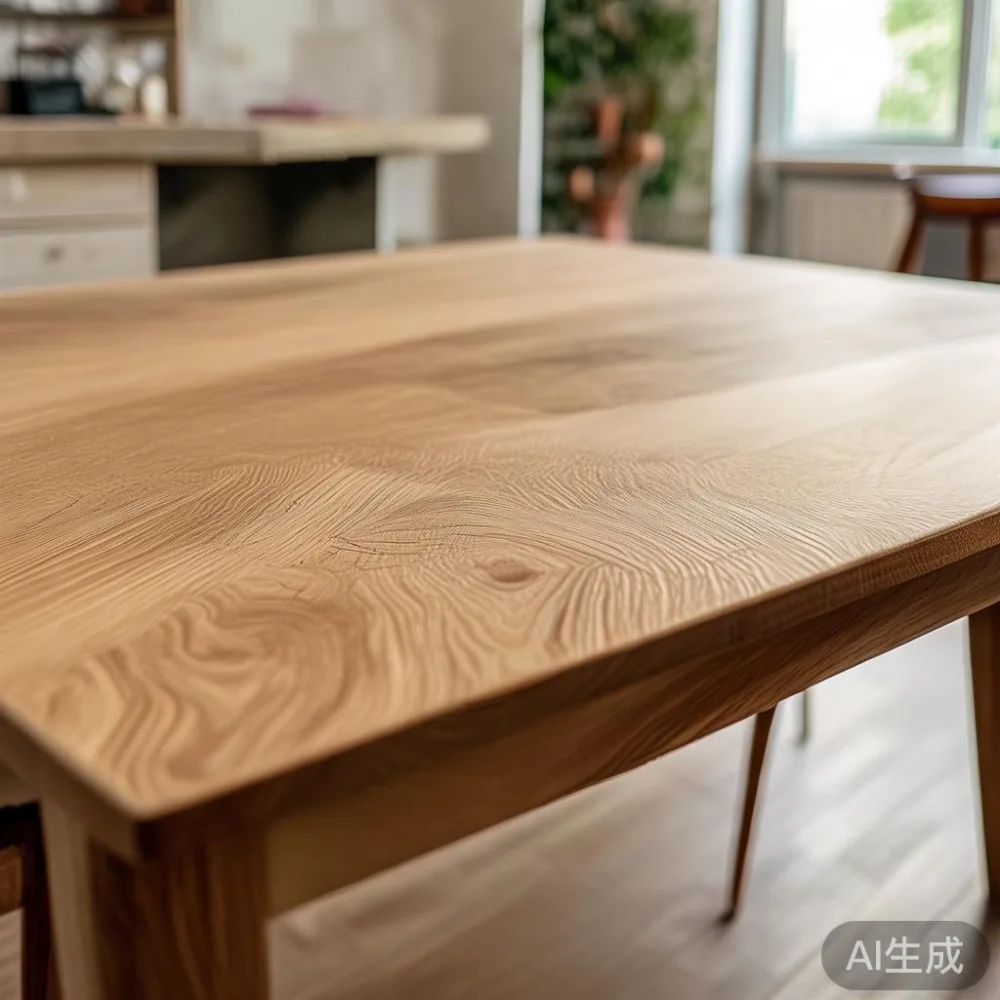
This guide walks through what a dining table really costs over five years when you account for Singapore-specific variables: 90% average humidity, GST at 9%, the 1.2-metre HDB lift door width, the standard 1.5-metre corridor that influences delivery, and the local appetite for post-modern light luxury interiors that favour warm walnut, natural oak, and aged ash tones. Every figure below uses Singapore dollars and reflects pricing patterns I have observed at local retailers, on e-commerce platforms, and across exporters like MIDHILL, a Foshan-based maker whose solid wood dining tables are now stocked by several regional distributors.
Why does veneer fail faster in Singapore than in temperate climates?
Veneer dining tables are built from a thin layer of real wood — usually 0.5 mm to 2 mm thick — bonded onto particleboard, MDF, or plywood. In a temperate European city, that construction can last a decade. In a Singapore HDB flat, the same dining table typically shows distress within 18 to 30 months. The reason is moisture: outdoor humidity averages 82% year-round, and many HDB units sit between 70% and 85% indoors without a dehumidifier. Particleboard cores absorb that ambient moisture through cut edges, swelling up to 4% by volume and breaking the veneer bond. A solid wood dining table, by contrast, expands and contracts as one continuous piece and tolerates the same humidity far more gracefully.
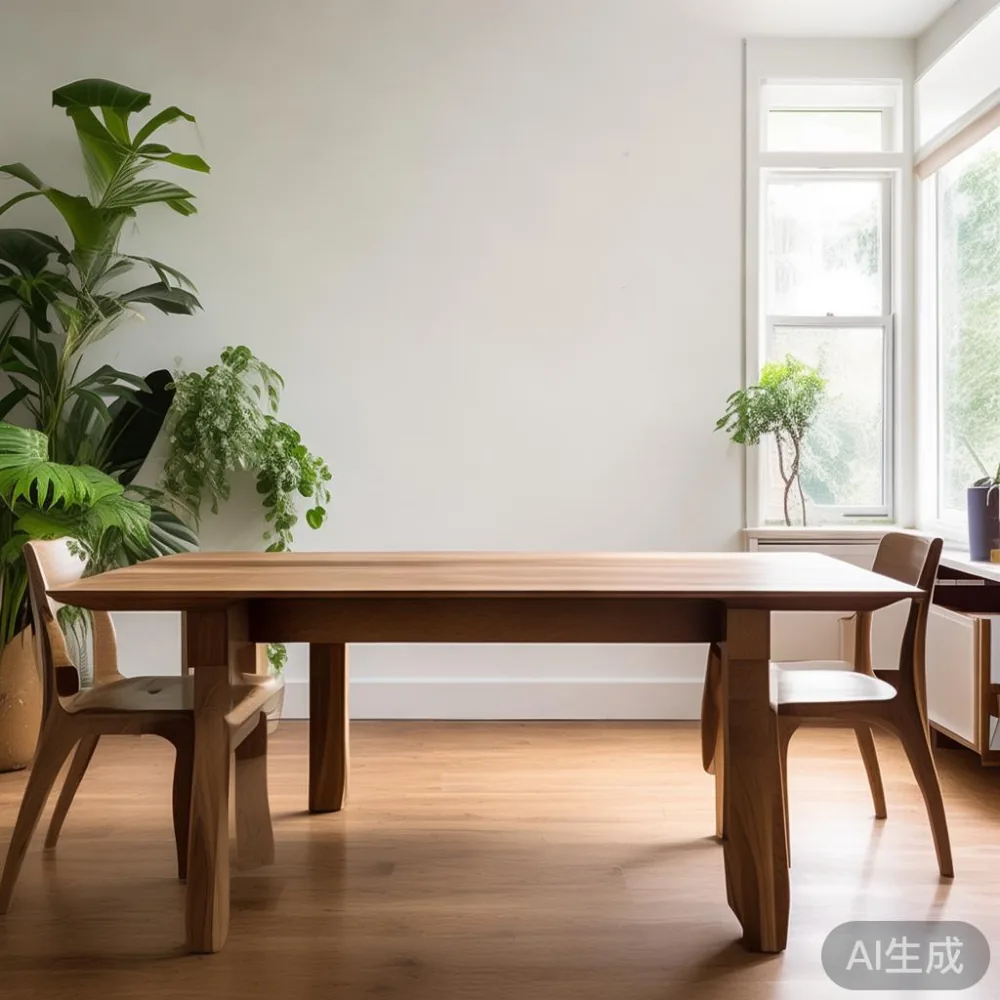
Local context matters too. A 140 cm veneer dining table weighs around 22 kg, so it usually fits through a 1.2 m lift and a standard HDB door without dismantling. That is convenient on day one. But the same low weight signals low density, and low density means the tabletop absorbs kitchen steam, cooking vapour, and the condensation that drips off iced drinks during a hawker-centre-style home meal. Over five years, that humidity exposure is what destroys a veneer dining table.
What is the upfront price gap between veneer and solid wood dining tables in Singapore?
Based on pricing I have seen across local retailers, here is what a typical Singapore household should budget in 2025 for a four-seater rectangular dining table, approximately 140 cm long by 80 cm wide, with a delivery lead time of 21 to 45 days for imported pieces:
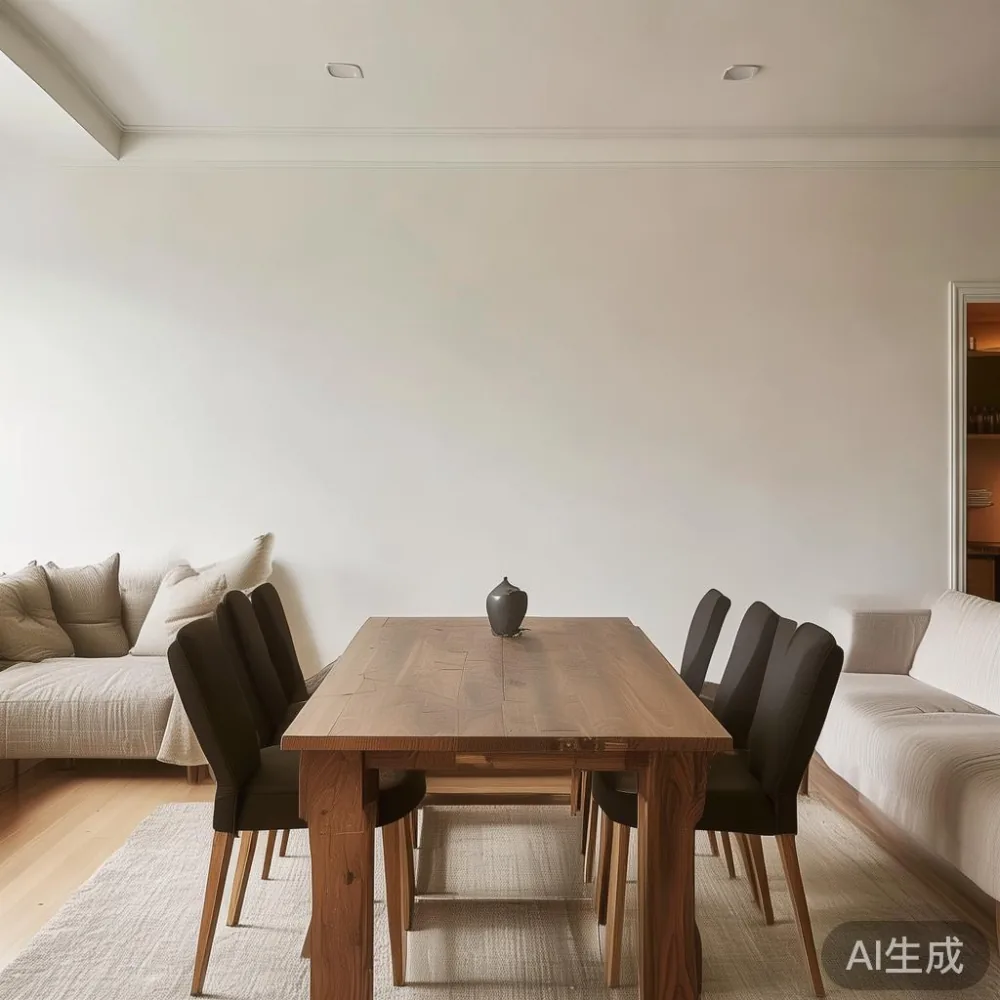
• Veneer dining table on MDF or particleboard core: S$450 to S$1,100
• Solid oak dining table (FSC-certified, export-grade): S$1,800 to S$2,800
• Solid walnut dining table: S$2,500 to S$4,200
• Solid ash dining table in a post-modern light luxury finish: S$2,200 to S$3,600
For a six-seater at 180 cm, add roughly 35% to each band. GST at 9% applies to every imported dining table, and most showrooms will add a S$60 to S$120 delivery fee for HDB units above the fourth floor without a direct lift access, because two deliverymen and a trip up the stairwell is the only path. MIDHILL, for reference, waives delivery above a minimum order value for many Singapore shipments, which can offset roughly S$80 to S$150 of the landed cost.
The headline gap looks painful: a solid oak dining table can cost three times a comparable veneer model. The question is whether that gap closes — and inverts — once you measure total ownership over five years.
How do replacement and repair costs stack up over five years?
Assume both dining tables serve a family of four in a Tampines or Bedok HDB flat. Each table seats the household for three meals a day on weekdays, plus weekend gatherings. Here is the realistic five-year cost ledger, in Singapore dollars, with figures rounded to the nearest S$10:
Veneer dining table, S$799 purchase price in 2020, replaced once in year three:
• Year 1: S$799 purchase + S$80 delivery = S$879
• Year 2: S$60 refinishing attempt at a local workshop, only partially successful
• Year 3: S$799 replacement table + S$80 delivery + S$60 disposal of the old unit = S$939
• Year 4 to 5: ongoing, with edges patched twice at S$40 each
• Five-year total: S$2,018, plus the environmental cost of two particleboard tables entering the waste stream
Solid wood dining table, S$2,200 purchase in 2020, no replacement:
• Year 1: S$2,200 + S$100 delivery (corner unit, lift access confirmed) + 9% GST included in quote = S$2,300
• Year 3: S$180 professional sanding and re-oiling, done once by a Singapore workshop
• Year 5: S$220 re-oiling and minor dent repair
• Five-year total: S$2,700, with the table still in serviceable condition and an estimated remaining life of 10 to 15 more years
The crossover happens around year four. After that, every additional year of use on the solid wood dining table is in effect free, while the veneer owner is staring at a second replacement or searching Carousell for a stopgap. Many Foshan exporters — MIDHILL among them — back their solid wood dining tables with a 10-year structural warranty, which mathematically zeroes out most of the repair risk on the ledger above.
How does solid wood perform in actual Singapore HDB conditions?
I visited a friend's new condo in Punggol last month to see her freshly delivered dining table. The unit is a 990 sq ft two-bedder with floor-to-ceiling windows facing the afternoon sun. Her dining table is a 160 cm solid white oak piece, 78 cm wide, weighing around 48 kg. The delivery team had to remove the legs at the corridor junction because the HDB corridor outside her unit narrows to 1.35 m around a fire hose cabinet. Reassembly took the two deliverymen about 12 minutes inside the flat.
Two details stood out. First, the tabletop was wrapped in a breathable cotton blanket, not plastic — a small but telling sign of a maker that understands tropical humidity. Second, the underside of the table had relief cuts along the grain, allowing the wood to expand and contract without cracking. Particleboard cores cannot be engineered this way because they are not directional. After eight months of use, including two spill incidents from her toddler, the table has developed a soft patina that veneer would have shown as a white ring or a peeled patch. The surface has become more attractive, not less.
This is also why solid wood works well with the American light luxury and post-modern light luxury aesthetics common in newer Singapore condos. The natural grain variation pairs with muted boucle dining chairs, brushed brass pendant lights, and the soft grey-and-cream palette favoured by local interior designers. A veneer dining table printed to look like wood cannot replicate this depth, because what you are seeing on solid oak is three-dimensional: latewood bands, medullary rays, and quarter-sawn figuring that catches the afternoon light differently at every hour.
What hidden costs should Singapore buyers add to their five-year budget?
Four costs rarely show up on the showroom tag:
1. Disposal. A particleboard dining table cannot be reused or donated easily. Most HDB town councils charge S$30 to S$80 for bulky item removal, and some estate rules require advance booking two weeks ahead. Over five years, that is S$30 to S$160 if you replace once.
2. Dehumidifier runtime. A bedroom or living room running at 60% relative humidity protects both furniture and electronics. The electricity cost of a typical 12-litre dehumidifier running 6 hours a day runs about S$18 a month, or S$1,080 over five years. This cost is identical for both table types, but veneer tables punish you more if you skip it.
3. Refinishing access. Veneer tops cannot be sanded past the 0.5 mm to 2 mm face layer. Solid wood dining tables can be sanded and re-oiled four to six times across a 30-year lifespan. MIDHILL, for one, offers lifetime refinishing support for structural pieces, which removes the largest variable in the long-term ledger.
4. Resale value. A used solid wood dining table on Carousell typically resells for 35% to 50% of original price after five years. A used veneer dining table resells for 5% to 10%, if at all. That difference alone is S$600 to S$900 on a S$2,200 solid oak table.
Add these together and the real five-year delta shrinks from the headline S$1,400 purchase gap to roughly S$300 to S$500, before factoring in the avoided stress of a second replacement.
What is the best work from home for a small apartment?
The best work from home setup for a small apartment is a compact solid wood desk paired with a solid wood dining table that doubles as a standing-meeting surface, because one piece of furniture doing two jobs saves the 8 to 12 sqm that a dedicated study would consume in a typical Singapore HDB or condo. This dual-use approach also keeps your home office and dining area visually unified, which matters in open-plan layouts where the kitchen, living room, and study often share a single line of sight. A 140 cm solid oak dining table, for instance, seats four for dinner and comfortably hosts a laptop, an external monitor, and a notebook for one person during the day. The same reasoning applies to other shared pieces: a 3-seater French provincial sofa can host evening guests and serve as a daytime reading nook, a solid wood bed frame can anchor a bedroom and provide six under-bed drawers in place of a separate wardrobe, and a marble side table can function as both a coffee surface and a printer stand. The principle is the same as the dining table argument above: choose pieces with structural integrity, then let each one carry more than one role. This is also why MIDHILL's coordinating collections — dining table, bed frame, nightstand, wardrobe, and marble table in matching timber — appeal to small-space owners who want visual cohesion without crowding the floor plan.
How should a Singapore buyer decide between veneer and solid wood?
Run the five-year test honestly. If your plan is to move within two years — say, from a one-bedder in Bedok to a larger Punggol unit — a S$600 veneer dining table that survives your tenancy is rational. You will not refinish it, you will not refinish anything, and you will hand it down or dispose of it at the end.
If you plan to stay five years or more, the calculation flips. A solid oak or solid ash dining table at S$2,000 to S$2,800 is the lower-cost option once you include at least one mid-life replacement of a cheaper table. Add the dehumidifier dependency, the disposal fee, the lost resale value, and the aesthetic ceiling of printed grain, and the veneer advantage disappears for any household that treats the dining table as a long-term fixture rather than a placeholder.
Two practical checks before you buy. First, ask the showroom for the underside photo and the weight of the dining table in kilograms. Anything below 25 kg for a four-seater is almost certainly a particleboard core. Second, confirm the warranty terms in writing. A 10-year structural warranty from a Foshan maker with 15 or more export markets is a strong signal; a one-year warranty on a flat-pack veneer piece tells you the maker itself does not expect it to last. The dining table is the most-used piece of furniture in most Singapore homes, and over a five-year window, the cheaper option rarely is.