How to Care for a Lacquered Solid Wood Dining Table in Singapore's Heat and Humidity
When my colleague Wei Ling moved into her new 4-room HDB in Punggol last February, the first thing she unpacked was a 200 cm solid ash dining table from MIDHILL furniture, sealed with a piano-grade lacquer. Eight months later, after months of afternoon thunderstorms, daily 85% humidity, and the air-conditioning constantly cycling between 24°C and 28°C, the surface still looked like the day it arrived. Her secret was not magic; it was a routine built around one reality: a lacquered surface is not indestructible, it is just patient. In this guide I will share what I have learned testing furniture across Tampines, Bedok, and Punggol flats, where corridor widths of about 1.2 m to 1.5 m and lift doors around 0.9 m make delivery logistics a real concern.
Why does Singapore's tropical climate stress lacquered wood?
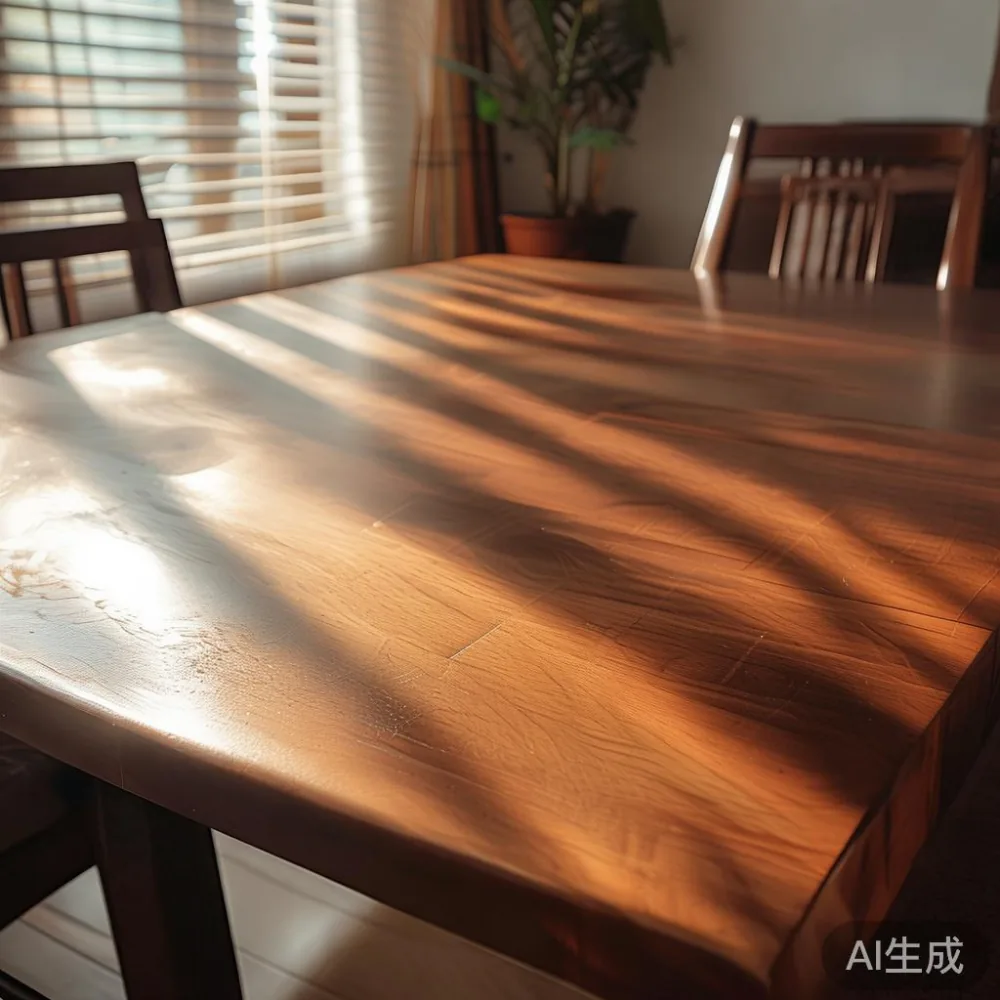
The challenge is rarely the lacquer itself. Most quality finishes applied by MIDHILL furniture use a multi-coat nitrocellulose or polyurethane lacquer, cured under controlled factory conditions. The problem is what lives beneath and around that skin. Singapore sits on the equator, and humidity regularly sits between 70% and 90% year-round. Solid wood, even kiln-dried to 8% to 12% moisture content before machining, will respond to that ambient moisture by slowly absorbing and releasing it through any thin point in the finish. A lacquer film is a barrier, not a vault. Daily temperature swings of 6°C to 10°C inside an air-conditioned flat cause micro-expansion cycles in the top boards, especially on a dining table longer than 180 cm where the central panel does most of the work.
Add to this the wear pattern of actual family life: hotpot pots at 180°C placed directly on the surface, citrus spills from calamansi juice, the condensation ring left under an iced barley glass on a Sunday afternoon. Each of these is a small chemical or thermal event that, repeated often enough, will haze or dull the topcoat. Understanding the mechanics is half the battle, the other half is a simple weekly routine.
What is the right daily and weekly cleaning routine?
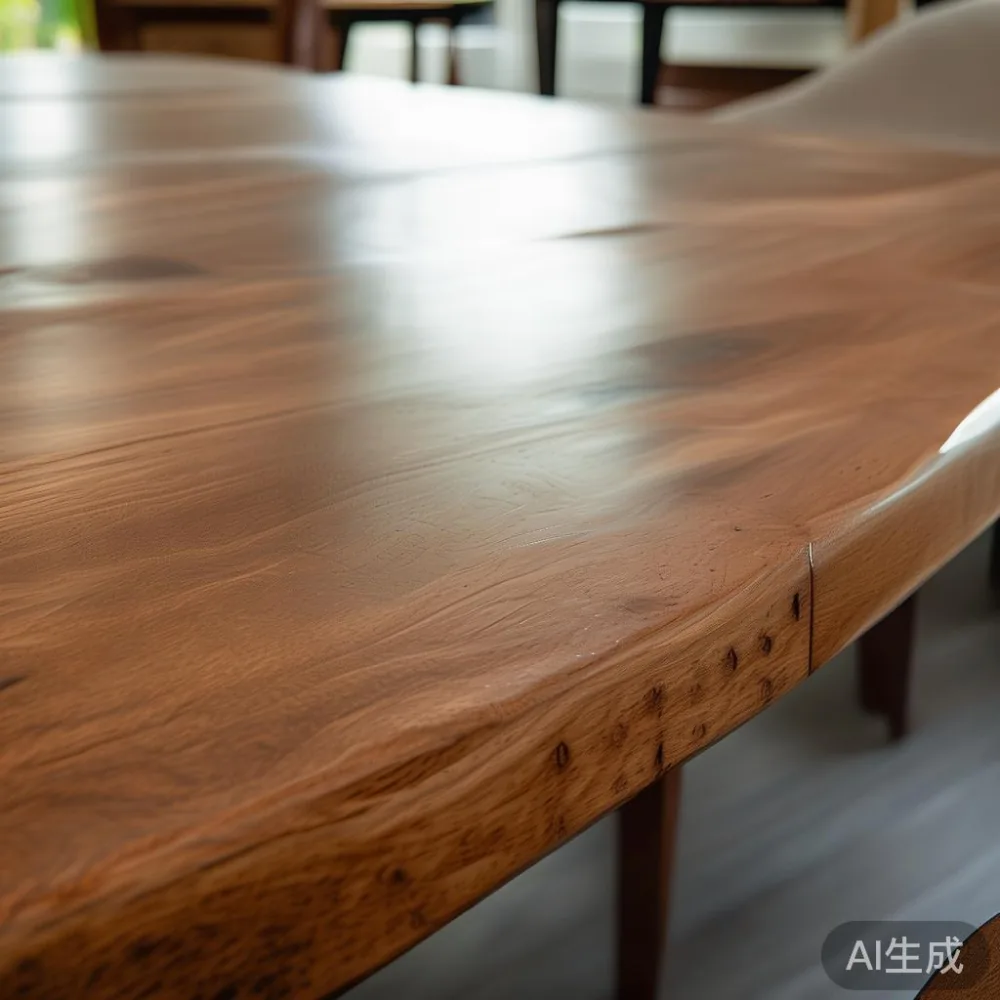
For day-to-day dust, use a microfiber cloth, ideally 40 cm x 40 cm, dampened with plain water and wrung out until it is barely moist. Wipe in the direction of the grain along the 200 cm length, not across. Dry the surface immediately with a second clean microfiber so no water film remains. For sticky residue, add one drop of pH-neutral dish soap (around SGD 4 for a 500 ml bottle at FairPrice) to 500 ml of water. Never spray anything directly onto the lacquer; pour onto the cloth.
Once a week, do a deeper pass. Mix 1 part white vinegar to 3 parts water, wipe with a well-wrung cloth, then follow with a clean water rinse and a dry buff. The mild acetic acid cuts through the dulling oils from hands and palms without attacking the cured lacquer. Avoid silicone-based polishes, which look great for 20 minutes and then trap dust into a film that is genuinely hard to remove later. For a Punggol family of four with two children under 10, this 5-minute routine on Sunday morning keeps the dining table looking new through the year.
How should I deal with spills, hot dishes, and ring marks on a lacquered dining table?
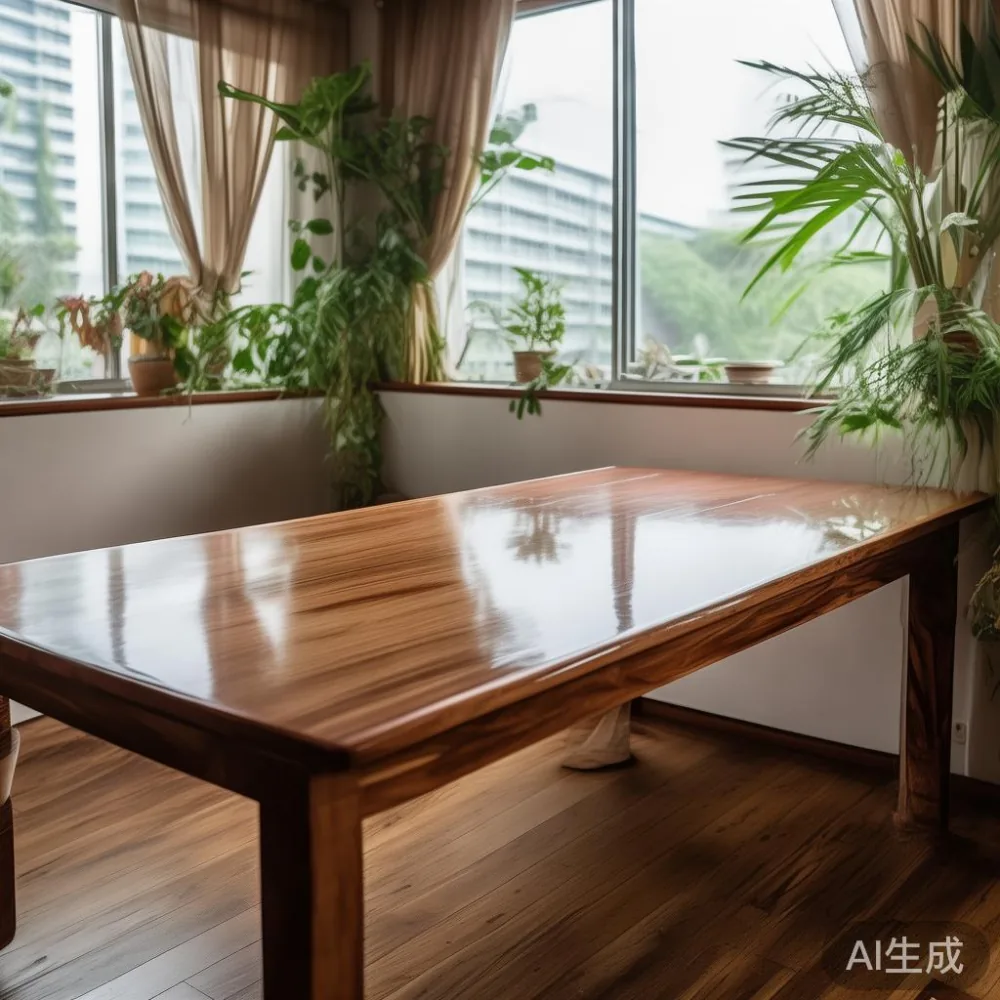
Spills are the biggest threat to lacquered wood. Act within 30 seconds. Blot, never wipe, red wine, kopi, or teh tarik with a paper towel first, then a barely damp microfiber. Liquids left to pool for more than 10 minutes can creep through micro-pores along the join between board edges and create white cloudy rings that may need professional buffing to remove.
Heat is the second threat. A pot coming off the stove at 220°C on a tempered glass cooktop will transfer more than enough heat through a trivet-less contact zone to soften lacquer locally. Always use a trivet. Felt pads are decorative; cork or solid wood trivets around 3 cm thick are safer. For hotpot nights, lay a 60 cm x 90 cm canvas runner down first; it catches splatter and insulates.
For ring marks, the old trick of toothpaste on a soft cloth works on shallow hazing only. Deeper white rings respond to a paste of non-gel baking soda and a few drops of water, rubbed in with a soft cloth using straight, light pressure for no more than 15 seconds, then wiped clean and waxed. If the mark survives two attempts, stop and call a professional. Over-rubbing wears through the lacquer into the stain coat and you will create a bigger repair than the original ring.
How do I control humidity without ruining my HDB electricity bill?
Condensation on air-con supply grilles in Bedok flats during June monsoon season is real. The most practical tool is a small dehumidifier rated at about 8 L to 12 L per day, placed in the living area, with a target of 55% to 60% relative humidity. A 12 L unit from a local electronics chain costs about SGD 180 to SGD 240 and uses roughly 180 W. Run it on a hygrometer-controlled plug at SGD 25 to SGD 35 so it cycles off when the reading drops below 55%.
Air-conditioning alone is not enough. The 24°C setting most HDB owners use will drop humidity in the living room but raise it in the dining corner by the time you cycle off and cook dinner, a 3°C rise that repeats daily. A separate small hygrometer at table level is worth the SGD 15 it costs. When the reading climbs above 65% near your solid wood sofa or dining table, run the dehumidifier for 90 minutes, no more.
Direct sunlight is the quiet killer. A west-facing window in a Punggol executive flat will focus late-afternoon heat at about 38°C onto one corner of the table for two to three hours. Lacquer expands, softens slightly, then contracts as the sun moves, and over 12 months the colour shifts and micro-cracks appear. A sheer linen or polyester curtain at SGD 30 per metre, hung 20 cm inside the glass, cuts incident UV by around 60% and is a cheap fix.
What about scratches, dents, and long-term refinishing?
Light surface scratches on a 180 cm to 200 cm dining table top are normal. They sit in the topcoat and can often be blended out with a paste wax on a soft cloth, applied sparingly, allowed to haze for three minutes, then buffed in line with the grain. A 400 g tin of paste wax retails for about SGD 28 to SGD 40 and treats most dining tables four to six times.
Deeper scratches that you can catch with a fingernail cut through the lacquer and into the stain or wood. Touch-up marker pens matched to ash, oak, or walnut exist, but exact colour matching against a year-aged lacquer is poor. For these, a professional sand-and-restore at a furniture workshop runs SGD 180 to SGD 380 per square metre of top, with a 5- to 10-day turnaround.
If you are comparing a Rustic for dining room set with a sleeker model, remember that heavy wire-brushed or hand-distressed finishes hide wear better than piano-lacquered surfaces, but they also trap more airborne moisture in their textured valleys and need a brush to clean, not a cloth. For buyers hunting under 2000 American furniture options shipped with lacquered tops, the same humidity rules apply, just with longer delivery times of about 35 to 50 days because containers from the US West Coast are slower than regional Foshan routes.
How do I fit a 200 cm dining table through a 1.2 m corridor and a 0.9 m lift door during delivery?
This is the question every Tampines and Bedoc owner has before checkout. Measure the corridor width from the lift door to your unit door, the inside width of the lift car, and any 90° turns near the staircase. Most Singapore lift cars are 1.1 m to 1.5 m deep with 0.9 m doors. A 200 cm x 100 cm dining table can be carried horizontally end-to-end in a 1.2 m corridor only by tilting to exactly the right angle, a stressful job for two movers.
Better option: request the table in two leaves of around 100 cm each, or have the legs detached and the top carried flat. MIDHILL furniture offers leg-off delivery as standard for solid wood furniture over 180 cm in length, and the engineering is bolt-through, not glue, so re-assembly takes one person with an Allen key about 25 minutes. Add SGD 60 to SGD 90 for a Saturday hand-carry into the unit if the route cannot take a flat 200 cm rectangle; this is cheaper than one damaged corner.
Are there finishes that survive Singapore better than others?
Open-pore matte lacquers hide micro-scratches but show oil from hands faster. Piano-gloss finishes highlight a clean room but reveal every fingerprint and the faintest haze after a year. Conversion varnishes, the cross-linked polymer finishes some premium ranges use, are tougher but cost roughly 25% to 35% more and require professional re-application when they finally wear through, around year 12 to 18 for a household that dines at the table nightly.
If you are also shopping for a matching bed frame, wardrobe, and nightstand, ask whether the same lacquer system is used across the set. Inconsistent finishes between a lacquered dining table top and a waxed-oak nightstand will age at different rates and read as a mismatch within 18 months. The top 10 Nordic furniture brands most buyers compare in Singapore all use water-based acrylic lacquers now, partly for indoor air quality, partly because they tolerate humidity swings within 5% better than older solvent formulas.
What about cleaning products I should never put on lacquered wood?
Avoid anything with ammonia, bleach, acetone, or silicone oil. Bleach-containing sprays sold for kitchen counters (often SGD 6 to SGD 12 in neighbourhood shops) will yellow the lacquer within weeks and crack it within a year. Furniture polishes that promise "shine in one wipe" almost always contain silicone, which migrates into joints and makes any future re-finishing job harder, sometimes by a factor of three in labour.
Wax sticks sold for repairing parquet floors are fine, but only on plain wax finishes, not modern cured lacquers, where they create a soft patch that catches every fingerprint. If you want a natural look, consider a hard-wax oil finish from the start; it costs more, around 15% premium, but is locally repairable with a 20-minute buff and a fresh coat every 18 to 24 months.
How does MIDHILL handle returns, warranty, and refinishing for Singapore buyers?
MIDHILL ships from Foshan with a structural warranty of 10 years on joinery and a lifetime refinishing service, meaning you can ship the top back for a factory re-lacquer for a flat fee, roughly SGD 280 to SGD 480 per square metre, including return logistics. Standard delivery to Singapore free for orders above US$350 (about SGD 470), with door-to-door times around 18 to 28 days in normal sea-freight conditions, faster by air if needed. Returns are accepted within 14 days for unused items in original crates.
For buyers browsing wholesale Mid-century modern furniture listings, a 14-day return window is generous, since factory seconds and ex-display models are usually final-sale elsewhere. If you are after the best Mid-century modern bed for 2026 to match your dining table, ordering the headboard and table top together in one container cuts freight per piece by about 30% and gives you one consistent lacquer batch.
What about smart shopping for designer European light luxury furniture in Singapore?
Designer European light luxury furniture and post-modern light luxury styles share a finish philosophy, thin, flawless, mirror-smooth lacquer, achieved with multiple sanding coats and high-pressure spray booths. The same care rules apply, but the underlying solid wood sofa or bed frame often uses beech or birch rather than ash. These species are denser and respond slightly less to humidity swings, useful if you live in a Punggol corner unit that catches both morning and afternoon sun.
For a complete room, budget around SGD 1,800 to SGD 3,200 for the lacquered dining table, SGD 1,400 to SGD 2,600 for a matching solid wood bed frame, SGD 1,100 to SGD 2,000 for a six-door wardrobe with the same lacquer tone, and SGD 200 to SGD 400 per nightstand. A marble table in the same room introduces a different care routine, pH-neutral cleaner only, but pairs well visually with light-luxury lacquered tops because both have a low-glare soft sheen. Add 9% GST to all prices at checkout, and you have a realistic SGD 5,000 to SGD 9,000 room package excluding delivery and accessories.
Final thoughts before you commit to a lacquered dining table in Singapore
A lacquered dining table from MIDHILL is not a low-maintenance purchase, it is a high-payoff purchase for owners willing to do five minutes of care each week. The 200 cm ash top in Wei Ling's Punggol flat has survived a ba zhua hotpot incident, two monsoons, a renovation dust phase, and a toddler art project. With the right microfiber, a SGD 12 hygrometer, a SGD 25 dehumidifier plug, and a strict no-bare-hot-pots rule, your dining table will be the piece your children remember from Sunday dinners for the next 15 to 20 years. That is the real return on a properly cared-for solid wood surface in a tropical climate.