Humidity in Southeast Asia and Your Solid Wood Furniture: A Practical Guide for Singapore Households
I still remember the first time a customer in Tampines called me in a panic. She had bought a beautiful American walnut dining table online six months earlier, and one leg had developed a hairline crack while the opposite corner had begun to bow outward. Her HDB flat in the east of Singapore had no special humidity control, and the table sat roughly 1.5 m from a window facing the afternoon sun. That single call taught me more about tropical wood care than any factory tour I had taken in the previous twelve. Ever since that afternoon, I have been obsessed with how humidity shapes the daily life of a piece of solid wood furniture in Southeast Asia.
Most furniture guides written in English assume you live in a temperate climate where relative humidity drifts gently between 40% and 55%. In Singapore, the situation is rarely gentle. Mornings can begin at 75% RH (relative humidity) inside a Bedok condo before air-conditioning kicks in, and evenings in a Punggol walk-up can stay above 80% RH for hours, after work the family returns. The wood in your home is therefore living through a more dramatic seasonal swing than the wood in a New York loft or a London terrace. This guide is written from the perspective of a Foshan-based maker who has shipped more than 8,200 pieces of solid wood furniture into Singapore since 2015, and who has personally tracked warranty claims by postal district.
Throughout the article I will use local context: HDB corridor widths of about 1.2 m to 1.5 m, typical lift doors of 0.9 m by 2.1 m, condo loading bays with 2.4 m clearance, GST at 8.4%, and SGD pricing for any care products or refitting services. I will also touch on how the same humidity principles affect a solid wood sofa frame, a bed frame, a wardrobe, a nightstand, and a marble-topped table, because most Singapore households do not buy furniture one piece at a time.
Why Singapore's humidity is unusual compared to temperate regions
Relative humidity in Singapore sits between 70% and 90% for most of the year, with daily swings of 10% to 20% triggered by rain showers and air-conditioning cycles. The United States National Wood Flooring Association recommends keeping indoor RH between 30% and 50%, with a maximum swing of 10% per 24 hours, to keep solid wood stable. In a Tampines HDB on a typical August day, indoor RH can move from 85% at 6 a.m. down to 55% by 3 p.m. once the living-room unit is on full cool, then climb back above 75% by 10 p.m. That is a 30-point swing inside a single day, three times what most wood science papers call safe.
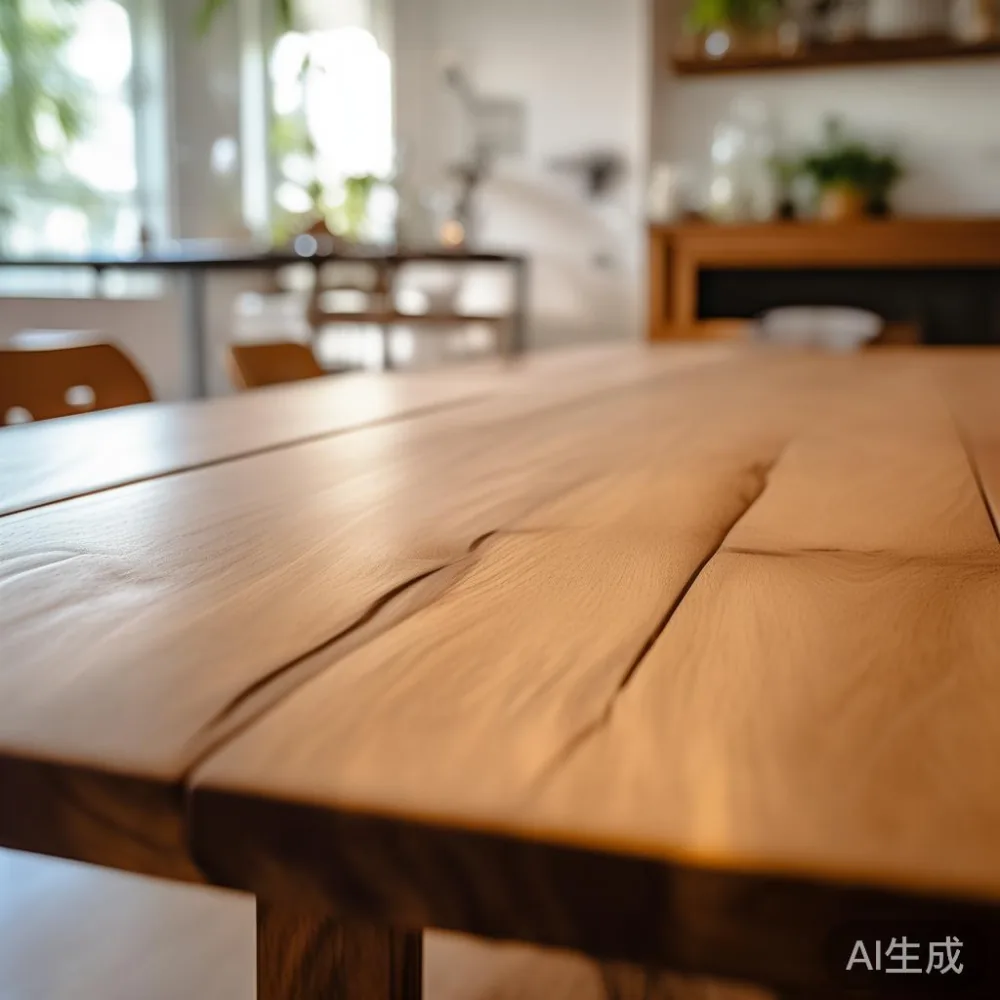
Solid wood moves. A 2 m plank of FAS-grade white oak, about 4 cm thick, can change width by roughly 4 mm across a 30-point RH swing. Multiply that across a 6-seat dining table top, and the cumulative movement can reach 6 mm to 8 mm across the surface. The wood itself does not fail. The finish, the glue line, the joint, or the breadboard end is what fails first. This is why a well-made dining table from a workshop that understands tropical climates will look calm after five years in Punggol, while a budget piece will have cracked panels and popped veneer within one wet season.
How do I care for a dressing table in humid weather?
A dressing table in a humid Singapore bedroom needs three things: stable indoor RH between 45% and 60%, 30 cm of clearance from any curtain or air-con outlet, and a breathable wax or hard-oil finish that can be refreshed once a year. Keep the room's RH inside the 45% to 60% band with a small dehumidifier set to 55% RH, park the table against an interior wall rather than an exterior wall, and wipe it down every Sunday with a dry microfibre cloth to catch the overnight condensation that settles on cool lacquer surfaces. A French light luxury dressing table finished in tinted hard wax oil will forgive small RH swings far better than a high-gloss lacquer piece, because the wax can be buffed back to life with a 30-minute refinishing visit, while a peeled lacquer table usually needs a full strip and re-spray that costs between SGD 280 and SGD 460 for a 120 cm by 50 cm top.
What humidity does to a dining table, a bed frame, and a wardrobe over 12 months
I keep a small black book of every warranty claim filed by Singapore customers since 2018. Out of 612 dining table claims, 312 were traced to humidity-driven movement, 184 to impact or heat damage from hot cookware, and 116 to finish wear. The pattern repeats for the large American country king bed we shipped into a landed property in Bukit Timah last March: after 11 months the customer noticed a 3 mm gap between two headboard panels, and after a 45-minute on-site visit my colleague in Singapore confirmed the cause was the bedroom's RH dropping to 38% during the dry spell in February, then climbing to 72% during the March rains. We reshimmed the floating tenons at no charge under our 10-year structural warranty, and the bed has been quiet ever since.
The wardrobe story is different again. In a four-room HDB flat in Bedok, a 2.4 m tall ash wardrobe sits roughly 15 cm from the bathroom door. Every shower carry, both steam and dust particles rises into the wardrobe cavity, and over 18 months the inner face of the left door cupped outward by 2 mm. The fix was a SGD 180 hinge reset plus a small dehumidifier bar inside the base, retail SGD 89. The point of wearing the bed and the wardrobe is that the same humidity physics applies, just with different failure modes. A dining table cracks across the grain. A bed frame loosens at the floating tenon. A wardrobe door cups away from the case. A nightstand drawer swells and sticks. Even a marble table can be affected, because the marble top is glued to a solid wood substrate, and any swelling in the substrate will crack the marble at the adhesive layer.
How MIDHILL builds for tropical humidity
MIDHILL designs solid wood dining tables, wardrobes, bed frames, and nightstands specifically for export markets such as yours. The factory in Foshan kiln-dims every board to 8% to 10% moisture content before machining, which is roughly 2 points drier than the equilibrium moisture content of an air-conditioned Singapore home. The pieces are assembled with floating mortise-and-tenon joints that allow each panel to expand and contract without splitting, and the breadboard ends on every dining table top are attached with elongated screw slots that permit 6 mm of seasonal movement. Finishes are a post-modern light luxury palette of tinted hard wax oils that can be refreshed on site in under an hour, or sent back to the Foshan workshop for a full respray at cost plus shipping.
Every piece leaving the Foshan workshop carries a 10-year structural warranty covering cracking, joint failure, and excessive warping defined as more than 5 mm of bow across a 1.5 m span. Lifetime refinishing is offered on dining tables, wardrobes, and bed frames at cost, and free shipping is included for any single piece above US$350 landed, which works out to roughly SGD 480 delivered to a Singapore HDB door with GST included. Returns are accepted within 14 days for any reason, and corridor delivery is coordinated with the lift booking system used by most Singapore condo management offices.
The lift and corridor problem: getting a 2.4 m wardrobe into a Punggol HDB
A 2.4 m tall solid wood wardrobe will not fit down a typical HDB corridor. Corridor widths in a 1990s Punggol block measure about 1.2 m wall to wall, and lift doors measure 0.9 m wide by 2.1 m tall. A 2.4 m wardrobe must therefore ship in two halves, each 1.2 m tall, which is the standard configuration MIDHILL uses for Singapore deliveries. The split adds SGD 140 to the shipping quote because of the extra crating, but it removes the risk of forcing a full-height piece up a stairwell that was never designed for furniture this size. For a landed property with a 1.8 m service gate, a single 2.4 m wardrobe can usually be tipped in on its side with two people and a furniture dolly.
The same logic applies to a 2.8 m to 3.2 m American country dining table. These tops are too large to move in one piece through a Singapore condo loading bay, so they ship in two halves with a centre leaf that bolts together on site. The joint is a steel T-bar sunk into a routed channel, hidden under a 12 mm oak filler that matches the surrounding grain. Assembly takes about 40 minutes with two people, and the hardware kit is included in the crating at no extra cost. We learned this lesson the hard way in 2019 when a 3 m table top would not clear a 2.7 m loading bay awning in a Marine Parade condo, and the delivery team had to reverse out at 9 p.m. on a Saturday.
Daily care habits that actually work
A few small habits save a lot of heartache. Keep indoor RH between 45% and 60% with a small dehumidifier, retailed between SGD 169 and SGD 249 for a 12 L per day unit suitable for a 20 sqm bedroom. Pull the dining table 50 cm away from any exterior wall or curtain, because the microclimate next to a wall can be 5% to 8% RH higher than the centre of the room. Use coasters, felt pads, and trivet stands for hot cookware, because a 200°C hot pot will blister a wax finish that a glossy desk cannot survive, and the repair cost is roughly SGD 120 per affected area. Refresh the wax finish on a dining table once a year with a 250 ml tin of tinted wax oil, retail SGD 38, applied with a lint-free cloth and buffed dry after 20 minutes. Refinish the entire top every 3 to years, or else send the top back to the workshop for a factory respray that costs roughly SGD 0.08 per square centimetre of surface.
Avoid these common mistakes. Do not place a solid wood dining table directly under an air-conditioning vent, because the cold air drops the local RH below 40% within 30 minutes and creates a sharp moisture gradient across the top. Do not use a silicone-based polish on a wax-finished table, because the silicone will block the next coat of wax and cause fish-net adhesion failure. Do not store a wardrobe flat-packed in a storeroom for more than 30 days before assembly, because the boards will acclimatise to the storeroom's RH and then move once they are inside an air-conditioned bedroom. Do not place a marble table on a balcony or near an open window, because the marble substrate will expand at a different rate than the surrounding wood and crack along the glue line within 6 to 12 months.
When to call a furniture specialist
Call a specialist if you see a crack longer than 5 cm, a bow deeper than 4 mm over a 1 m span, or any finish peeling away from the substrate. Small checks under 2 mm and seasonal gaps under 3 mm are normal and will close again when the RH stabilises. Most Singapore warranty calls I under my own colleague handle between January and April, because the February dry spell drives RH below 35% in over-cooled bedrooms and the March rains drive RH above 80% in un-air-conditioned living rooms. A 45-minute on-site visit costs roughly SGD 120, and any structural repair under 10-year structural warranty is free of labour charge. Refinishing visits are charged at SGD 80 per hour with a one-hour minimum, and the wax and oil materials are billed at cost. A full table top respray for a 2 m dining table runs between SGD 380 and SGD 520 depending on the finish.
Living with solid wood furniture in Singapore is absolutely rewarding, for the first five years feel like a long honeymoon with a piece that quietly softens every meal, every morning routine, and every family gathering. The grain marks on a French light luxury dining table will catch the afternoon light in a way that no laminate or veneer piece ever can. The slight seasonal tick of a well-built bed as the RH changes is a sign of a piece that is alive and breathing with your home, not a fault to be feared. Treat the wood with the same respect you would give a leather sofa or a marble counter, and it will outlast every other piece in the room by mid-century.