Styling a Small Singapore Apartment Around a Solid Wood Dining Table Without Making It Feel Crowded
I spent three weekends in August walking through showflats and resale units in Tampines, Bedok and Punggol with a tape measure in my bag, and what struck me was how often a perfectly good 75–90 sqm HDB flat feels pinched for one predictable reason: the dining table was bought first, the rest of the living room was arranged around it, and nobody questioned the size. A 150 cm six-seater in a 3.2 m wide living-dining zone will eat every centimetre of walking space you have, and once the chairs are pulled out, the corridor to the kitchen narrows to 55 cm, which is below the 80 cm most adults need to pass comfortably behind a seated diner. Flip the priority, and the same flat feels completely different.
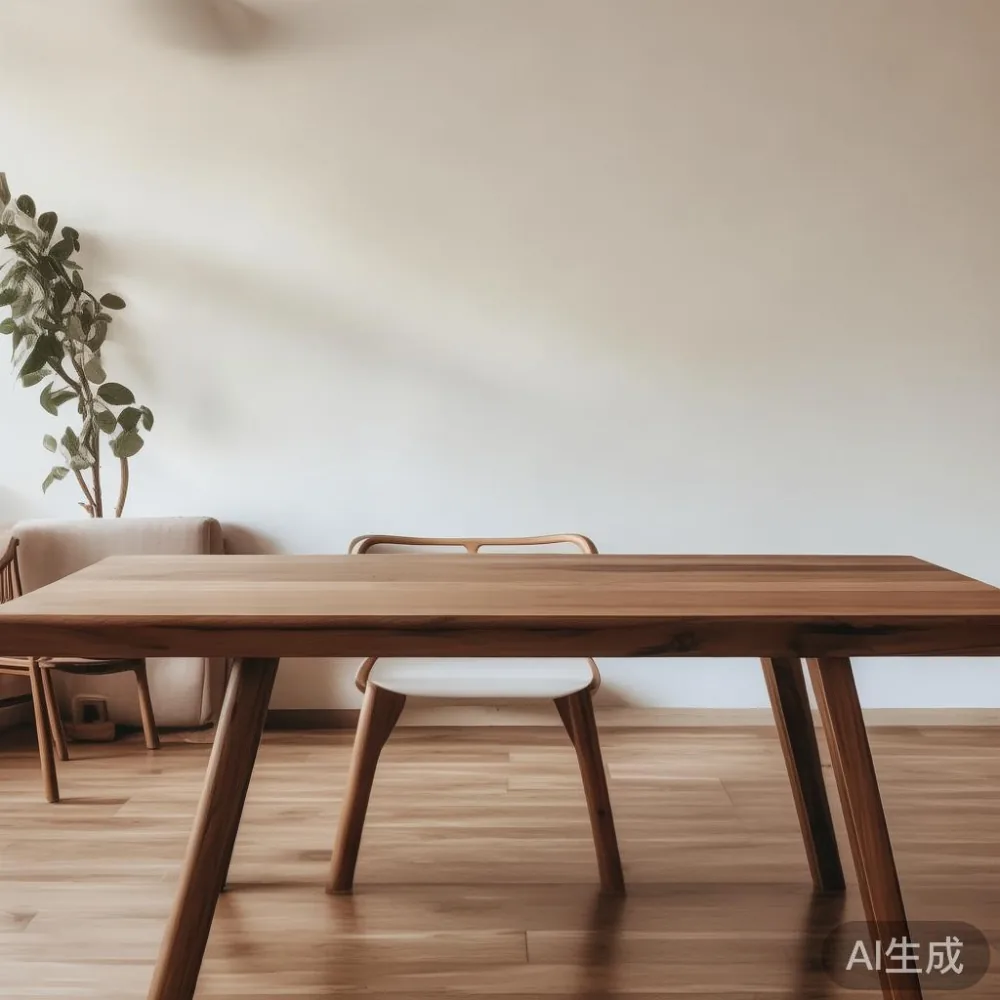
Styling a small apartment in Singapore is less about clever hacks and more about three boring, measurable decisions: furniture footprint in centimetres, visual weight in material and colour, and circulation paths of at least 80–90 cm around every major piece. Get those right and a 4-room HDB can read like a 5-room condo. Get them wrong and even a beige oak industrial style console in the entryway will look like clutter, because the eye has nowhere to rest.
Measure Your Room Before You Fall in Love With a Dining Table
The single biggest mistake I see in local showflats is a 180 cm or 200 cm dining table dropped into a space that mathematically cannot hold it. The rule I now follow is brutal and simple: leave 90 cm between the edge of the table and the nearest wall, sofa or TV console, and another 60–70 cm of chair pull-back so an adult can stand up without bumping the person behind them. In a typical HDB living-dining of about 3.0–3.4 m wide, that leaves a table of 120–140 cm, which seats four comfortably and six at a squeeze.
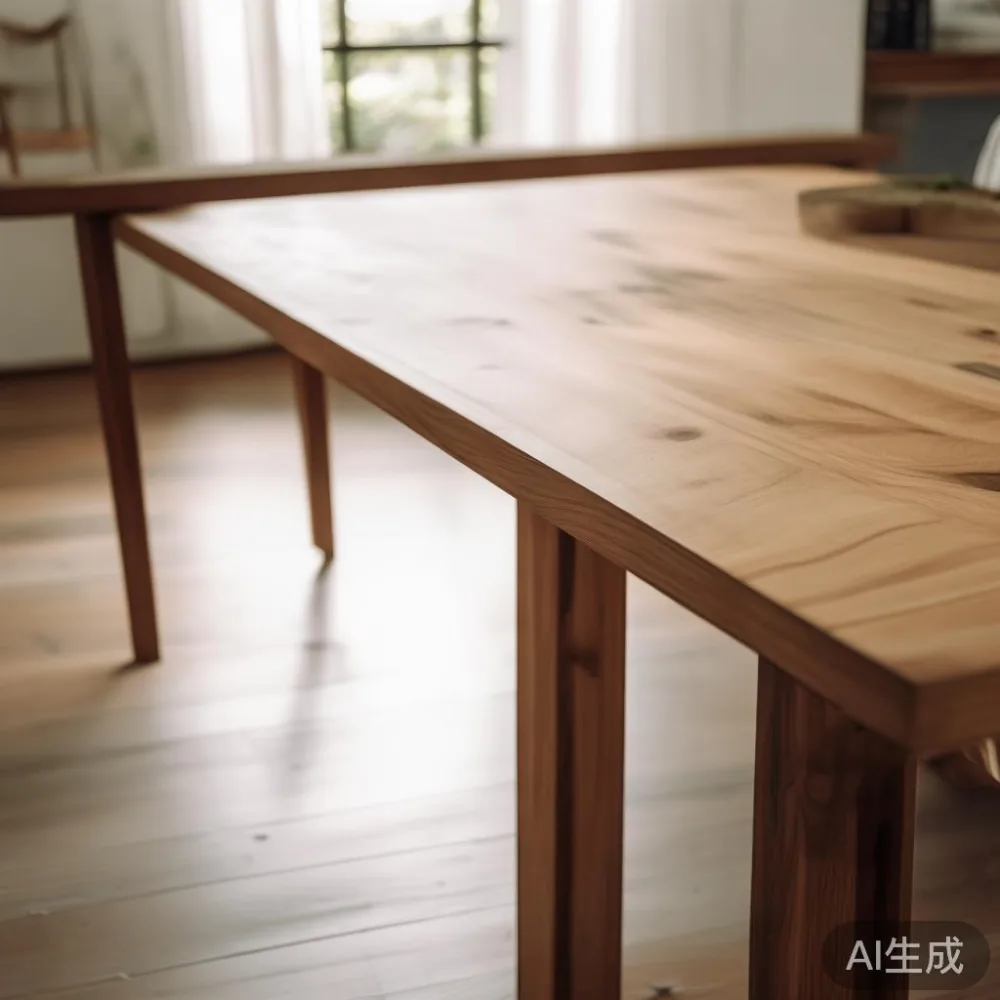
For two-person households in a 2-bedroom flexi unit, a 90 cm round solid wood dining table is often the right answer. Round tables have no corners to clip past, they seat four on standard 45 cm wide chairs, and a 90 cm diameter needs only 75 cm of clearance, which fits a Punggol studio's kitchen-living strip with room to spare. Length matters more than width for rectangular tables: a 140 x 80 cm rectangle reads lighter than a 120 x 80 cm square at the same seat count, because the long axis aligns with the longest wall and the eye travels through it.
Height is the other number people ignore. Standard dining tables sit at 75 cm with a 43–48 cm seat height. Counter-height tables at 90–92 cm pair with stools at 65 cm, but they hog visual space in a low-ceilinged HDB (2.6 m floor-to-floor is common in older blocks) and make the room feel shorter. Stick to 75 cm unless your ceiling is 2.8 m or higher.
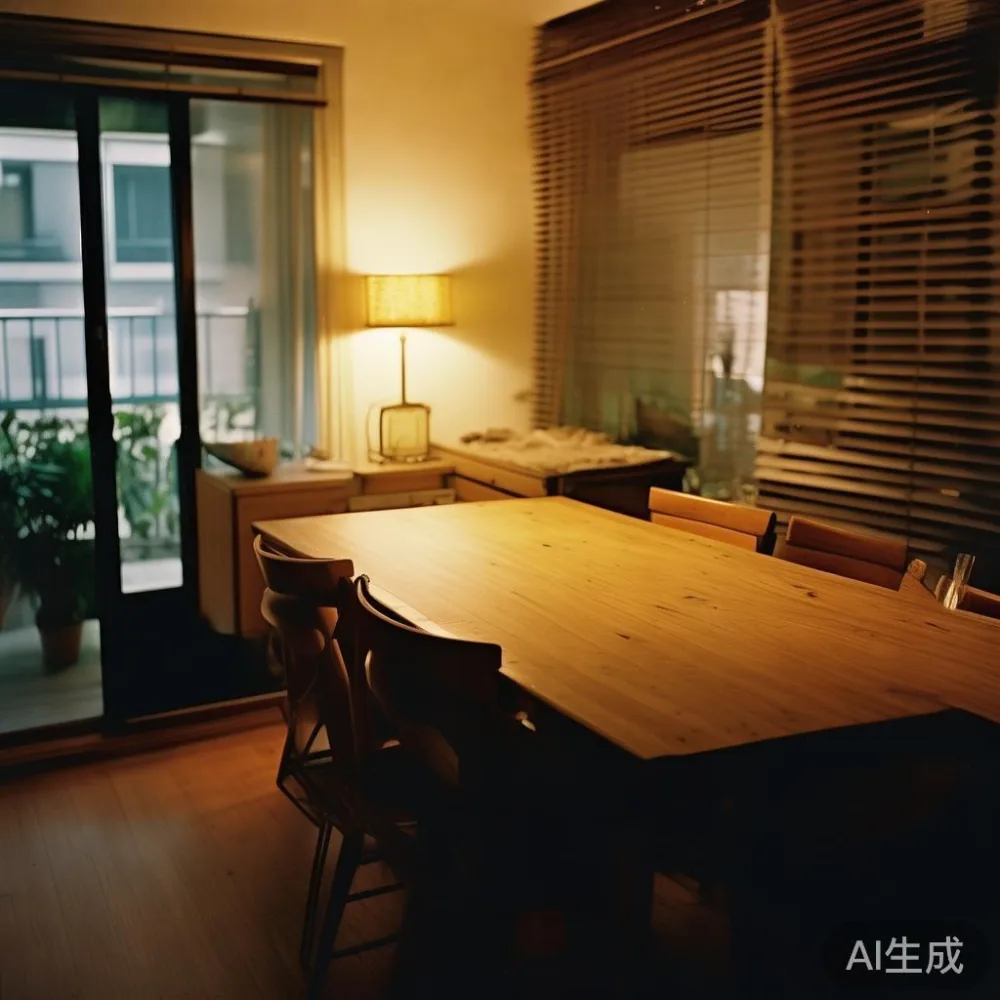
What Solid Wood Actually Does For a Small Room
Engineered wood and MDF are lighter in weight and lighter in price, and they show it. A 120 cm MDF dining table in light oak laminate might weigh 25–35 kg, while a comparable solid wood dining table from a maker like MIDHILL weighs 45–60 kg, which sounds like a disadvantage in a fourth-floor walk-up but is actually a visual one. Heavier pieces anchor a room; lighter pieces float, and floating furniture in a small footprint reads as temporary, like a desk in a co-working space rather than a home.
Solid wood also ages honestly. After eight years in a Bedok 5-room flat, my colleague's ash dining table has darkened by about two shades where morning sun hits it through the east-facing window, and that patina now feels like the room's centre of gravity. A 3-year warranty on the structural joinery and a written promise of lifetime refinishing for surface scratches is the kind of backstop that turns a S$1,800–S$3,200 purchase into a 15-year piece of furniture. MIDHILL's 10-year structural warranty on their solid wood dining tables, bed frames, wardrobes and nightstands is the figure I actually quote to clients, because in a HDB that gets shifted every 7–10 years, a table that survives two moves pays for itself.
Material also dictates how much light a surface bounces back. A matte white laminate reflects about 70% of incident light, an open-grain oak about 35–40%, and a stained walnut around 20%. In a Tampines North BTO with only one window wall, the dining table is either helping you or hurting you. A pale solid wood top, sealed with a clear matte lacquer rather than a high-gloss polyester, gives you the warmth of real grain without turning the table into a black mirror at night.
Light Luxury, Small Apartments and Why the Term Matters Here
French light luxury, American light luxury and post-modern light luxury are not interchangeable, and choosing between them shapes your dining table more than any other decision. French light luxury in a Singapore context means restrained classical proportions, tapered legs, soft curves on the chair backs, and finishes in champagne brass or brushed bronze, usually on a warm white or cream painted base. It pairs well with parquet-look vinyl floors in the newer Punggol flats and looks correct against the cornicing you'll find in older Tiong Bahru walk-ups.
American light luxury leans into scale and comfort: deeper seats (55 cm instead of the standard 50 cm), thicker cushions (12 cm instead of 8), and tables with chunkier 7–8 cm legs rather than the 3–4 cm turned spindles. It suits the larger HDB typologies, the 5-room and executive flats, where you can afford a 180 cm dining table and a separate solid wood sofa in the living zone. Post-modern light luxury is the playful cousin: asymmetrical chair legs, mixed materials such as a travertine-look top on a slim black steel base, and a marble table at the entry that reads as sculpture rather than furniture.
For a small apartment, post-modern light luxury is the hardest to do well, because every sculptural element must earn its floor space. A 90 cm round marble table at S$1,400–S$2,200 is justifiable if it replaces a sideboard and a console; two pieces of sculpture in 60 sqm is a gallery, not a home. American light luxury scales the most gracefully downward, because the proportions were always generous and you simply shrink each piece by 15–20%.
How do I choose a fabric sofa for a living room?
Choose a fabric sofa whose seat depth, arm height and leg clearance are matched to the specific centimetres between your dining table and your TV wall, because a sofa that is 15 cm too deep will push your walkway under the 80 cm minimum and undo every other layout decision you have made.
In a Singapore HDB, that means measuring the run from the back of the dining chairs (about 50 cm pulled out) to the wall opposite, then subtracting 90 cm for circulation. Whatever distance remains is your maximum sofa depth. For most 4-room flats this lands at 85–95 cm, which is exactly the standard seat depth of an American light luxury three-seater. French light luxury sofas tend to sit shallower at 80–85 cm, which is why they slip more easily into tighter condos in the Novena or River Valley area.
Fabric choice matters more than people think. A linen-blend in a 60% linen, 40% cotton weave breathes in our 32°C, 85% humidity afternoons, while a polyester velvet looks gorgeous in the showroom and becomes a sweat patch by week two. For households with children or cats, a tightly woven performance fabric at 30,000+ Martindale rubs will outlast a loose weave at 15,000 rubs by roughly five years. Frame construction is the silent S$800–S$1,500 line item: kiln-dried hardwood frames with mortise-and-tenon joinery and an 8-way hand-tied spring base are heavier (often 55–70 kg for a three-seater) but last 15+ years, while a plywood frame stapled together weighs 30–35 kg and starts squeaking around year four.
Bed Frames, Wardrobes and Nightstands: The Bedroom Side of the Equation
The same 90 cm clearance rule applies in the bedroom, and most Singapore couples discover this only after the bed frame arrives. A king-size mattress is 183 x 190 cm and the frame adds another 5–8 cm on each side, so the footprint is roughly 195 x 205 cm. To walk around three sides of the bed, your bedroom needs to be at least 3.1 m wide by 3.4 m long, which is a master bedroom in a 5-room HDB. In a 3-room flat's 2.7 x 3.0 m bedroom, a queen at 160 x 200 cm, or even a super-single at 107 x 191 cm, is the honest choice.
A solid wood bed frame in oak or ash at 35–45 kg will sit firmly on a HDB's vinyl floor without sliding; a hollow MDF frame at 18–22 kg creeps 2–3 mm per month, and by year three the drawers no longer align. Lift-up storage beds are popular in HDBs because they replace a wardrobe, but check the hydraulic piston rating: 1,200 N handles a 60 kg mattress; you need 1,800–2,000 N for a pocket-spring king, or the lid will not stay up by the third year.
Wardrobes should be sized to the wall, not to a catalogue. A 240 cm tall, 180 cm wide, 60 cm deep wardrobe fits the standard HDB bedroom wall with 5 cm clearance top and bottom for the cornice and skirting, and gives you roughly 2.5 cubic metres of hanging and shelf space, which is enough for two adults. Sliding doors save the 50 cm of swing clearance that hinged doors need, and a mirrored sliding door effectively doubles the visual depth of the room. Nightstands at 45 x 40 x 55 cm sit correctly beside a queen bed; the chunkier 60 x 45 x 65 cm American light luxury nightstand belongs beside a king in a 5-room.
Delivery, Lifts and the Singapore Logistics Reality Nobody Mentions
A 60 kg solid wood dining table will not fit through a HDB door that is 90 cm wide and 210 cm tall if it is fully assembled. The standard lift in a 1990s HDB block is 1.1 m wide x 1.4 m deep x 2.3 m tall with a 630 kg load limit, and the corridor outside your door is 1.2 m wide. Pieces over 45 kg usually need to come flat-packed, which a good maker plans for: a dining table that breaks down into a tabletop, apron and four legs, each under 18 kg, can be carried up the stairs during a lift breakdown, which happens more often than the town council admits.
Free shipping over US$350, which is about S$470 at today's rate, is the threshold I look for, because a flat-packed 1.5 cubic metre shipment from a Foshan factory to a Singapore warehouse typically costs S$180–S$280 for sea freight plus S$60–S$120 for last-mile delivery to a HDB. Anything below that threshold means you are subsidising someone else's shipping. 14-day returns sound generous until you read the restocking fee, which in the industry runs 15–25% for solid wood; a maker that absorbs that on change-of-mind returns is one worth paying a small premium for.
For landed property in areas like Bukit Timah or Sentosa, the calculation changes: a 2.4 m wardrobe will not fit through a 1.0 m side gate, and a crane lift over the car porch adds S$450–S$900 to the bill. Plan the access, not just the room.
A Small Apartment Styling Checklist You Can Run This Weekend
Walk your flat with a tape measure, a notepad and a chair. Note the width of every doorway, the lift depth if you are in a HDB, the corridor outside your unit, and the distance between your dining table and the nearest wall in three states: chairs pushed in, chairs pulled out for sitting, and chairs fully out for someone to walk past. Anything under 80 cm in the third state is your first problem.
Build around one anchor piece per zone, not three. In the living-dining zone, the anchor is almost always the dining table, because it is the heaviest, the flattest, and the most often used. A solid wood dining table of 120–140 cm seats four adults, weighs 45–55 kg, and from S$1,400 to S$2,800 in the Foshan-made segment gives you kiln-dried oak or ash with a 10-year structural warranty. Around it, place a solid wood sofa at 85–95 cm depth, a TV console at 35–40 cm depth to preserve the wall line, and nothing else larger than a 50 cm side table.
In the bedroom, the anchor is the bed frame. Choose the mattress size first, then the frame, then the wardrobes and nightstands to fit the remaining walls. In a 3-room HDB, that is usually a queen bed, two 45 cm nightstands, and one 180 cm wardrobe with sliding doors. Skip the dresser if it forces the wardrobe under 150 cm wide.
Finally, budget honestly. A complete light luxury furniture set for a 4-room HDB, anchored by a solid wood dining table, a solid wood sofa, a queen bed frame, a 180 cm wardrobe and two nightstands, lands between S$6,800 and S$11,200 depending on whether you go American, French or post-modern light luxury. Spread over 10 years, that is S$68–S$112 per month, which is cheaper than two years of a co-working hot desk and gives you a home that does not feel crowded.