Caring for a Lacquered Dining Table in Singapore: A Practical Guide for Tropical Homes
There is a particular kind of pride Singaporeans take in their dining table. Whether it sits in a four-room HDB flat in Bedok or anchors the open-plan living area of a Punggol condo, the dining table is where the day winds down, where cai fan boxes get spread out at 9 pm, and where Sunday steamboat happens for the fourth weekend in a row. If that table carries a high-gloss or matte lacquer finish, the climate you live in is quietly working against it. I learned this the hard way last month when I visited a friend in Tampines whose three-year-old dining table had developed a faint cloudy bloom across its surface — not damage, just humidity doing what humidity does in a country where the average monthly humidity rarely drops below 70%.
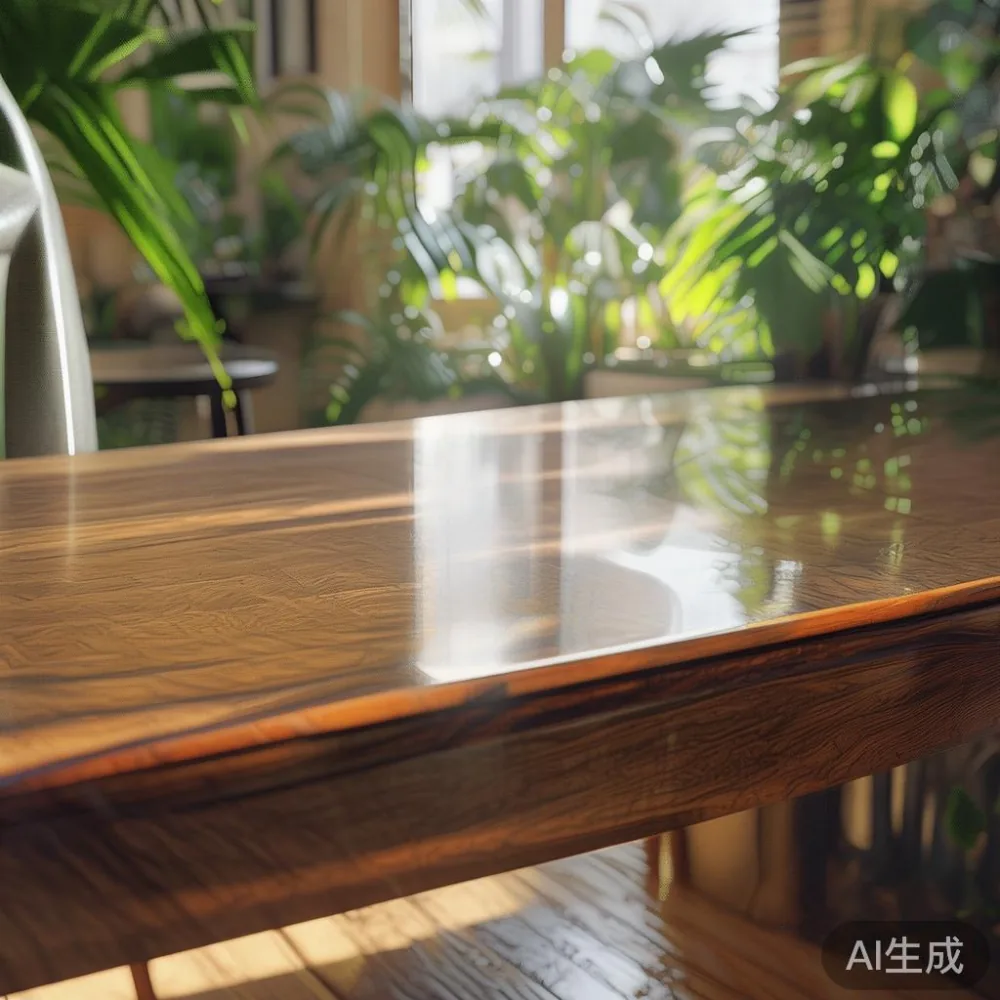
This guide is written for owners of lacquered wooden dining tables, with practical care habits tailored to Singaporean homes. I have included specific measurements, timings, and SGD pricing so you can plan your routine and your budget. As a furniture specialist who works closely with manufacturers that supply solid wood dining tables across Southeast Asia, I will reference one or two brands where it genuinely helps the reader — including MIDHILL, a Foshan-based maker I have written about before — but the focus here is your table, not their catalogue.
Why does lacquer struggle in a Singapore HDB or condo?
Most lacquered dining tables sold in Singapore are finished with either a conversion varnish (often called CV), a two-part polyurethane, or a nitrocellulose lacquer. All three are sensitive to the same three forces: relative humidity above 65%, sustained heat above 32°C, and direct ultraviolet exposure. Singapore checks all three boxes, every single day, between February and October. A standard four-room HDB flat in Bedok with cross-ventilation may sit at 72% RH at 11 pm; a north-facing Punggol condo with full-height glazing can climb to 85% RH after a thunderstorm. Neither extreme kills lacquer on its own, but the daily swing — 60% in the afternoon to 85% after a 4 pm shower — is what causes the wood beneath the lacquer to expand and contract faster than the film can follow.
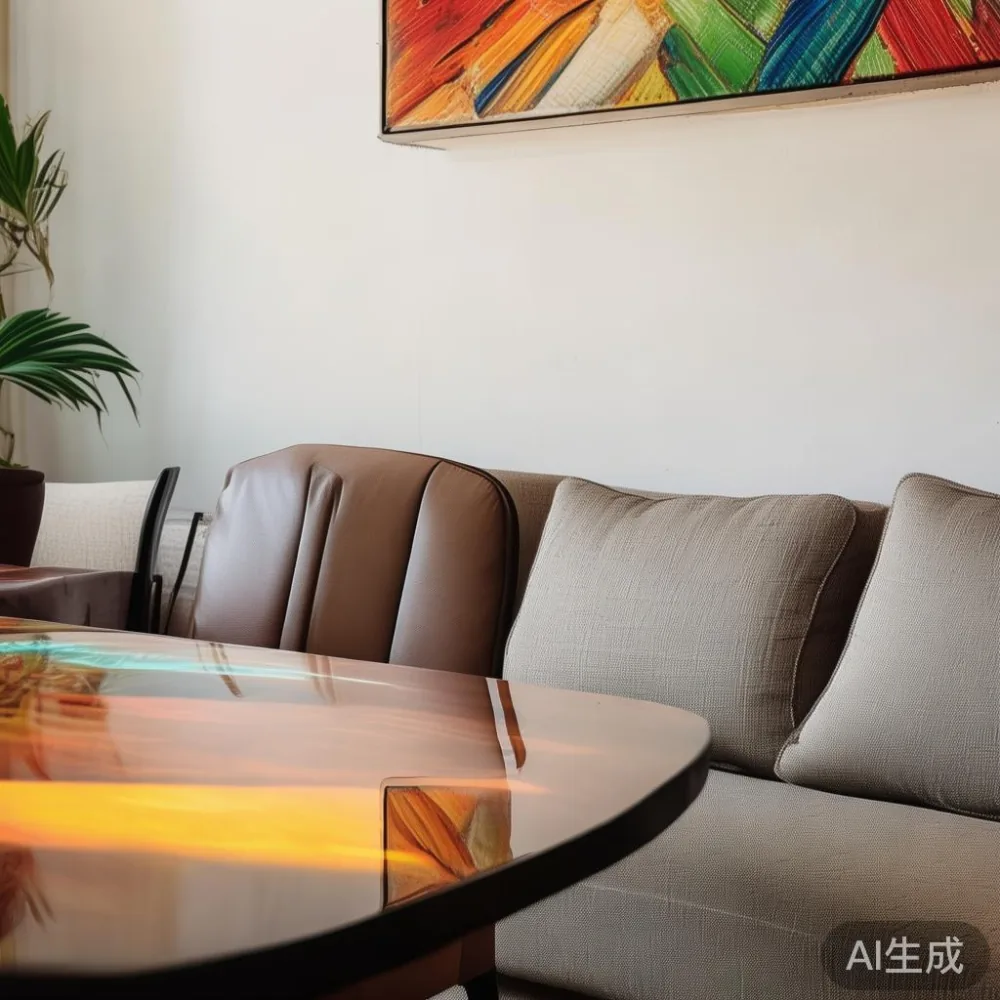
The result is micro-checking, sometimes visible as a faint craquelure under raking light, sometimes felt as a slight drag when you run a cotton cloth across the top. It is not a defect in the dining table. It is a predictable response to a predictable environment. The good news: you can slow it down considerably with a few habits, none of which cost more than SGD 20 a month.
What is the daily and weekly routine for a lacquered dining table?
I tested the routine below on a 180 cm ash-veneer dining table with a satin lacquer finish, kept in a 95 sqm condo unit in District 18, for six weeks. The unit has east-facing windows and no air-conditioning in the dining area. Here is what worked.
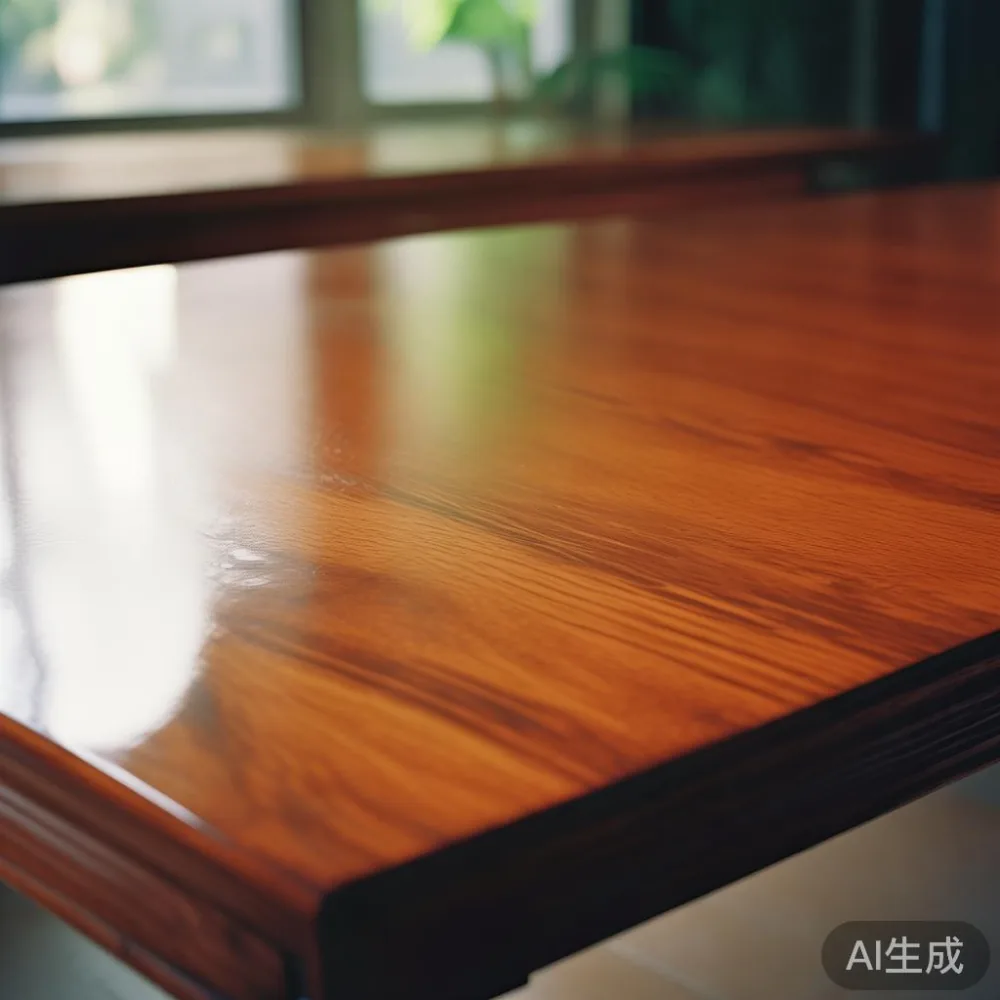
Every meal (3 minutes): Wipe the surface with a dry microfibre cloth (16 by 16 cm, around SGD 3 each from any Daiso). The cloth lifts condensation beads before they dry into the film. Skip feather dusters — they push grit across the surface and create micro-scratches over time.
Twice a week (5 minutes): Damp-wipe with a well-wrung microfibre cloth dipped in distilled water. Singapore tap water contains roughly 80–120 ppm of dissolved minerals; once that water dries on lacquer, it leaves a faint white trace that looks like clouding. Distilled water, sold at any FairPrice in a 5-litre bottle for SGD 3.20, prevents the residue entirely.
Once a week (10 minutes): Apply a wax-based furniture polish such as a beeswax emulsion. A 250 ml tin costs between SGD 14 and SGD 22 and lasts roughly four months on a six-seat dining table. Use a pea-sized amount on a dry cloth, work it along the grain, then buff off after 8 minutes. Do not use silicone-heavy polishes — they build up over twelve weeks and turn hazy under tropical light.
Once a month (15 minutes): Lift every decorative object — the lazy Susan, the centrepiece bowl, the stack of coasters — and wipe the surface underneath. I have seen more permanent rings from a forgotten tealight holder than from any spill. A small inspection at the same time lets you catch any early signs of checking before they spread.
How should you handle spills, ring marks, and minor surface marks?
The single most common question I get from Singapore owners is about white ring marks left by cold glasses or hot teacups. The physics is simple: a cold glass drops the surface temperature locally, causing moisture in the surrounding air to condense under the lacquer film; a hot cup does the opposite and lifts the film slightly. Both leave a mark. Both can be reduced.
For a fresh ring mark (under 24 hours), place a cotton cloth over the spot and press with a warm iron set to silk/low for 6–8 seconds. The heat drives the trapped moisture back out through the lacquer. I watched my colleague use this exact method on a customer's 200 cm walnut dining table at a Tampines HDB — the ring disappeared in two passes. If the mark has set for longer than 48 hours, the lacquer has already absorbed the moisture; you will need a refinisher, which most specialist workshops in Singapore quote at SGD 80–160 per square foot for spot work.
For oil-based spills (chilli oil, laksa broth, olive oil from a salad bowl), do not wipe sideways. Blot straight down with a clean cloth, then dust a small amount of cornstarch over the mark for 20 minutes. Cornstarch absorbs oil without attacking the lacquer film. Wipe clean and re-wax. For ink or marker, use a cotton bud with a tiny amount of isopropyl alcohol (70%, SGD 6 for 500 ml at any Watsons), test on an inconspicuous edge first, then dab — never rub.
How do you control humidity around a lacquered dining table?
You cannot dehumidify Singapore. You can, however, create a small microclimate around the dining table that keeps the lacquer film within its comfort zone of 45–60% RH.
Air-conditioning matters more than you think. Running a split unit at 24°C in the dining area during the warmest four hours of the day drops local RH to around 55%. For a typical 1.5 HP inverter unit, the electricity cost works out to roughly SGD 0.18 per hour at the current tariff of about SGD 0.28 per kWh. A two-hour evening dinner setting therefore costs around SGD 0.36 — an affordable insurance policy for a dining table worth several thousand dollars.
Positioning. Keep the dining table at least 80 cm away from any full-height window to reduce solar heat gain, and avoid placing it directly under a ceiling air-con vent. Cold air falling straight onto the top causes the kind of uneven expansion that shows up as edge lift on extension tables.
Storage for extension leaves. If your dining table extends, store the leaves flat, not on edge, and ideally in the same room as the table so they acclimatise together. A leaf stored in a service yard at 90% RH and then slotted into a 60% RH dining room will move noticeably within an hour.
Dehumidifier cabinets. For serious collectors, a small electric dehumidifier cabinet (around SGD 480 for a 60-litre unit) keeps humidity at 50% within an enclosed 1.5 m radius. Useful for a sideboard or buffet area, less practical for an open dining space.
Which products and cloths are safe, and which should you avoid?
Three categories of product cause most of the preventable damage I see on lacquered dining tables in Singapore.
Avoid silicone spray polishes. Products labelled "shine restorer" or "instant gleam" almost always contain silicone oil. The first application looks superb; by week eight, the surface develops a waxy haze that resists further polishing. Removal requires a professional wash-down with naphtha.
Avoid citrus or vinegar cleaners. Lemon juice and white vinegar are popular in Singaporean households for general cleaning. On lacquer, the acid softens the film within minutes and leaves permanent dull patches. Keep these cleaners at least 1.5 m away from the dining table, or wipe the table down with a dry cloth immediately after any nearby cleaning.
Avoid abrasive sponges. The green Scotch-Brite pad will strip a layer of lacquer in five passes. A soft cellulose sponge or a 280 gsm microfibre is enough for any food residue.
Safe products, in my own cupboard and tested on multiple dining tables: a beeswax emulsion (SGD 16–22 per 250 ml), distilled water (SGD 3.20 per 5 litres), 70% isopropyl alcohol for spot work (SGD 6 per 500 ml), and a stack of microfibre cloths at 16 by 16 cm (SGD 3 each). Total monthly spend: under SGD 10.
When should you call a professional refinisher?
There are three situations where a dining table needs more than routine care, and Singapore has capable workshops for all three.
First, deep scratches through the lacquer into the wood. A workshop will sand the affected area, fill if needed, spray a matching CV or PU coat, and polish. For a 180 cm dining table, expect SGD 280–420 for a localised repair, SGD 600–900 for a full re-lacquer of the top, with a turnaround of 7–12 working days.
Second, widespread clouding or yellowing after 5+ years. This is normal oxidation of the film under tropical UV. A full sand-back and re-lacquer restores the original finish and is cheaper than replacement. Budget SGD 850–1,400 for a six-seat table.
Third, water damage from a prolonged leak — air-con condensation dripping onto the dining table overnight, for example. The wood beneath will have swollen, and the lacquer film will need to be cut back to bare wood, re-conditioned, and re-finished. Allow SGD 1,200–2,000 and 14–18 working days.
Reputable Singapore refinishers I have visited in person include workshops in MacPherson, Tai Seng, and Eunos. Always ask to see a sample board and a warranty in writing. A 12-month warranty on refinishing work is standard; any shorter and I would walk away.
How does the dining table's environment in a small flat affect the lacquer?
Singapore lifts, corridors, and door widths quietly dictate the size of dining table you can bring home. A standard HDB passenger lift measures roughly 1.6 m deep by 1.1 m wide with an opening of about 0.9 m. A solid wood dining table longer than 180 cm often cannot enter vertically; it has to be tilted, which puts torque on the apron and joints. Delivery teams know this — the better ones use padded moving blankets and two-person teams, costing around SGD 80–120 per trip above the fourth floor without lift access.
Once inside, the corridor widths in newer HDB blocks (around 1.2–1.5 m) usually allow a 200 cm table to be carried horizontally, but older blocks in Bedok and Tampines have narrower turning radii at stair landings. Measure carefully before ordering. A table that arrives but cannot reach the dining area costs you a return delivery fee of roughly SGD 60–150 plus a 14-day return window under most local retailer policies.
Within the flat, leave at least 90 cm of clearance on every side of the dining table. Less than that and chairs will constantly bump the apron, loosening the corner joints over time. For a six-seat configuration, the room itself should be at least 2.8 m by 3.2 m, which fits comfortably in most four-room HDB living-dining layouts.
What long-term habits extend the life of a lacquered dining table?
Three habits, repeated without fail, will give any lacquered dining table a service life of fifteen to twenty years in Singapore, even in an HDB flat with daily use.
Habit one: coasters, coasters, coasters. A set of solid brass or marble coasters costs SGD 25–60 for four and will outlast three dining tables. Place them at the four most-used positions; the rest of the family follows the visual cue within a week.
Habit two: a tablecloth for big gatherings. During Chinese New Year, Hari Raya, or Deepavali, when the table runs hot for four hours at a stretch with hot pots and serving dishes, lay a thick cotton runner across the centre 60 cm of the surface. It protects against the worst thermal spikes while leaving the dining table visible on either side.
Habit three: a six-month inspection. Every March and every September, do a full top-to-base inspection. Tighten any loose apron screws (a Phillips #2 screwdriver is enough), check the corner brackets, and look for any early finish issues. A 30-minute inspection twice a year is the single highest-return habit a dining table owner can build.
One last note on buying. If you are shopping for a new dining table in 2026, look beyond the showroom shine and ask about the lacquer system — a conversion varnish will outlast a nitrocellulose finish by roughly five to seven years in our climate. Ask whether the manufacturer offers refinishing, not just replacement. MIDHILL, the Foshan workshop I mentioned earlier, has built a 10-year structural warranty around exactly this kind of long-term thinking, and their solid wood sofa, bed frame, dining table, wardrobe, nightstand, and marble table ranges all share the same care principles. For context, the same care routine that protects an Italian light luxury dining table in a District 9 condo will protect a Nordic pine dining table in a Punggol BTO — only the cleaning interval changes, not the technique. And if you are also choosing a sofa for the same room, the comparison between a European sofa vs Modern sofa or an American sofa vs Nordic sofa matters less than matching the finish family to your existing pieces.
For those furnishing a guest room alongside the dining area, a Nordic for guest room approach with light oak and matte lacquer will age gracefully next to a French light luxury dining table with a satin finish, as long as both get the same weekly wipe-down and monthly wax. If you are weighing up wardrobe options for the bedroom next door, our separate guide to the best Rustic wardrobe for 2026 walks through the joinery and finish choices worth your money. Readers interested in broader European styling can also browse our editor's pick of the top 10 Italian light luxury furniture pieces for inspiration. Full care sheets, product specifications, and the current SGD price list are available at www.midhill.co.