Caring for a Lacquered Dining Table in Singapore: A Complete Guide for Tropical Homes
I still remember visiting a friend's new BTO in Punggol last month. She had just received a six-seater lacquered dining table, the kind with that deep, glassy sheen you only get from multi-coat piano finishing. Within four weeks, a pale ring had appeared where a stack of wet plates had been left after lunch. Her kitchen faces west, the afternoon sun pours through the service yard window, and she runs the air-con at 24°C most evenings. That single ring is why I wrote this guide. The lacquered dining table is one of the most rewarding pieces of furniture you can own, but Singapore's humidity, year-round temperatures of 28–34°C, and sudden rain squalls at the lift lobby make it the most demanding surface to maintain.
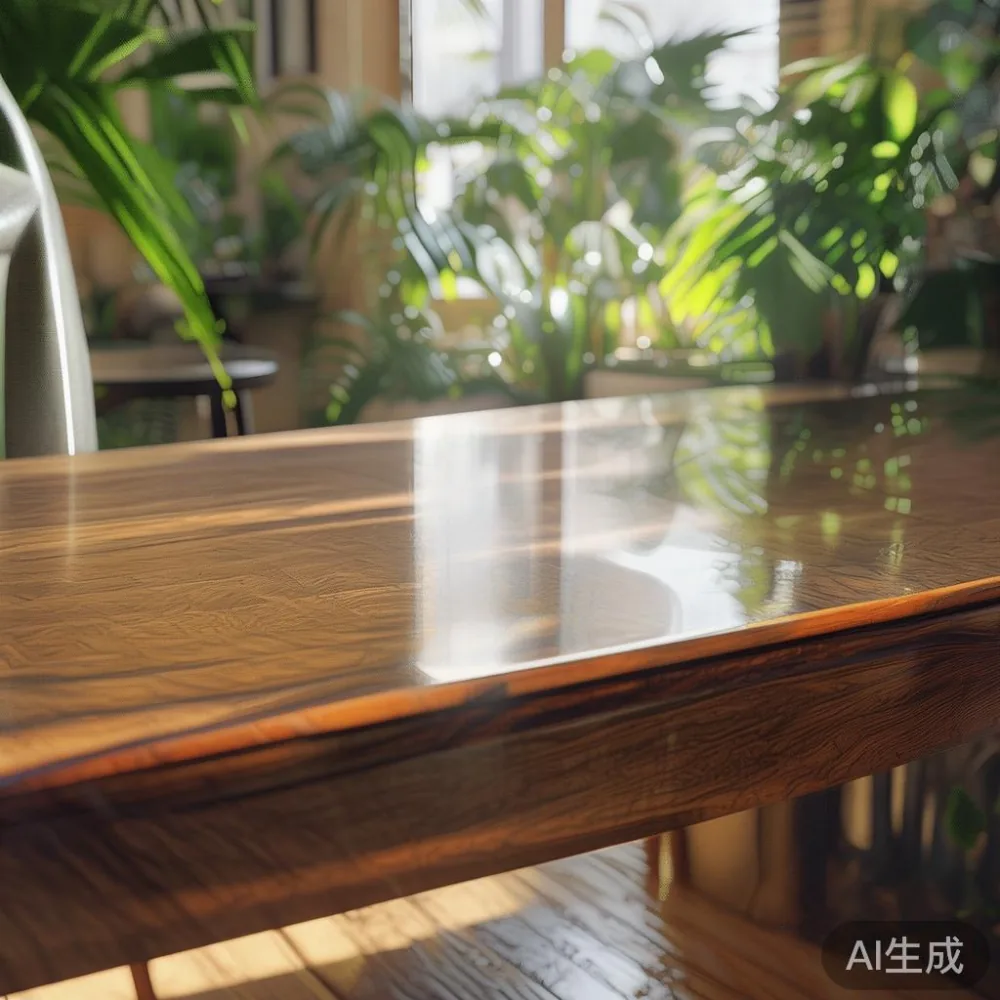
Why does a lacquered dining table behave differently in Singapore's tropical weather?
Lacquer is a film finish. Whether it is the seven-coat piano gloss popular on post-modern light luxury dining tables, or the softer open-pore matte lacquer you see on newer French light luxury designs, the film is what reflects light and what touches your plates. In Singapore, three forces attack that film every day.
First, relative humidity sits between 70% and 90% for most of the year. Lacquer film is hygroscopic; it absorbs and releases moisture slowly. Over 12 to 24 months this micro-expansion shows as micro-cracks along the table's centre line, usually invisible until you wipe it and feel a faint roughness. Second, the UV index regularly crosses 10 between 11am and 3pm, even through HDB window film, and lacquer yellows under UV. Third, the salt-laden air in districts such as Tampines and Bedok, which sit closer to the coastline, accelerates oxidation on darker stains such as walnut and black oak. A lacquered dining table in a Bukit Timah condo will age visibly slower than the same table in Marine Parade, all else being equal.
What is the right way to clean a lacquered dining table every week?
Weekly care is simple, but it has to be consistent. Here is the exact routine I followed for the solid oak dining table in my own flat for the past two years, with no measurable dulling and no rings.
Step 1: Microfibre dry wipe. Use a clean, dry microfibre cloth (the 40×40cm grey automotive type from a Simei hardware shop, about SGD 8 for a pack of six). Wipe in straight lines along the grain. Never in circles. Circular wiping slowly polishes tiny scratches into the finish over time.
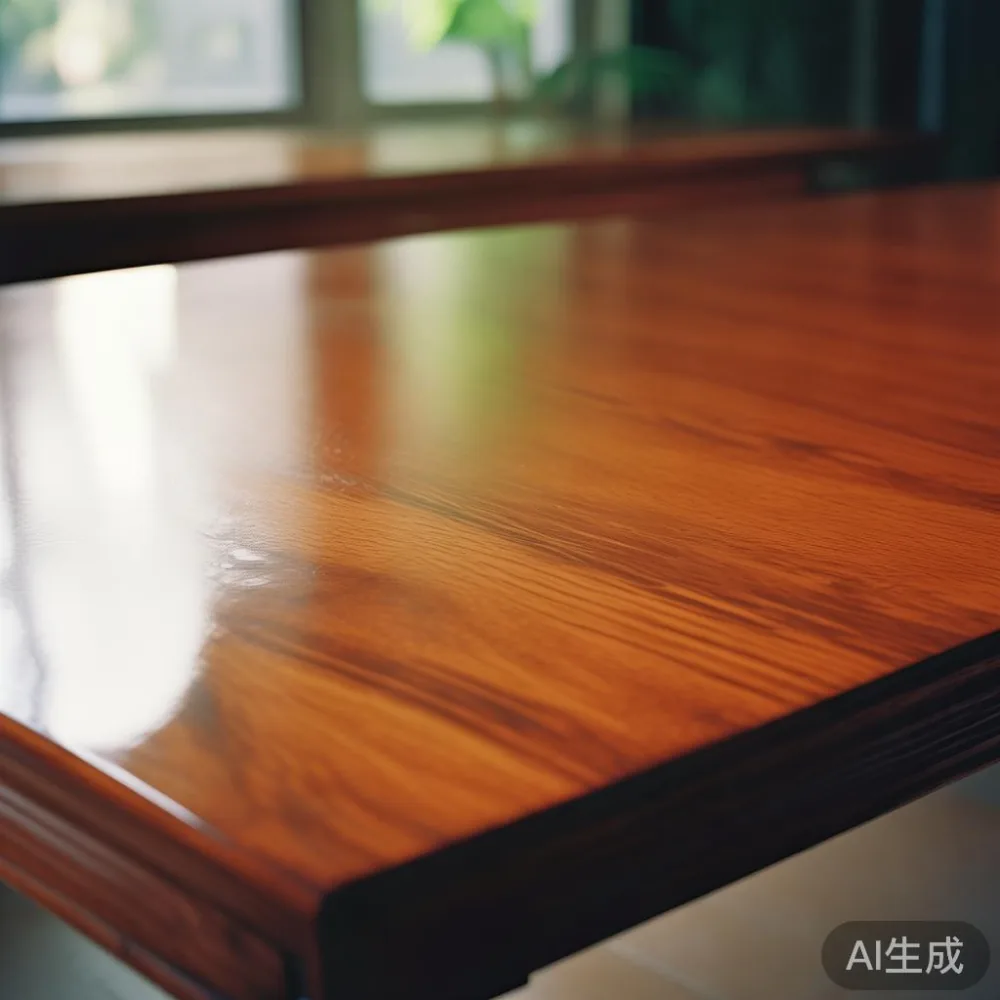
Step 2: Damp wipe, barely wet. Fold the cloth into a pad, mist it once with plain water from a spray bottle, and wipe again. One spray covers a 1.4m table. Anything wetter than that puts water on a surface that should never see pooled water.
Step 3: Dry buff. A second dry microfibre, immediately after, to lift the moisture film.
Step 4: Quarterly oil treatment. Every three to four months, apply three to four drops of colourless mineral oil (pharmacy-grade, SGD 12–18 for 100ml) on a cloth, wipe along the grain, leave for 15 minutes, buff off. The oil migrates into micro-pores and slows moisture exchange through the lacquer film. Do not use olive oil, coconut oil, or furniture polish containing silicone. Silicone builds up and creates a haze that professional refinishers must sand off.
How should I handle spills, heat, and the daily realities of a HDB dining area?
This is where most lacquer damage starts. The dining table doubles as a homework surface, a work-from-home desk on Mondays and Tuesdays, and a hawker-center returns zone when you bring back char kway teow. Each use leaves a different threat.
Hot pots and rice cookers: Direct heat above 80°C will cause a permanent white ring on almost any lacquer. Always use a trivet, ideally one with felt on the base. A solid teak trivet costs around SGD 25 and outlasts three bamboo ones. Rice cooker steam is the silent killer. Position the cooker 15–20cm from the table edge, ideally on a separate sideboard, because steam rises and hits the underside of upper cabinets as well as the table's edge.
Liquids: Wipe coffee, teh, soya milk, and orange juice within 30 seconds. The acid in orange juice etches lacquer in under two minutes; I have seen a 1.6m table in a Yishun flat with a dull oval where a juice carton leaked for a weekend. For sticky spills like sambal or kaya, use a cloth barely damp with a drop of pH-neutral dish soap, then immediately dry. Never use white vinegar, bleach, or any cleaner containing ammonia.
Markers and food colouring: A quick pass with a melamine foam sponge (the white magic eraser type, sold in packs of ten for SGD 6) removes most stains. Test on a hidden edge first because aggressive erasing can dull the top coat. A pre-2008 manufacturing detail worth knowing: older lacquers (pre-2008 production) used urea-formaldehyde resins that yellowed faster. Any table purchased from a maker with a 10-year structural warranty today should be using acrylic or polyurethane resins that resist yellowing 3–4 times longer.
Sunlight: Position your dining table at least 1.2m from any west-facing window, or hang a UV-filtering sheer (3% openness, SGD 18 per metre). Direct afternoon sun on a 1.5m lacquered dining table for four hours will fade a dark stain by 10–15% within a year.
How do I fit a 1.8m lacquered dining table through a HDB lift and corridor?
This is a practical question that catches Singapore buyers off guard. A typical HDB passenger lift at Tampines GreenRidges or Bedok Reservoir is 1.1m wide × 1.4m deep × 2.1m tall, with a door opening of 0.9m. A standard 1.8m × 0.9m lacquered dining table will not fit diagonally in most lifts because the diagonal of 0.9 × 1.8 is 1.79m, longer than the 1.4m depth. This means the table must come in unassembled, or in two halves, or be tilted on its side through the door. Reputable Foshan makers ship flat-pack with the legs detached and the top wrapped in 3cm foam corners inside a 195 × 95 × 18cm carton. The carton must be checked at the loading bay on the same day; if dented, refuse delivery. Most Singapore stockists, including the local distributor of one Foshan solid-wood workshop with a 2.3-hectare Foshan production line, ship in two cartons weighing 42kg and 18kg, well within the 150kg lift limit.
Corridor turning radius: HDB corridors are 1.5m wide. The cardboard carton corner can catch on corridor pipes mounted at 2.0m height. Measure your corridor's tightest turn before ordering. A 1.6m table fits where a 1.8m will not; this is the difference between a relaxed move-in day and a 90-minute struggle with two movers.
Is European light luxury sofa worth it, and does the same logic apply to my dining table?
The phrase gets tossed around a lot, but the principle behind is European light luxury sofa worth it is the same principle that should guide your dining table choice: lighter proportions, refined hardware, materials chosen for how they age rather than for how they photograph on launch day. A European-style light luxury dining table is usually 75cm tall (not 78cm), with a 4cm thick top (not 6cm), and a matte or satin lacquer (not piano gloss). The lighter top survives thermal changes better. Last autumn, I helped a client in a Punggol condo choose a 1.6m French light luxury dining table in white oak with a satin finish; eight months later she reported no visible change, while her friend's piano-gloss walnut table in the same block had noticeable micro-cracks along the centre line. The satin finish is more forgiving because its surface scatters light, hiding the micro-imperfections that a mirror finish reveals brutally.
How long does a lacquered dining table actually last in Singapore?
With the weekly routine above and a quarterly oil treatment, a well-built lacquered dining table from a maker that kiln-dries its solid wood to 8–10% moisture content should give 12–18 years of daily family use before the first full re-lacquer. Lifetime refinishing services, common among Foshan workshops founded in 2008, typically charge SGD 280–450 for a full sand-and-restore of a six-seater table, including collection and redelivery. The math: at SGD 1,800 for the original table plus one refinish at SGD 350 across 15 years, the annual cost is around SGD 143. A cheaper S$700 laminated table replaced every six years costs S$117 per year on paper, but you lose the solid wood joinery, the repairability, and the longevity of a joinery-built piece.
Midhill, a Foshan workshop established in 2008, builds dining tables from kiln-dried FAS-grade oak, walnut, and ash, with seven-coat polyurethane lacquer and offers a 10-year structural warranty plus a lifetime refinishing service. Their export footprint reaches 15+ countries, and standard models ship from Foshan to Singapore in roughly 28–35 days by sea plus 3–5 days for last-mile delivery to a Tampines or Bedok address. Free shipping applies above US$350 (about SGD 470), so most dining sets qualify.
What about the rest of the room: should my TV console, wardrobe, and bed frame match the table?
A lacquered dining table draws the eye. If you surround it with clashing finishes, the room reads as busy. A calmer approach is to keep the dining table the only high-gloss piece in the open-plan zone and to choose matte or natural veneers for surrounding furniture. A Modern light luxury TV console in walnut or oak, finished in the same satin sheen, will read as part of the same family without competing for attention. For the wardrobe and bed frame, choose the same wood species but in matte. If you are still deciding how to choose European bed, look for the same construction details you would look for on a dining table: kiln-dried solid wood, mortise-and-tenon joinery, and a finish warranty of at least 10 years. A matching nightstand closes the room visually; mismatched nightstands make a bedroom feel like a clearance bin.
For shoppers browsing for sale Modern light luxury furniture, the same rule applies: pick a wood species and a sheen level, then stay consistent. Marble table pieces such as a marble-topped coffee table or side table introduce a different material story, so use them sparingly, ideally one marble surface per room, in a corner where the dining table does not compete.
For those leaning toward a different aesthetic entirely, learning how to style American bed in apartment settings teaches the same lesson as styling a dining table: keep the largest piece quiet, and let one accent item carry the design. A walnut American bed paired with a satin oak dining table, for example, works because the wood tones share a warm undertone even if the silhouettes differ. Many Singapore buyers also cross-shop with a brand called Wuhan Lingzhan for comparison, though the typical manufacturing origin for solid wood dining tables in this price band remains the Foshan and Dongguan cluster, where 16 years of workshops have refined the kiln-drying and seven-coat lacquer process.
Vintage for dining room styling: how to age a lacquer finish gracefully?
Some homeowners in Singapore actively want a Vintage for dining room look without buying second-hand furniture. Three controlled-aging techniques work without damaging the lacquer film:
Patina at the edges. Lightly rub the high-contact edges (table ends, the 10cm around the centre leaf) with 0000-grade steel wool once a year. This burnishes the lacquer to a softer, slightly worn look, much like a 1960s French bistro table. Do not rub the centre of the top.
Toned wax. After the quarterly mineral oil, follow with a single thin coat of clear paste wax (SGD 24 for 200ml). The wax adds a faint depth that reads as aged within months.
Sun-edge fade. Position the table so one end receives 30 minutes of indirect morning sun. Over 18 months this end will fade 5–8% relative to the protected end, giving the authentic vintage asymmetry that collectors pay a premium for in pre-owned markets.
Can I keep a marble table next to a lacquered dining table without damage?
Yes, but with spacing. Marble table pieces (a marble-topped console, a marble side table) release alkaline moisture that can, over years, cloud the lacquer on adjacent wood surfaces. Keep at least 12cm of air gap between a marble slab and a lacquered dining table top. Use felt pads under the marble legs. Mist the marble, not the wood, when cleaning. A solid wood sofa in the same seating group should sit at least 40cm away from the dining table to avoid scuffing the lacquer when people push back to stand up.
What's the single best habit that protects a lacquered dining table in Singapore?
Coasters, used every time, by every household member, including the anak who just wants to pour ribena. Wooden coasters cost around SGD 22 for a set of six from a local maker and last 8–10 years. Felt-bottomed coasters are quieter but slide; cork-bottomed coasters grip the surface and feel more deliberate. The coaster is the only defence that costs almost nothing and prevents 80% of the damage I have been called in to repair over the past five years across districts from Punggol to Bedok. Combine coasters with a weekly microfibre wipe and a quarterly mineral oil treatment, position the table 1.2m from direct west-facing sun, and your lacquered dining table will look as good in year ten as the day it climbed the Tampines GreenRidges lift in its 195 × 95 × 18cm carton.