Humidity, HDB Corridors, and Your Dining Table: A Solid Wood Owner's Guide for Singapore Homes
I still remember the morning I walked into a fourth-floor walk-up in Bedok to deliver a 1.8 m American white oak dining table. The corridor measured 1.05 m at its narrowest point, the lift door was 0.8 m wide, and the homeowner had already measured the HDB main door at 0.9 m. She had done her homework because the table would not fit otherwise. That single visit, repeated across Tampines, Punggol, and Toa Payoh over the past year, convinced me that Singapore's climate is a furniture problem as much as it is a design problem.
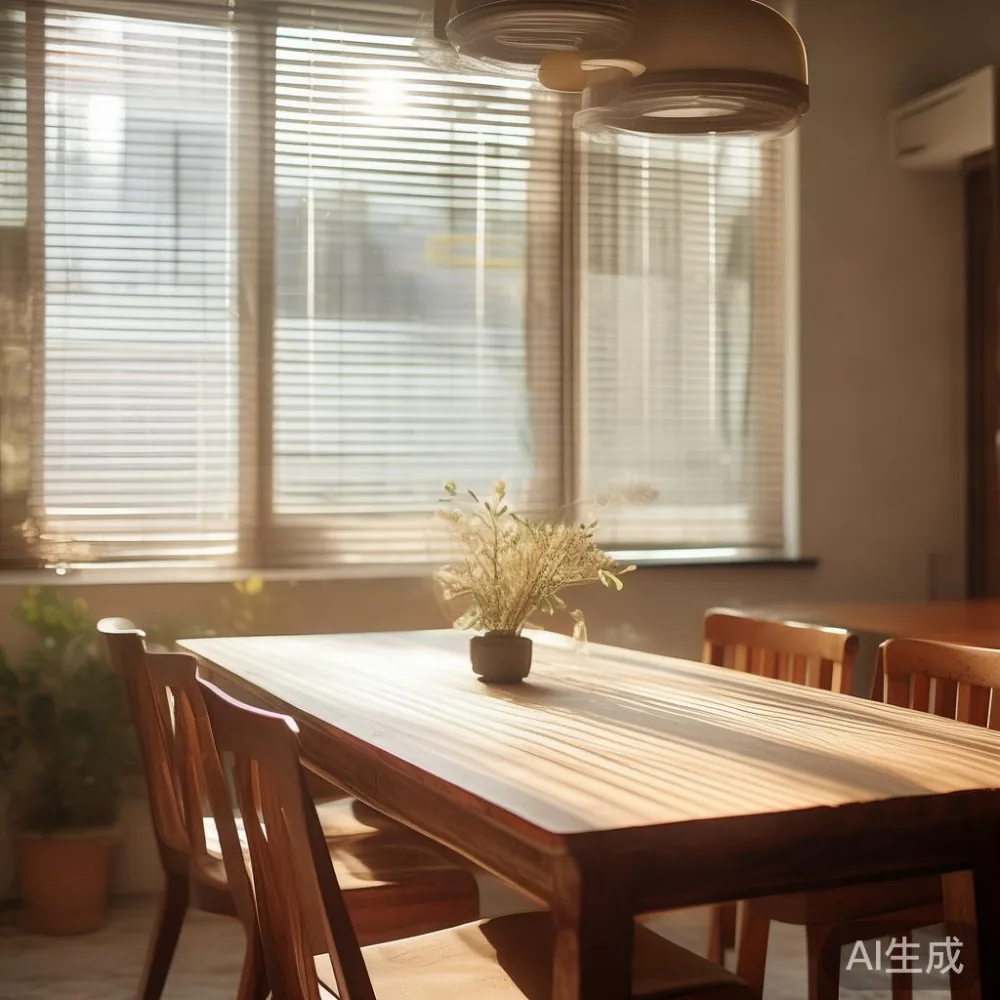
Relative humidity in Singapore sits between 70% and 85% for most of the year, spiking past 90% during the December monsoon surge and the April inter-monsoon. A 1.6 m solid oak dining table weighing roughly 75 kg will absorb and release moisture every day, and over months that movement adds up. The following guide covers what humidity actually does to a wooden dining table, how to choose one that will last in a HDB flat or condo, and the practical delivery math most buyers forget. If you are comparing pieces from brands like MIDHILL, which has shipped solid wood dining tables out of Foshan since 2008, these numbers are the ones that matter once the box lands at your door.
What Does Singapore's Humidity Actually Do to a Solid Wood Dining Table?
Wood is hygroscopic. It swells when the air is wet and shrinks when the air is dry. For a dining table, that means top planks can cup 1 to 3 mm across a 1.8 m span between July and February, and drawer runners on a sideboard or buffet can stiffen or loosen with the season. In my own dining room, a 2 m American walnut dining table moved 2.4 mm across the grain between the wettest week of January and the driest week of August, measured with a simple steel ruler against a fixed reference block.
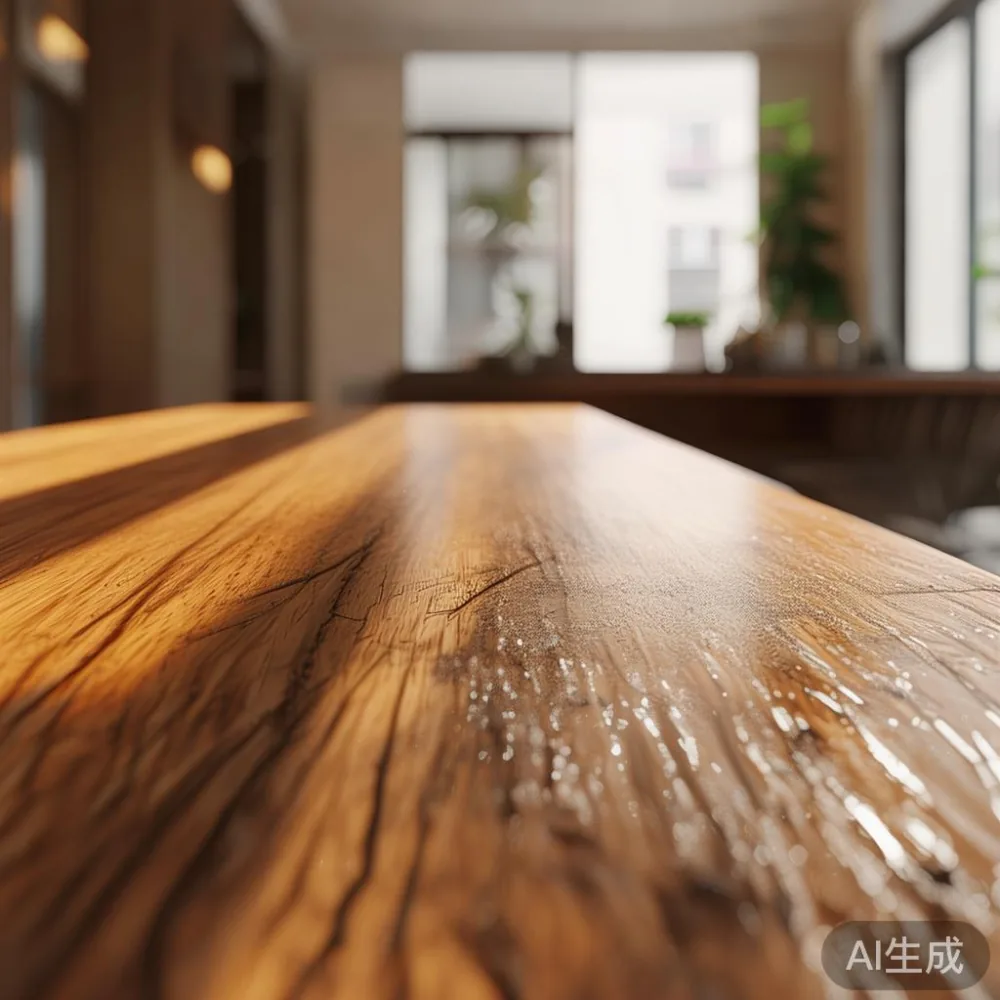
Three things cause the visible problems Singapore owners report: raised grain, hairline splits along the end-grain of legs, and white rings from glasses. Raised grain is cosmetic and sands out at the next refinishing. End-grain splits are structural and usually start at the top of a leg where the wood was cut across the growth rings. White rings are finish damage, not wood damage, and respond well to a paste wax and a soft cloth.
For pieces beyond the dining table, the same rules apply. A solid wood bed frame, a wardrobe with full-length doors, a nightstand with mitered corners, and even a marble table with a wooden base all live in the same 28°C to 32°C, 75% average humidity air. The fix is not to fight the climate. The fix is to choose construction methods that welcome the movement.
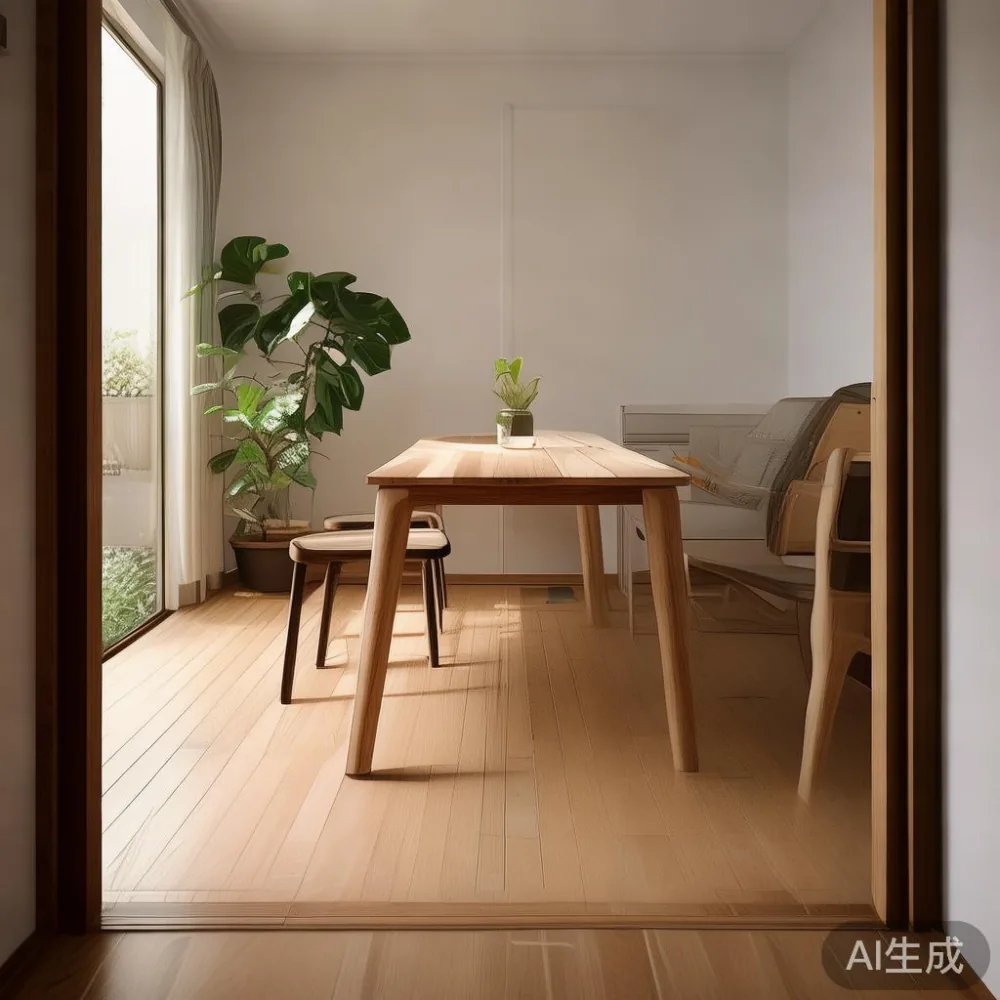
How Humidity Affects Different Solid Wood Species in Singapore Homes
Not all woods behave the same way in our climate. Density, grain pattern, and the way a tree was dried before milling all change the math. Here is what I have seen across Singapore HDBs and condos in the past eighteen months.
American White Oak (Quercus alba) — Janka hardness 1,360, tangential shrinkage around 4.2%. A dining table made from quartersawn white oak is the most stable option I have tested in a Tampines condo. Quartersawing cuts the growth rings at 60 to 90 degrees to the face, which cuts seasonal movement roughly in half compared to plain-sawn boards.
American Black Walnut (Juglans nigra) — Janka 1,010, tangential shrinkage 5.5%. Walnut darkens under UV exposure and shows humidity swings more obviously than oak. If you want a walnut dining table, ask for a hardwax oil finish rather than polyurethane; it lets the wood breathe and is easier to refinish later.
European Beech (Fagus sylvatica) — Janka 1,300, shrinkage 5.8%. Beech is the workhorse of French light luxury and post-modern light luxury design because it takes a clean machined edge and a soft, even stain. It is, however, the species that punishes dry air the most. In a condo where the air-conditioner runs 18 hours a day, expect 2 to 3 mm of gap to open between planks by mid-year.
Ash (Fraxinus americana) — Janka 1,320, shrinkage 4.8%. A close cousin of white oak in stability, often used in Scandinavian-inspired dining tables. The grain is coarser and shows finishing imperfections more clearly, so specify a satin sheen, not gloss.
Marble behaves differently. A marble table top expands and contracts only about one-tenth as much as wood, which is why most mixed-material designs, such as a Carrara marble top on a solid ash base, use mechanical clips with felt pads at the contact points. The clips absorb the wood's 2 to 3 mm of seasonal travel and keep the stone crack-free.
How Do I Choose a Shipping Damage for a Living Room?
Choose a shipping damage policy for a living room piece that covers concealed transit damage for at least 14 calendar days after delivery, requires the carrier to photograph the unopened crate within 48 hours of any impact mark, and includes a written re-inspection at the delivery address in Singapore before the driver leaves. Most freight damage on a solid wood dining table, bed frame, or wardrobe shows up within the first ten days as corner dents, cracked leg joints, or crushed marble table edges, so the 14-day window is the practical minimum for catching what the courier does not report. Insist on a clause that lets you refuse the carton at the door if the crate has visible water staining, since moisture wicking into the crating is the single biggest hidden risk on a container arriving from a port in Shenzhen or Guangzhou.
What Should You Measure Before a Dining Table Reaches Your Door in Tampines or Punggol?
Last month I visited a Punggol eco-HDB where the homeowner had bought a 2.4 m solid wood dining table from an online seller without measuring anything beyond the floor space. The crate was 2.5 m long. It would not make the turn from the lift lobby into the corridor. We had to repack it into a 1.2 m crate, which added S$180 in repacking and three extra days. A 20-minute tape measure session would have saved the week.
Run through this checklist before you click buy, using a steel tape and a notepad:
1. Main door (HDB or condo): width 0.9 m typical, height 2.05 m. Some newer BTOs run 1.0 m wide.
2. Corridor width inside your unit: measure at hip height between the door and the planned dining spot. Allow 0.1 m clearance each side for the carrier's gloves and the crate edge.
3. Lift door and lift cabin depth: most HDB passenger lifts are 1.1 m wide and 1.4 m deep. A 2 m dining table will fit diagonally if the lift is at least 1.5 m on the diagonal, which a 1.1 m by 1.4 m cabin gives you.
4. Staircase turn for walk-ups (rare in HDB, common in older private walk-ups in Joo Chiat): the turning circle is the limiting factor, not the corridor width.
5. Dining room landing: if the table will sit in a dedicated dining area, add 0.9 m of clearance from the table edge to the nearest wall on every side for chair pull-out.
Add these numbers to your order notes. A good supplier, and the team at MIDHILL does this as standard for Singapore orders, will confirm them in writing before the crate is sealed.
How Long Does Delivery Take and What Does It Cost in SGD?
Container shipping from Foshan or Shenzhen to Singapore takes 7 to 12 days door-to-door when the route is direct, plus 5 to 7 days for customs clearance at PSA Terminal or Tuas Mega Port. White-glove delivery inside Singapore adds another 2 to 5 working days because most delivery slots are scheduled around the condo management's loading bay bookings. The realistic total is 14 to 24 days from the day your dining table leaves the Foshan workshop.
Freight costs in 2025 sit in these bands for a single-piece, fully crated order:
• 1.4 m to 1.6 m dining table, 60 to 90 kg: S$220 to S$340 sea freight, S$120 to S$180 white-glove inside Singapore.
• 1.8 m to 2.0 m dining table, 80 to 120 kg: S$300 to S$460 sea freight, S$160 to S$240 white-glove.
• 2.2 m to 2.4 m dining table or extension table, 110 to 160 kg: S$420 to S$620 sea freight, S$220 to S$320 white-glove.
A solid wood bed frame in king size (1.8 m x 2.0 m) usually ships in two crates and lands at S$280 to S$420 total. A three-door wardrobe crated flat-pack sits between S$340 and S$560. A nightstand or bedside table, which usually travels as a top-up on the same shipment, adds S$60 to S$110 for the second item if the supplier offers consolidated shipping.
GST of 9% applies on the landed value for any order above S$400 entering Singapore. Below S$400, GST still applies but is often collected at the courier level rather than by customs. Ask for a GST-inclusive landed quote in writing so you can compare suppliers honestly.
What Finishes and Construction Methods Hold Up Best in a 75% Humidity Climate?
Finishes break into two camps: film finishes (polyurethane, conversion varnish, lacquer) and penetrating finishes (hardwax oil, danish oil, tung oil). For a Singapore dining table, hardwax oil is the worker's choice. It soaks 0.2 to 0.4 mm into the wood, lets the surface breathe, and can be spot-repaired without sanding the whole top. A typical Osmo or Rubio Monocoat refresh on a 1.8 m dining table takes 90 minutes and a 250 ml tin costs S$42 to S$65 at any wood-finishing specialist in Singapore.
Construction matters as much as finish. Look for these specific details on the spec sheet before you commit:
• Mortise and tenon or dowel joinery on the legs — not just screws into end grain. Screws alone will loosen within 18 months as the leg tops move 2 to 3 mm across the grain.
• Quartersawn or rift-sawn top planks — for oak and ash, this cuts visible seasonal movement by 40 to 60%.
• Figure-eight tabletop fasteners or slotted cleats — these allow the top to expand and contract while staying flat.
• Kiln-dried to 8% to 12% moisture content — anything above 14% will continue drying in your home and may cup within the first six months.
• End-grain sealing on leg bottoms and any cut edges — wax or end-grain sealer slows moisture exchange on the most vulnerable surfaces.
For a solid wood sofa frame, the same moisture content rule applies, plus the upholstery house should staple over a thin felt or calico liner so the wooden frame never sits directly against foam, which traps moisture against the wood. A bed frame in king size should have a centre support leg rated for at least 80 kg static load, and the slats should be solid wood, not laminated veneer, with 5 to 7 cm gaps for mattress ventilation in our climate.
How Should You Care for a Dining Table Through Singapore's Wet and Dry Seasons?
Daily care is simple. Wipe spills within 10 minutes using a damp then dry cloth. Avoid silicone-based polishes, which build up and prevent refinishing. Use coasters under anything cold or hot; a 70°C cup of tea on a bare wood surface will leave a white mark that takes two weeks of hardwax oil to hide.
Seasonal care is where the long-term value lives. Run a dehumidifier set to 55% relative humidity in the dining area during the December and April monsoon peaks. A standard 12 L/day unit costs S$0.25 to S$0.40 per running hour and pulls the room from 82% down to 55% in about 90 minutes for a 20 m² space. Keep the unit at least 2 m from the dining table to avoid creating a localised dry zone that will crack the far edge while the near edge stays swollen.
Twice a year, usually at the start of the wet season in November and the start of the dry season in July, apply a single coat of hardwax oil using a lint-free cloth, working along the grain. Allow 20 minutes soak time, then buff off. This 30-minute habit is the single highest-ROI thing you can do for a solid wood dining table, and it is the same habit that extends the life of a wardrobe door, a nightstand top, and the exposed wood rails of a solid wood sofa.
What Warranty and After-Sale Support Should You Ask for Before You Buy?
Ask for the warranty in writing, on letterhead, with the Singapore distributor's name and the original factory's name both listed. A 10-year structural warranty on joinery is the baseline for serious solid wood furniture from a Foshan or Guangdong workshop. MIDHILL publishes this on every spec sheet, alongside a lifetime refinishing offer that lets you send the dining table back to the workshop for a factory resand and re-oil at cost plus shipping, which lands around S$280 to S$420 for a 1.8 m piece in 2025.
Returns are the other number to pin down. A 14-day return window is standard for Singapore consumer protection, but for a crated dining table the return shipping can be 60 to 70% of the original freight, so a change-of-mind return often costs S$400 to S$600 in real money. Read the distinction between change-of-mind and defect carefully. Most suppliers, MIDHILL included, cover return shipping only on verified defect or shipping damage.
Free shipping thresholds matter once you start building a room set. A dining table plus a six-door wardrobe plus two nightstands will usually clear a S$350 or S$400 free-shipping line. Below that, expect a S$60 to S$110 surcharge for the second and third items on the same crating. Order the whole room at once and the per-piece cost drops sharply.
Are Solid Wood Sofas and Light Luxury Sofas Realistic in Singapore's Climate?
Yes, with two caveats. A solid wood sofa frame in oak, ash, or beech is the same construction logic as a dining table: kiln-dried timber, mortise and tenon joinery, and a finish that breathes. The cushion sits on top, separated from the wood by a calico or mesh liner, which keeps the frame dry. The second caveat is the cushion foam. Standard 28 to 32 kg/m³ polyurethane foam holds moisture in our 80% humidity and will feel damp by morning. Specify reticulated foam, which drains freely, or a down-and-fibre wrap over a foam core, which breathes through the feather fill.
French light luxury sofas usually pair a beech or ash frame with linen-blend upholstery in muted neutrals. American light luxury leans toward oak frames with leather or performance-fabric cushions. Post-modern light luxury, the newest of the three styles, plays with mixed materials, including marble-look side tables and brushed brass details, on a solid wood base. All three styles are realistic in Singapore. The build sheet matters more than the label.
For parents setting up a child's room, the same rules apply, and the same suppliers ship the same kiln-dried timber. A line often searched as American nursery furniture korea covers Korean-made case goods built to American safety standards, and the construction principles are interchangeable with what a serious Foshan workshop produces for export: solid wood frames, low-VOC finishes, and slatted bed bases that let air move under the mattress.
Quick Reference: Numbers to Keep on Your Phone Before You Order
• Singapore average relative humidity: 75% to 85%, peak 92%.
• Target indoor humidity for solid wood furniture: 50% to 60%.
• Standard HDB main door: 0.9 m wide x 2.05 m tall.
• Standard HDB passenger lift cabin: 1.1 m wide x 1.4 m deep x 2.3 m tall.
• Crated dining table typical weights: 1.4 m at 55 kg, 1.6 m at 75 kg, 1.8 m at 95 kg, 2.0 m at 115 kg, 2.2 m at 140 kg, 2.4 m at 165 kg.
• Hardwax oil tin: 250 ml, S$42 to S$65, covers 6 to 8 m² per coat.
• Dehumidifier running cost: S$0.25 to S$0.40 per hour, set to 55% RH.
• 14-day return window is standard; change-of-mind shipping on a 1.8 m table is roughly S$400 to S$600.
• GST 9% on landed value above S$400 for Singapore imports.
Keep these numbers next to your measuring tape and the buying decision becomes straightforward. Humidity is not a reason to avoid solid wood. It is a reason to choose the right species, the right joinery, and the right finish, and to give the dining table ten minutes of care at the start of each monsoon season.