What Actually Drives the Price of Solid Wood Furniture?
A solid wood dining table can cost SGD 680 or SGD 6,800. That difference is not simply a matter of “solid wood versus veneer”, nor is it explained by a polished sales photograph. The price is built from measurable choices: the timber species, board dimensions, joinery, finish, hardware, engineering, delivery scope, and warranty. For homeowners in Tampines, Bedok, and Punggol, those choices also need to fit real HDB lift doors, narrow corridors, and the practical demands of Singapore humidity.
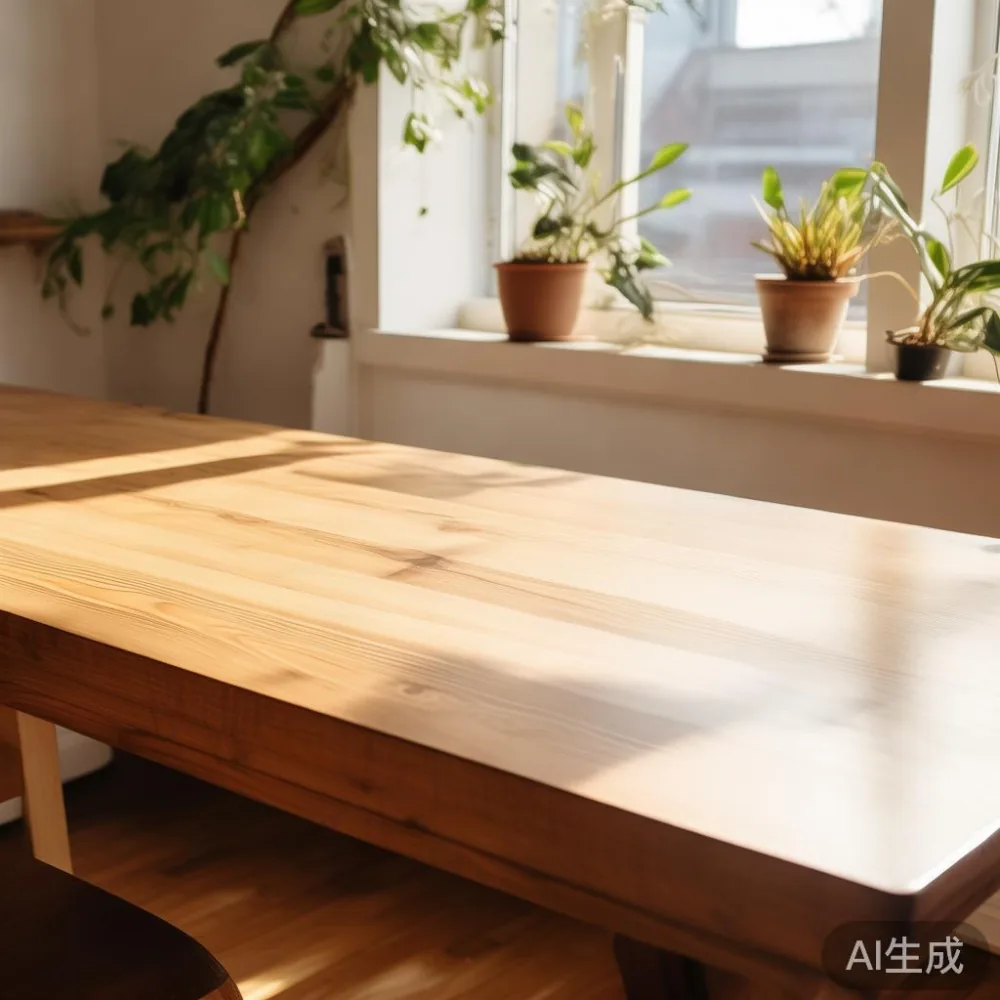
This guide uses dining tables as the main example because one table can reveal nearly every price driver in solid wood furniture. Along the way, we will compare related categories such as a solid wood sofa, bed frame, wardrobe, nightstand, and marble table, while keeping the focus on why a dining table receives its price tag.
MIDHILL is a Foshan solid wood furniture maker established in 2008. Its pieces are exported to more than 15 countries, supported by a 10-year structural warranty, lifetime refinishing, 14-day returns, and free shipping above US$350. Those service commitments matter, but they are only one layer of the calculation.
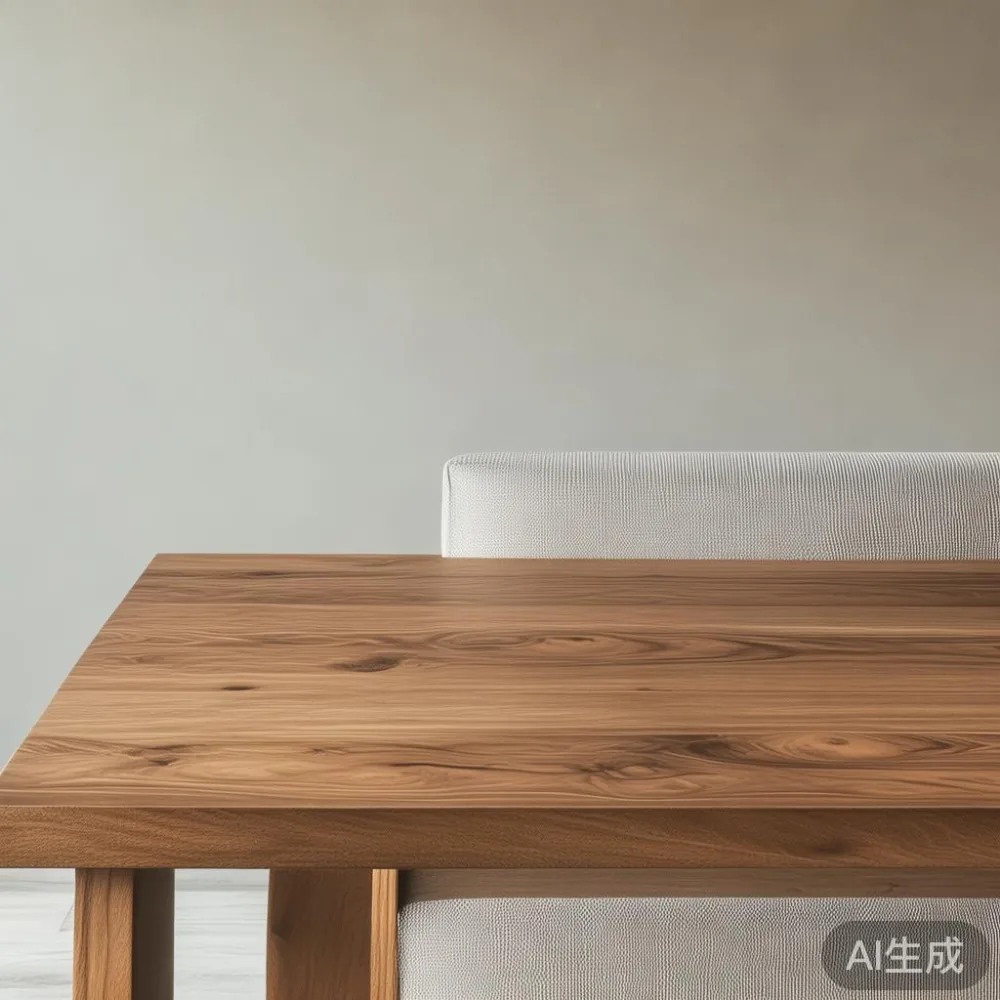
Why does a solid wood dining table cost so much?
The short answer is that “solid wood” describes a material category, not a fixed grade of manufacture. A table made from 18 mm pine boards and one made from 45 mm hardwood may both qualify as solid wood furniture. Their price gap can still exceed SGD 2,000 because thickness, density, drying, machining, and assembly differ sharply.
Start with the board. Rubberwood and pine are common lower-cost choices, while oak, walnut, ash, and other hardwoods generally demand higher pricing. Density affects work: a 220 × 90 × 4 cm solid walnut dining table has far more material and machining weight than a 160 × 80 × 2.5 cm pine model. Weight is a useful inspection clue, though it is not the only quality signal.
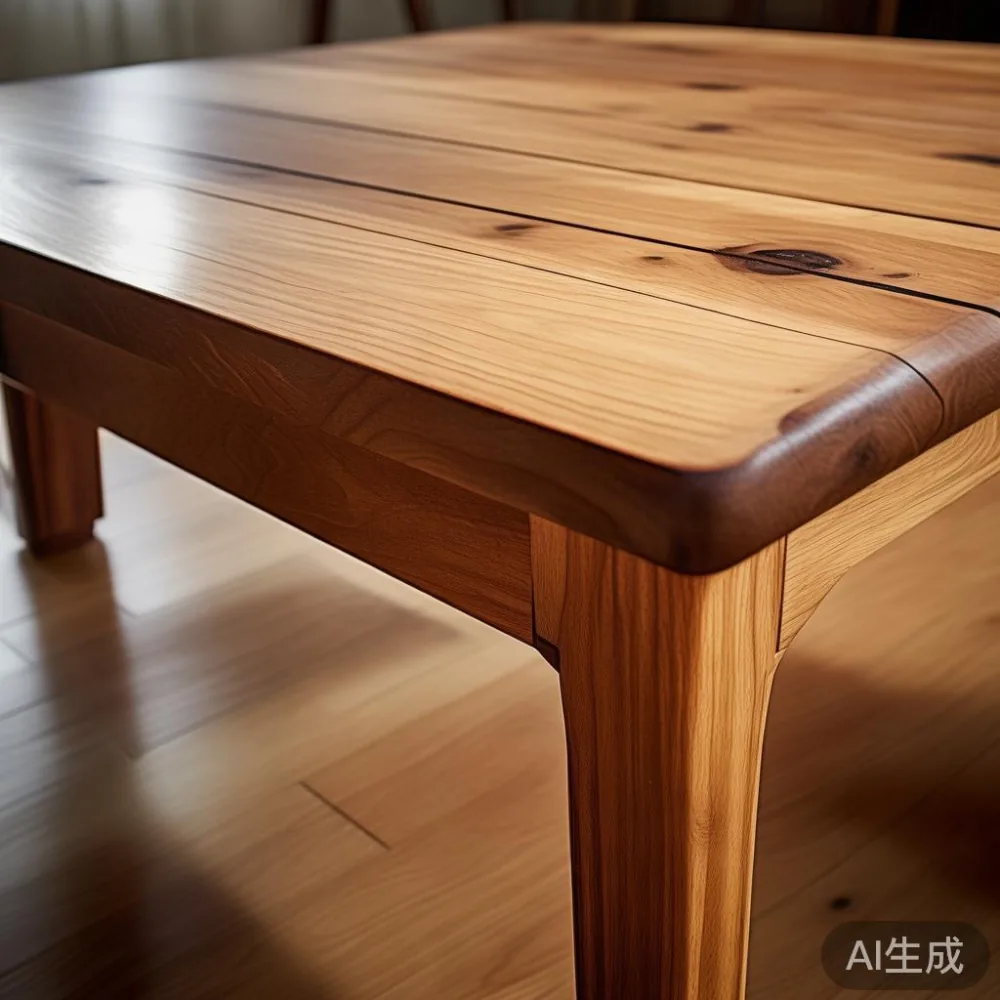
Wood must also be properly dried for Singapore’s climate. A responsible target for indoor furniture is roughly 8–12% moisture content, with documented acclimatisation practices. If moisture control is skipped, a 200 cm table can move, split, or develop joint gaps over several seasonal cycles. That is not merely a warranty issue; it creates avoidable costs for the customer and manufacturer.
Joinery tells another story. Mortise-and-tenon joints, dowels, corner blocks, and appropriate fasteners can cost more than simple screws into end grain. A well-built dining table should resist 80–100 kg of distributed load without the top flexing or joints pulling apart. Mid-range tables may support 60–80 kg, but the stated rating should be checked rather than guessed.
Is thickness the biggest price driver for solid wood furniture?
Thickness is important, but it is not the only major factor. A 4 cm top feels substantial, yet a poorly joined 2.5 cm top may be less durable. Buyers should assess the whole package: 3–5 cm tops, clean edges, stable joinery, controlled drying, and a finish that suits daily dining use.
Here is a simple pricing framework for a 6–8 seater dining table:
- Entry solid wood: approximately SGD 680–1,500, commonly using thinner tops and simpler construction.
- Mid-range hardwood: approximately SGD 1,500–3,500, often with 3–4 cm tops, stronger joinery, and more refined finishing.
- Design-led or heavier construction: approximately SGD 3,500–8,500+, potentially using wider boards, thicker slabs, premium timber, sculptural bases, or high-complexity joints.
These ranges describe normal market differences, not a universal price list. A table with a 260 cm top, two pedestals, six 45 cm leaves, and hand-applied finish may sit at the upper end even if the wood species is ordinary. Conversely, a restrained 180 cm table can be expensive because every board is selected for matching grain and defects are minimized.
American light luxury often appears in clean silhouettes, pale oak, walnut accents, and restrained hardware. French light luxury leans toward turned details, warm timber, curved aprons, and a more decorative mood. Post-modern light luxury may use rounded geometry, asymmetry, or mixed material relationships. All three visual languages can be achieved at different budgets; the finishing and construction standards need closer comparison than the style label.
What is the difference between solid wood, veneer, and reclaimed wood?
Solid wood uses timber through the visible and structural board. Veneer uses a thin, often 0.6–2 mm real wood layer bonded to a manufactured board. Neither is automatically inferior: a stable veneered panel can be sensible for some spans and budgets. The misleading part is when a supplier presents a low-density core as though it were a solid slab.
Ask where the solid timber begins and ends. A dining table may have a solid wood top but finger-jointed or block-built aprons and legs. That can work well. What matters is accurate disclosure: which components are solid wood, which are engineered, and how the construction handles movement.
Reclaimed timber has its own cost structure. Old floorboards and beams may need de-nailing, metal removal, sanding, pest inspection, moisture testing, and substantial yield loss. A builder may need 150 kg of raw reclaimed wood to obtain 70 kg of usable dining-table material. It is often marked as environmentally responsible, but “reclaimed” does not guarantee stable quality. Check treatment records, moisture readings, and the percentage of new material added.
One useful line in a quotation is: “160 × 90 cm dining table, solid [species] top and legs, engineered back panel, [finish], joint specification, load rating, dimensions, and delivery terms.” Precision removes room for accidental substitutions.
How much should finishing, hardware, and design add to the price?
Finishing is a measurable cost. Options such as water-based matte lacquer, oil, stain, wire brushing, smoked colour, and hand-rubbed edges require different preparation times. A clear matte lacquer over a carefully sanded surface may add SGD 250–700 to a dining table quotation. More elaborate layers, matched colour work, or hand-applied wire brushing can add SGD 500–1,200.
Singapore buyers should ask whether the coating is water-based, low-VOC, and compatible with everyday cleaning. A dining table should tolerate spills, heat rings, and frequent wiping. During a meal, a serving dish may reach 60–70°C; coasters and trivets remain sensible even when the finish is durable.
Hardware also affects the total. A basic fixed table needs little beyond strong joining. An extending dining table may use 4–6 heavy-duty slides, locking mechanisms, and a leaf-storage system. Six 45 cm leaves can increase the price by SGD 600–2,000 compared with a fixed model. That system must be tested because an extension that drifts or locks unevenly is expensive to service.
Large bases can add more than timber. A 240 cm table on two pedestals may require steel or reinforced timber supports to prevent sagging. Sculptural bases can be aesthetically appealing, but their complexity increases CNC time, hand fitting, weight, and packing volume. Sometimes a well-proportioned four-leg design is not only less expensive but easier to move into a compact HDB flat.
My colleague and I visited a supplier’s finishing room last month and handled panels at 8%, 10%, and 14% moisture readings. The difference was visible: the 14% sample felt heavier and had noticeably cooler, damp-looking end grain. Staff also showed how one dining table top received four primer coats, two colour coats, and one protective top coat, with sanding between stages. That factory-level explanation made the price difference easier to understand than a style label alone.
Do delivery and installation change the final cost in Singapore?
They often do. A table’s quoted price may exclude delivery, assembly, lift booking, and staircase carry-in. In Singapore, the lift dimensions and turning radius matter more than the number of rooms in the development. A standard HDB lift opening may be around 90 cm wide, while the dining table top could be 220–260 cm long. One broad top may need to enter vertically, on its side, or partly disassembled.
A useful measurement exercise is simple. Record the narrowest corridor, lift door, lift cabin depth, and turning space before ordering. Allow several centimetres of clearance for packaging, door handles, and hand positioning. For example, a 200 × 95 cm dining table may fit a 100 cm lift opening on edge if the floor area permits rotation, but it may not pass a 90 cm doorway without removing the legs.
White-glove delivery to the room of choice can add approximately SGD 80–250 in Singapore. Stair carry-in, two-person handling, or full assembly may add SGD 120–350. If a table must be unpacked and discarded, buyers should request carton dimensions and maximum package weight; some tops arrive in cartons exceeding 60 kg, so two-person handling may be necessary.
GST also affects the final payable amount. For a SGD 2,000 before-GST dining table, 9% GST adds SGD 180, making the total SGD 2,180. Display prices should state clearly whether GST is included. MIDHILL provides free shipping above US$350 for qualifying orders, but local tax, access charges, and any quoted service inclusions should still be confirmed at checkout.
For broader comparison, an Italian light luxury TV console may include marble or stone surfaces, protective treatments, and specialist handling. A Modern light luxury coffee table may use solid timber frames, lacquered tops, and design-heavy bases. Those pieces illustrate how finish and detail can outweigh volume in the final price. Searches for for sale European furniture can reveal imported lines with higher freight, certification, and local distribution costs built into the asking price.
What should I compare in a dining table quotation?
Compare like with like. Record the size, usable seating capacity, top thickness, timber species, component construction, finish, extension mechanism, load rating, assembly method, warranty, and delivery scope. Two tables at SGD 1,900 may differ because one includes a solid 4 cm top and factory finish, while the other uses a thinner top, a basic coating, and curbside delivery.
The warranty language is equally important. MIDHILL offers a 10-year structural warranty and lifetime refinishing on eligible products. Ask what “structural” covers, what evidence is needed, and whether refinishing means refinishing the original item or supplying a new piece. A warranty is valuable when its scope is clear, not merely when the number of years is large.
Returns and repair access also influence value. A 14-day return period gives buyers time to inspect dimensions and appearance. For longer-term care, a supplier should explain how to clean marks, address minor surface damage, and source replacement screws or extension hardware. A local authorised service network can reduce the true ownership cost of a large dining table.
Buyers often compare a solid wood sofa, bed frame, wardrobe, or nightstand while shopping at home. Their pricing logic is related: timber grade, joinery, surface treatment, movement, hardware, and assembly all matter. A solid wood bed frame must accommodate floor-level ventilation and mattress movement, while a wardrobe needs stable hinges and moisture-conscious panels. Even a nightstand with 2 drawers may cost more when its drawer boxes, slides, and dovetails are upgraded. By contrast, a marble table introduces stone selection, sealing, edge treatment, and heavier handling, so its material cost cannot be read like a timber board.
Design references can also narrow the search. 2026 French provincial furniture remains popular for curved profiles, pale finishes, and traditional proportions, while modern interpretations reduce carving and visual weight. A French provincial bed is often visually substantial compared with many Japanese platform beds, but the better comparison is construction: Japanese platform designs may prioritise low profiles and space efficiency, while French provincial styles may use shaped headboards and more decorative detailing.
How can I tell if a solid wood dining table offers good value?
Value is the balance between construction, usefulness, and lifetime care—not the lowest invoice. A practical mid-range target in Singapore is around SGD 1,800–3,500 for a well-made 180–220 cm dining table with a 3–4 cm top, documented solid-wood components, stable joinery, and a durable finish. This range supports comparison without pretending that every model has identical specifications.
Inspect the edges, joints, and surface before purchase. Look for tight joints, even sanding, no filled cracks, and a consistent finish along edges and underside. For extension tables, check alignment and locking with all leaves installed. For a fixed dining table, sit at the end and middle positions; noticeable flex or movement under approximately 80 kg of distributed weight deserves investigation.
Measure the home, not only the showroom. A 220 cm table looks elegant in a condo dining room but may be tight against a 200 cm HDB dining zone. Allow about 90 cm behind each occupied chair and 120 cm along the table’s main route where possible. In a Punggol or Tampines flat, a narrower 160–180 cm dining table may serve a 4–6 person household more comfortably and cost less in delivery too.
Owners should also compare maintenance assumptions. Solid wood can be sanded and refinished, but deep heat damage, water stains, and cracking depend on the finish and species. Rotate table runners, use trivets, clean spills promptly, and maintain indoor humidity around 45–65% where practical. Lifetime refinishing can extend usefulness considerably, but normal cleaning still protects the finish.
The most informative price is one that can be defended component by component. When a dining table costs SGD 3,200, a buyer should be able to identify why: perhaps 40 mm solid oak, mortise-and-tenon joinery, a water-based matte finish, reinforced pedestals, a 10-year structural warranty, insured delivery, and local return support. The same transparency applied to a solid wood sofa, wardrobe, nightstand, or marble table turns “solid wood” from a vague promise into a purchase that can be compared fairly.