Solid Wood vs Veneer Dining Table: A 5-Year Cost Study for Singapore Homes
Last month I visited a friend in a 4-room HDB flat in Tampines to help her pick a new dining table. She had narrowed her choices down to a glossy veneer piece at S$899 from a Jurong furniture mall and a solid oak table at S$1,650 from a brand she had read about online. The price gap on day one was S$751, and that number quietly shaped the rest of our conversation. Five years later, which one will have cost less per sit-down meal? That is the question I want to answer here, with real Singapore numbers, real lift-door widths, and real GST.
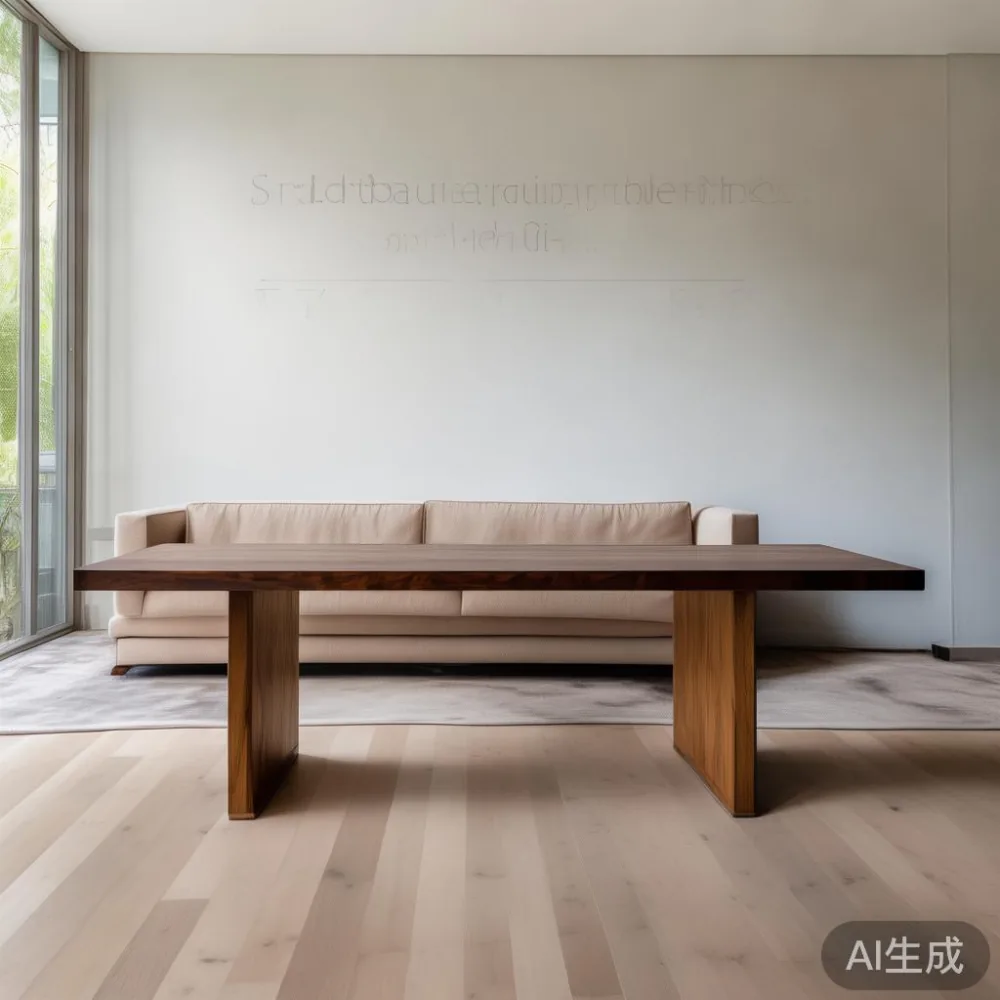
What does a S$800-S$1,800 dining table actually cost in Singapore?
The sticker price is only the opening move. For Singapore buyers in HDB flats and private condos, the all-in day-one figure includes the 9% GST (going to 10% from January 2024), door-to-door delivery from a Jurong or Sungei Kadut warehouse (S$60-S$120 for a standard 6-seater), and a S$40-S$80 disassembly fee if the lift opening in your block is under 80 cm. A typical 140 cm x 80 cm solid wood dining table from a Foshan maker lands in Singapore at S$1,400-S$1,800 with shipping, tax, and a basic wax-and-oil finish included. A comparable engineered veneer dining table of the same dimensions lands at S$900-S$1,150.
The structural difference matters here. A solid wood top is usually 25-35 mm thick and weighs 35-55 kg. A veneer dining table uses a 15-18 mm MDF or particleboard core wrapped in a 0.5-1.2 mm wood slice, weighing closer to 22-30 kg. Both fit through a standard HDB service lift (door opening 90 cm wide, 210 cm deep), but the solid wood top needs two porters, not one, and that labour shows up in your bill.
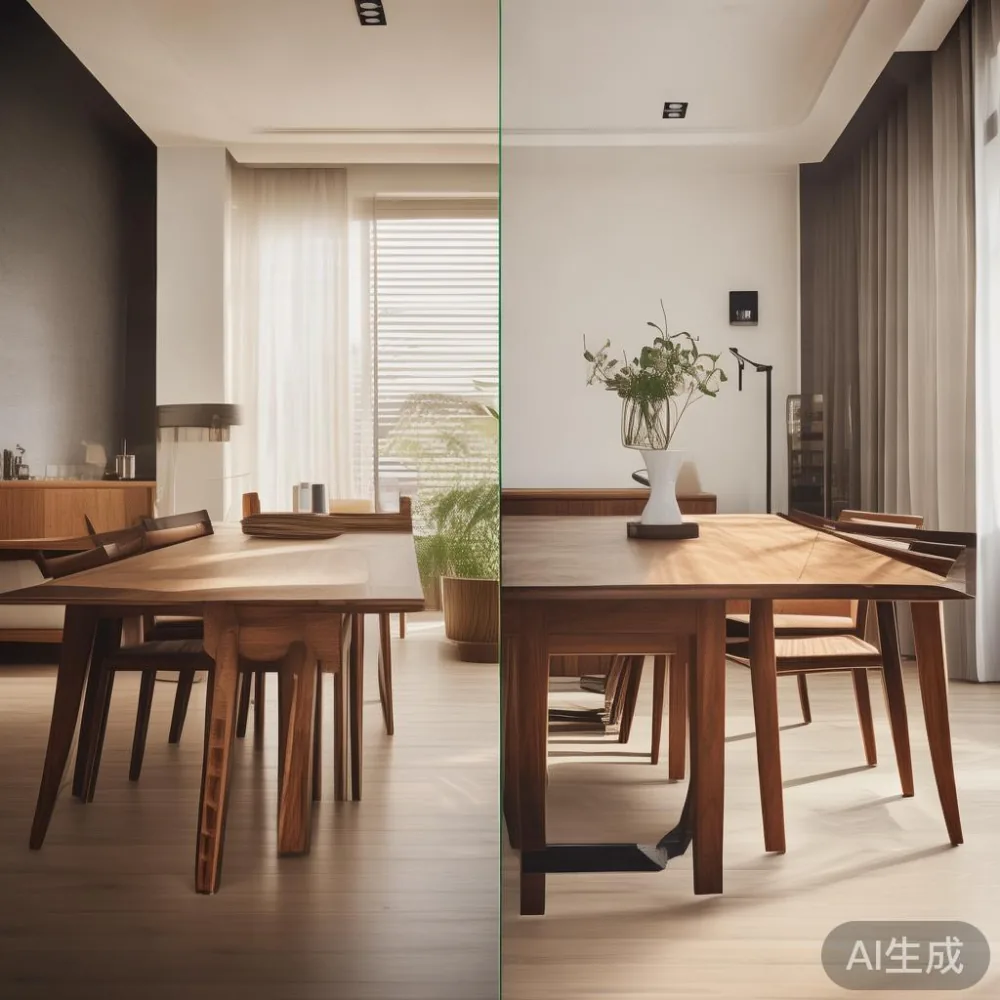
How does daily life in Punggol or Bedok affect the table after 12 months?
Singapore humidity hovers at 78-85% year-round, and air-conditioned rooms still see 60-70%. Engineered dining tables cope well at first because the MDF core is dimensionally stable, but the thin veneer layer begins to delaminate at the corners within 18-24 months when AC vents blow directly on the tabletop. My colleague in a Punggol Waterway Terrace unit noticed lifting along the 2 mm edge band after 14 months, where the afternoon sun hits the table from the window. A quick patch-up cost S$180 at a Toa Payoh repair shop.
Solid oak or ash tops behave almost the opposite way. They absorb moisture and release it, which means a 1-2 mm seasonal movement across the width, sometimes visible as a hairline gap between leaves in January and a tight fit in July. This is normal, and it does not count as damage under most warranty terms, including the 10-year structural coverage that makers such as the Foshan factory behind midhill attach to their solid wood frames. After 12 months a solid table simply needs a fresh coat of hard wax oil, around S$35 for a tin that covers 8-10 sqm.
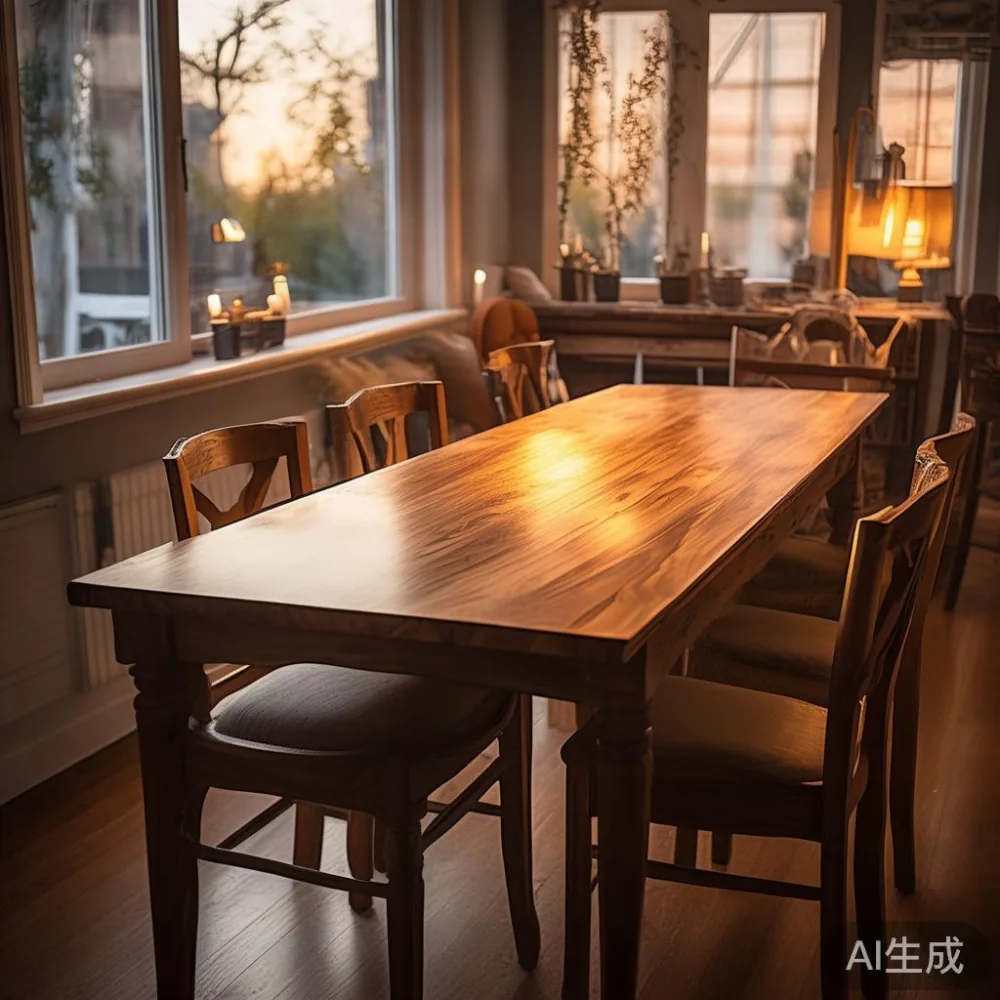
Veneer vs solid wood dining table: what breaks first?
The two failure modes are completely different, and that is where the 5-year math starts to diverge.
Veneer dining tables fail at the surface. The first signs are corner lift, heat-ring marks from hot pots, and bubbling where water sits. Year three is usually when a family shows the laminate, sees water staining along the underside lip, and starts looking for a replacement. Resurfacing a 140 cm x 80 cm veneer top costs S$250-S$400 and only buys another 2-3 years, because the underlying MDF swells once it has absorbed moisture and never returns to flat.
Solid wood dining tables fail cosmetically, not structurally. Expect dents from dropped cutlery, water rings under the aircon vent, and UV fading near the window. None of these affect load capacity. A solid oak dining table tops are guaranteed to handle 80-120 kg of distributed weight for 10+ years because the core is continuous grain. Dents can be steamed out with S$20 of equipment. Fading responds to drum refresh with oxalic acid and a new coat of oil, S$50-S$80 in materials and a weekend afternoon.
Add the savings on two professional polishing visits (S$120 each) that a veneer table would need in years 3 and 4, and the solid wood option is already S$240 ahead before you count the avoided replacement.
What about resale, scrap, and replacement cycles in a 999-year condo?
Singaporeans move. The HDB resale market in Tampines saw 2,438 transactions in 2023, and the average private condo owner refinances or upcycles every 7-9 years. That means any dining table is likely to face one or two owner changes before it hits 15 years old.
A 5-year-old veneer dining table in working condition sells on Carousell for S$150-S$300, and most listings end up given away because the next buyer worries about hidden swelling. A 5-year-old solid wood dining table in working condition, even with a few scratches, sells for S$500-S$900 depending on species. Buyers in this category know that oak and ash can be drum-sanded flat and re-finished, which adds another 15-20 years of service. That retained value closes the original S$751 price gap almost entirely.
If you scrap both tables at year five, the difference is smaller. Solid wood gets picked up by a carpentry recycler at S$20-S$40 per piece. Veneer panels are usually chipped and sent to incineration because the MDF core and the glue line make them hard to recycle. From a pure cost angle, scrapping is a tie at S$30.
How much does a solid wood dining table really cost per sit-down meal?
Let's pick a realistic household: a couple and one child in a 4-room Punggol flat, eating three meals a day at the table on weekdays and full family dinners on weekends. That is roughly 1,800 seated meals per year. Over five years, the table hosts about 9,000 sit-downs.
For the veneer table at S$1,050 all-in, with S$200 in repairs and S$180 in polishing by year five, the total 5-year cost lands around S$1,430. Divided by 9,000 meals, that is S$0.159 per meal, or roughly 16 cents of table cost on every plate of chicken rice eaten at home.
For the solid wood table at S$1,750 all-in, with S$80 in oil, S$60 in a drum-sand rental, and S$0 in structural repairs thanks to the warranty, the 5-year cost is about S$1,890, minus S$550 retained resale. The net is S$1,240, or S$0.138 per meal. The solid wood dining table is actually 2 cents cheaper per sit-down, even before you count the lifetime drum-sanding and refinishing service that some Foshan makers bundle into the price.
Which dining table suits a French light luxury aesthetic in a 1,200 sqft condo?
For owners chasing French light luxury or post-modern light luxury interiors in a 1,200 sqft condo, the dining table is usually the anchor piece, dressed with a marble table lamp on a sideboard, a velvet solid wood sofa across the room, and a coordinated bed frame and nightstand visible through an open-plan layout. In this setting, a veneer dining table reads as budget after the first year, because the edge band, the repeating grain pattern, and the way the surface photographs under warm LED strips all give it away. A solid oak or ash dining table with hand-applied French light luxury finishing absorbs light differently and ages into a deeper tone over five years, which is exactly the patina the style asks for.
If you are mapping out a full light-luxury package, the same brand often supplies the matching solid wood sofa, bed frame, dining table, wardrobe, and nightstand. Buying the suite from one maker keeps the grain, stain, and hardware consistent, which matters because mismatched undertones are obvious under the 3,500K-4,000K warm lighting most Singapore interior designers recommend for American light luxury schemes.
What if I rent and might relocate in 5 years?
Renters should still lean solid wood, but for a different reason. A S$1,200-S$1,500 solid wood dining table can be disassembled, moved, and reassembled without losing structural integrity. A S$900-S$1,000 veneer dining table can be moved once or twice before the corner joints loosen and the top starts to skew. If you move three times in five years, the cost of a single corner-gluing repair (S$180-S$250) wipes out most of the original savings.
Measure your lift opening before you order. HDB passenger lifts are usually 110 cm wide and 210 cm deep with a door opening of 90 cm. Most 140 cm dining tables clear this with the legs removed. Some private condos in the Bedok Reservoir area still use lifts with 75 cm door openings, which means a 160 cm table must be split into two halves, and only tables designed for that disassembly survive the trip without splitting at the joint.
Is a dining table worth the GST in 2024 and beyond?
Yes, and here is why. The 8% GST bump to 9% in January 2023 and the planned 10% from January 2024 add S$80-S$160 to the price of either table, but the percentage hits both options equally. What changes the math is that solid wood holds its value, while veneer does not. From 2024 onwards, with the additional 1% on the table price, the gap between initial cost and retained value widens by another S$15-S$25 in favour of solid wood.
If you are still on the fence, visit a showroom with both options on display, place a hot pot on each for 10 seconds, pour iced water on each for 10 seconds, and run your fingernail across the edge band. The veneer table will mark on the heat test, pool water on the cold test, and chip on the nail test. The solid wood table will do none of those things. That 60-second test saves a S$1,000 mistake.
Where do I buy a solid wood dining table that ships from Foshan to Singapore?
Most Singapore buyers now order direct from Foshan factories that export to 15+ countries, ship door-to-door, and offer a 10-year structural warranty with lifetime drum-sanding refinishing service included. Delivery takes 35-50 days by sea from Shenzhen or Guangzhou to Singapore port, then 5-10 days for last-mile delivery into your HDB or condo. Free shipping kicks in around the US$350 mark, which is roughly S$470, well below the price of any dining table of either type. Returns are accepted within 14 days if the piece arrives damaged, and refinishing is covered for life, which is the single strongest argument for solid wood over the five-year window.
For owners still planning the rest of the room, the same Foshan factory line usually covers a solid wood sofa, bed frame, dining table, wardrobe, and nightstand in matching grain. Pairing a French light luxury dining table with a post-modern light luxury marble table in the living area keeps the weight, tone, and finish coherent across the open plan, and saves the S$200-S$400 you would otherwise spend matching wood tones from three different suppliers.
So, veneer or solid wood for the next five Singapore years?
For most HDB and condo owners who plan to stay at least three years, the solid wood dining table wins on cost, durability, and aesthetic depth. The 5-year net cost is roughly S$1,240 versus S$1,430 for a comparable veneer option, the per-meal cost is 2 cents lower, and the retained resale value closes the original sticker gap. Add in the lifetime refinishing service and the 10-year structural warranty, and the S$700-S$800 upfront premium becomes a quiet discount by year three. For anyone styling how to style Japanese sofa in room layouts, planning how to style Japandi sofa in apartment corners, hunting the best Industrial sofa for 2026, comparing a French bed vs Japandi bed for the master, scrolling for the best Coastal bed for 2026, or sourcing the best Italian light luxury bed for 2026, the dining table remains the heaviest piece in the room and the one that anchors every other decision, so it deserves the longest-lasting material you can afford.