Caring for a Lacquered Solid Wood Dining Table in Singapore's Tropical Climate
Walk into any HDB flat in Tampines or a new condo along the Punggol Digital District and you will see the same piece of furniture anchoring the home: a solid wood dining table. Lacquer finishes sit on top of almost every one of them, from a 140 cm four-seater squeezed into a 92 sqm BTO to a 220 cm statement piece in a landed property. Yet Singapore's climate works against lacquer every single day. Relative humidity hovers between 78% and 88% for most of the year, afternoon temperatures inside a west-facing unit climb past 34°C, and the afternoon thunderstorm cycle pushes moisture levels even higher. I learned this the hard way last month when I visited a client's resale flat in Bedok. Her 180 cm oak dining table, only fourteen months old, had developed a milky haze along the edge nearest the kitchen, plus two faint rings under a lazy Susan. The cause was not the wood. The cause was the lacquer, and how the tropical air had been treated by an air-con running at 24°C for sixteen hours a day, then switched off overnight while humidity crept back in.
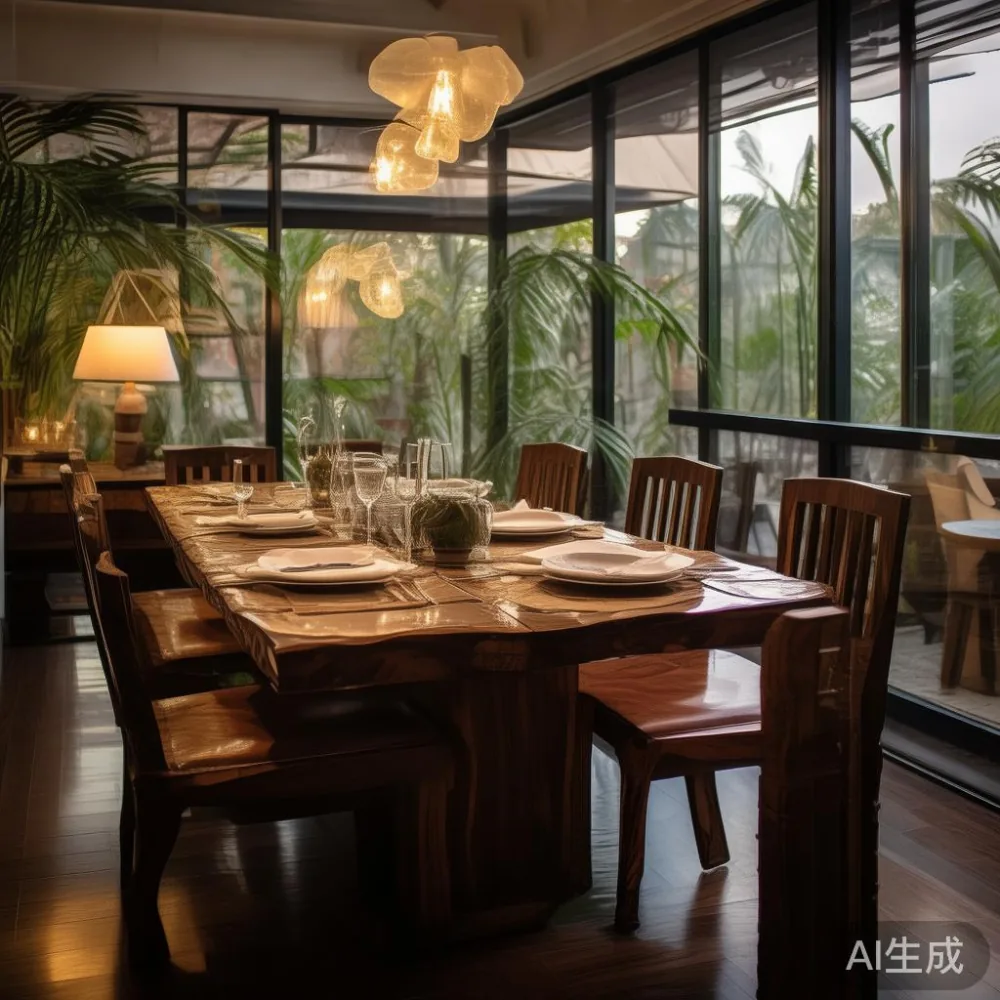
The good news is that a well-finished lacquered dining table can easily outlive its 10-year structural warranty in this climate. It just needs a different care routine than the same piece in a Beijing apartment or a Vancouver townhouse. Below is a practical, room-by-room guide shaped around how Singaporeans actually live, eat, and entertain, with prices quoted in SGD and product sizes matched to the lift and corridor widths common in HDB blocks.
Why does the lacquer on my dining table turn cloudy after only one year?
This is the question I hear most often from homeowners in District 16 and District 19. A cloudy film, sometimes called blush or bloom, is moisture trapped inside the lacquer film or sitting on top of it as condensation. Three things cause it in Singapore: high ambient humidity, a cold glass or hot pot placed directly on the surface, and household cleaners that contain silicone or ammonia. Lacquer is a film finish, meaning it forms a 0.05 mm to 0.12 mm skin over the wood fibers. When that skin heats up faster than the wood underneath, or cools faster, it pulls away by a few microns and refracts light differently. The result is that milky patch you see near the dining chair leg where a coaster was forgotten.
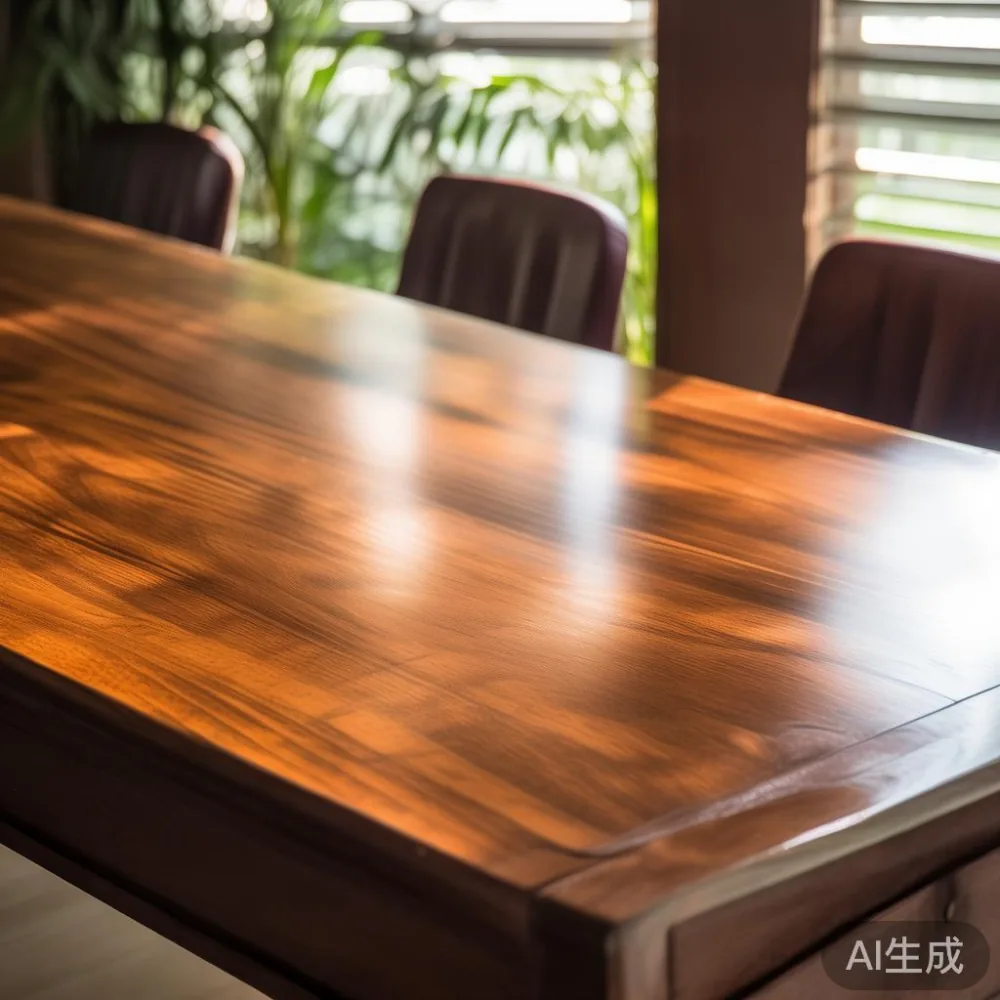
The fix is mechanical, not chemical. Buff the affected area with a clean microfiber cloth (a 12-pack costs about SGD 18 at any FairPrice or Giant) using straight, with-the-grain strokes. For haze that has been there longer than three months, a paste wax made specifically for lacquer — Renaissance Wax, around SGD 28 for a 65 ml tin — will usually restore clarity in under five minutes of work. Avoid furniture sprays from supermarket shelves, which often contain silicone oil that softens lacquer over repeated use and causes yellowing within twelve to eighteen months.
The 60-second daily wipe-down for your lacquered dining table
A consistent nightly routine does more for lacquer than any product you can buy. After dinner, while the dishes soak, take a dry microfiber cloth and wipe the entire surface once, picking up the acids from soy sauce, the oils from sambal, and the condensation rings from cold mugs. Singapore tap water has a Total Dissolved Solids content of around 180 mg/L, which sounds clean but leaves mineral spots if it sits on lacquer for over thirty minutes.
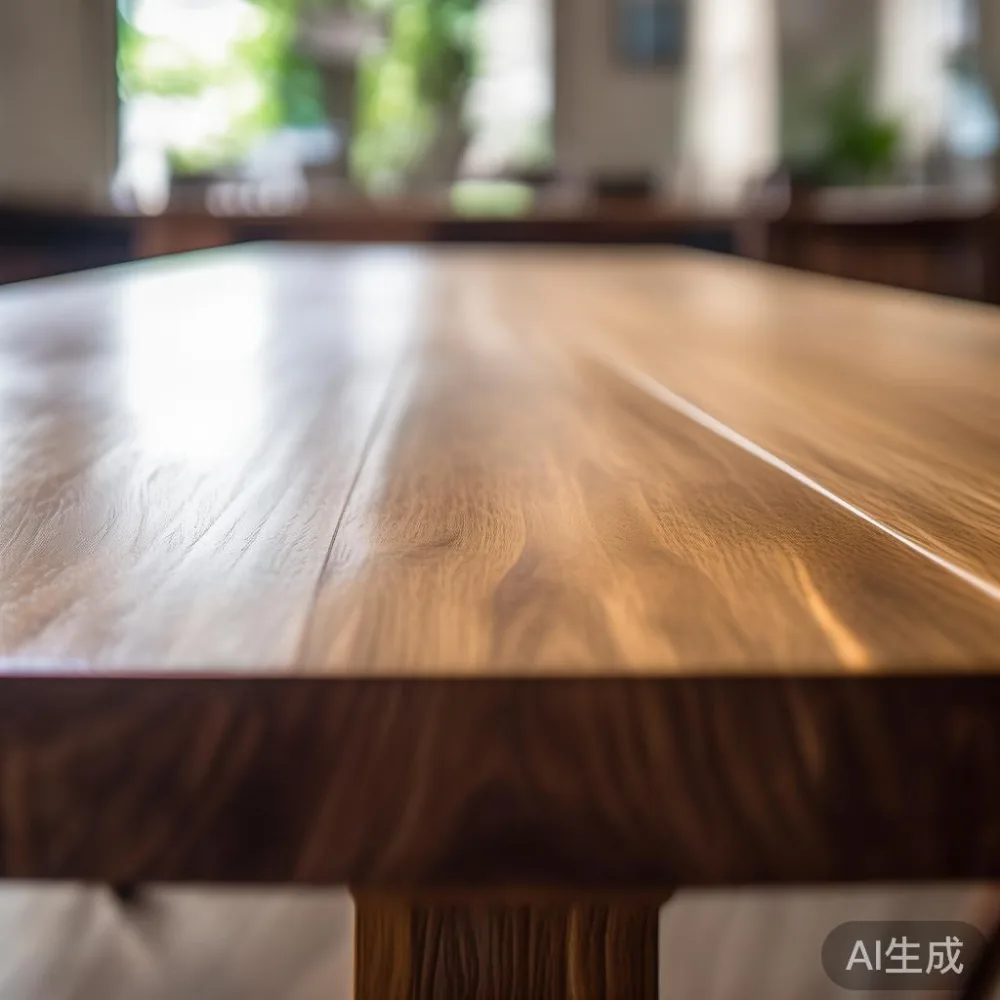
Once a week — Sunday morning works for most households in Punggol and Sengkang — go one step further. Lightly dampen (never soak) a second microfiber cloth with room-temperature filtered water, wring it until no drops fall, add a single pea-sized drop of pH-neutral dish soap (a SGD 6 bottle lasts roughly four months), and wipe the dining table in sections of about 60 cm at a time. Dry each section immediately with a third cloth. The whole process takes about 90 seconds for a 160 cm table and 140 seconds for a 200 cm table. This routine prevents the sticky film that attracts dust and slowly degrades the lacquer's sheen.
Humidity control: the 40% to 60% rule for Singapore interiors
Lacquer behaves within a specific humidity window. Below 40% relative humidity, lacquer becomes brittle and micro-cracks form along the grain lines. Above 65%, the film absorbs moisture, softens, and prints easily. Wood itself moves with humidity: a 200 cm solid wood dining table top can change width by 4 mm to 6 mm across a humid season, which is why good tables use a breadboard end or expansion slots underneath, never a fully glued-down top.
Run the air-conditioning at 24°C to 26°C during the day, paired with a dehumidifier set to 50% relative humidity in the dining area for the eight to ten hours you are home. A standard 12 L/day compressor dehumidifier (around SGD 189 to SGD 240 for brands like Midea or Novita) handles a 20 sqm dining-living space comfortably. Empty the tank each morning. If you prefer not to run a separate appliance, the dehumidifier mode on most 2024-and-newer Mitsubishi or Daikin split units holds a 40 sqm HDB at 52% to 55% RH while using about 0.6 kW per hour, roughly SGD 0.18 per hour at the current regulated tariff of SGD 0.2463/kW before GST.
At night, leave the air-conditioner running in the master bedroom with the door open so humidity migrates back toward the dining table. Two hours of morning sun on the table also helps: UV light breaks down mould spores and slowly evaporates trapped moisture. Rotate the dining table 90° every six weeks so one edge does not darken faster than the other.
Heat, spills, and the items that ruin lacquer in under a minute
A lacquered dining table can handle a short burst of normal use, but five everyday items cause 90% of the damage I see during in-home consultations. Place them on a trivet or coaster, never directly on the finish.
- A 75°C hot pot from your Steamov or Haidilao order. Lacquer starts softening at 60°C. A silicone trivet (SGD 12 to SGD 22) handles up to 230°C.
- A frozen cup of ice cream or a chilled bottle of wine. Condensation forms in under eight seconds and leaves a ring in under twenty minutes.
- A wet clay pot straight from the washing-up bowl. The terracotta holds moisture for hours.
- Plastic placemats with a rubber backing. Plasticizer migration causes a permanent orange stain within four to six weeks of contact.
- A laptop running for two hours. The exhaust heat reaches 48°C to 52°C, which softens the lacquer and leaves a visible ghost when the laptop moves.
The same rules apply to all the other lacquered pieces around the home. A solid wood sofa frame, a bed frame with a veneered headboard panel, a wardrobe with painted doors, a marble-topped side table, and a lacquered nightstand all share the same film finish chemistry. Treat them as one family of surface.
Is light luxury furniture worth it for tropical homes?
The phrase "is light luxury wardrobe worth it" gets asked a lot in our Tampines showroom, and the answer depends on which strand of light luxury you mean. French light luxury and European light luxury lean on pale oaks, off-whites, and brushed brass handles, which read bright in a compact HDB. American light luxury uses warmer walnut tones and slightly chunkier profiles, which suit the larger 110 sqm to 130 sqm four-room flats in Punggol. Post-modern light luxury pairs lacquered solids with stone or marble accents — a marble table with a solid wood base, for instance — and works well in dual-purpose dining-and-living spaces. The key with any light luxury furniture in Singapore is to confirm the lacquer is a multi-coat conversion process (usually 4 to 7 coats, each sealed with a 240-grit sanding between coats) rather than a single sprayed NC or pre-cat lacquer, which will fail in our humidity within three to five years.
How do I get a dining table through a 1.1 m wide HDB lift?
The physical movement of a dining table into the home is the moment when 40% of all finish damage actually happens. Standard HDB passenger lifts in blocks built between 1985 and 2015 have a clear door opening of 0.9 m to 1.1 m and an internal depth of 1.5 m to 1.9 m. A 200 cm dining table top will not stand on end through a 1.1 m door — the diagonal becomes 2.03 m minimum. The solution is a split-top design, where the central leaf detaches in two pieces. MIDHILL's own 200 cm American light luxury dining table, for example, ships with a removable centre leaf that splits the top into a 140 cm and a 60 cm section, each of which fits a 1.1 m × 1.5 m lift with 5 cm of clearance on every side. The frame, weighing 38 kg for an oak version and 44 kg for a walnut version, is hand-trucked by a two-person delivery crew at no extra charge on orders above SGD 350.
HDB corridors add another constraint. Most blocks in Bedok and Tampines have a corridor width of 1.2 m to 1.5 m, with a handrail on one side. A dining chair in its box measures 60 cm × 60 cm × 95 cm for the standard solid wood dining chair. Six of them, stacked sideways, fit a single elevator trip. Allow 35 to 55 minutes from the delivery lorry at the loading bay to the dining room in a high-floor unit, and budget an extra SGD 30 to SGD 80 for a staircase carry if the service lift is booked during peak hours between 11 am and 2 pm.
Refinishing, repairs, and the 10-year promise
Every lacquered surface can be restored, but only by sanding back through the layers and reapplying. A standard dining table top takes 6 to 8 hours of workshop time to fully refinish, plus 48 hours of dust-free curing, which is why most local workshops quote SGD 280 to SGD 450 per top. MIDHILL includes lifetime refinishing in its structural warranty package for any dining table, bed frame, or wardrobe sold at its Foshan factory direct. Customers receive a quotation for two-way shipping (typically SGD 120 to SGD 240 within mainland Singapore, free for the return leg on items over SGD 350) and the refinish itself at cost. I have walked this process through the workshop in person. The top arrives, gets stripped with a fine 320-grit pass, sealed with two new coats of conversion lacquer, and returns to the customer looking like new inside ten working days.
Small touch-ups — pen marks, light scratches, a single ring — can be done in-home by the buyer with a touch-up pen matched to the finish (SGD 14 to SGD 22 per pen) and fifteen minutes of work. Anything deeper than 0.1 mm into the film should go back to the workshop. The 10-year structural warranty covers joint failure, cracking of the substrate, and excessive warping greater than 8 mm across a 200 cm top, but it does not cover heat marks, water rings, or chemical damage from harsh cleaners. Keeping the warranty intact comes down to the routines described above, applied on a weekly basis.
Practical shopping checklist for a lacquered dining table in Singapore
Before placing an order for any dining table in this climate, confirm four technical details with the seller. First, request the lacquer specification: number of coats, type (conversion, pre-catalyzed, polyurethane), and final sheen level (matte at 10° to 20° gloss shows scratches less than satin at 40° gloss). Second, ask about the substrate: a solid wood top is a different product from a veneered MDF top, and the price difference is usually 2.2× to 3× for the same size. A solid wood dining table in oak starts around SGD 1,180 for a 140 cm version and SGD 2,450 for a 200 cm version with extensions; a comparable walnut top sits at SGD 1,680 to SGD 3,320. Third, confirm delivery routing through your specific block and lift. Fourth, check the returns window — 14 days is standard for direct-factory pieces, but the item must be unused and in original packaging to qualify.
Buyers often compare the same dining table against an european sofa bed with storage or a euro-style sideboard when they are kitting out a whole flat. The care routines cross over directly — a lacquered european sofa bed with storage shares the same film finish on its arms and drawer fronts, just like a post-modern bed frame with a lacquered headboard. Browse guides on the best Post-modern bed for 2026 and the best French bed for 2026 to see how the same humidity rules apply to bedroom pieces. For the master bedroom wardrobe, the question of how to style American wardrobe in apartment layouts comes down to the same humidity-tolerant finishes and the same weekly wipe routine.
A simple monthly maintenance calendar
Mark these four checkpoints on the wall calendar next to the dining table. Week 1: weekly wipe plus visual check of all four edges for haze. Week 2: buff with a microfiber cloth and a single drop of paste wax along the central axis only — the high-wear zone. Week 3: rotate table 90° to even out UV exposure from the nearest window. Week 4: check humidity logs; if you do not yet own a hygrometer, the SGD 18 thermo-hygrometer from any DIY shop is worth the spend.
A lacquered solid wood dining table will easily last twenty-five years in a Singapore home if these few routines are kept. The piece of furniture you eat on most nights deserves that kind of attention, and the climate — as stubborn as it is — does not have to win the argument.
One last tip from the workshop floor: when comparing two dining tables side by side in a showroom, run your fingernail very lightly across an underside corner of the top. If the lacquer feels glass-smooth and gives a soft squeak under the nail, you are looking at a properly cured conversion finish. If it feels slightly tacky or rubbery, walk away, regardless of how attractive the grain pattern appears. That single test separates a table that will still look good in 2036 from one that will haze over by next December.