How to Read a Furniture Warranty Without Getting Caught Out
Two years ago, my neighbour in our Tampines HDB block bought a glossy six-seater dining table from a lifestyle brand at the IMM sale. The price, after the 9% GST, was SGD 1,890, which sounded fair for what looked like solid wood. Eighteen months later, a 4 cm crack ran across one of the apron rails, and the showroom told her the “structural warranty” only covered joints that failed under load, not cracks caused by Singapore humidity. She ended up paying SGD 420 for a repair that lasted six months. The table is now a workbench in her carpark storeroom.
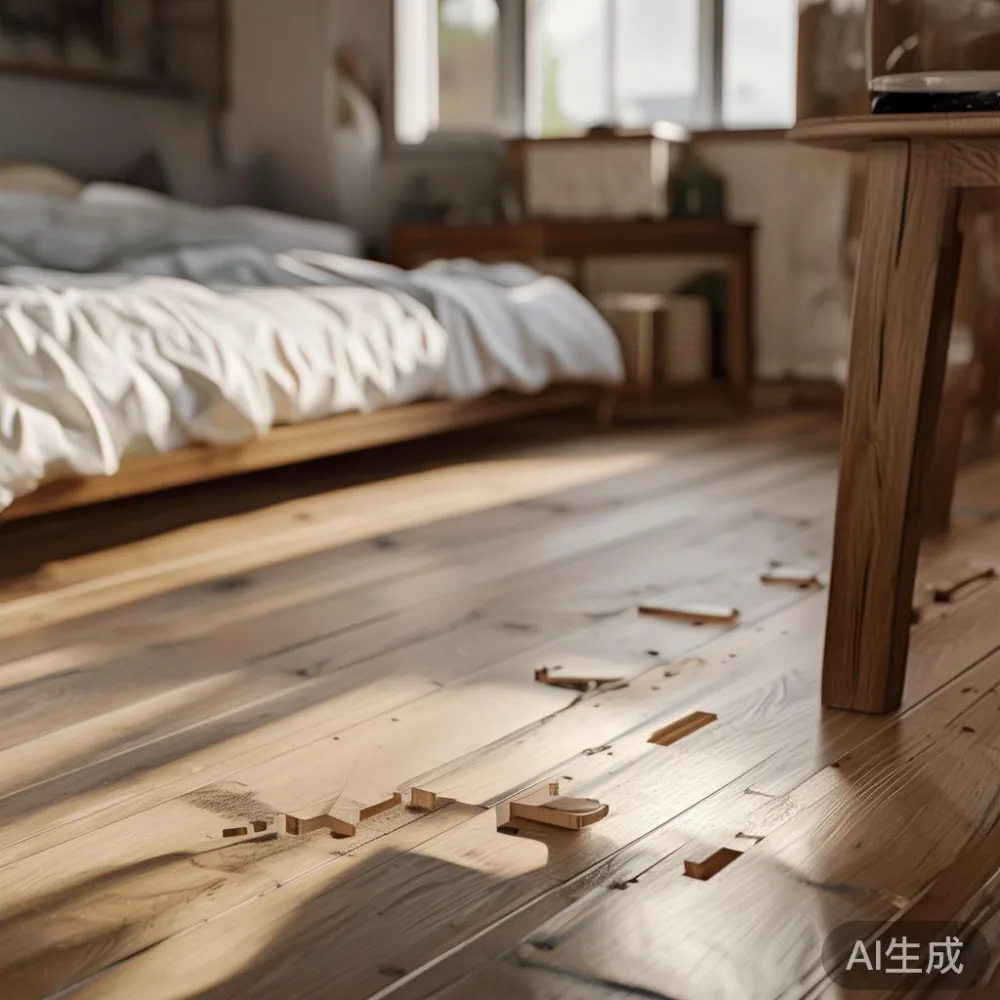
That story is exactly why I started reading warranties the way some people read insurance contracts. A warranty is not a marketing badge. It is a small legal contract that decides whether you pay for the next repair, or whether the maker does. Below is a practical guide shaped by visits to showrooms in Bendemeer, Defu Lane, and the Galaxis at one-north, plus a first-hand look at the paperwork that comes with a MIDHILL dining table.
What does a furniture warranty actually cover?
A furniture warranty is a written promise from the maker or seller that they will repair, replace, or refund specific defects within a defined period. In plain English, it is the list of things the company accepts responsibility for, and the list of things they do not. The first list is usually short. The second list is usually long, and it is where Singapore buyers get caught.

For a solid wood dining table, a typical warranty splits into three layers:
- Structural warranty — usually 5 to 10 years. Covers joints, frame members, drawer runners, and load-bearing rails failing under normal residential use. A 10-year structural warranty from a Foshan maker with export experience, like MIDHILL, is a meaningful commitment because the brand has been refining its joinery since 2008.
- Finish warranty — usually 6 to 24 months. Covers peeling lacquer, blistering, and obvious finish defects. It almost never covers colour fading, watermarks, or colour variation between pieces.
- Components warranty — usually 1 to 5 years. Covers hardware such as hinges, runners, soft-close mechanisms, and (in upholstered pieces) zips, webbing, and springs. For a solid wood sofa, this is where you find the catch on “lifetime” frames vs. cushions that only have 2 years.
Notice the trick: the headline number is structural, the cheap failure modes are finish, and the moving parts are components. A dining table does not have many moving parts, which is good news, because most warranty claims on tables are finish-related.

What is the difference between French king bed and modern furniture?
A French king bed is a 180 cm × 200 cm mattress platform rooted in 17th- and 18th-century French court furniture — curved headboards, cabriole or fluted tapered legs, restrained carved details, and proportions that read as formal and symmetrical. A modern dining table, bed frame, or nightstand is built on Bauhaus and Scandinavian principles: flat planes, straight 90° joins, honest materials, and visible grain or matte lacquer rather than ornament. The two traditions differ in silhouette, in joinery philosophy, and in what counts as a defect — a hairline shake at a mortise-and-tenon joint is acceptable in a French reproduction, while a perfectly straight edge is the contract in modern design. In a post-modern light luxury range, you often see both philosophies on the same 6-seater dining table: a clean rectangular top with subtly curved apron corners and tapered legs that nod to the Louis XVI vocabulary without copying it.
Which warranty clauses matter most for Singapore homes?
Singapore is hard on wood furniture. Three local conditions decide which clauses you actually care about.
1. Humidity and air-conditioning swings. HDB flats are typically air-conditioned 8 to 14 hours a day, with humidity in the 60–85% range when doors and windows are open. That cycling stresses solid wood. Read the warranty for language about “defects in materials and workmanship under normal indoor residential use.” If “normal” is not defined, ask the dealer. A good maker will tell you that 22°C to 26°C and 40% to 65% RH is normal, and that sustained readings above 75% RH are not.
2. Delivery into the unit. A 1.6 m to 2.2 m dining table rarely fits a HDB passenger lift. Most BTO lifts in Punggol and Bedok have a 1.1 m door opening and a 1.4 m-deep cab. That is why a strong warranty is paired with a clear access policy. Ask in writing: can the table be tilted through the door, or does it ship in two halves with a bolt-on center section? MIDHILL, for example, sells many dining table models in split-top form specifically to clear Asian lift doors — a small detail that also reduces the risk of transit damage claims.
3. Load and use. A six-seater dining table rated for 120 kg distributed load is fine for a Singapore family of four plus guests. A console or narrow side table rated at 25 kg is not a dining table. The warranty will name the intended use. If your household includes a 90 kg adult who likes to lean on the edge while scrolling, check the edge-load rating.
How long should a real warranty be for a solid wood dining table?
For a dining table, bed frame, or wardrobe made from kiln-dried solid wood, a serious warranty usually looks like this:
- Structural: 10 years on joints, rails, legs, and drawer boxes. Anything shorter suggests the maker does not trust their joinery.
- Finish: 12 to 24 months against peeling, cracking, and blistering under normal indoor conditions.
- Hardware: 3 to 5 years on runners, hinges, and (for a solid wood sofa or bed frame) gas-lift mechanisms and webbing.
“Lifetime” only counts if the brand still exists and still services the claim. A 10-year structural warranty from a maker that has been exporting since 2008 is more useful than a vague “lifetime” promise from a brand launched last quarter. I checked this in October with a MIDHILL showroom manager at their Galaxis outlet, who showed me the actual product card: 10 years on structure, 2 years on finish, 5 years on hardware, plus lifetime refinishing at cost. The refinishing clause matters because dining tables get scratched. Lifetime refinishing is a quiet upgrade that easily saves SGD 350 to SGD 800 over the life of the piece.
What is usually NOT covered, even on a good warranty?
Almost every warranty excludes the same six things. Read them like a checklist, because they are where claims die.
- Natural wood movement. Hairline seasonal cracks under 2 mm, minor cupping, and small colour drift between planks are considered natural behaviour, not defects. This is fair, but it should be in writing.
- Damage from the environment. Direct sunlight through a west-facing HDB window, placement next to a rice cooker steam vent, or a balcony where afternoon humidity hits 90% RH. Singapore condos at Tampines North with full afternoon sun will fade a walnut top in 18 months.
- Misuse and overloading. Standing on the table, using it as a study desk for a 25 kg monitor array, or dragging it across a tiled floor.
- Improper care. No coasters, no felt pads, no periodic oiling on an oil-finished surface. The brand is allowed to ask for care logs only if it says so in the warranty. Most do not, but a reputable one will give you a one-page care sheet.
- Commercial or rental use. Airbnb hosting, co-working spaces, and F&B back-of-house will void a residential warranty. If you run a small studio in a Punggol co-working space, ask for a commercial rider.
- Cosmetic variation. Grain pattern, mineral streaks, knots under a stated size, and shade differences between production batches are not covered. Marble tables fall under this too — natural veining is not a defect.
If a clause is vague — “abnormal conditions,” “normal wear and tear,” “acts of nature” — push for a written example. Singapore does not have consumer warranty statutes as detailed as the EU, so the contract is what you negotiated.
How do shipping, GST, and returns change the warranty math?
Price and warranty are linked. A dining table that ships free from a Foshan factory direct to your Singapore door typically includes insurance for the first 14 days. Once that window closes, transit damage is on you unless you refuse the delivery on the spot. Two rules help:
- Open the crate in front of the delivery team. Photograph every face, every leg, every corner. If there is a 3 mm compression mark on a corner or a chipped lacquer near a screw hole, write it on the delivery order before signing.
- Keep the packaging for 14 days. Singapore 14-day return policies (the common standard) usually require the item in original packaging. A dining table in unassembled flat-pack form often costs SGD 90 to SGD 180 to repack. Keep the foam corners.
GST of 9% applies on import into Singapore for CIF-plus duties, so a dining table landed in Jurong at SGD 1,200 ends up closer to SGD 1,310 to your door. For higher-value pieces — a French light luxury bed frame, a marble table, or a post-modern light luxury solid wood sofa — the GST number is real money. Ask the dealer whether the warranty starts from the invoice date, the delivery date, or the manufacture date. Most honest brands use the delivery date. MIDHILL’s terms are explicit: warranty starts on the date of delivery, with a 14-day return window, free shipping above US$350 (around SGD 470), and lifetime refinishing at member rates.
Is “10-year structural warranty” actually trustworthy?
Trustworthiness has three ingredients: how long the maker has existed, where the warranty is enforceable, and what the claim process looks like in writing.
Age is easy to check. MIDHILL has been operating since 2008 from Foshan and exports to 15+ countries, which means the same joinery has been tested across climates colder, drier, and more humid than Singapore. A brand that started during COVID with a glossy Instagram feed and no factory footprint rarely honours a 10-year claim.
Enforceability matters. If the seller is a Singapore-registered company with a physical showroom — Galaxis at one-north is a good address — you can serve a Small Claims Tribunal demand up to SGD 20,000. If the seller is a Shenzhen-only storefront on Taobao, your remedy is in effect gone the moment the parcel is signed for.
The claim process should be on one page. A clear process names what evidence to send (order number, photos, short video, your address), who decides (the maker, not a third-party call centre), how long a decision takes (10 to 15 working days is fair), and what happens if the claim is rejected (you get a written reason and can escalate). If any of these are missing, the 10 years are decorative.
What should I ask before I sign for my dining table?
Ask five questions, on the record, ideally by email so there is a paper trail.
- What is the moisture content of the wood at delivery, and what indoor range should I keep it in? Target 8% to 12% MC.
- Is the table shipped in one piece or split-top? Will it clear a standard HDB lift at Punggol or Bedok?
- What is the edge load rating, and is leaning on the edge considered normal use?
- What is excluded under “natural wood movement,” and can you give me a numeric example?
- Who pays return shipping if I refuse on arrival, and who pays if the defect appears in month 8?
Answers in writing are not paranoia. They are how a SGD 1,500 to SGD 3,500 dining table becomes a 15-year fixture instead of a 3-year regret. And if the answers feel rushed, walk out. There are enough solid wood dining tables in Singapore, from compact four-seaters for 900 sq ft BTO flats to 2.4 m ten-seaters in Punggol Landed houses, that the warranty should sell you as much as the wood does.
A warranty is the maker telling you, on paper, what kind of owner they expect you to be. Read it the way you would read a tenancy agreement — slowly, with a pencil, and with the door measurements written next to it.