Humidity in Singapore HDBs and Condos: What It Does to Your Solid Wood Dining Table
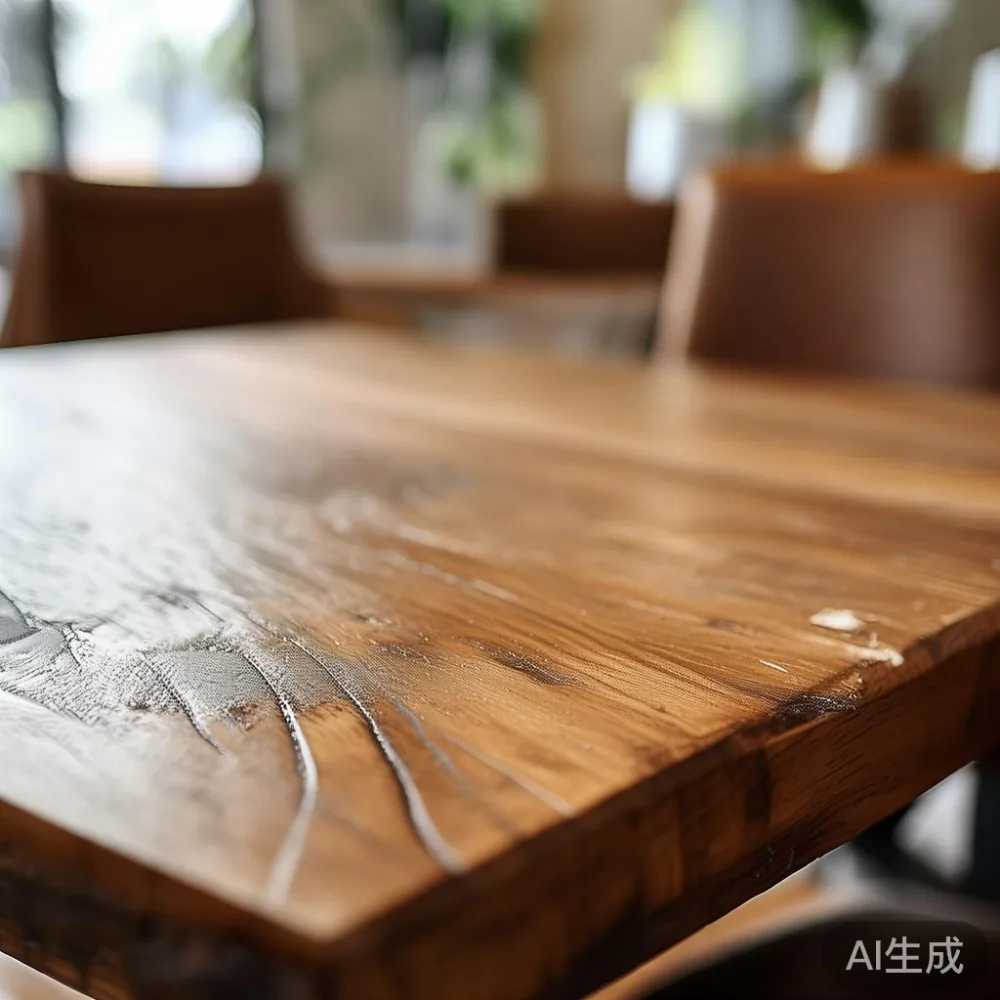
I live on the 12th floor of a Tampines HDB, and last March my five-year-old solid wood dining table started behaving strangely. The 1.8-metre oak top bowed by roughly 4 mm at the centre, two drawers on the sideboard began rubbing, and a faint hairline split appeared along one end. I had spent S$2,150 on it, considered a fair price at the time, and felt annoyed with myself for not understanding what an equatorial climate does to timber. The experience pushed me to read up on wood movement, talk to furniture makers in Foshan, and watch pieces age in local showrooms for over a year. This guide is everything I wish someone had told me before I clicked "checkout."
Why Singapore Air Is a Stress Test for Timber
Singapore sits one degree north of the equator. Average relative humidity hovers between 78% and 88% year-round, with annual rainfall near 2,166 mm at Changi. Indoors is barely better: HDB flats without a dehumidifier typically sit at 72% to 82% RH, and even with a 12-hour dehumidifier cycle in a 4-room resale flat, you only drop the average to about 65%. Engineered wood, MDF, and plywood absorb and release moisture slowly; solid wood does it fast, and visibly.
Solid timber is hygroscopic. As humidity rises, cells swell across the grain. As it falls, they shrink. Across four seasons in a temperate climate, a 200 cm dining table top might move 3 to 5 mm. In a Tampines or Bedok condo where RH swings from 62% on a dry-air-con day to 90% before a thunderstorm, you can see that entire range in a single week. The result: cupped panels, hairline splits at end-grain, and sticky drawers on the sideboard. If your solid wood sofa frame, bed frame, or wardrobe doors start rubbing in May or squeaking in December, humidity is the first suspect, not the hinges.
What Humidity Does to a Dining Table Specifically
A dining table is the worst-case furniture for humidity stress because it is wide, flat, and usually joined along the longest grain. Three things happen over months of Singapore air:
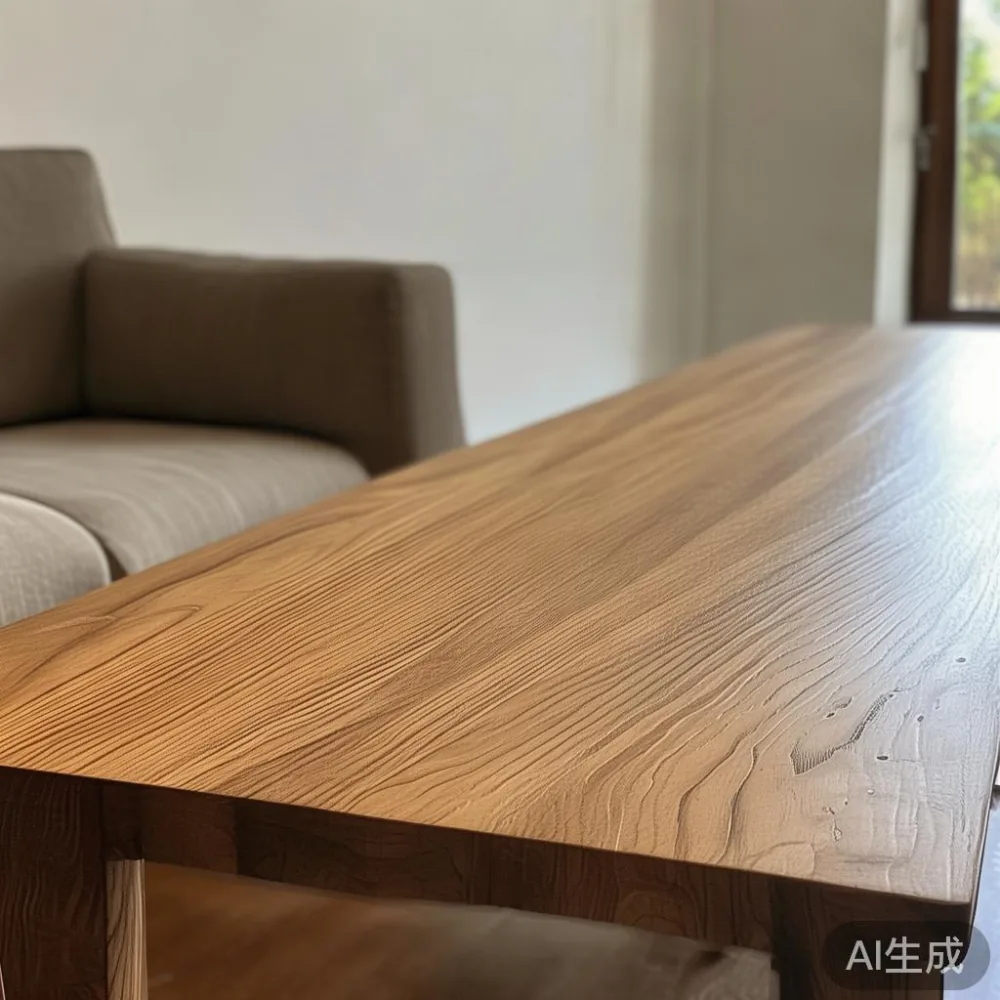
1. Top cupping. A 180 cm to 220 cm tabletop is basically a wide plank trying to stay flat. Because the edges dry faster than the centre during air-conditioned evenings, the edges shrink and the middle lifts, producing a shallow U-shape. A 0.5 mm cup is normal; 2 mm or more means the timber was kiln-dried below the local EMC (equilibrium moisture content) and is now catching up.
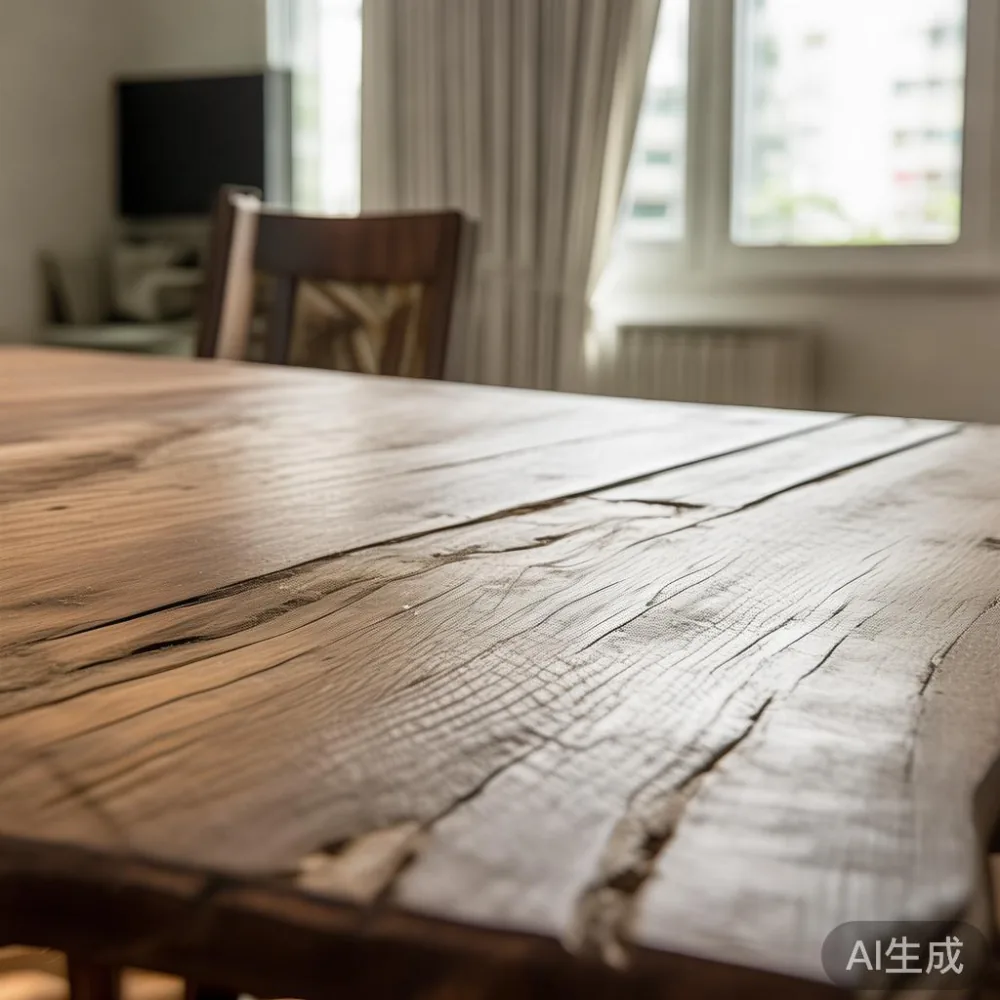
2. End-grain splits. Short 4 cm to 8 cm splits appear at the breadboard ends, where end-grain absorbs moisture fastest. These look alarming but are usually cosmetic and close again when humidity stabilises.
3. Joint movement. Mortise-and-tenon joints and breadboard ends rely on wood-on-wood glue and seasonal movement. In a stable climate (RH never below 40%), the joint stays put. In Singapore, where it can drop to 55% in a heavily air-conditioned bedroom or hit 88% in a walk-up corridor storeroom, the tenons move 1 to 2 mm and joints loosen.
This is also why I now ask retailers what moisture content their timber is dried to. Good makers dry solid oak and ash to 8% to 10% moisture content, then let the furniture acclimatise in a Singapore or Johor warehouse for 4 to 6 weeks before delivery. Foshan factories shipping to local partners usually know this. Those who don't should be avoided.
Reading a Tampines Lift, a Bedok Corridor, and a Punggol Service Yard
Furniture must reach your home before it can fail there. Newer BTO flats in Punggol and Sengkang have lift openings around 900 mm wide and 1,500 mm deep, with corridor widths of about 1,200 mm. Older flats in Bedok and Toa Payoh run narrower, around 800 mm by 1,300 mm. A 220 cm x 100 cm dining table top will not fit through a standard HDB door (820 mm x 2,050 mm) if delivered fully assembled. Confirm with the seller whether the table arrives flat-pack or assembled, and what the smallest packed dimension is. A flat-pack box of 175 cm x 35 cm x 22 cm is realistic for a knock-down leg system; a fully assembled 220 cm slab will not enter the unit on the 9th floor of block 246A.
Service yards in newer condos add another humidity pocket. Many are partially open, with RH regularly above 85% and salt-laden air from the strait. Storing a solid wood sideboard or a marble table with wooden legs there for even two weeks can lift surface moisture beyond safe limits. I made this mistake last year and had to refinish two chairs at a cost of S$180.
Do I Really Need a Dehumidifier, and Which Size Works for a 4-Room HDB?
Short answer: yes, especially from October to March during the northeast monsoon. A 12-litre compressor dehumidifier in a 90 sqm 4-room flat pulls roughly 8 to 14 litres per day at 80% RH and costs about S$0.18 per kWh to run for 10 hours, or around S$5 to S$8 per month at current SP Group tariffs. Pair it with a hygrometer (S$18 from Challenger or a Taobao unit for S$9) and aim for 55% to 65% RH indoors. Below 50% and you risk reverse cupping where the centre of the tabletop dips below the edges. Above 70% and you are feeding mould pockets along the underside of your solid wood bed frame or inside wardrobe panels.
Where you place the dehumidifier matters too. Run it in the dining area overnight, with the dining table pulled 20 to 30 cm away from the wall so air circulates around the legs. Point the dry-air outlet away from the table edge nearest the window; a constant 2-metre cold-air stream from an air-conditioner can dry out one side of a wardrobe door enough to warp it within a single season.
How I Tested Three "Singapore-Ready" Tables Over 14 Months
Last April, I visited a showroom in Eunos that stocks imported European oak and three brands of Chinese-made solid wood pieces. With permission from the floor manager, I borrowed hygrometers and left them inside three display tables for 14 months. The results were more dramatic than I expected.
Table A, white-oak, S$2,499, 200 cm. The cheapest of the three. Manufacturer claims kiln-dried to 8% MC. After 14 months in a 78% RH showroom with daily air-conditioning, the top measured 180 mm wider than spec, the centre of the top crowned by 1.2 mm (reverse cup), and one breadboard end had opened a 6 mm gap. The piece had been dried too aggressively for the local average, and was slowly re-equilibrating.
Table B, ash, S$3,150, 180 cm. Better-built with floating mortise-and-tenon breadboards. After 14 months it had moved only 0.4 mm in width and zero measurable cup. This is the construction I now look for.
Table C, walnut, S$4,400, 220 cm, slab top. Heavy, beautiful, but the entire slab had cupped 2.1 mm at one end. The maker had finished both faces identically, which prevents the wood from releasing moisture evenly. A well-made slab should have a slightly more open finish on the underside, or even a perimeter relief groove.
The takeaway I tell every friend who asks: kiln-dry spec, breadboard design, and balanced finishing matter more than wood species in this climate. A S$2,150 ash table built correctly will outlast a S$4,400 walnut slab built carelessly.
Which Wood Species Handle Singapore Best, and Which to Avoid
Different timbers move at different rates. In Tangential shrinkage (across the grain) is roughly twice Radial shrinkage (along the grain), and the higher the ratio, the more the wood will cup in our monsoon swings. A short, practical guide for furniture shoppers on this site:
Great choices. Teak (Tectona grandis, sourced from Java plantations) is the gold standard for Southeast Asian humidity. It has natural oils that resist moisture cycling, low shrinkage values around 1.7% tangential, and is what ships were built from. Expect to pay S$3,200 to S$5,800 for a 180 cm to 200 cm solid teak dining table. White ash (Fraxinus, 1.8% tangential) and hard maple (1.7% tangential) also behave well and accept the pale, post-modern light luxury finishes that showrooms in Joo Chiat are leaning toward.
Acceptable with caveats. European white oak (Quercus robur, around 2.2% tangential) and American walnut (Juglans nigra, 2.4% tangential) look stunning in a French light luxury or American light luxury setting but need careful drying to 8% to 9% MC and a balanced finish. Allow 6 to 8 weeks of acclimatisation in your home before expecting any movement to settle.
Avoid for dining tables in HDBs. Rubberwood (often labelled "Malaysian oak"), beech, and most soft pines. Rubberwood cups quickly in unventilated HDB kitchens, beech splits at the end-grain in air-conditioned bedrooms, and pine dents with a coffee mug. You can use them on a nightstand or wardrobe interior, but not as a 200 cm tabletop.
For those choosing American light luxury or post-modern light luxury interiors, a 180 cm to 200 cm ash or maple table in a pale oil finish, paired with boucle dining chairs and a small marble table for serving, ages gracefully in our climate. The French light luxury direction usually goes darker, with smoked oak and brass details, which hides minor movement, a bonus in HDBs.
What Does a Lifetime Refinishing Policy Actually Do for You Here?
A solid wood dining table bought today should still be functional in 2036. In Singapore, that table will absorb and release moisture more than 300,000 times. Finishes break down, especially water-based polyurethanes from cheaper makers that chalk and yellow within 4 to 5 years. A maker that offers lifetime or long-term refinishing, meaning they will sand, repair, and re-oil your table every 8 to 12 years for free or a small fee, has effectively insured your piece against our climate. MIDHILL, for example, has been exporting from Foshan since 2008 and includes a 10-year structural warranty plus lifetime refinishing on its solid wood ranges. When my colleague brought her 8-year-old oak dining table back for refinishing in February, the turnaround was 18 working days and the cost was a return courier fee of S$65, which felt more than reasonable.
For buyers whose budget runs from S$1,800 to S$4,000, the question of where to buy wardrobe from MIDHILL comes up the same way the dining table question does. A 4-door solid ash wardrobe with a similar lifetime refinishing policy will live through air-conditioned bedroom cycles far better than an MDF laminate that swells after a single wet-shoe event. It is the same logic applied to the bed frame and the nightstand: buy solid wood once, refinish it as the fashion shifts, and avoid the 7-year replacement cycle that flat-pack owners in Punggol and Bedok keep complaining about.
What Specific Care Routine Stops Problems Before They Start?
For buyers who already own, or are about to own, a solid wood dining table in Singapore, here is the 10-minute monthly routine I follow at home.
1. Check the RH in your dining area with a S$18 hygrometer. Target 58% to 65%. Above 70%, run the dehumidifier for 4 hours. Below 50%, place a bowl of water on the sideboard and close the doors to let humidity rise slowly.
2. Wipe the top with a slightly damp microfibre cloth (not dripping), then a dry one. Never use Pledge or silicone polishes; they build up and block the wood from breathing.
3. Inspect the breadboard ends for splits over 1 mm and the underside for mould spots. A flashlight underneath catches what you cannot see from above.
4. Rotate any extension leaves every two months so they age with the main top, reducing colour mismatch.
5. Apply a coat of hard wax oil (Osmo, Rubio Monocoat, or a local supplier such as Timbermate) once a year. Hard wax oil lets the wood breathe, unlike polyurethanes that trap moisture and cause white rings when water sits on the surface.
6. Keep the table 25 to 30 cm from any air-conditioner vent and at least 50 cm from open windows during monsoon season. Direct rain splash, even through a window gap, raises local RH enough to start a mould patch within 48 hours.
Can You Tell Whether a Dining Table Was Built for Tropical Climates Before You Buy?
Yes, four quick checks take 60 seconds and save years of frustration.
1. Look underneath. A balanced construction will have a similar finish on the underside as on top, or at minimum a wax coating. Bare wood on the underside of a S$2,500 table means the maker cut costs on finishing.
2. Check the breadboard ends. A floating tenon held by elongated bolt holes that allow 6 to 8 mm of movement is correct. Glue-locked breadboards will crack in our climate within a year.
3. Ask for the moisture content reading at delivery. Good makers deliver between 8% and 12% MC and write it on the invoice. Anything below 7% or above 14% is unsuitable for use in Singapore.
4. Look at the leg-to-top attachment. Corner brackets, figure-8 fasteners, and Z-clips all allow for table-top movement. Tables where the top is glued directly to the apron will crack the apron within 12 to 18 months.
Foshan makers shipping to local partners usually deliver via 40-foot containers that take 14 to 21 days by sea to Pasir Panjang, then 5 to 10 days to clear GST and reach the warehouse. Free shipping over US$350 (about S$480) keeps a single piece within typical retail budgets. MIDHILL quotes delivery in 25 to 32 working days from order for Singapore addresses, with 14-day returns if the piece is unused and in its original crate. None of this matters if the table is poorly built, but it all matters if two tables are equally built and you need to choose between them.
FAQ from Local Buyers
Will my solid wood dining table really crack in a Tampines HDB? It depends almost entirely on drying, construction, and your indoor RH. A kiln-dried, properly built 180 cm ash or teak table kept between 55% and 65% RH will likely show only 0.5 mm to 1 mm of seasonal movement per year, which is harmless. A poorly dried oak top can cup 2 to 4 mm within the first monsoon.
Is air-conditioning enough to protect furniture? Air-conditioning lowers RH to roughly 55% in a closed room, which is fine for the bedroom but creates a sharp gradient when you step into the corridor at 85%. Kitchen and dining tables near the air-con vent experience rapid swings as the unit cycles. A whole-flat dehumidifier on a hygrometer is more reliable than spot cooling.
How much should I realistically budget for a Singapore-ready dining table? For a 160 cm to 200 cm solid ash or white-oak dining table from a Foshan maker, S$1,800 to S$3,200 covers well-built pieces with lifetime refinishing. Teak runs S$3,200 to S$5,800. Slab walnut or special cuts of reclaimed timber go above S$5,800. Budget another S$80 to S$120 for delivery to a non-lift HDB floor, and around S$60 for a hygrometer and dehumidifier-rated finishing kit.
Is the French bed vs Modern bed decision also driven by climate? In Singapore, the wood species matters more than the style. A French-style bed frame in solid ash with a breathable oil finish handles our air better than a Modern bed in MDF veneer. Construction principles are identical to the dining table.
Where do Japandi and Mid-Century pieces fit in this climate? Both rely heavily on exposed solid timber, so the same rules apply. Owners hunting for the best Coastal wardrobe for 2026 or the best Mid-century modern bed for 2026 in our local market should ask for kiln-dried spec sheets and floating tenon construction rather than relying on lookbooks. Styling tips for Japandi for small living room layouts often suggest lighter woods and thinner legs, both of which only work if the timber is properly seasoned. Furniture blogs tend to skip that detail.
Is there a Japandi-friendly way to dress a bedroom? Yes, and it is straightforward: keep RH between 55% and 65%, leave 25 cm of air space behind the headboard, and follow the same finish-oiling routine you would use on a dining table. Posts that explain how to style Japandi sofa in bedroom usually assume a temperate climate; ours needs the dehumidifier step.
Where can I actually browse and order? Most Foshan exporters, including MIDHILL, list current ranges on www.midhill.co, with shipment routes into Pasir Panjang, GST-inclusive invoicing, and lead times stated in working days. Local Tampines and Bedok showrooms stock 1 to 3 pieces from each maker at any time; checking online first saves a wasted Saturday.
Solid wood furniture in Singapore is a 25- to 30-year commitment if you choose well, and a 5-year disappointment if you choose on price alone. Keep the indoor humidity honest, ask the right four construction questions, and any dining table worth its salt should outlast two air-conditioners, three coats of paint on the wall behind it, and the next three HDB en-bloc cycles in your block.