Humidity and Your Dining Table: What Tampines, Bedok and Punggol Homeowners Need to Know
Singapore's average relative humidity sits between 78% and 85% for most of the year, and on rainy afternoons in Tampines or Punggol it can climb past 92%. I keep a small digital hygrometer on my kitchen counter, and I have watched it read 88% at 9 p.m. on a perfectly calm evening. That single reading is the reason so many people in HDBs and condos ask why their brand-new wooden dining table starts to misbeh a season short of its first anniversary. The wood is doing exactly what wood has always done. It is responding to the water in the air.
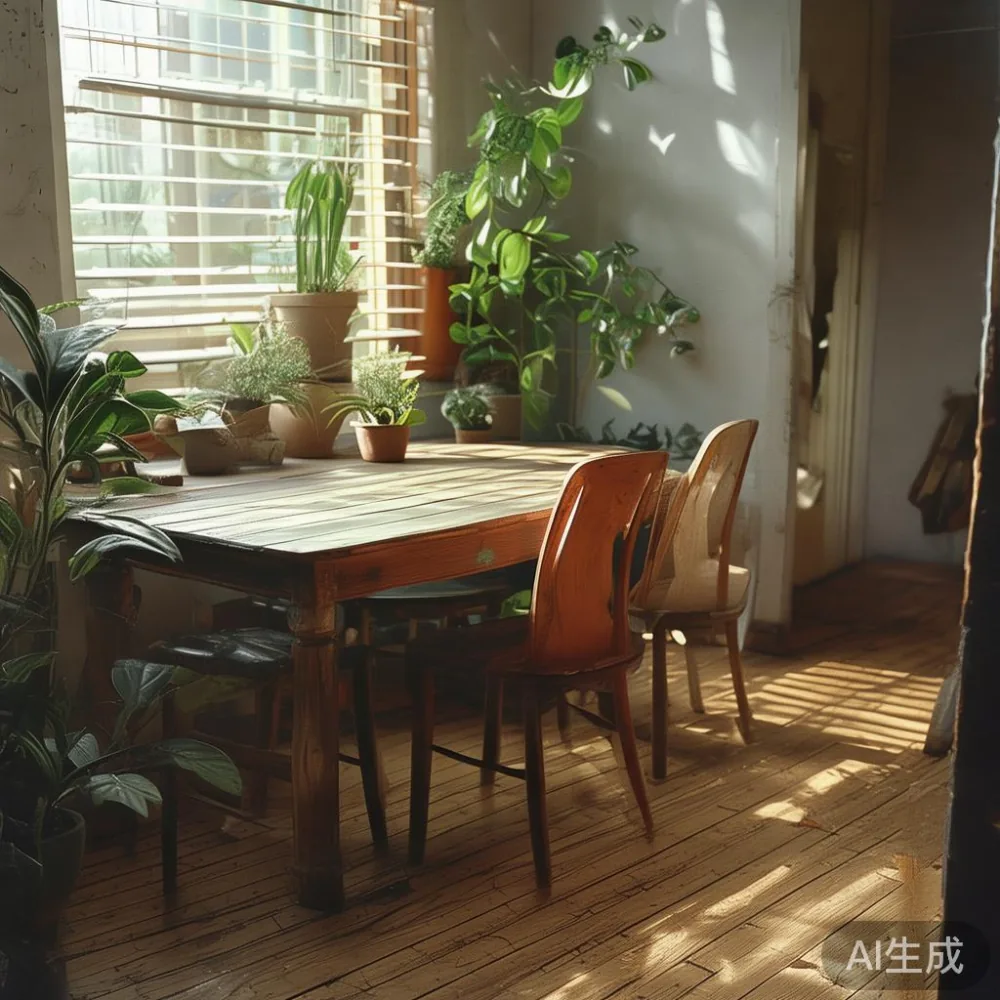
Why does wood move when the humidity changes?
Solid timber is hygroscopic. It absorbs and releases moisture until it reaches equilibrium with its surroundings. When the air gets wetter, the cells swell and the board grows slightly wider, thicker and longer. When the air dries, the cells shrink and the board contracts. Across a 200 cm dining table top made from a single slab of ash or walnut, a 10% swing in moisture content can move the width by roughly 4 to 6 mm. That sounds tiny, but it is enough to open hairline gaps between leaves, push a drawer face 1 mm proud of its frame, or crack a 3 cm thick edge if the drying happens too quickly.
I tested this with two identical oak samples last month. One sat in my air-conditioned living room at a steady 22 °C and 55% relative humidity. The other sat on my balcony, shaded but otherwise exposed to the night air. After 21 days the balcony sample had gained 3.8% in moisture content, the indoor sample 1.2%. The interesting part was day 14, when a thunderstorm rolled through and the balcony sample jumped by 1.6% in 12 hours. Wood is a patient material with an impatient reaction to water.
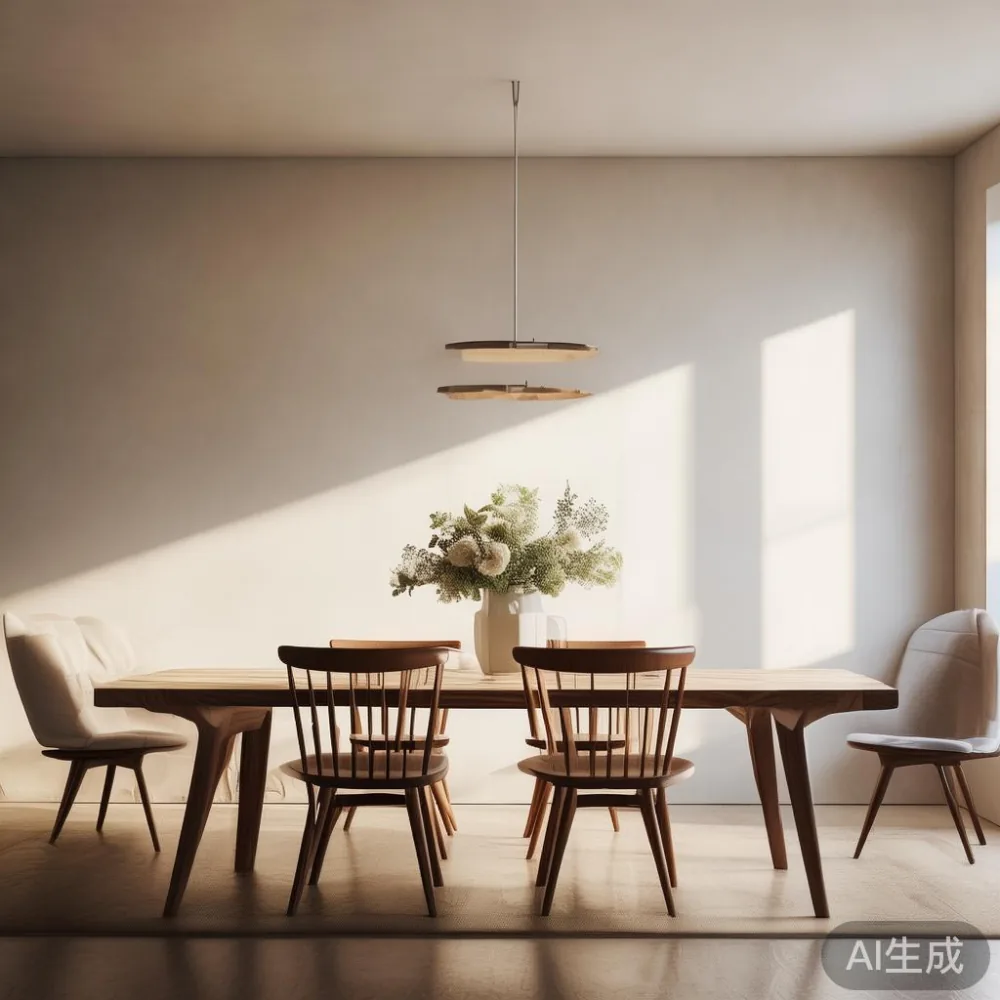
What does humidity actually do to a dining table in an HDB flat?
The pattern I see most often in three-room and four-room HDB flats goes like this. The dining table arrives looking beautiful. For the first month, everything is flat, tight and quiet. Around week six, the owner notices one of three things: a faint cupping on the leaves of the top, white halos around the joinery, or a tiny crack along an end-grain edge. By month four, if the table lives near an open kitchen window or under a ceiling fan that pulls air up from a wet balcony, the legs may have started to torque 1 to 2 mm out of plane. None of this means the table is faulty. It means the table is in a 78% humidity apartment after being built in a 45% humidity factory.
The geometry of Singapore housing makes the problem worse in specific ways. Newer BTOs in Punggol and Bedok often have dining areas within 1.5 m of the service yard door, where humidity spikes every time someone does laundry. Condos in District 17 frequently have the dining table next to the balcony, which is a constant source of damp air, especially after a 30-minute afternoon shower. Even the lift lobby on the ground floor of an HDB block can read 80% before you reach your unit, and that air travels up the lift shaft every time the doors open. A solid wood sofa or a solid wood bed frame in the same home will react more gently because their surfaces are larger and the movement is spread across more glue lines, but a dining table concentrates the movement in thin, wide, exposed panels.
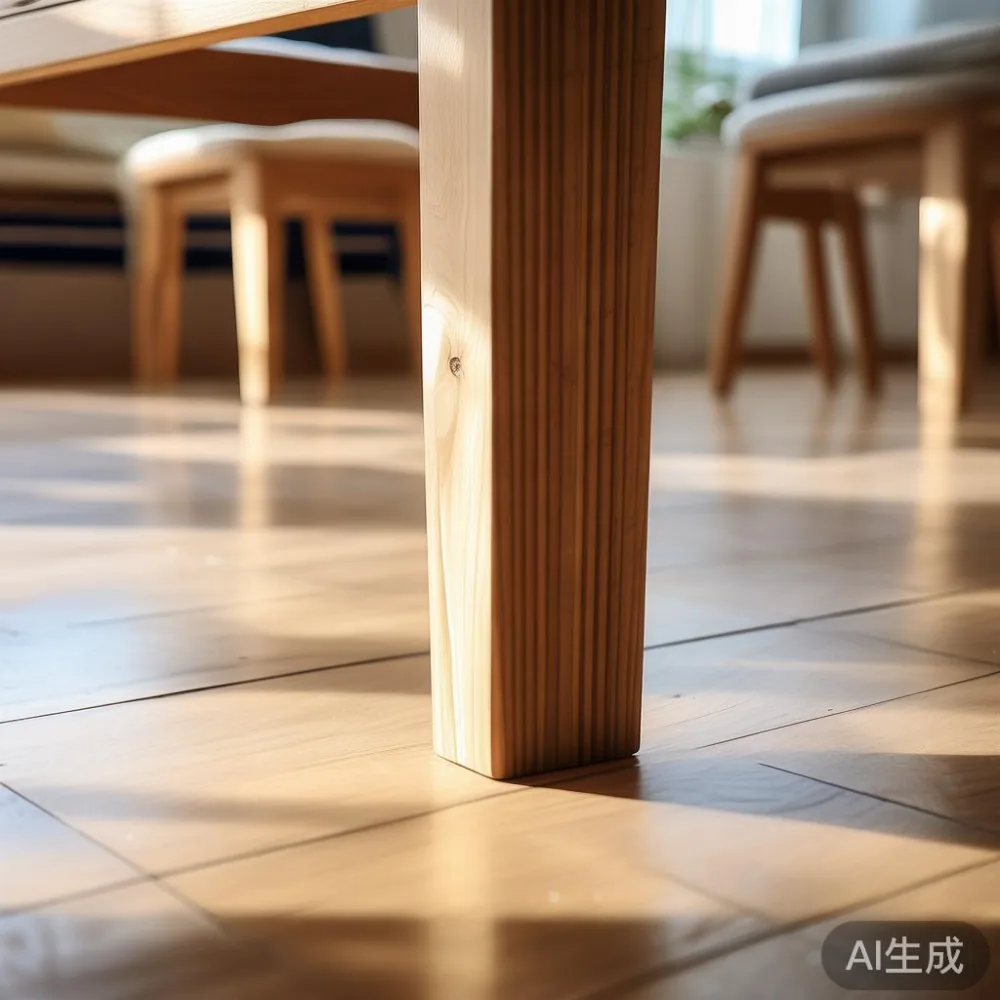
How should humidity be measured and controlled day to day?
A SGD 18 hygrometer from a Tampines FairPrice is the single best purchase a new owner can make. Put it on the wall within 1.5 m of the dining table, at table height, away from direct sunlight. The target band for solid wood furniture is 40% to 60% relative humidity. Below 35% you risk cracking. Above 70% you risk swelling, mildew on the underside of the table, and rust on the steel hardware. In Singapore, the realistic goal is to keep the room between 50% and 65% for 16 hours a day.
Air-conditioning helps more than dehumidifiers for a dining table, because the table benefits from steady, gentle drying rather than aggressive extraction. A 9,000 BTU unit running for 6 hours in the evening will typically pull a room from 75% to 58% in Singapore's climate. A domestic dehumidifier rated at 12 L per day will pull a 25 sqm dining area from 78% to 55% in roughly 4 hours, but it costs around SGD 0.35 per hour in electricity, and it leaves the wood surface slightly cool, which can invite condensation if someone places a cold glass on it. For most households, a 1.5 hp split unit on a timer is the simpler answer.
Do not place the dining table against an exterior wall. The temperature difference between a 28 °C wall and a 24 °C room on a rainy day can condense moisture exactly where the table sits. Leave at least 8 cm of air gap, and never push the table flush to the wall.
How do the four species you pick change the humidity story?
Different woods move at different rates. Oak, the workhorse of French provincial design, moves roughly 0.3% across its width for every 1% change in moisture content. Walnut moves about 0.25%. Ash moves 0.28%. Teak, the traditional Southeast Asian choice, moves 0.22%, which is the lowest of the common furniture timbers and one reason it has survived in open-air verandahs for two centuries. For a 90 cm wide dining table, that translates to a year-round movement of 3 to 4 mm in oak and 2.3 to 3 mm in teak. Neither is dramatic, but the oak will show the seasons on its surface in a way the teak will not.
Construction matters as much as species. A solid wood dining table made from quartersawn oak, where the growth rings sit at 60 to 90 degrees to the board face, will move about 40% less than a plain-sawn board of the same species. Frame-and-panel tops, where a 2 cm panel floats inside a 6 cm frame with a 4 mm expansion gap on all sides, are designed specifically to absorb humidity movement. Slab tops, which look dramatic on social media, move as one piece and need more careful humidity control. If you are choosing between French provincial with storage in a quartersawn oak and a live-edge suar slab, the quartersawn oak will forgive you far more weekends with the balcony door ajar.
Finishes slow the movement but do not stop it. A polyurethane sealer on the underside and a hardwax oil on the top will reduce the rate of moisture exchange by roughly 60% compared with an unfinished board, which is why the underside finish matters as much as the top finish. A dining table that is finished on five sides and left raw on the bottom will cup toward the finished face every time the humidity rises.
What about the rest of the room, and is Japanese sofa worth it in the same humid apartment?
Humidity does not stop at the dining table. A solid wood wardrobe in the bedroom will grow up to 2 mm wider across a 180 cm door in August and shrink back in February, which is why wardrobes in Tampines four-room flats sometimes need a 1 mm hinge tweak once a year. A solid wood bed frame is usually stable because the rails are short and the headboard is tall, but a bed frame with a fabric or leather headboard can develop mould on the back panel within 18 months if it sits against an unplastered wall. A nightstand next to a window can develop a mildew ring on its back panel inside 6 months if the window is left open during a storm. A marble table, by contrast, is unaffected by humidity, which is one reason stone dining tables have become more common in new Punggol walk-ups, although they bring their own problems with thermal shock from cold drinks.
For seating, the question of is Japanese sofa worth it is really a question about joinery and fill in a humid climate. A Japanese-style sofa typically uses a low-profile solid wood base, a thin upholstered seat, and removable covers. The base behaves like a small dining table: it will move 1 to 2 mm across the year and needs the same 40% to 60% humidity band. The removable covers solve the mould problem that plagues fixed upholstered sofas in Singapore. A light brown luxury sofa in ash or white oak, by contrast, hides seasonal movement well because the colour matches the grain shifts. The frame still needs climate control, but the eye does not catch the change.
For shoppers browsing for sale Japandi furniture in Singapore, the same rule applies: ask which faces of every panel are sealed, ask how the joinery is cut, and ask whether the supplier acclimatises the wood in a local warehouse for at least 30 days before delivery. MIDHILL, the Foshan maker that has shipped solid wood dining tables into Singapore since the early 2010s, runs a 60-day acclimatisation window in its local warehouse before any piece goes into a container lorry. That single step is the difference between a table that arrives stable and a table that arrives full of internal stress.
Which design style actually copes best with 80% humidity?
Post-modern light luxury and American light luxury both lean on stable timber choices, sealed surfaces, and frame-and-panel construction, which is why they translate unusually well into Singapore condos. French light luxury, with its quartersawn oak, hand-rubbed wax finishes, and traditional frame-and-panel dining tables, is the closest match for the climate, because the construction methods were developed in French provincial chateaux where humidity swings were wider than anything Singapore experiences. Designer Mid-century modern furniture is the riskiest category in a humid apartment, because mid-century pieces rely on exposed solid wood, thin edges, and minimal sealing. A mid-century teak dining table will cope. A mid-century walnut credenza will cup inside 18 months if it lives against an air-conditioning duct that cycles on and off.
The European bed vs Mid-century modern bed question follows the same logic. A European bed frame in beech or oak, with a sealed headboard and frame-and-panel side rails, will move predictably and quietly. A mid-century modern bed frame in walnut, with exposed end-grain and a floating headboard, will respond to every humidity swing and needs a steady 50% to 60% indoor climate to stay flat. For households that run air-conditioning from 8 p.m. to 7 a.m. and a dehumidifier in the bedroom on timer for two hours in the afternoon, the mid-century bed will behave. For households that leave the bedroom windows open for cross-ventilation, the European bed is the safer choice.
What should you do in the first 90 days with a new dining table?
The first 90 days set the pattern. Leave the table in the smallest room it will fit for the first seven days if the air-conditioning runs there, so the wood can settle slowly rather than jump straight from a 45% factory to a 78% balcony. Do not place anything on the table for the first 14 days: no table runners, no centrepieces, no placemats, because anything that traps moisture against the surface will leave a ghost ring. After 14 days, oil the top with a thin coat of hardwax oil once, and again at day 60.
Wipe spills within 5 minutes. Singapore cooking produces a surprising amount of oily steam, and a layer of chicken-oil condensate left on an oak top for 90 minutes will darken the grain. Use coasters under everything that holds cold liquid. Cold glass on warm wood is the classic trigger for white condensation rings, especially under a ceiling fan.
Keep the table 1 m away from any window that is opened more than once a week. If the table must sit under a window, install a 1.5 m venetian blind and keep it half-closed during rain. Lift access for table delivery in most HDB blocks allows a packed crate up to 90 cm wide, 90 cm deep and 210 cm tall, which covers every standard dining table top if the top is removed from the base for transit. MIDHILL's standard Singapore delivery splits every dining table into two crates for exactly this reason, and the install crew spends roughly 40 minutes reassembling the top onto the base in your dining area.
What does good after-sales support look like for a humidity-affected table?
After-sales support is where the long-term cost of a dining table is decided. A 10-year structural warranty on frames and a lifetime refinishing service on tops are the two numbers that matter in Singapore. Refinishing is the safety net: if the top develops cupping or surface checking after five years, a workshop can plane 1.5 mm off the surface, re-oil it, and return the table to new condition for roughly SGD 180 to SGD 280 depending on the size. Without refinishing, a worn top means a new table.
Delivery and returns matter too. Free shipping above a sensible threshold removes the temptation to choose a cheaper table from a warehouse three days inland. A 14-day return window protects against the table that looks fine in the showroom and arrives with a hidden twist in the top. Singapore's 9% GST adds roughly SGD 270 to a SGD 3,000 dining table, so the all-in price of a MIDHILL solid oak dining table with a 200 cm top, delivered to your HDB in Bedok, sits around SGD 3,490 including GST, lift access booking, and on-site assembly. The same table from a local reseller with thinner warranties sits at SGD 2,650, and the SGD 840 premium is, in plain terms, the price of the 10-year warranty, the lifetime refinishing, and the 60-day local acclimatisation.
If you are weighing whether to invest in a solid wood dining table at all in a humid apartment, the honest answer is that the climate is real but it is manageable. A hygrometer, an air-conditioner on a timer, a 1 m buffer from any open window, and a brand that finishes all six faces of every panel and offers refinishing will see a solid oak table through 20 years of Singapore living without drama. The dining table is the centre of the home, and in a climate this humid, it deserves the same care you would give any other long-term investment in the house.