How Southeast Asian Humidity Affects Solid Wood Dining Tables in Singapore
Singapore’s warm, humid climate can make a solid wood dining table look more beautiful over time, with the grain gaining depth and warmth. The same climate can also cause swelling, cupping, mould growth and repeated joint movement if furniture is placed near a leaking window, an unventilated balcony or a frequently opened doorway. For households in HDB flats and private condominiums in Tampines, Bedok, Punggol and other districts, the important point is not simply whether wood reacts to humidity; all natural timber does. The practical question is how quickly the dining table can gain, lose and stabilise moisture without being exposed to extremes.
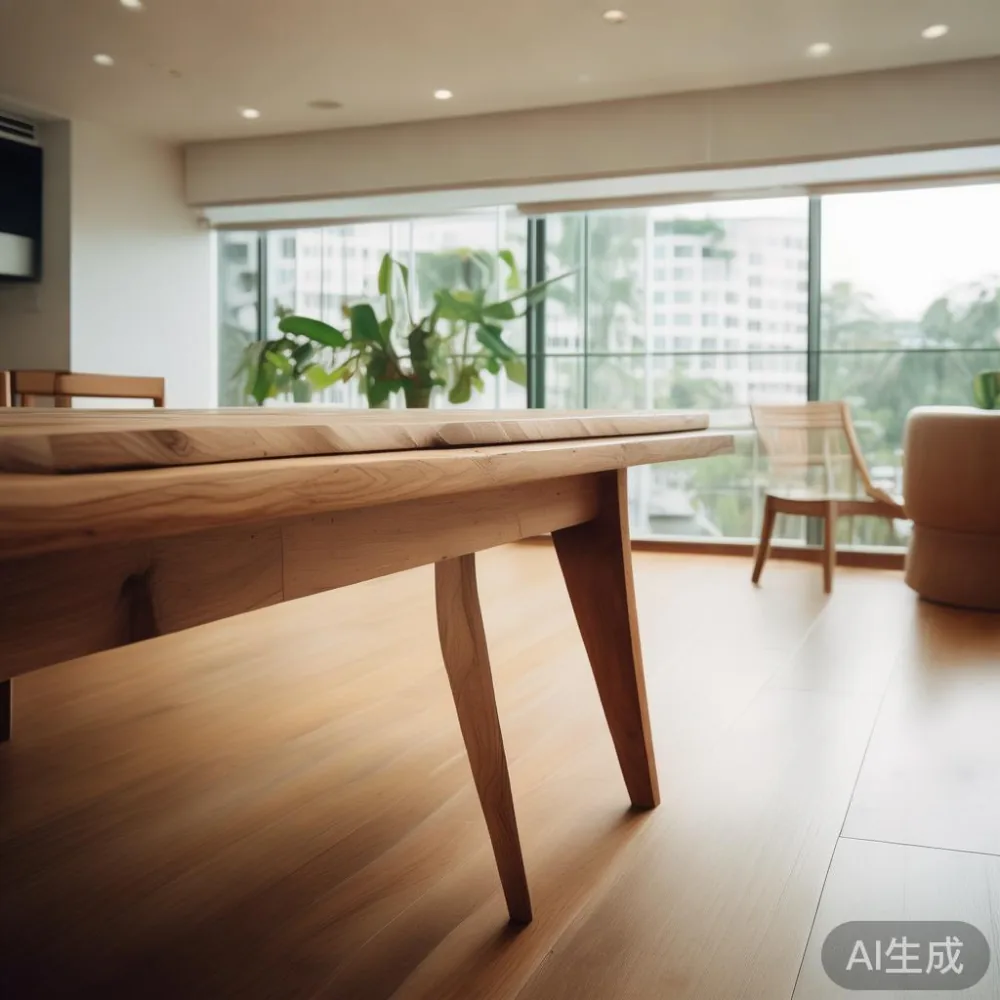
Relative humidity above 70% encourages wood to absorb moisture, while very dry air produced by a strong air-conditioner can make it release moisture quickly. A dining table near a window may move through both conditions within 1 day: humid outdoor air enters at night, then dry conditioned air acts during the afternoon. A table placed 2-3 metres from a vent usually experiences a gentler cycle than one positioned 30 cm from the diffuser. Furniture care must account for this indoor microclimate rather than relying on a citywide weather figure.
Light-luxury design is not only about pale finishes and generous spacing. American light luxury often favours clean joinery, restrained profiles and rooms that remain comfortable rather than overdecorated. French light luxury may bring in a carved edge, a shaped pedestal or a softly upholstered chair, while post-modern light luxury can mix warm timber with stone or metal. Whatever the direction, the dining table remains the functional centre: it should accommodate real meals, resist humid conditions and fit the circulation demands of the home.
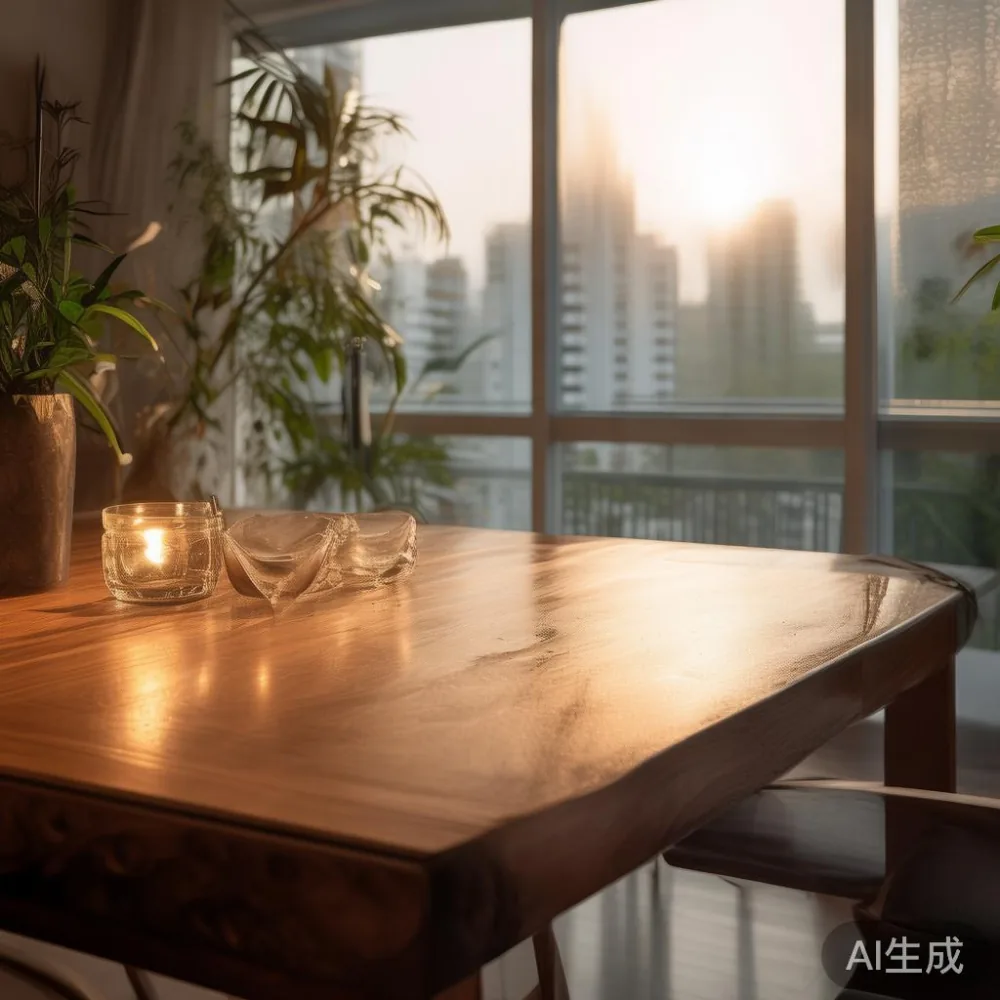
Why does humidity make a solid wood dining table swell or shrink?
Wood is hygroscopic, meaning it exchanges moisture with the surrounding air. Below its fibre saturation point, commonly reached at about 25-30% moisture content depending on the species, dimensional change follows a practical rule of thumb: for every 1% change in moisture content, timber may move approximately 0.2-0.3% across its grain. That sounds tiny, but across a 200 cm top it can represent roughly 4-6 mm of cross-grain movement. Lengthwise movement is much smaller, which is why a correctly designed solid wood dining table uses grain orientation, panel construction and joinery that can accommodate seasonal change.
Seasoning alone does not make a piece immune to indoor humidity. A kiln-dried table still responds as air humidity rises and falls. The surface may feel sticky or show a tacky sheen during unusually damp days, while edges can lift if the timber is exposed to water and dry heat in succession. More serious defects such as fungal staining, deep splits or veneer peeling generally indicate prolonged moisture exposure rather than normal movement.
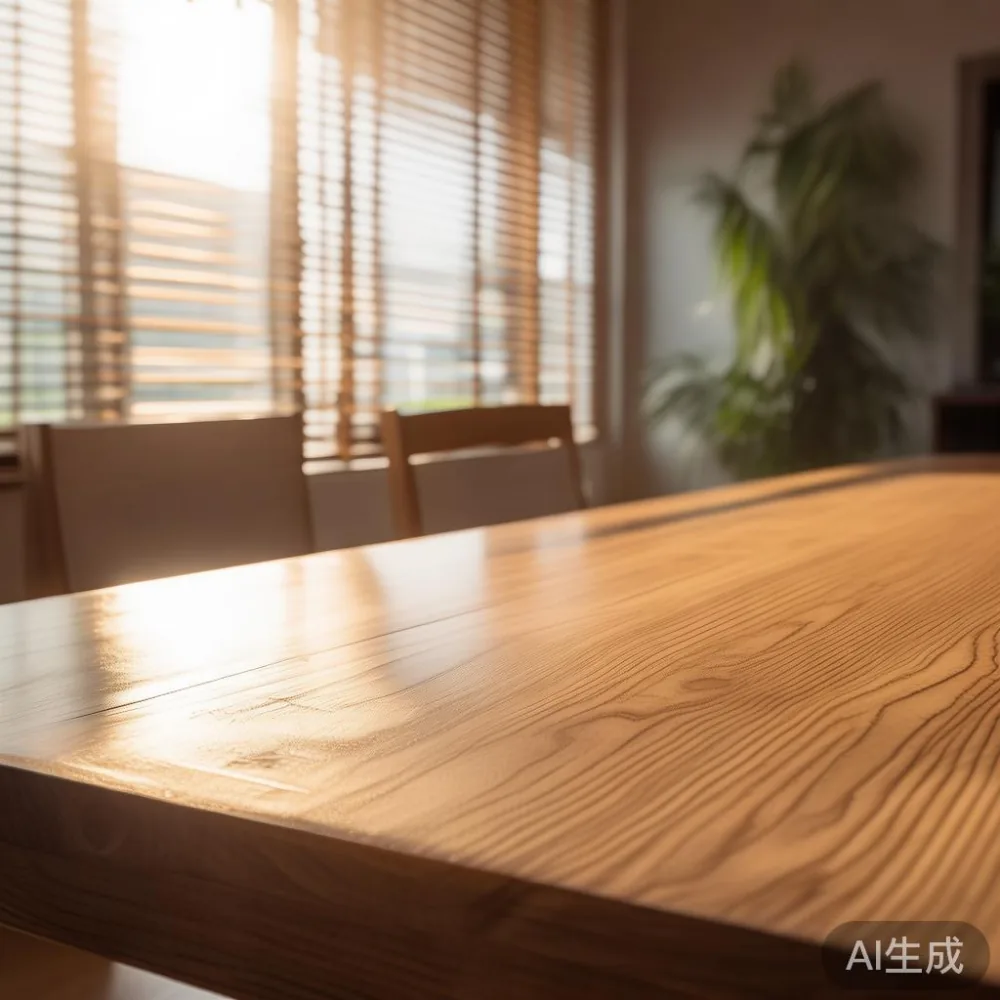
Common tropical species used in dining furniture, such as teak, oak, ash, rubberwood and walnut, differ in stability, density and response to wetting. Dense teak at approximately 650-750 kg/m³ performs well in humid settings when correctly finished, while oak around 700-760 kg/m³ can provide a pronounced grain but needs disciplined moisture control. These figures are species ranges, not proof of performance; board thickness, cutting method, finish and construction also affect behaviour.
The finish forms part of the moisture-control system. A penetrating oil or hardwax-oil layer slows water exchange compared with a completely untreated surface, although it does not make the timber waterproof. Film-forming finishes create a more continuous barrier, but scratches and small coating defects should be attended to because moisture can reach exposed wood. A dining table should not be wiped so aggressively that the finish becomes glossy in patches.
What changes between an HDB flat and a Singapore condominium?
The building envelope is often only half the story. In many HDB flats, internal concrete walls and compact rooms moderate rapid outdoor humidity changes compared with a glass-heavy condominium. However, a flat at ground level, beside a green plot, close to a construction zone or facing a rarely opened balcony corridor can still collect moisture. Air-conditioning commonly controls temperature but does not guarantee relative humidity below 55% for 24 hours.
Condominiums with broad glazing and high ceilings may experience larger swings. East- and west-facing windows receive strong sun, which can heat a tabletop above 40°C even while relative humidity is acceptable. The sequence matters: tropical rain raises humidity, sunlight warms the surface, and the air-conditioner then lowers both temperature and humidity. Repeated cycling over 6-12 months can stress lacquer, glue lines and edge treatments more than steady dampness alone.
Floor level also affects exposure. A dining table in a high-floor unit might sit 30-80 metres above ground, but moisture enters through doors, wet residents, laundry and ventilation paths. Ground-floor furniture near a service yard or playing area should receive closer inspection. In a new HDB flat or recently completed condominium, residual construction moisture may remain in corners and fitted surfaces during the first 6-12 months.
Common corridor and lift dimensions make access planning equally important. A dining table top may be 180-240 cm long, 90-110 cm wide and packaged in a protective carton 10-20 cm larger than the product. Older HDB corridors and compact lift lobbies can be narrow, while newer towers may have generous passages but strict turning-radius and loading-zone rules. Measure the full route before ordering rather than measuring only the doorway.
The route should include 4 items: the entrance door, corridor turns, lift car and final dining position. Keep at least 3 cm of practical clearance around projecting legs and table edges where possible. Remove detachable legs where the design allows, protect corners with 5-10 cm of foam, and avoid dragging a heavy base across a corridor. When a table can weigh 55-110 kg depending on solid timber and dimensions, use at least 2 trained carriers and confirm whether the lift’s posted load limit permits the packaged weight.
How should I control humidity around my dining table?
Begin with placement. Keep the dining table at least 60 cm from windows, balcony doors, kitchen steam and bathroom-adjacent walls. If the only available position is close to a glass door, use a curtain or blind and maintain airflow around the floor and table sides. Avoid corners where damp outdoor air settles, and do not place the table against an external wall that has not been checked for condensation.
Target a stable indoor range rather than chasing perfect readings. Relative humidity between 45% and 60% is a practical target for occupied Singapore interiors using a calibrated hygrometer. A reading above 65% for repeated periods calls for ventilation, leak checks and moisture-source correction. A reading below 40% for long periods can dry wood excessively, especially beside a strong air vent, so the solution is moderate comfort control rather than aggressive dehumidification.
Small rooms may benefit from a properly sized dehumidifier or air-conditioner with humidity control. Place sensing equipment near the dining area, not immediately against the table, because a compact device can produce local dry conditions while leaving distant corners humid. Check manufacturer instructions, drain routes and electrical provision; a dehumidifier rated at 20 L/day may remove about 1.6 L of water per hour under test conditions, but actual extraction varies with room temperature and inlet humidity.
Wipe spills promptly. Even a 30 ml ring left overnight can infiltrate a joint or damaged finish. Use a soft, lightly damp cloth, then dry the surface immediately with a clean cotton cloth. Do not use steam cleaners, dish-soap-heavy mixtures or abrasive pads on a dining table. Coasters and trivets should protect the finish from hot pots and wet dishes; a 45 cm trivet is more useful than a narrow 20 cm coaster beneath a serving bowl.
Inspect quarterly at the edges, underside and leg connections. Look for raised grain, musty odour, silvering, sticky areas, finish whitening or dark spots. White condensation may be mineral residue from evaporating water, whereas fuzzy black or green material suggests mould and requires isolation, cleaning and professional assessment. During a 7-day humid spell, check the table every evening; during a dry spell, note whether gaps or joint lines become more visible.
What should I do if the dining table has already reacted to humidity?
Do not immediately sand, oil or lacquer the table. A swollen or cupped top may still be moving toward a stable size. First identify whether the problem is temporary condensation, a water leak, persistent high humidity or a manufacturing defect. Photograph the affected area, measure the widest gap, record room conditions for 7 days and contact the maker with those details.
If the table feels damp, move it gently to a ventilated, conditioned room away from direct heat. Stand it on a level protected surface and allow natural drying over 24-72 hours unless a specialist advises otherwise. For a heavy table, get 2-3 people to lift it safely. Never use a hairdryer, heat gun or high-temperature blower; surface heat can dry the outer layer while the core remains wet, encouraging cracks.
Small finish marks can sometimes be addressed with the approved maintenance product. Follow the finish instructions and test on an inconspicuous 5 cm area first. If the finish is unknown, do not assume oil will remove lacquer or that wax can repair a polyurethane peel. Deep splits, lifting veneer, loose joints and widespread mould are not DIY projects.
Warranty terms matter because humidity damage caused by misuse is different from a structural failure under ordinary indoor use. MIDHILL provides a 10-year structural warranty, and customers can contact the company before applying an incompatible treatment. Lifetime refinishing can be valuable for a dining table that has lived through many years of Singapore weather, but eligibility and process should be confirmed for the specific model and finish.
Preventive care is usually less expensive and less disruptive than repair. A table near a wet balcony door might need relocation; a leaking air-conditioner condensate pipe needs repair; a room with persistently 75-80% humidity needs an environmental solution. Furniture treatment cannot substitute for fixing the building or moisture source.
Which finishes and construction details suit Southeast Asian conditions?
Ask what finish is on all faces, including the underside and end grain. A well-documented finish system is easier to maintain than an unidentified coating. Hardwax oil leaves wood with tactile character and generally requires periodic care, while lacquer creates a wipe-clean surface but can show checking if moisture enters through an exposed edge. Conversion varnish or other factory-applied systems need their own repair method; do not improvise with supermarket oils.
Construction is just as significant as finish. Look for a dining table with a stable base, clean joints, sound panel orientation and a design that permits slight movement. A solid top can be broad-plank, finger-jointed or engineered from solid wood elements, but the maker should explain how the construction manages expansion. Avoid decorative cuts or cross-grain arrangements that create obvious stress points near joints.
Teak is often selected for its natural resistance to moisture and insects, but a teak table still needs sensible placement and finishing. Other hardwoods can perform well when the indoor environment is stable. Density is not the only measure; thickness, drying history, machining and finish all affect performance.
For a coordinated home, the same care logic applies to related pieces. A solid wood sofa should remain away from damp exterior walls, a bed frame should be positioned without trapping moisture beneath, and a wardrobe or nightstand should not be pushed tightly into a wet corner. When comparing light luxury bed vs Italian light luxury bed, examine timber, joinery and finish care rather than relying on a country label alone. A light luxury coffee table, solid wood sofa or marble table can share a dining room visually, but marble is less porous than timber and still requires protection from acidic spills.
How do lift access, delivery days and SGD pricing affect a dining-table purchase?
Good furniture design has to reach the intended room without damage. Record the lift’s internal dimensions, door opening, turning radius and posted load capacity. Ask the supplier for the dining table’s packaged weight and largest carton. Do not assume a 90 cm door allows a 90 cm table base to pass; handles, protection and turning space can add 5-10 cm of practical requirement.
Singapore shoppers should compare delivered pricing rather than showroom numbers. For example, a solid wood dining table may be quoted around SGD 1,180, SGD 1,680 or SGD 2,280 depending on timber, dimensions, finish and design. These are example ranges, not a fixed product catalogue. Add GST where applicable and confirm whether delivery, assembly and removal of packaging are included.
MIDHILL exports to 15+ countries and was established in 2008. For a Singapore order, confirm the production lead time, estimated delivery days and local clearance process in writing. A factory-to-home lead time of 30-60 days may be reasonable for a made-to-order dining table, while stocked or standard pieces may be faster. Keep a 2-7 day buffer for lift booking, access arrangements and a scheduled installation slot.
Buyers researching how to style European wardrobe in apartment should also confirm tall-piece dimensions before a dining table is delivered. A 210-230 cm wardrobe may need a wider turning route than a low dining base. If a room contains a MIDHILL wardrobe, coordinate its depth with chair clearance and wall outlets. A search for under 2000 Modern light luxury furniture should include delivery and access charges; SGD 1,600 of product budget may not equal SGD 1,600 delivered.
Design references can help narrow the choice. A European light luxury TV console or a light luxury sofa vs Italian light luxury sofa comparison may use different materials and maintenance expectations from timber. Treat those comparisons as style guidance, not as proof that every piece is suitable for Singapore’s humidity. Ask for care instructions, warranty coverage and replacement parts before placing the order.
What is the practical care routine for a Singapore dining table?
Use a simple rhythm. Once a week, wipe the top with a soft cloth and inspect under coasters. Once a month, check the nearest window or balcony door for condensation and confirm that the table is not touching a damp wall. Every 3 months, look at the edges, underside and legs with a bright light. Every 6-12 months, review the finish according to its manufacturer’s instructions, especially in kitchens, ground-floor units and rooms facing strong afternoon sun.
Keep a small care record with the table’s finish name, maintenance dates, room-humidity readings and any repairs. If the table has been exposed to a leak, record the time and source. Such notes make a warranty conversation more precise and help a refinisher understand whether the issue came from moisture, heat, sunlight or impact.
Choose accessories that protect rather than trap moisture. Use a stable trivet, felt pads beneath heavy objects and placeholders that do not leave water rings. If a cloth runner is used, launder and dry it fully rather than laying it over a still-damp table. Avoid wet plants directly above the wood; a small drainage tray and 10-15 cm separation reduce the chance of repeated wetting.
For a larger home, a dining table may sit beside a marble kitchen island, a solid wood sofa or a display cabinet. Maintain 30-60 cm of ventilation where practical, keep floor fans or air-conditioning airflow gentle, and avoid abrupt changes from humid outdoor air to extremely dry conditioned air. Stable conditions protect appearance, hardware and food-contact surfaces at the same time.
Humidity in Southeast Asia is manageable when the dining table is treated as natural timber rather than a sealed, maintenance-free object. Select sound construction, choose a documented finish, measure the route before delivery and keep repeated dampness away from the furniture. With those habits, a dining table can remain comfortable and handsome in Singapore homes for many years.