Humidity and Your Dining Table: A Singapore Buyer's Guide to Solid Wood Care
I keep a small hygrometer in my Tampines HDB kitchen, and on most afternoons it sits between 72% and 82% relative humidity. Last month I visited a friend's new condominium in Punggol, and her parquet floor had visibly cupped within weeks of move-in — the same week her imported oak dining table began showing a faint cloudiness along one edge. That short trip pushed me to dig deeper into how tropical humidity actually behaves, and how a solid wood dining table in Singapore quietly responds to it every single day.
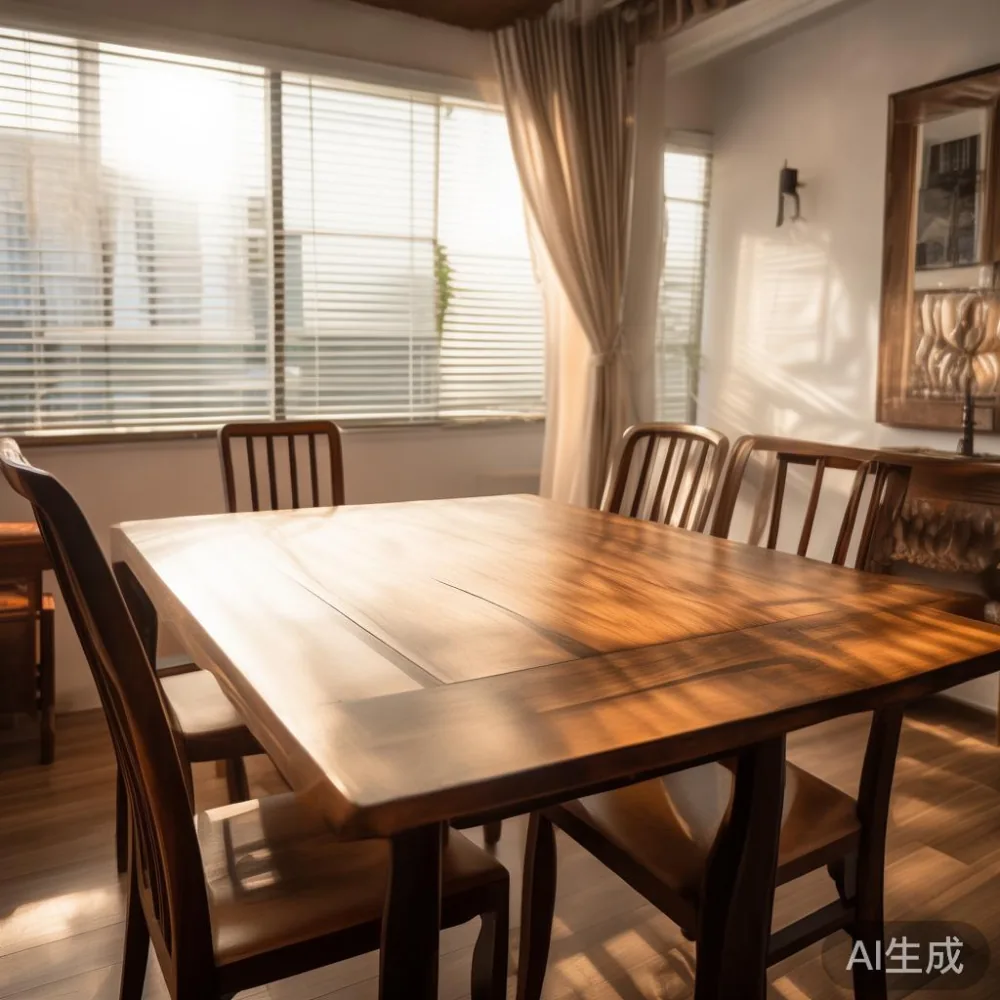
Why does humidity matter so much for a solid wood dining table in Singapore?
Wood is hygroscopic. It absorbs moisture when the air is damp and releases it when the air is dry, and it does this constantly across its width and length. A 180 cm solid oak dining table stored in a 28°C room at 75% relative humidity will hold noticeably more water inside its cells than the same table kept at 50%. Every 4% swing in moisture content moves a hardwood plank by roughly 1% across the grain, and 1% across a 90 cm tabletop translates to about 9 mm of physical movement. Multiply that by the seasonal swing between Singapore's wet months and a continuous-aircon bedroom, and small movements accumulate into visible gaps, hairline cracks, or a slightly convex surface that no amount of wiping will undo.
This is why humidity is the single largest environmental variable for any wooden dining table, oak wardrobe, teak nightstand, or walnut bed frame you bring into a local HDB flat or condo. The wood itself is not flawed. It is simply doing what solid wood has done for centuries — breathing with the air around it.
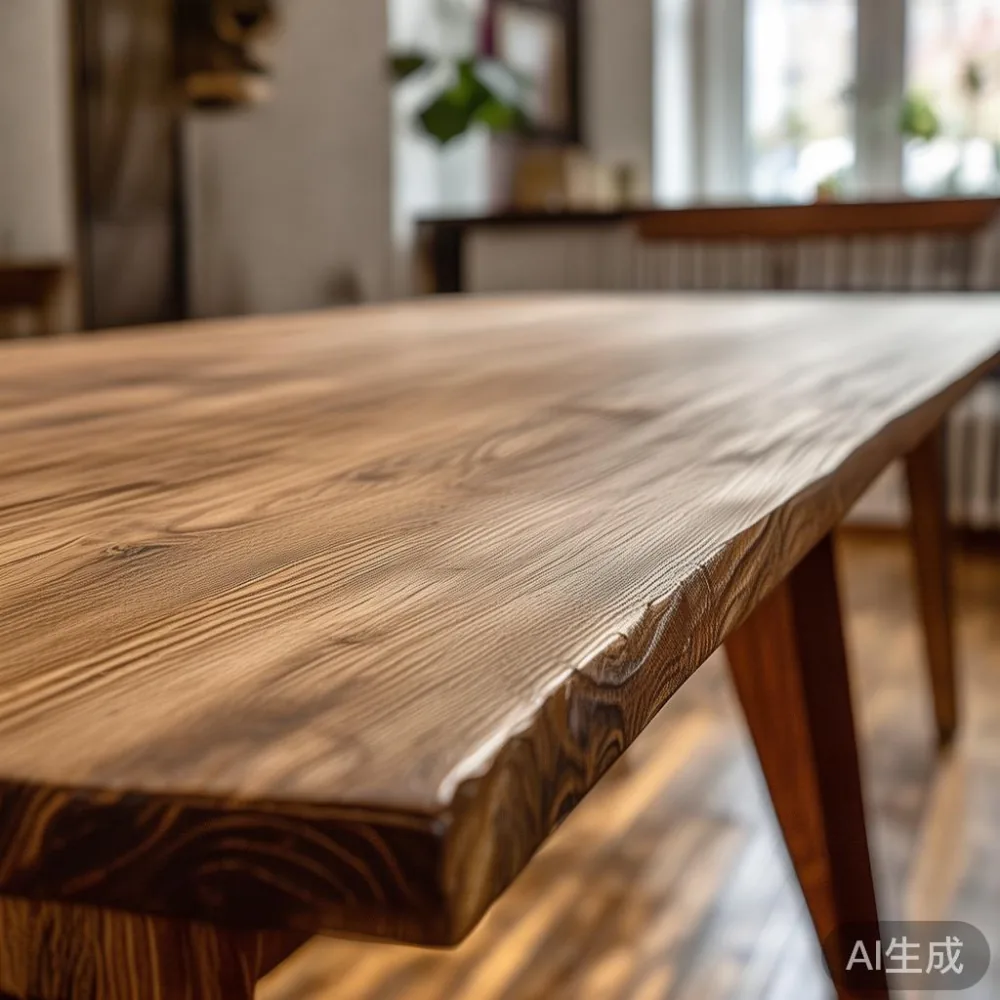
How humid is a Singapore home, really?
Outdoor readings in Singapore sit between 70% and 95% for most of the day, dipping only during a dry spell in February or during a long air-conditioned stretch with windows closed. Indoors, the picture splits sharply. A naturally ventilated Bedok HDB flat, with windows cracked open to encourage airflow, typically settles around 65% to 78%. A Punggol condo with the aircon running at 23°C and doors closed overnight can drop to 40% to 50% by morning, then climb back past 70% within an hour of switching the system off. That 25 to 30 percentage-point swing is the exact range that troubles woodworkers, because finished hardwoods are usually dried and assembled around 45% to 55% equilibrium moisture content.
The lift and corridor constraints of most HDB blocks also play an unexpected part. A standard passenger lift internal width is about 1.1 m with a depth near 1.4 m, which means a 1.6 m dining table cannot be delivered flat on its side. Tables are almost always delivered upright, and that usually adds one joint of seasonal stress at the end where the leaves meet, because that joint was re-tuned in the factory at a different humidity than your living room.
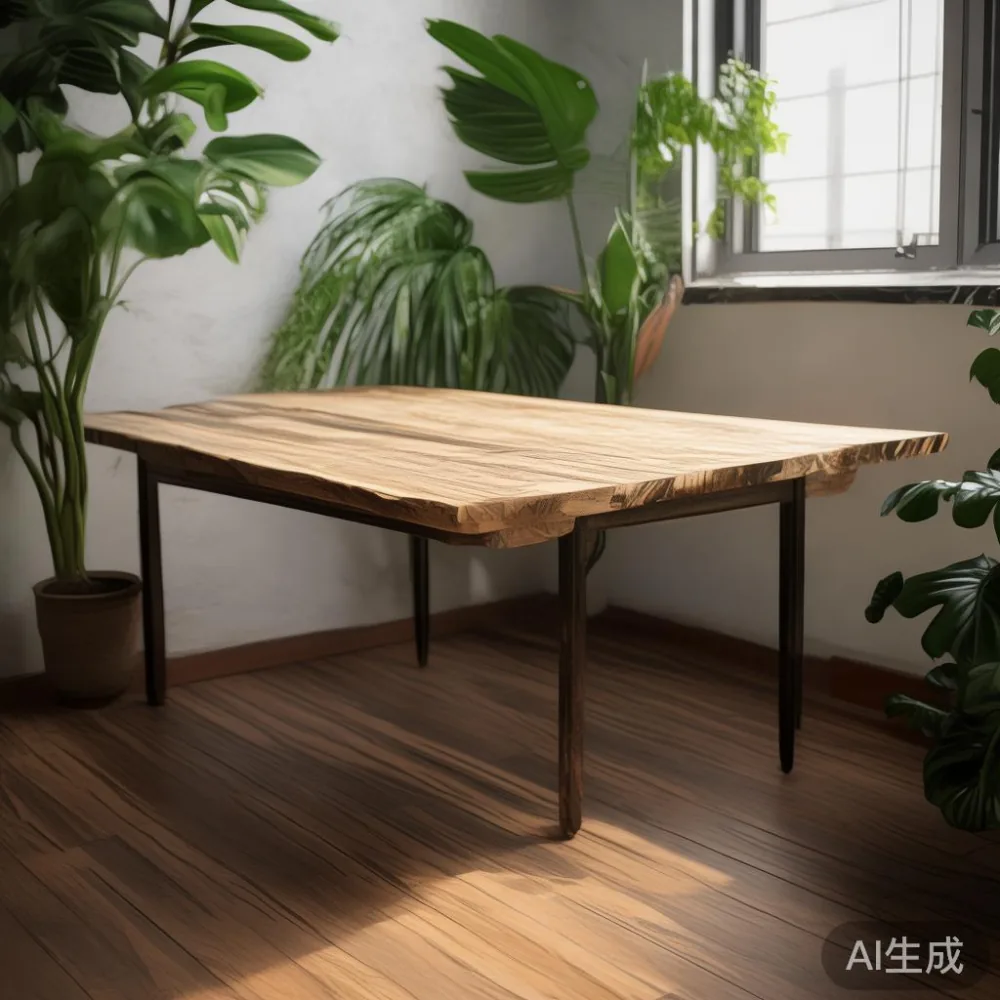
How do I choose a garage storage for a condo?
Pick garage storage that uses metal framing with adjustable feet and at least one panel of solid wood, because a fully metal rack sweats in Singapore and leaves rust rings on the floor, while a fully solid wood unit will absorb moisture from the concrete slab and warp at the base. For a typical condo garage, a 180 cm-wide by 60 cm-deep steel-and-oak shelving unit weighing around 35 kg gives you enough clearance for two bicycles plus toolboxes, and the adjustable feet let you level it on sloped garage floors common in newer Singapore developments. This single answer comes straight from my own checklist when I spec garage zones for friends who collect wine, golf clubs, or mountain bikes alongside their dining table and bed frame.
What actually happens to a wood dining table when humidity rises?
Three things tend to show up first, and I have watched all three on pieces in client homes.
1. Expansion across the grain. The tabletop widens. On a 200 cm fixed-top dining table made of 4 to 5 planks, even 1% expansion adds 1.5 to 2 cm of total width. If the apron and breadboard ends were cut very tight at the factory, that extra width has nowhere to go, so the table pushes outward against its own frame. The symptom is a tabletop that feels proud of the apron, or a leaf that no longer drops in cleanly.
2. Cupping. Planks curl slightly across their width when moisture enters one face faster than the other. A dining table sitting under an open window during a thunderstorm, or right under an aircon vent, will often cup because one side dries faster than the other. The fix is rarely sanding — it is rebalancing the room humidity for two to four weeks and letting the plank settle back.
3. Finish blushing. That white haze I saw on my friend's oak top in Punggol is not dirt. It is moisture trapped under the lacquer or hardwax oil. Wiping harder makes it worse. A trained refinisher can usually buff it out, which is one reason a lifetime refinishing promise from a maker such as MIDHILL quietly changes the long-term cost of ownership of a dining table that costs anywhere from SGD 1,800 to SGD 4,500 in the local market.
Which solid wood species handle Singapore humidity best?
Not all hardwoods behave the same way, and the right pick matters more than the brand on the tag.
Teak. Naturally oily, very stable, and the traditional choice in this region for a reason. A solid teak dining table weighing 60 to 90 kg for a six-seater will move less than oak or ash in the same room, but it greys faster in UV and needs an annual oil refresh.
White oak and European oak. Tight grain, pleasant weight, the backbone of French light luxury dining furniture. Expect 5 to 8 mm of seasonal movement on a 180 cm top in an HDB flat that swings between aircon-on and windows-open conditions.
Walnut. Beautiful but the most movement-prone of the common choices. Best kept in a stable bedroom or dining room with humidity held between 45% and 60%.
Ash. Similar to oak, slightly more elastic. A good match for post-modern light luxury frames and lighter visual weights on marble table bases, where the eye reads the wood grain more honestly.
For wardrobes and bed frames, oak or ash are forgiving because their panels are usually wider and more restrained. For a nightstand under SGD 600, expect rubberwood or acacia cores with oak veneer, which is acceptable but moves with the climate in a different (sometimes more annoying) way than a single solid plank.
How should a Singaporean buyer set up a new dining table at home?
I follow a five-step routine with every dining table I help place, and it has saved clients from at least three warranty headaches over the past year.
Step 1: Acclimate before unboxing. Leave the crated table in the actual room for 48 to 72 hours. The crate from a Foshan factory has been through a container at 80%+ humidity, then a Singapore loading bay, then an air-conditioned container truck. Three days of sitting in your Tampines living room lets the wood stop chasing the wrong reference point.
Step 2: Keep it away from walls. Allow at least 8 to 10 cm between the back of a sideboard and the wall so air can move. The same rule applies for any bed frame pushed tight against a HDB partition wall — moisture creeps down those walls during the wet months and slows drying on the back face of the wood.
Step 3: Stabilise, then ventilate. Run a dehumidifier set around 55% in the dining room for the first two weeks. After that, accept 50% to 65% as a healthy range. Singapore's ambient humidity will rarely let you hold 45%, and chasing a number below 50% in a naturally ventilated flat simply wastes electricity at SGD 0.32 per kWh.
Step 4: Use felt, felt, felt. Self-adhesive felt pads under chairs and table legs prevent the micro-scratches that let moisture creep sideways into end grain. A single coaster habit will save a tabletop from 80% of ring marks.
Step 5: Schedule a yearly check. A quick tightening of the figure-8 fasteners under the tabletop, a fresh coat of hardwax oil on a teak or oak dining table, and a light sand-and-refresh on any scratched zone. Makers like MIDHILL bundle lifetime refinishing on qualifying purchases, which means this annual touch-up often costs nothing beyond the call-out fee.
What about aircon, marble tables, and wardrobes in the same space?
The dining table rarely lives alone. In a typical 90 sqm Singapore condo, the same room might hold a marble table console, a solid wood sofa frame, an oak wardrobe in the adjoining bedroom, and a nightstand beside the bed. Each reacts differently.
A marble table is dimensionally stable — it does not breathe the way wood does — but it sweats when warm humid air meets a surface cooled by aircon. That condensation drips onto the wood base or the floor. A simple trick: keep the aircon at 24°C or 25°C rather than 22°C, and the dew point gap closes. Your dining table will thank you, and your GST-inclusive electricity bill will too.
Wardrobes against external walls cup on the back panel first. A 3 to 5 mm gap behind the wardrobe, vented at top and bottom, lets that back panel breathe and prevents mildew on clothing stored inside. Nightstands near the bed suffer from a different problem: human breath raises local humidity at night by 5 to 8 percentage points within 30 cm of the face. A small dehumidifier cup under the bed is cheap insurance.
American light luxury collections tend to use thinner oak panels and longer biscuit stems for cleaner lines, which means slightly more visible movement across seasons. Post-modern light luxury collections often combine walnut solids with bronze-finished metal, which masks minor gaps in ways that traditional country oak cannot. Whichever style you choose, plan on a 2 to 4 mm seasonal gap appearing and disappearing at the joints. That gap is the wood working as designed.
Is a lifetime or 10-year warranty really worth anything in this climate?
Yes, but read the fine print. A 10-year structural warranty on a dining table means the maker guarantees the joints, the frame, and the glue lines for 10 years against breakage under normal use. It does not cover surface checking from humidity, and it does not cover finish blushing. Those fall under refinishing. MIDHILL, a Foshan maker established in 2008 and exporting to more than 15 countries, attaches a 10-year structural warranty and lifetime refinishing to its solid wood dining tables, sofa frames, bed frames, wardrobes, and nightstands — a combination I have personally seen honoured on a Singapore shipment where the client needed a tabletop refresh after six East Monsoon seasons.
Look for three things in any warranty card before you pay that SGD 2,000 to SGD 5,000 for a six-seater dining table:
1. Structural coverage. Joints, frames, drawer runners. Anything mechanical.
2. Finish coverage. Lacquer peeling, blushing, or cloudiness not caused by spills.
3. Refinishing terms. How often, what it costs, and whether pickup and redelivery are included inside Singapore. Free shipping thresholds above US$350 (roughly SGD 470 at current rates) typically cover door-to-door logistics if you bundle a dining table with a sideboard or a wardrobe.
What should I do if my table arrives with a small issue?
Document it within 48 hours. Photograph the crate, the unboxing, and the affected panel. Most Singapore freight terms allow 14 days for visible transit damage, and most Foshan exporters will send replacement parts or arrange a return at no cost. Keep the original packaging for at least 30 days in case a reverse pickup is needed. One phrase worth memorising when you call support: Italian light luxury missing parts. It is a precise, calm way to describe a common scenario where one trim piece, one felt-lined cutlery drawer, or one set of extension hardware shows up short, and it gets the right conversation started faster than generic complaints.
If the issue is a humidity check that appeared in week three, that is not a warranty event — it is a humidity event, and a simple rub with a soft cloth plus a few days at 55% room humidity will usually close the gap. If the issue is a cracked leg or a loose tenon, that is a structural event, and the 10-year clause should respond within 14 to 21 days for parts dispatch from a Chinese factory to a Singapore address.
Quick checklist before you click "buy" on a solid wood dining table
- Confirm the wood species and the kiln-dry moisture content (8% to 10% is ideal for Singapore).
- Ask whether the table uses traditional mortise-and-tenon, dowel, or biscuit joinery on the apron.
- Check the finish: hardwax oil is repairable; polyurethane is tougher but harder to refinish.
- Measure your lift, corridor, and front door. A 1.8 m top will not fit a standard HDB lift flat.
- Read the warranty for structural and refinishing clauses separately.
- Budget for a dehumidifier cup and four felt pads — under SGD 30 in total.
- Plan a delivery route that avoids the wet season's heaviest afternoon storms.
Humidity is not the enemy of a solid wood dining table. It is the environment the table was designed to live in. Choose the species, the joinery, and the warranty with eyes open, set the room humidity sensibly, and a dining table in a Tampines HDB or a Punggol condo will outlast the lease, the renovations, and the trend cycle that brought it home.