How Humidity in Southeast Asia Affects Your Dining Table (and What to Do Before the Wet Season)
Singapore sits on the equator, and the weather does not pretend otherwise. The average relative humidity hovers between 78% and 88% for most of the year, and during the northeast monsoon from December to early March, it climbs even higher. If you live in a Tampines HDB, a Bedok condo, or a Punggol executive flat with cross-ventilation that only really works in January, you already feel it on your skin. Your solid wood dining table feels it as well, just in slower motion.
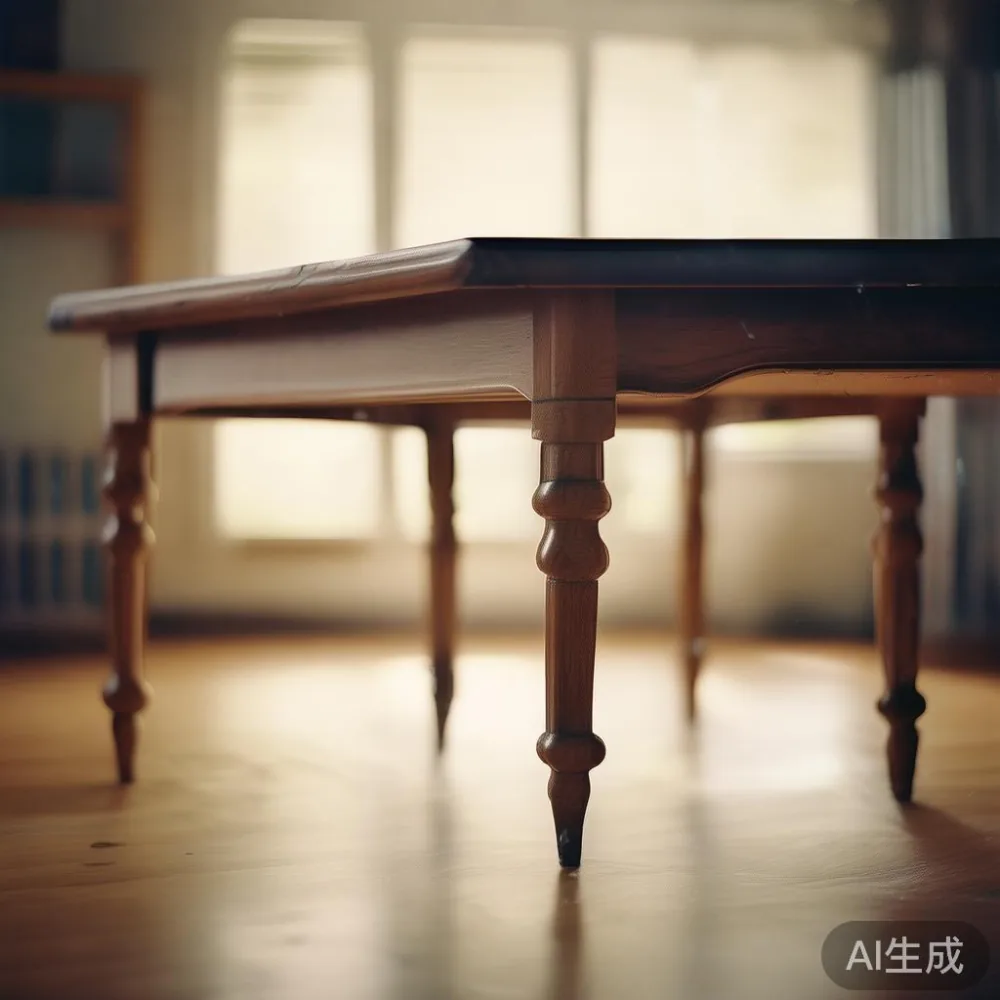
Wood is hygroscopic. That is the polite way of saying it drinks and breathes with the air. When humidity rises, the fibres absorb moisture and swell. When it drops (and air-conditioning can pull interior RH to 35% within an hour), the fibres shrink. The repeated swelling and shrinking is what causes cupping at the edges of leaves, hairline cracks across the top, and sticky drawers in a sideboard. It is also why a dining table that looked flawless in the showroom can develop a 1–2 mm gap between leaves three months after delivery.
I learned this the hard way last November. A friend had me over for dinner in a Sengkang resale flat. Her six-seat oak dining table, just 14 months old, had a 2 mm crown across the centre and one leaf that no longer sat flush. The culprit was not the wood. It was the position: 60 cm from a sliding glass door that stays half-open from 7 a.m. to noon for the breeze, with afternoon sun hitting the surface directly for roughly two hours. I took a photo, sent it to our workshop in Foshan, and the technician diagnosed it in three sentences: ambient swings between 62% RH at night and 91% RH in the afternoon, plus UV exposure. The fix was simpler than she expected, and I will share it below.
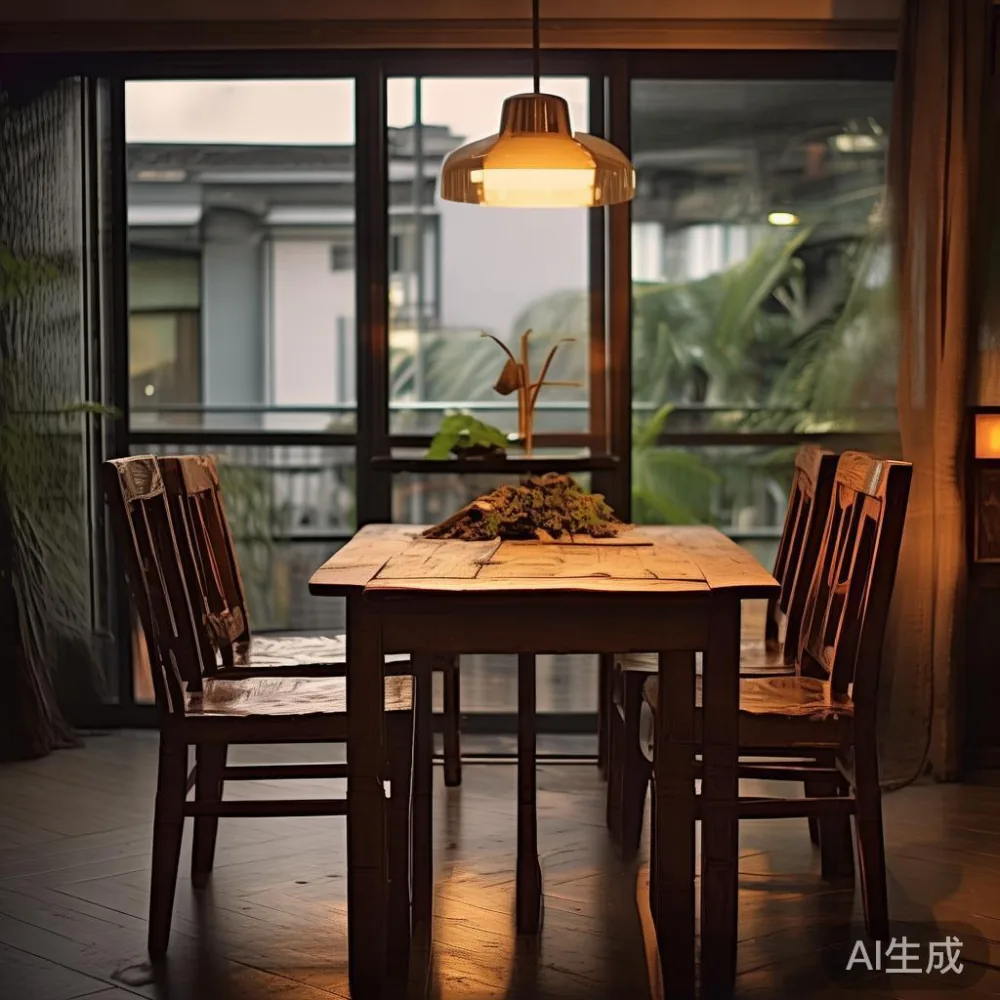
Why Singapore's Climate Is Harder on Wood Than Beijing or Berlin
Most furniture marketing is written for temperate cities where interior RH sits between 40% and 60% year-round. Singapore lives in a different zone. According to the Meteorological Service Singapore, the daily mean is around 82% RH, with overnight peaks above 90% almost every day of the year. Outdoor furniture in a balcony corridor can hit 95% RH by 6 a.m. Even indoors, without active control, most HDB and condo interiors sit between 65% and 80% RH.
For solid hardwoods commonly used in dining tables — white oak, walnut, ash, beech, rubberwood — the equilibrium moisture content (EMC) target for Singapore is roughly 10% to 13%. A table built and acclimatised in a Foshan workshop at 18% EMC will lose about 5% of its moisture content in the first six weeks at home. That sounds small. Multiply it across a 180 cm by 90 cm top, and you get visible shrinkage on the breadboard ends and along the glue lines. This is also why a dining table that was perfect in the showroom can show a 1–2 mm gap between extensions a season later.

The second issue is salt air. If you are in an east-facing unit in Tampines or near the Pasir Ris coast, fine chloride particles settle on the finish. They are not corrosive on day one, but over 24 months they dull lacquer and pit open-grain pores. I have seen dining tables along the East Coast that look five years older than identical pieces in Bukit Timah, even though they were bought on the same invoice date.
Does Air-Conditioning Solve the Problem, or Make It Worse?
Both, depending on how you use it. Air-conditioning drops RH fast, which is good. The problem is the swing. You walk in at 7 p.m., drop the room to 23°C and 55% RH within 30 minutes, eat, and switch it off. By 4 a.m., RH is back to 78%. That 23-point swing, every evening, is worse for a dining table than a constant 75% RH would be. Wood prefers slow change.
The practical answer is to keep the air-conditioner running at 25°C on low fan during the night, or to leave it on a schedule. A second, cheaper fix is a small dehumidifier set to 60% RH. For a typical 12 sqm dining area, a 12-litre compressor unit costs about SGD 280 to SGD 380, uses roughly 180 W, and pulls a SGD 18–22 monthly electricity bill at current rates. A digital hygrometer (SGD 12 to SGD 25 on Shopee or Lazada) lets you watch the numbers and place it on the table edge, not on the wall, because surface RH is what matters.
One more thing people forget: the air-conditioner vent. If the vent blows directly across the dining table, the surface dries unevenly and you will see a banana-shaped warp within a year. Redirect the louvre, or move the table 40 cm out of the airstream. Our installers in Singapore actually flag this during delivery; it is the single most common cause of post-delivery complaints, and it is also the easiest one to prevent.
What Should You Look for When Buying a Solid Wood Dining Table in Singapore?
Three things on the spec sheet, two things in the showroom, and one thing in the warranty. On paper, look for: kiln-dried timber with stated moisture content between 8% and 12% (good factories measure and print it); mortise-and-tenon or dowelled joinery on the aprons (not just staples and glue); and a finish system with at least two coats of polyurethane or hardwax oil. Avoid tables built with MDF cores wrapped in veneer. They look identical on day one, and they cup badly by month eight in HDB humidity.
In the showroom, do two checks. Run your palm across the underside. It should feel as smooth as the top; rough undersides signal rushed finishing. Lift one end of the leaf by about 5 cm and let it fall. A solid table has a dull thud. A hollow-core table has a higher, ringing sound. The second test is the corner gap. Place a credit card in the joint between the leaf and the main top. It should not slide in without pressure.
On warranty, read the structural clause. A 10-year structural warranty is a strong signal that the maker expects the table to survive at least a decade of normal use. Look also for lifetime refinishing, which means the factory will sand and re-finish the surface for a predictable fee, often SGD 180 – SGD 280 for a six-seater including GST. MIDHILL ships from Foshan with kiln-dried white oak and walnut at 9%–11% EMC, both of which are documented on the packing list, and offers free shipping on orders over US$350. For a customer weighing a SOLID wood sofa order and a dining table together, this threshold is easy to clear.
Finally, look at the legs. Turned legs on a pedestal dining table look elegant, but they concentrate movement in one column. Four-leg tables distribute it. If your dining table lives near the kitchen or balcony door, a four-leg base with a 4 cm skirt gives you a more stable platform through the wet months.
How Do You Fit a 180 cm Dining Table Through an HDB Door and Lift?
This is a practical question most online guides ignore, and it is the first thing Singapore customers email us about. A standard HDB door is 90 cm wide by 210 cm tall. The lift door in most blocks from the 1990s onward is 90 cm wide by 210 cm tall. Newer lifts in Punggol and Bidadok condos are 100 cm wide by 220 cm tall. Service lift doors can be 120 cm wide, but you must book them 48 hours ahead through the Town Council, and the fee is typically SGD 30 to SGD 60 per move.
A 180 cm by 90 cm dining table top will not fit through any of these in one piece. The solution is a table with a removable leaf or a two-piece top. Most European-inspired and post-modern light luxury dining tables use a centre extension leaf, which slides out from under the top. The shipping carton for a six-seater is usually 130 cm long, 95 cm wide, and 22 cm tall, weighing 45–55 kg. Two people can carry it up a HDB corridor without tilting it on its edge, which matters because tilting stresses the glue lines.
If your corridor has a 90° turn, measure it. The standard HDB corridor width is 1.2 m, with turning clearance of about 2.4 m. The 130 cm carton clears a 1.2 m corridor with 10 cm to spare on each side. If your block is one of the narrow-link walk-ups from the 1970s in Bedok or Marine Parade, the corridor drops to 0.9 m. In that case, request a two-box shipment (top in one box, base in another), and confirm with delivery that the box dimensions are below 90 cm on every side. It adds SGD 40–80 to the bill, but it saves a 220 kg lift that cannot be reopened on the same day if the box does not fit.
For condos with cargo lifts measuring 140 cm by 230 cm and a 1,500 kg load limit, a single-box shipment is fine for any six-seater. For an eight-seater at 220 cm, always request a two-box shipment.
Routines That Add 10 Years to a Solid Wood Dining Table
Five habits, costing nothing to roughly SGD 75 a year, will keep your dining table looking new for a decade.
1. Wipe with a damp (not wet) microfibre cloth every evening. Dry spills within 10 minutes; standing water darkens for 6 days or longer.
2. Wax twice a year. A 200g tin of beeswax or hardwax oil costs SGD 18 to SGD 35. Apply with a soft cloth in the direction of the grain, leave 20 minutes, buff off. Skip silicone polishes; they build up and reject future re-finishing.
3. Keep the table 50 cm away from the air-conditioner vent and 80 cm away from a window with direct afternoon sun. UV breaks down lignin and yellows light woods within 18 months.
4. Use felt pads under table runners, vases, and centrepieces. A wet clay vase can mark a surface within four hours.
5. Rotate the leaves every six months. Extensions absorb at different speeds than depending on which side faces the window.
These five steps are the same ones we apply in our own workshops between finishing and packing, and the same ones our refinishing team applies when a customer sends a dining table back for a refresh after delivery, typically seven to ten years in. The first refinish costs about SGD 220 for a six-seater; subsequent ones cost less, since the surface is already clean.
How Do MIDHILL Dining Tables handle Singapore's humidity?
Two design choices matter. The first is the timber specification. White oak and walnut are both dimensionally stable in tropical conditions because of their tight grain and natural extractives. The second is the finish system. We apply three coats of conversion varnish or hardwax oil, with a 12-hour cure, which seals the surface against the 80%–90% RH common in HDB flats during the monsoon. Each dining table ships with a moisture-content sticker on the carton. If you are comparing a MIDHILL dining table against a local alternative, ask the seller for the same data; a number between 8% and 12% is what you want to see.
For customers browsing European bed vs French provincial bed collections on the same site, the same humidity rules apply to bed frames and nightstands: kiln-dried timber, three-coat finish, and 50 cm clearance from any air vent. A solid wood bed frame made of white oak at 10% EMC will outlast a veneer-wrapped MDF frame by a decade in Punggol humidity, simply because the substrate does not delaminate when it absorbs and desorbs moisture.
For showroom visitors comparing a light luxury sofa vs Modern sofa in Singapore, the wood frame inside the sofa is the part that takes the humidity damage, not the upholstery. A kiln-dried hardwood frame at 10% EMC stays rigid through 90% RH nights. An MDF or plywood frame inside the same fabric swells and creaks by year two. Ask the showroom staff for the frame specification before you compare fabric or cushion density.
Customers who search wholesale European light luxury furniture and end up on a Foshan factory page like ours usually want two things: factory-direct pricing and documented humidity data. We provide both on every quotation, with a moisture-content sticker on every carton. We also offer a 14-day return window and free shipping over US$350, which roughly equates to SGD 480 at today's exchange rate. For customers browsing our collection of dining tables, wardrobes, nightstands, and marble-topped side tables, the same humidity-tested construction runs across the whole range, so a SOLID wood sofa, bed frame, dining table, wardrobe, nightstand, and marble table can all live in the same HDB or condo flat without each one fighting the climate differently.
Is a Marble Top or a Solid Wood Top Better for a Humid Dining Room?
It depends on what you mean by better. Marble is dimensionally stable. A 2 cm Carrara or Guangxi white marble top on a kiln-dried base will not cup, warp, or shrink in Singapore humidity. It will, however, etch from lemon juice, wine, and vinegar within minutes. Solid wood tops tolerate these spills better, and they absorb small scratches into the patina rather than highlighting them. For families with young children eating at the dining table three times a day, solid wood is more forgiving in Singapore, where the dining table is also the homework table, the craft table, and the Sunday mahjong table. For a formal dining room used twice a month, marble gives you a slightly more refined French light luxury aesthetic, with a cooler surface that suits a hot climate.
Either way, the base still needs to be kiln-dried hardwood. Marble on MDF swells and cracks within two wet seasons; marble on a solid wood sub-top at 10% EMC lasts for the life of the slab. If you go with marble, ask for a 1.5 cm solid wood sub-top with a 5 mm cork expansion gap at the edges; it gives the slab room to move without cracking the stone.
What About Warranty, Refinishing, and Returns for Singapore Customers?
Most factory-direct furniture makers in Foshan offer some combination of structural warranty, refinishing, and returns. The exact numbers matter. A 10-year structural warranty covers frame cracks, joint failure, and severe warping — the three failures that humidity actually causes. Lifetime refinishing covers the cosmetic side: scratches, fading, and surface wear. A 14-day return window covers the moment you realise the table does not fit the dining nook or does not match the wardrobe you bought three years ago.
For Singapore customers, the practical timeline from first order to first dinner is 25 to 35 days: 5 days for production after deposit, 12 to 18 days for sea freight from Foshan to Singapore, 2 days for customs clearance at PSA or Tuas, and 3 to 5 days for local delivery and assembly. Total landed cost for a six-seater white oak dining table typically sits between SGD 1,650 and SGD 2,450 including GST, delivery, and assembly, which is roughly 30% to 40% below comparable European-brand showrooms in the Scotts Road. SAT terms for B2B wholesale are usually 30% deposit, 70% before shipment; for retail, full payment confirms the order.
If you are still comparing options and want to see the construction in person, we recommend visiting the Foshan factory showroom or asking for a video walk-through on WhatsApp before placing the deposit. A good factory will send you a 90-second video of your specific dining table being assembled, packed, and sealed — not a stock video, but your actual table. That is the level of documentation worth paying for, and it is the level a single-page photo caption on a marketplace listing never gives you.
One last pointer for Singapore customers arranging our service. If you are moving into a new BTO or resale flat, book the dining table delivery for at least 7 days after the keys are collected. New HDB flats often run interior RH above 85% for the first 5 days while the screed paste, paint, and grout cure. Letting the flat breathe first, with windows open for an hour a day, drops the interior RH by 8 to 12 points and gives your dining table a much gentler welcome than a sealed room on day one of handover.
For readers who came in through a search for where to buy sofa from MIDHILL, the same factory-direct and temperament-tested approach applies to our sofa, bed frame, and dining table ranges, all shipped from Foshan with the same kiln-drying standard and the same 10-year structural warranty. Top 10 Scandinavian furniture lists and Mid-century modern with storage roundups often overlook this humidity angle, but it is the single biggest factor in whether a piece survives a decade in Tampines or needs replacing within three years in Bedok.