Small Apartment Styling in Singapore: Making Compact Living Feel Open Without Losing Warmth
Last month I visited a colleague's new 65 sqm three-room HDB flat in Punggol, and within ten minutes of walking through the front door I understood the entire problem most Singapore renters and owners are quietly wrestling with. Her solid wood dining table sat against the wall, a beautiful piece she had saved six months for, yet the room still felt cramped. The culprits were not the table or even the size of the flat, they were the silhouette, the colour of the legs, the height of the pendant lamp, and the fact that four chairs were fully pushed in. A dining table in a compact home can either anchor the room or quietly suffocate it, and the difference comes down to ten or twelve centimetres you would never think to measure.
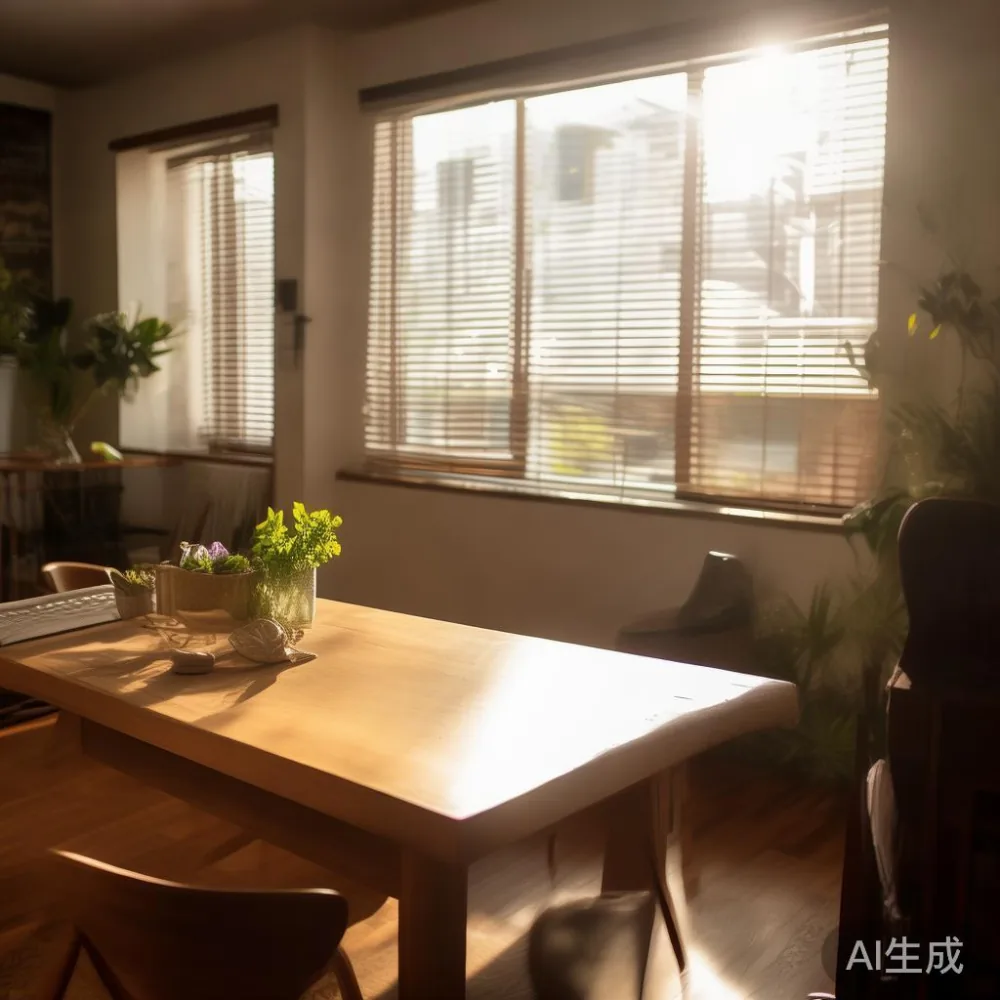
Singapore flats are wonderfully efficient and stubbornly compact. A typical four-room HDB living-dining runs around 18 to 22 sqm, condo three-bedders sit closer to 24 to 28 sqm, and your lift door in a Punggol or Bedok tower is usually only 900 mm wide. Any piece over 1.8 m long has to be tipped or partially disassembled before it will fit through the lift and the 1.1 m corridor turn. Choosing furniture for these proportions is part geometry, part taste. With export-grade solid wood construction now reaching Singapore from workshops like MIDHILL directly to your doorstep (their pieces arrive flat-packed with a 10-year structural warranty and free shipping above SGD 480), the question is no longer whether you can afford solid wood, but how to specify it so it works in a room where every centimetre counts.
What Does a Small Singapore Apartment Actually Have to Work With?
Before buying a single chair, take ten minutes with a tape measure and a phone camera. Measure the lift opening (most HDB passenger lifts are 1.0 m wide by 1.4 m deep, while many condo service lifts stretch to 1.3 m by 1.8 m). Measure corridor widths along your floor: anything under 1.2 m forces a near-vertical tip-and-slide. Measure ceiling height (the HDB standard is 2.8 m; newer BTOs and most condos hit 3.0 to 3.2 m). Finally, mark your dining zone with painter's tape on the floor in the exact footprint of the table you are considering. Live with that rectangle for 48 hours. If you cannot walk past it without turning sideways, drop down 20 cm on the length or 10 cm on the width.
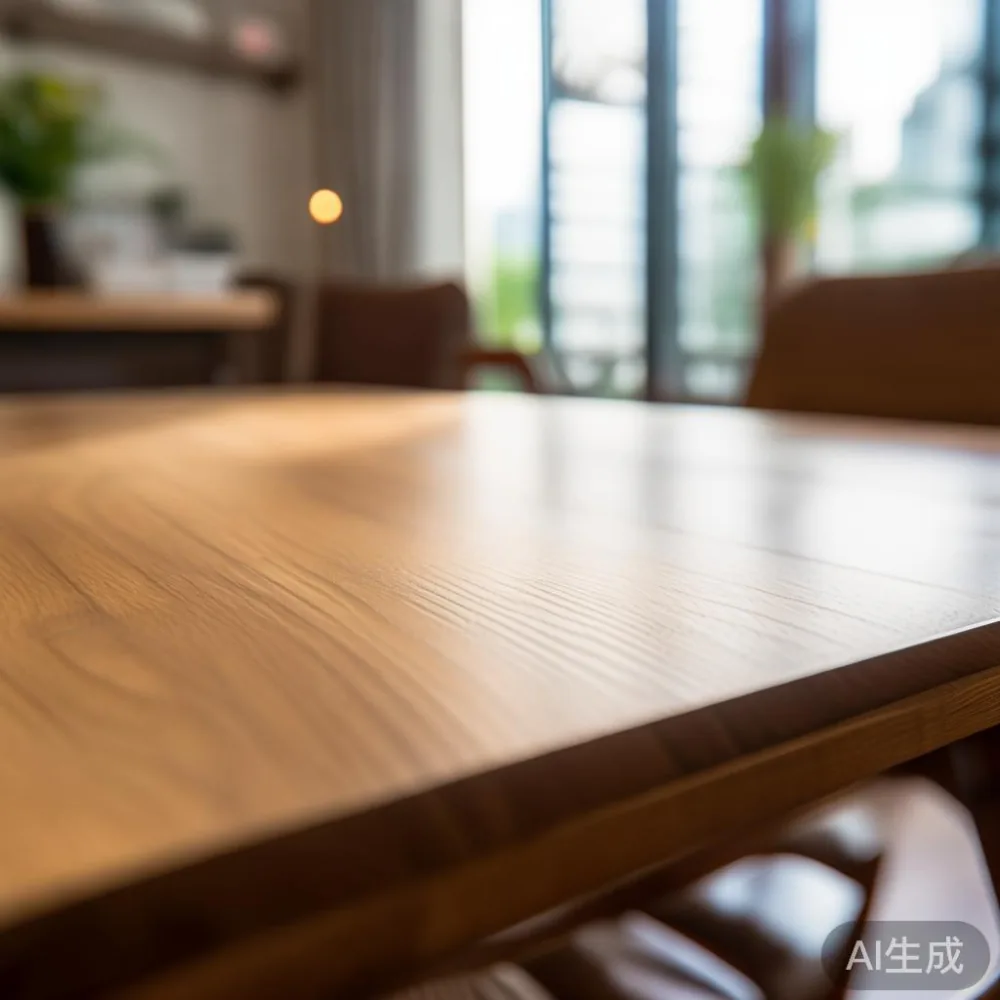
Useful reference sizes for Singapore compact living: a four-person dining table between 120 cm and 140 cm long by 75 cm to 78 cm high leaves 90 cm of circulation space on each side, which is the minimum I recommend for comfortable passage. A six-seater becomes feasible only when the room width hits 2.7 m or more. Marble tables are tempting, but a 140 cm marble slab with a stone top can weigh 80 to 110 kg, doubling your delivery challenge on a high floor without a service lift. For most HDB upgraders, a solid wood dining table with a 4 cm thick top and tapered legs delivers the same presence at roughly 35 to 50 kg, easier for two delivery men to bring up the staircase if the lift is out of service on a Sunday morning.
Which Light-Luxury Direction Suits a Compact Home Best?
Light-luxury styling gives you the warmth of traditional design without the visual weight. There are three families worth considering, and each behaves differently in a small footprint.
French provincial is the classic route: turned legs on dining chairs, a farmhouse-edge dining table, soft cream or muted sage upholstery on the seats, and a curvy upholstered headboard on the bed frame. The trick with provincial is restraint. Pick two provincial pieces per room, not five, otherwise the room reads as a theme park rather than a home. A single French provincial for dining room anchor piece, either the dining table itself or a buffet, is plenty for a 20 sqm living-dining zone in a Tampines four-room flat.
American light luxury leans modern with a softer palette: slim shaker legs on a 140 cm solid wood dining table, brushed brass hardware on a two-door wardrobe, off-white boucle or linen-blend upholstery on a small two-seater. The palette is oat, ecru, warm grey, ivory. Nothing glossy, nothing lacquered, nothing high-contrast. This direction photographs well and reads as calm.
Post-modern light luxury is the playful cousin: rounded corners, geometric pedestal bases, sculptural lighting, an accent marble table at the entry. It is the most forgiving style in a small space because the rounded silhouettes eat less visual square footage than squared-off frames. If your flat has unusual angles, a Punggol waterfront unit with a trapezoidal dining nook for instance, the curved pedestal table solves a problem a four-leg table cannot.
All three directions overlap with what designers call Japandi, the Japanese-meets-Scandinavian sensibility that worships negative space. A japandi room in 600 sq ft can feel like a 900 sq ft flat because the eye is allowed to rest. Practically speaking, the wardrobe proportions, the low-profile bed frame, the slim nightstand, and the unornamented dining table all share the same quiet visual language.
How Can I Style a French Provincial Bed in a Room Without Crowding It?
The bed is the largest object in the bedroom, so its silhouette sets the tone for every other piece. How to style French provincial bed in room without crowding the layout comes down to three rules. First, choose a headboard no taller than 110 cm from the mattress top. Anything higher visually lowers the ceiling. Second, taper the foot of the bed to a low-profile divan base at 25 to 30 cm off the floor rather than a full wooden footboard, which adds 40 cm of visual bulk. Third, dress the bed in a single textured throw folded at the foot rather than stacking ten pillows.
Pair the bed with a nightstand at 45 cm height (a few centimetres below the mattress top) so your eye does not snag on the height change. Keep bedside lampshades under 25 cm diameter, and route cords behind the headboard rather than along the wall. Off-white linen bedding reads calmer than pure white, and pulls the eye upward if your ceiling is 2.8 m. If your wardrobe shares the room, choose panel-front rather than mirrored doors, since mirrors double the visual weight of every other piece in a small bedroom.
What Should I Look for When Choosing a Dining Table for a Small Flat?
The dining table is the one piece that will earn daily use, so it deserves a checklist rather than a guess. Start with top thickness: under 4 cm feels flimsy and over 6 cm feels heavy in a small room. Solid wood over MDF or veneer if you intend to keep the piece for ten or more years, and confirm the warranty in writing (MIDHILL ships to Singapore with a 10-year structural warranty, which is on the longer end of what is available locally). Ask whether the piece can be refinished; a workshop offering lifetime refinishing means a scratch from a fork in year three can be sanded out for a fee rather than lived with.
Shape matters as much as size. A 130 cm round dining table seats four comfortably and has no corners for someone to walk into, which is genuinely useful when your living room transitions into the dining zone in a 16 sqm HDB layout. A 140 x 80 cm rectangular table pairs better with a bench on one side, saving 30 cm of clearance per seat because benches tuck fully under the overhang. Marble tables are achievable at small dimensions; a 120 cm round marble top with a brass-trim base works at 55 to 70 kg, which is still lift-friendly. Avoid pedestal bases with crossbars under 30 cm clearance, since they catch shins and trap chair legs.
For chairs, the sweet spot under SGD 280 per chair is the rattan-back, beech-frame options from regional makers, which weigh under 4 kg each. Liftable chairs matter on moving day and on Sunday mornings when you want to sweep under the table without shifting five heavy seats.
Which Storage Pieces Carry a Small Bedroom Without Making It Feel Like a Warehouse?
Wardrobes are usually the second-largest purchase after the bed and the one most likely to dominate the room if chosen carelessly. A two-door wardrobe at 120 cm wide by 55 cm deep by 200 cm tall handles the hanging and folded storage for two adults in a standard HDB bedroom, as long as you commit to seasonal rotation. Three-door wardrobes make sense only when the bedroom is over 11 sqm and the door swing does not interfere with the bed placement.
How to style japandi wardrobe in bedroom is mostly about hiding the doors: full-height flat panels in light oak veneer read as a calm wall, while mirrored or glass-front doors create constant visual movement that the eye cannot rest on. Japandi sensibility rewards handleless or recessed-pulls, which keep the silhouette clean. A low chest of drawers at 90 cm wide by 40 cm deep, placed at the foot of the bed only when you have at least 70 cm of walking space beyond it, replaces a bulky tallboy and frees the wall above for a single piece of art or a thin floating shelf.
For readers planning further ahead, the best Japanese wardrobe for 2026 is in effect the same piece you would buy this year: a light-oak flat-panel cabinet with soft-close hinges, three or four internal drawers, and a single hanging rail at 110 cm height. Skip the rotating rails and motorised internal lighting, which add SGD 600 to SGD 1,200 to the price and break within the warranty period more often than a simple rail.
How Should a Living Room Read When Every Seat Is Only 60 cm From a Wall?
Compact living rooms in Singapore tend to sit between 12 and 18 sqm once the dining zone is carved out. The single most useful framing device is the area rug. A 200 x 300 cm rug, anchored by the front two legs of a 180 cm three-seater solid wood sofa and a 90 cm round marble coffee table, defines the conversation zone without a screen or partition. Without the rug, the same furniture reads as furniture in a corridor. With it, the same furniture reads as a room. Limit yourself to one rug per zone.
A minimalist for small living room approach also helps. Drop the wall-mounted television to a low media bench at 35 cm height rather than mounting it at eye level above a console, which leaves 80 cm of wall above the screen blank and gentle. A two-seater at 160 cm wide slips into spaces where a three-seater refuses to fit, and pairs better with a 60 cm round side table than a 120 cm coffee table. Light-luxury for bedroom moments can echo softly in the living room: a single brass pendant above the marble table, one curved linen armchair, a slim ceramic vase, and the room reads composed rather than crowded.
Plants help, but only if you commit to a watering routine. Two large fiddle-leaf figs at 1.5 m height cost SGD 90 to SGD 140 each and soften a corner far more affordably than another piece of joinery. Avoid clustering more than three plants on a single surface; the eye reads density as clutter.
What Should Singapore Buyers Know About Delivery, GST, and After-Sales?
Practical logistics shape the buying decision as much as the design. HDB lift dimensions, weekend lift-booking restrictions for renovation goods (Saturday afternoons are usually reserved for residents moving personal items), and the 9 percent GST added at customs all need budgeting. A solid wood dining table in the SGD 1,200 to SGD 1,800 range from a regional workshop typically lands in Singapore at SGD 1,400 to SGD 2,000 delivered, including GST for items above SGD 400 in declared value. Solid wood sofa, dining table, bed frame, wardrobe, and nightstand bundles from a single maker cut freight costs by 15 to 22 percent because five boxes ship in one consignment rather than five separate ones.
Confirm delivery scope in writing: doorstep, lobby, or room-of-choice. For HDBs without a service lift, room-of-choice on a high floor adds SGD 80 to SGD 150 to the bill and saves you the awkward sight of two delivery men carrying a 50 kg marble table down six flights of stairs. Return windows of 14 days apply to most regional workshops; inspect the piece before signing the delivery acknowledgement, since most carriers treat a signed slip as acceptance.
My colleague eventually kept her dining table and rotated to a 130 cm round in light oak, which seats the same four people in a fraction of the footprint. The original rectangular table went to her sister's landed property in JB. Both homes fit better for the swap. The lesson holds across almost every compact Singapore flat I have walked through in the last year: buy the piece that matches the room you actually have, not the room you wish you had, and the room will reward you with a calm that no amount of styling can fake.