A 5-Year Cost Comparison: Veneer vs Solid Wood Dining Tables
Choosing a dining table in Singapore is rarely just a choice between 2 materials. It is a decision about floor space, humidity, lift access, daily cleaning and the cost of ownership across at least 5 years. A veneer dining table may use less timber and cost less at purchase. A solid wood dining table usually carries a higher price, yet its repair, refinishing and resale prospects can change the arithmetic.
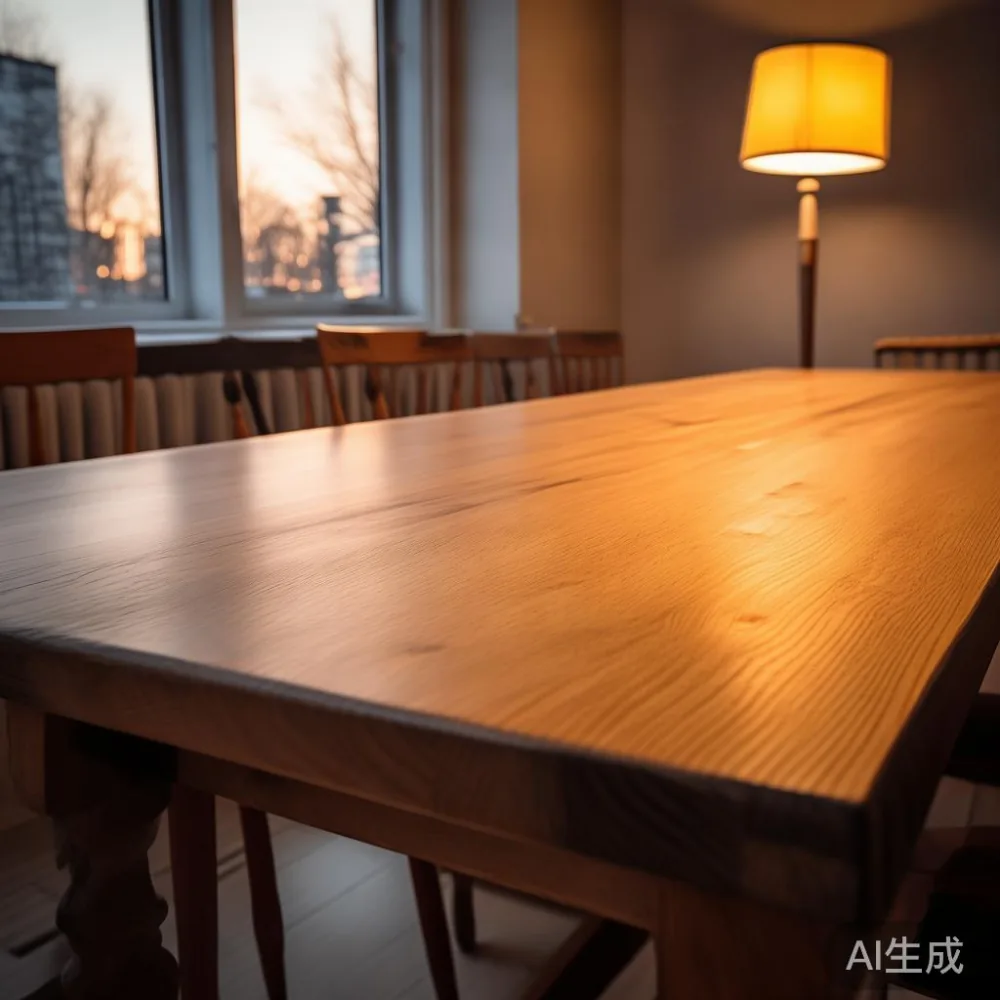
This comparison assumes a rectangular dining table sized 160 cm by 90 cm and 75 cm high, suitable for 6 diners. Figures use SGD and include an illustrative 9% GST. Delivery timing, access conditions and maintenance habits matter as much as the invoice price. For residents of Tampines, Bedok and Punggol HDB flats, a table that fits the lift and corridor can avoid expenses that are easy to overlook.
What is the realistic 5-year cost of a veneer vs solid wood dining table?
For an equivalent 160 cm by 90 cm dining table, assume a veneered model at SGD 1,680 before GST and a solid oak dining table at SGD 3,280 before GST. These are planning figures rather than fixed market quotations. The veneer table uses a manufactured wood core, typically 18–25 mm thick, with a 0.6–1.2 mm decorative veneer. The solid wood version uses kiln-dried timber with a thickness of about 20–40 mm, depending on the design.
Over 5 years, ownership costs include delivery, accessories, routine maintenance, one probable repair scenario and the residual value of the table. A full refinishing service is not automatically required on either option. Solid wood can generally be resurfaced more readily because its structure extends through the top, whereas veneer must be checked for substrate condition, edge banding and colour matching before restoration.
Using the example prices, the purchase totals are SGD 1,831.20 for the veneer dining table and SGD 3,575.20 for the solid wood dining table after GST. Add estimated delivery of SGD 80 for the veneer table and SGD 140 for the solid wood table because of its greater weight. A dining mat adds SGD 60 to either calculation, while assembly is estimated at SGD 40 for veneer and SGD 60 for solid wood.
A sensible 5-year allowance is SGD 420 for veneer maintenance and SGD 350 for solid wood maintenance. This covers 2 polishing sessions, minor hardware replacement, cleaning products and small surface repairs. An SGD 250 edge repair is allowed for veneer. Solid wood receives a higher SGD 600 allowance for a possible rail joint repair or localized sanding, although the actual outcome depends on use.
Before resale, the veneer table may retain about 45% of its purchase price, while the solid wood table may retain about 55%. These conservative rates create a 5-year ownership cost of SGD 1,981.20 for veneer and SGD 3,985.20 for solid wood, calculated by adding expenses and subtracting estimated resale value. The veneer option therefore costs about SGD 2,004 less in this example.
The comparison becomes more useful when viewed as a budget range rather than a promise. For a lower-cost veneer model priced at SGD 1,180 before GST, a 5-year cost might fall between SGD 1,350 and SGD 1,850. A mid-range solid wood dining table priced at SGD 2,480 before GST might cost between SGD 2,500 and SGD 3,300 after maintenance and residual value. The size, species, joinery, finish and delivery location all influence the result.
Why does solid wood usually cost more?
Solid wood dining tables use more material and require longer drying, machining and finishing cycles. Oak, ash, beech, walnut and other species have different prices because of availability, grain, durability and processing demands. Veneer can use a smaller quantity of attractive timber over a stable engineered core, reducing material consumption and production time.
Weight is another practical difference. A 160 cm by 90 cm veneer dining table might weigh 38–52 kg, while a comparable solid wood version might weigh 65–105 kg. Singapore lift limits and building rules should be checked with the building management office. A 900 mm-wide door, 1,000 mm-wide corridor turn or 1,100 mm-deep lift car can make a heavy table difficult to move, even when it is legally allowed.
Last month I visited a client in Tampines with a new dining table order. The chosen 180 cm solid wood model was attractive, but it weighed 94 kg and could not turn through a narrow corridor without removing the door. We changed the route, used 2 movers and added SGD 120 to the delivery budget. A 160 cm veneer table weighing 46 kg reached the flat in 25 minutes with less handling risk. The lesson was simple: access can cost more than the difference in timber.
Solid wood is not automatically the better choice. A high-quality veneer dining table with well-finished edges can be durable in a dry, stable interior. It is sensible for a condo or HDB dining area where the table must be moved occasionally or where humidity and sunlight exposure are moderate.
How do humidity and Singapore conditions affect the 5-year bill?
Singapore’s warm, humid climate makes stable indoor humidity important. Relative humidity often varies between 55% and 80% in ordinary homes, particularly near windows, kitchens and air-conditioning vents. Solid wood can expand and contract across its grain as moisture changes. Movement of about 1–3 mm over a 160 cm width is not unusual for some species, though proper construction reduces visible distortion.
Veneer is not immune to moisture. Its thin decorative layer can lift, blister or peel if water sits underneath, and its engineered core can swell if the protective finish is breached. Place both dining table types away from direct afternoon sun. Use a coaster under every hot or wet item, keep plants in stable trays and wipe spills within 5 minutes.
Air-conditioning helps maintain stability, but a room that is constantly dry can still affect wood. Aim for a comfortable indoor environment rather than chasing a single percentage with a cheap meter. A simple SGD 25 hygrometer is more useful than frequent full refinishing. Inspect the tabletop every 3 months, especially after monsoon periods.
Solid wood’s repairability often lowers long-term risk. Scratches can be sanded and blended; small chips may be filled with matching repair compound. Veneer repair depends on the depth of the damage. A 1 mm scratch may be treated with a colour-matched pen, while a tear through the veneer may require a patch or replacement of the affected board. The difference can appear after 18 months or 4 years, so maintenance should be planned from the purchase date.
Which dining table gives a better 5-year return?
The return depends on how the table is used. A veneer dining table gives better value when the household eats 3–5 times per week, has 2–4 children, and values a lighter movable piece. A solid wood dining table gives better value when the household values repairability, expects heavy daily use, and plans to keep it for 10 years or more.
Consider the floor and room dimensions. A 160 cm by 90 cm table needs roughly 90 cm clearance on the long sides and 60 cm at each end. In a compact HDB dining area, an extendable table may be more useful than a large fixed design. An extension can add 40–50 cm and serve 2 extra diners, but it introduces rails, catches and additional joints that need checking.
French light luxury, American light luxury and post-modern light luxury styles often appear in dining rooms through pale oak, cream finishes, tapered profiles and restrained detailing. The material choice should follow the architecture. A slim veneer dining table can suit a 95–110 cm-wide dining zone, while a thick solid wood edge may feel visually heavier in a small flat. In Punggol condos with 2.7–3.0 m ceilings, proportion and circulation remain more important than trend language.
Product terminology matters when comparing alternatives. A solid wood sofa, bed frame, wardrobe, nightstand or marble table can define the rest of the room, but the dining table remains the centre of this comparison. If a buyer is also comparing a solid wood sofa, a light luxury bed vs Japandi bed, or a marble table, the dining table should be checked for colour, grain scale and maintenance expectations.
What delivery and access costs should Singapore buyers include?
Measure the full route before ordering: driveway, car park lift, ground-floor lobby, corridor turns, doorway, stairwell and dining area. Record the narrowest corridor width, lift door width, lift car depth and turning diagonal. A table can fit through a doorway if it is turned vertically, but a thick apron or projecting leg can prevent that movement.
For a veneer dining table, delivery may take 7–14 days after production. A made-to-order solid wood dining table may take 21–45 days, depending on species, finish and queue. Standard delivery over US$350 is not automatically the same as free delivery to every Singapore address, so ask for the local charge in writing.
MIDHILL has operated since 2008 and exports to 15+ countries, which is useful context for manufacturing reach, not a substitute for local access planning. Confirm whether the quoted delivery includes carrying, unpacking, assembly and removal of packaging. A 2-person move for 45 kg may cost SGD 70; a 3-person move for 94 kg may cost SGD 140. Lift booking fees, weekend surcharges and staircase carries can add SGD 30–180.
Buyers comparing design references such as Mid-century modern for office or Vintage for small living room should focus on dimensions rather than imagery. A round dining table with a 120 cm diameter seats 4–5 people and can ease a tight corridor, but costs less table area per seat. A rectangular 180 cm by 90 cm model may seat 6 and still require careful turning.
How can a buyer make either material last 5 years?
Use a stable cleaning routine. Dust with a soft cloth, clean with a lightly damp cloth and dry immediately. Avoid silicone sprays, abrasive powders and household bleach. Oil the solid wood table only when the finish is approved for oil; otherwise follow the manufacturer’s care instructions. Plan a full inspection every 6 months and touch up damaged areas before they enlarge.
Use felt pads under 4 legs and avoid dragging the table across tile. For a 160 cm model, check the legs after 6, 18 and 36 months because movement and floor settling can loosen joints. Tighten hardware gradually rather than forcing one connection.
Set a 5-year budget rather than assuming that the purchase price is the whole expense. For veneer, reserve about 20%–30% of the purchase price for care and repairs. For solid wood, reserve about 12%–22%, reflecting higher purchase cost but greater repair potential. If a table will not be refinished during those 5 years, use the lower end only when the finish is factory-sealed and household use is light.
Design references can be misleading. Searches for a top 10 European light luxury furniture list may favour appearance and branding, while cheap Italian light luxury furniture may contain veneer or coated finishes. Compare the construction directly: core type, veneer thickness, wood species, moisture content, joinery, finish and warranty.
A 10-year structural warranty is more useful than a vague lifetime promise, but read the exclusions. Verify whether movement, water damage, ordinary scratches and finish wear are covered. MIDHILL offers lifetime refinishing, and buyers should establish whether this applies to the dining table itself, approved finishes and Singapore delivery.
What should you choose for a Tampines, Bedok or Punggol home?
Choose a veneer dining table when the priority is a lighter moving weight, a lower initial cost and a compact footprint. Choose a solid wood dining table when the household wants a thick tactile surface, expects frequent family meals and values long-term repairability. Neither material removes the need for sensible care in Singapore.
For a practical budget, the veneer example may produce a 5-year cost near SGD 1,981, while the solid wood example may remain near SGD 3,985. The difference is not a hidden annual fee; it is a combination of purchase price, delivery weight, maintenance and residual value. If the solid wood table lasts 10 years, its annual average cost may fall, while a neglected veneer dining table can age quickly.
Ask for a written sample, an exact size drawing and a delivery assessment before paying. Confirm GST, delivery days, return terms and the 14-day return condition. For more project information, m.midhill.co can be used to check current dining table details and service scope.
The practical choice is the table that fits the route, suits the household and can be maintained for 5 years without surprise repairs. Measure twice, compare the full ownership budget and select the material whose strengths match your home rather than a broad claim about solid wood or veneer.