Delivery and Assembly Realities When Buying a Solid Wood Dining Table Online in Singapore
Last month I visited a friend on the 14th floor of a Punggol HDB block to watch her unbox a 1.8 m solid wood dining table she had ordered from an overseas factory. The carton was 215 cm long and weighed 96 kg. The lift in her block measured 118 cm wide by 155 cm deep, door opening 90 cm. The carton fit diagonally, just barely, with two fingers of clearance on either side. If the table had been 2 m long, it would not have entered the lift at all. That single afternoon convinced me that delivery and assembly realities — not the headline price — are what decide whether an online dining table purchase becomes a joy or a multi-week headache for Singapore households.
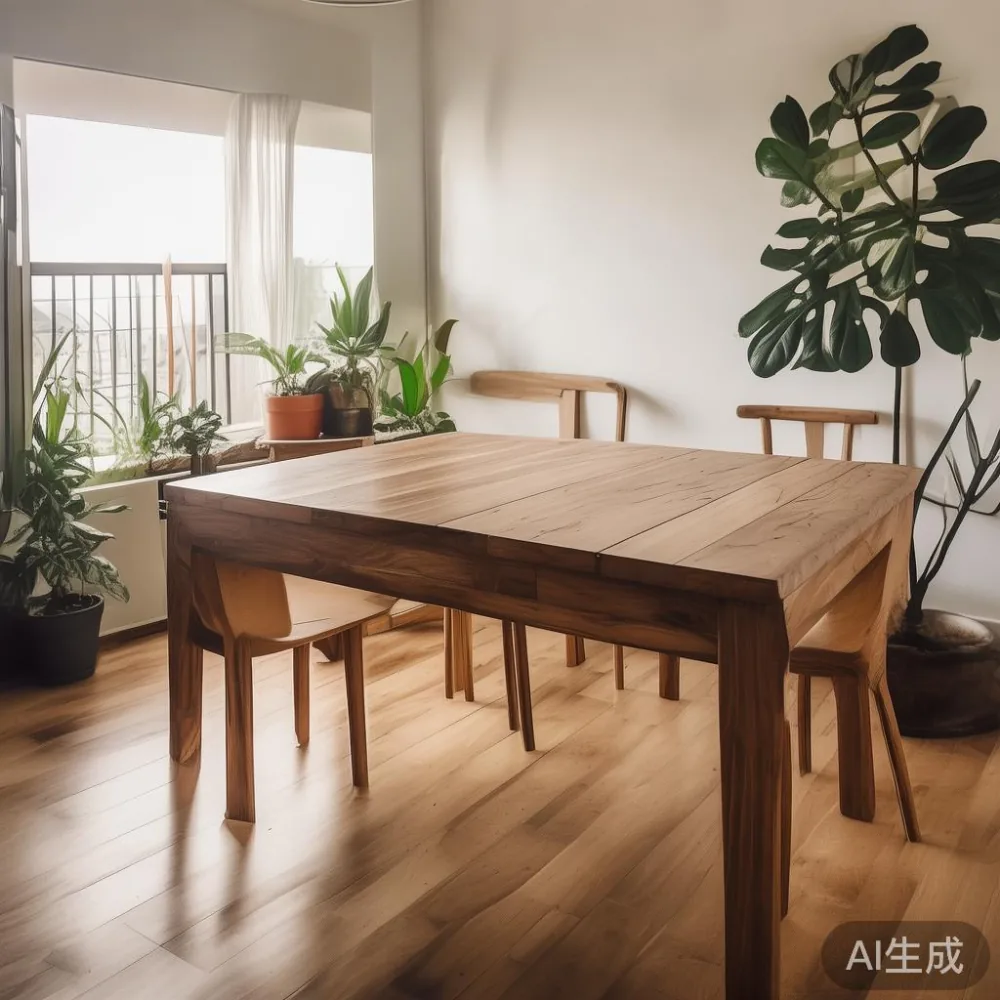
This article focuses on the S$1,200 to S$3,800 solid wood dining table, the segment where most Tampines, Bedok, Punggol, and Bukit Batok buyers shop. I will use real corridor widths, lift dimensions, GST figures, and lifter fees that come up in actual HDB and condo deliveries. Where helpful I will mention the French light luxury and post-modern light luxury styling cues that drive many HDB buyers toward oak and ash tops, and reference Singapore-friendly accessories — a matching solid wood sofa, bed frame, wardrobes, nightstands, and the occasional marble table — so the dining table sits inside a coherent light-luxury home rather than a one-off purchase.
Why a dining table is the hardest furniture piece to deliver to an HDB flat
A solid wood dining table is, by a wide margin, the largest single object most Singapore households will ever buy. A 1.6 m four-seater easily reaches 78 kg; a 1.8 m six-seater sits between 90 and 115 kg; a 2.0 m post-modern light luxury eight-seater with a thick oak top and steel base can clear 140 kg before packaging. The carton adds another 8 to 12 kg of foam, edge protectors, and a wooden crate. Even compact 1.2 m round designs, favoured by many Punggol young couples, arrive in a box that weighs 45 to 55 kg because the timber itself has density.
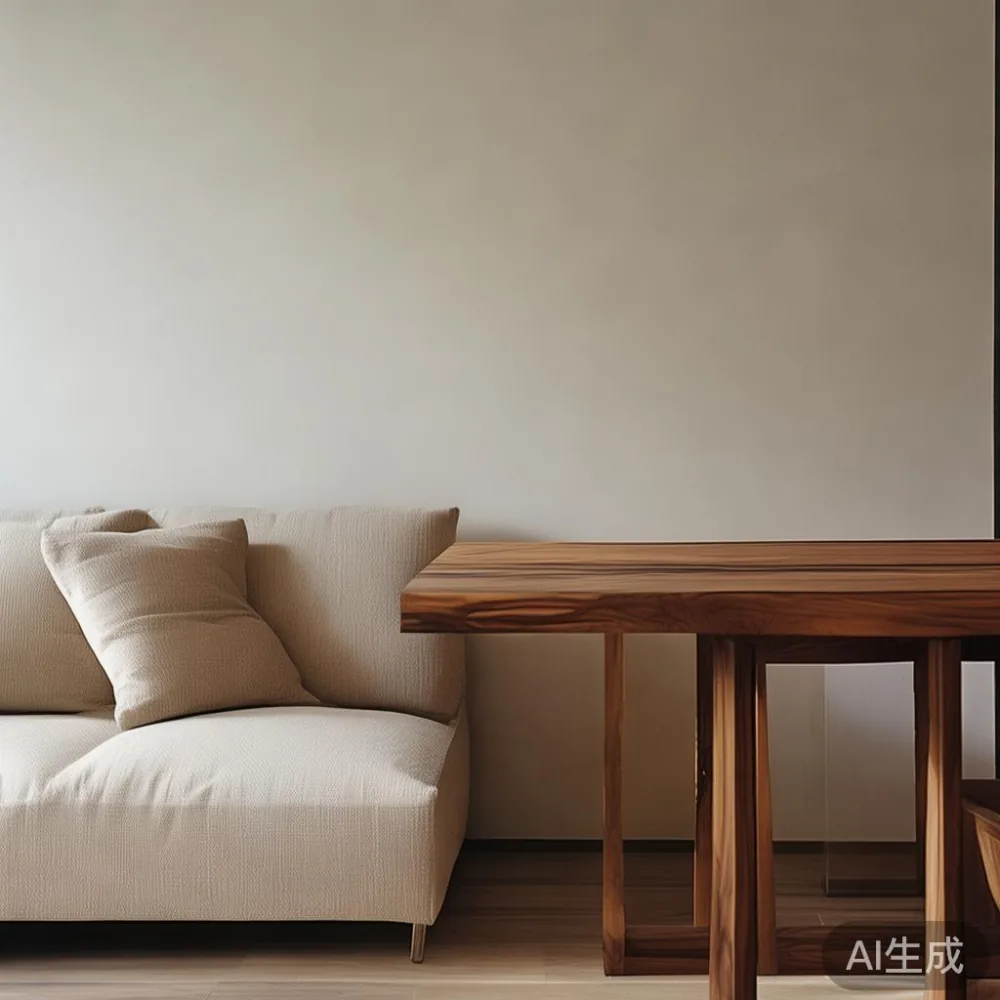
Three Singapore realities shape the problem. First, most HDB lifts in estates such as Tampines, Bedok, and Jurong West are passenger lifts rated 630 kg to 1,000 kg with cabin interiors of 118 cm by 155 cm, exactly the cabin my friend measured. Second, corridor widths between the lift lobby and the front door are typically 1.2 m, with a 90 cm service corridor at the refuse chute end. Third, the front door itself is often 91 cm wide. A 1.8 m rectangular tabletop turned on its side passes all of these, but only just. If the table is 2.2 m, you are asking the delivery crew to assemble the top inside the dining room, which is fine for some designs and impossible for solid single-slab tops where the grain must run continuously.
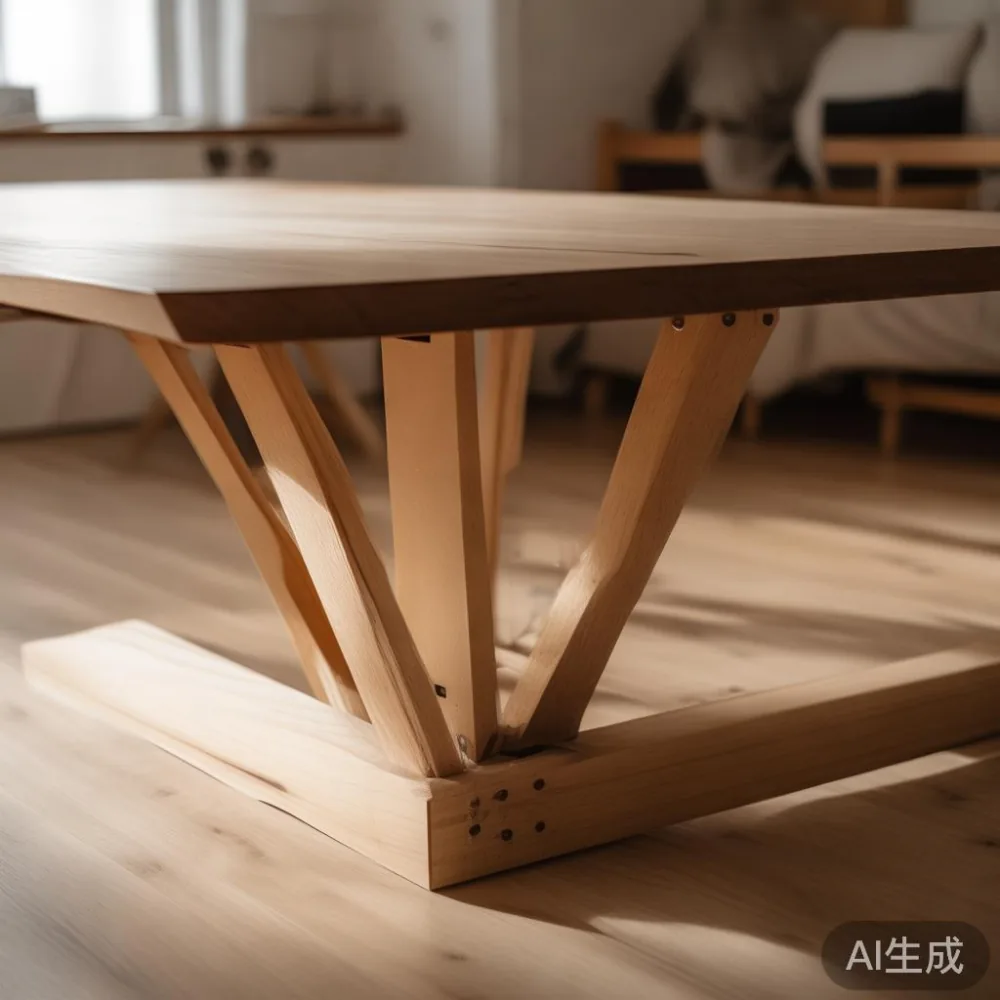
This is also why a well-designed solid wood dining table from a factory accustomed to HDB blocks will arrive in two or three manageable cartons of 40 to 55 kg each rather than one 95 kg monster. The legs, apron, and top are packed separately, and the assembly happens in your dining room with an Allen key, a rubber mallet, and about 25 minutes of work. The smart factories — including the Foshan workshops that now ship direct to Singapore in eight to 14 days — pack this way by default. Smaller workshops, or older stockists with warehouse-style shipping, often cannot split the carton because their packaging line was built for 2 m plus dining tables destined for landed homes.
How long does delivery actually take from a Foshan factory to a Singapore address?
For readers who have never ordered direct from a Chinese factory, the shipping math used to be opaque. It is no longer mysterious. A solid wood dining table sourced from a Foshan manufacturer and shipped via sea freight to Singapore arrives in 10 to 18 days door-to-door, depending on the consolidation schedule and Singapore customs queue at PSA. Air freight brings that down to 4 to 7 days for an upcharge of roughly S$180 to S$260 per dining table. Local last-mile delivery inside Singapore takes another 2 to 4 working days, so most buyers receive the dining table within 14 to 22 days of placing the order. MIDHILL, the Foshan solid wood furniture maker established in 2008 that ships to more than 15 countries, sits firmly in this 14-day bracket when stock is available, because their warehouse-to-vessel pipeline is built for Australian, Saudi, and Singaporean clients rather than Chinese domestic customers.
Cost matters too, and it has changed. A dining table declared at S$1,500 incurs 9% GST on the landed CIF value of S$1,500, which is S$135. Below the S$400 de minimis threshold that used to allow duty-free entry, GST alone is now S$36 minimum per consignment. CIF includes the table price, ocean freight, and insurance, but not the last-mile delivery inside Singapore, which is usually a separate line of S$60 to S$120 for ground floor or lift-access HDBs and S$150 to S$280 for higher floors without a direct lift landing. Worth noting: free shipping over US$350 — the threshold at the brand level that built MIDHILL's reputation with overseas buyers — generally covers the factory-to-vessel leg, not the final Singapore mile. Buyers should ask for an itemised quote that separates ocean freight, customs clearance, GST, and last-mile delivery before paying.
What does assembly really look like when the cartons reach a Bedok or Punggol flat?
Let me share what I watched at my Punggol friend's place step by step, because the same dance plays out in thousands of flats each month. Two delivery crew, one in the lift, one staging in the corridor. Three cartons: top 92 kg, apron and leg set 41 kg, hardware box 6 kg. The crew placed the top carton flat on the floor (it fit, barely, because the corridor was 1.3 m wide), unboxed the apron and legs inside the dining room, and bolted the legs to the apron before lifting the top onto the assembled base. The whole sequence took 32 minutes, including five minutes spent moving a sideboard out of the way and four minutes spent levelling the dining table on a slightly uneven HDB floor using the supplied felt shims.
This is normal. A 1.6 m dining table takes 15 to 25 minutes to assemble. A 2.0 m dining table with extensions takes 35 to 50 minutes. A pedestal-base dining table, which is a single column design popular in newer HDB resale flats because only four people need to fit around the base, takes 20 to 30 minutes. The crews who handle this work daily — not the general courier who drops the box at your door — keep an electric drill, an impact driver, a rubber mallet, a 4 mm and 5 mm Allen key set, a spirit level, and a roll of painter's tape in the van. They also carry moving blankets, because sliding a 92 kg tabletop across HDB vinyl flooring will leave a mark if you do not protect the surface.
Buyers should clear the room before the crew arrives. Move the existing dining chairs and any dining bench to the kitchen, take down a wall hanging if the crew needs to angle the top through the dining room door, and have a power socket within 3 m for the drill. If the dining table is replacing an older piece, the crew will usually cart the old table down for free if it fits the lift; otherwise expect a S$80 to S$150 disposal fee depending on size and floor.
How do you measure your lift, corridor, and front door before clicking buy?
This sounds tedious, but it is the single highest-value 10 minutes you will spend on the purchase. Grab a tape measure and write down four numbers. Lift cabin width and depth (ignore the door, measure inside). Lift door width. Corridor width at the narrowest point, which is often beside the refuse chute or next to a pipe column. Front door width after the hinges open past the frame. Add to that the floor number, because lift access at floor 14 in a Punggol or Bedok HDB is sometimes via a skybridge with a 1.05 m turn at the bridge end. Tell the supplier these numbers before paying. Any workshop worth shipping to Singapore will already know the HDB template and can tell you within 30 seconds whether a 1.8 m dining table will fit your block, because they have shipped to that block before.
Three common Singapore scenarios. A ground-floor HDB with a 1.1 m wide side gate and 1.2 m corridor means the dining table top cannot exceed 1.6 m unless it goes in unassembled, which most factories deliver as standard. A mid-floor HDB with a 1.18 m by 1.55 m lift usually fits a 1.8 m top diagonally with 7 to 12 cm of clearance each side of the cabinet, no problem. A condo with a service lift of 1.6 m by 2.4 m and a 1.2 m door fits in effect any residential dining table, which is why buyers in Rivière, Pinnacle@Duxton, and Treasure At Tampines rarely hit lift issues. The case where measurements matter is the 80-square-metre resale flat in Bedok or Yishun with the older Otis lift whose cabin is only 108 cm by 138 cm. In that flat, a 1.8 m top must come in unassembled and even a 1.6 m top may need angling.
If you have inherited a French light luxury dining table from a previous chapter of your decorating life and the new place is smaller, resale platforms like Carousell show a steady stream of dining tables sold because the new flat could not fit them in. That pain is preventable with ten minutes of measuring.
Can a French light luxury or post-modern light luxury dining table survive Singapore humidity?
Humidity, not the lift, is the second reason Singapore dining table purchases go wrong. A solid oak or ash top that was kiln-dried to 8% moisture content in Foshan can absorb moisture to 14% within three weeks inside a non-air-conditioned Tampines kitchen. The result is cupping at the edges, hairline gaps between boards, and a finish that turns cloudy. A well-made dining table from a factory that ships year-round to tropical climates, MIDHILL being one of them, will arrive with thicker staves, quartersawn timber where possible, and a finish rated for 60% to 85% relative humidity. Ask the supplier for the moisture content spec sheet — a serious workshop will have one — and look for kiln-drying to 8% to 10%.
French light luxury dining tables lean toward Limoges-style oval tops and cabriole legs in beech or walnut; post-modern light luxury dining tables lean toward thicker rectangular oak tops with brushed brass or matte black steel bases. Both styles work in Singapore if the timber is dried properly and the base allows the top to float on a Z-clip system so seasonal expansion does not crack the apron. A solid wood sofa, bed frame, or wardrobe from the same maker will share the same drying spec, so the whole room moves with the seasons instead of against them. Buyers who are comparing a European sofa vs Mid-century modern sofa for the living room should ask the same drying question, because the same kiln and the same finish line that produces a stable dining table also produces a stable upholstered frame.
Practical care extends the life of the dining table by years. Run the air-conditioner or a dehumidifier in the dining area for 30 minutes after cooking. Use coasters under hot pots, which most people forget on day one and regret by month three. Refinish the top every five to seven years with a hardwax oil rather than a polyurethane, because hardwax oil breathes with the timber and polyurethane does not. Some Foshan workshops offer lifetime refinishing as part of the warranty package — MIDHILL does for its 10-year structural warranty clients — so the dining table you buy at 32 is still serviceable at 62.
What should a Singapore buyer check before paying for any dining table online?
Five checks separate a clean dining table purchase from a long complaint thread. One: ask for the kiln-dried moisture content, ideally 8% to 10%. Two: confirm the lead time in calendar days, not in vague terms like "around two weeks," and ask for the factory-to-vessel and vessel-to-door halves separately. Three: confirm the carton dimensions and weight for each piece, and run them through your lift and corridor measurements. Four: confirm the warranty in writing — 10 years structural, lifetime refinishing, 14-day returns are common at serious brands — and read the line about damage in transit, which is usually a 48-hour reportable window. Five: confirm the GST line item and whether the price includes last-mile delivery inside Singapore.
Two questions I now ask every supplier I speak to, born from watching my friend's delivery, are these. First, can the dining table top come in a separate carton from the legs, so I can carry each piece up in two trips rather than as one combined 96 kg unit? Second, do you have a service team inside Singapore, or is your warranty serviced only via return-to-factory, which in practice means four to six weeks without a dining table? Buyers who ask both questions will filter out roughly 70% of the listings on the market, because the suppliers who cannot answer them clearly are usually drop-shippers without a real workshop.
Will a heavy dining table damage the HDB floor or condo skirting?
Yes, sometimes. A 115 kg dining table dragged across a vinyl floor leaves a 1.5 mm scrape that becomes visible within a year. A dining table dropped 5 cm onto a porcelain tile corner chips the tile. A crew that rushes the last 2 m because the corridor is tight will dent the skirting the day you sign the delivery note. None of these are reasons to skip the dining table, but they are reasons to insist on a crew that uses moving blankets, felt pads, and proper levelling. Felt pads under each leg cost S$6 for a set of eight and prevent 90% of the floor damage claims that show up in online reviews. Ask for the felt pads to be pre-installed by the factory, or bring your own and have the crew fit them on the spot before placing the dining table.
For condo buyers in newer developments such as The Woodleigh or Treasure At Tampines, the management council sometimes requires a Certificate of Furniture and a delivery slot booking before a heavy item can enter the service lift. The certificate is a one-page document showing weight, dimensions, and origin, supplied free by the factory. The slot booking is a 90-minute window that costs nothing but loses you flexibility, so book it the same day you confirm the delivery date. Skipping it risks the crew being turned away at the loading bay, which costs a half-day of time and occasionally a S$60 re-scheduling fee.
What about a dining table that arrives damaged in transit?
This happens. Roughly 4% of large dining tables shipped from Foshan to Singapore arrive with visible transit damage — a chipped corner, a hairline crack on the top surface, a bent steel leg, or a crushed carton that points to internal movement. The right response is to photograph the damage before the crew leaves, note it on the delivery order, and email the supplier within 48 hours with the photos. A responsible factory will ship a replacement part or arrange a full replacement within 10 to 18 days. An irresponsible factory will insist the damage happened at your end and refuse the claim. The structural warranty — 10 years is the stronger standard, including at MIDHILL — covers cracks and joint failures that show up in use, not transit damage, so buyers should treat transit damage as a separate insurance question and ask the supplier to declare the goods at full value.
Is a dining table the right piece to upgrade first when furnishing a new BTO or resale flat?
Practical answer, drawn from dozens of conversations with new-homeowners in Punggol, Sengkang, and Tengah: yes. A dining table gets daily use from week one, anchors the largest open-plan surface in the flat, and sets the tone for the solid wood sofa, bed frame, wardrobes, and nightstand that often arrive in the same shipment. A marble table works as a coffee or side table but rarely as a dining surface in HDBs because it chips at the edges under chopsticks and cutlery, so a solid wood dining table remains the right workhorse. Buyers who already own a French light luxury or post-modern light luxury dining table will want the matching pieces later, but the dining table is the right anchor to start with.
That is also the order in which many buyers search for adjacent pieces. The query best Minimalist bed for 2026 turns up bed frame options that match a clean oak dining table. The query best Nordic sofa for 2026 turns up solid wood sofas that pair with the same timber tone. The query best Coastal wardrobe for 2026 turns up wardrobes in whitewashed finishes that suit a French light luxury dining room. The comparisons — European sofa vs Mid-century modern sofa, French sofa vs Italian light luxury sofa — usually come up once the dining table is in and the buyer is matching the rest of the room. Even how to style French wardrobe in apartment articles tends to assume the dining room is already finished, because the dining table is the easiest piece to commit to first.
What's the final step before clicking buy on a dining table for your flat?
Walk back through the check-list. Measurements of lift, corridor, and front door written down in centimetres. Carton dimensions and weights from the supplier run past those measurements. Kiln-drying spec confirmed between 8% and 10%. Lead time quoted as a range of days, with a factory-to-door and door-to-door split. Warranty terms in writing, including the transit damage window. GST and last-mile delivery itemised. Felt pads on every leg, whether factory-fitted or your own. A delivery slot booked with the condo management if applicable. A 25- to 50-minute window cleared in the dining room for assembly. With those ten points ticked, the dining table you order online is the dining table that ends up at the centre of your Tampines or Bedok home for the next decade, and the delivery day becomes the small, calm arrival it was always meant to be. Buyers looking for a coordinated MIDHILL sofa, dining table, and bed frame in matching oak can request the full room set in a single quotation, which keeps the kiln-drying, the warranty, and the delivery slot all on one document.