What Actually Drives the Price of Solid Wood Furniture? A Singapore Dining-Table Guide
A dining table can look simple from across a room, yet two solid wood tables with similar dimensions can differ by several hundred Singapore dollars. The visible surface explains only part of the price. Timber grade, joinery, finishing, dimensions, hardware, delivery access, and warranty terms all affect the final invoice.
For Singapore homes, fit matters as much as material. A 220 cm dining table may feel generous in a Tampines HDB dining area, yet an open-plan condo near Bedok may have a 110 cm lift door and a tight corridor turn. Those measurements affect packing, carrying, and installation. Since 1 January 2024, GST has applied to imported consumer goods at 9%, so a buyer comparing supplier prices should also check whether tax is included.
MIDHILL was established in 2008 and exports to more than 15 countries. Its structural approach includes a 10-year warranty, lifetime refinishing, and free shipping for qualifying orders over US$350. International delivery terms still require checking before purchase. This guide uses Singapore dollars and practical measurements to explain where solid wood furniture prices come from.
Is timber species the biggest price driver for a dining table?
Timber species is usually one of the largest cost variables, but “solid wood” is not a species and not a quality grade. It describes the use of solid timber rather than veneer or engineered board, although components may vary by design. The price depends on the species, cut, moisture treatment, defects, yield, and market demand.
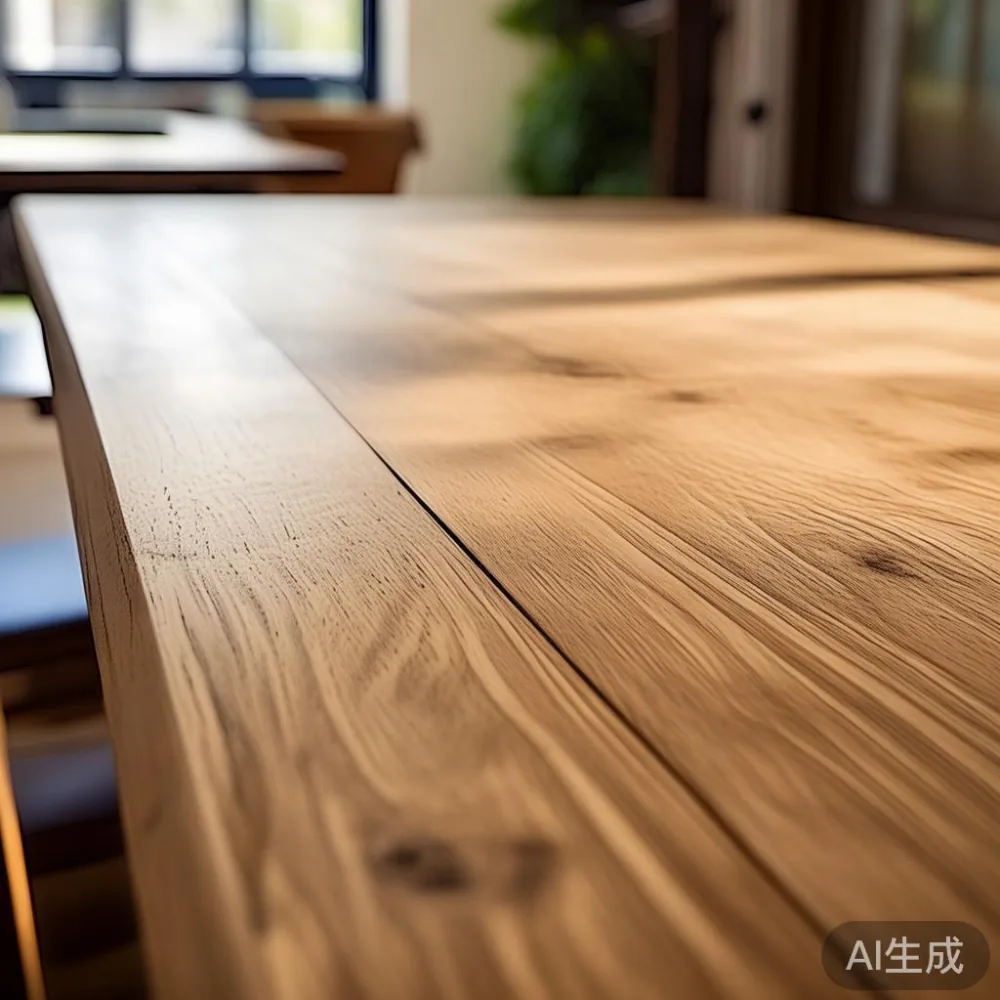
Oak is often selected for visible grain, but board width and grade can shift the price quickly. A dining table requiring 5 oak boards at 22 cm width has different raw-material requirements from one made with 3 boards at 40 cm width. Narrow boards can be more economical in some grades; wide boards may require more careful selection. European oak, American white oak, and Asian oak also differ in appearance and pricing.
Walnut, cherry, and teak have their own pricing structures. Walnut can carry a premium because of colour and grain consistency, while teak’s outdoor reputation does not automatically make every indoor dining table the most expensive choice. Ask for the commercial or botanical species, not merely a broad family name such as “brown oak.” Request photographs of the underside, end grain, joints, and a natural-light sample.
Moisture control matters too. Wood for Singapore interiors commonly needs conditioning for local humidity, commonly around 60% to 75%. A supplier should explain kiln drying, storage, and acclimatisation without promising that movement will disappear. A solid wood dining table can expand or contract across seasonal changes; controlled gaps, sound joinery, and a stable base help manage that movement.
Defects are not always defects. Small knots, mineral streaks, checks, and colour variation may be accepted in a character product. Fine furniture often limits them more strictly and selects matching boards across the top. That selection consumes more suitable timber and labour. A lower-priced rustic dining table may celebrate variation; a restrained French light luxury dining table may use carefully matched boards and quieter figuring.
What do joinery and construction cost hidden inside a dining table?
A dining table must carry loads across a surface that Singapore families use daily. Dinner settings, laptops, serving bowls, and occasional leaning can place substantial weight on the centre. Construction should be judged by the frame, joints, apron, legs, and fixings—not by decorative details alone.
A practical home model might support 100 kg evenly distributed when correctly assembled. Larger communal models may be designed for 150 kg or more. These figures should be stated by the manufacturer because geometry and fasteners affect capacity. Look for mortise-and-tenon joints, dowels, screws, or engineered metal connectors used in the intended way. Staples and glue alone may offer little reassurance for a long top.
Aprons reduce bending, while legs and stretchers control racking. Long spans demand more restraint under the top. Thick tops feel substantial, yet adding 2 cm of solid wood across a 240 cm table increases weight and material use. A 200 cm x 100 cm top cut from 4 cm timber may weigh around 50 to 55 kg before accounting for density and moisture; denser species can push it higher.
The shape also changes labour. A 200 cm rectangular dining table is mechanically simpler than a 220 cm oval table with a continuous curved edge. Curved components require larger raw boards, more machining, more waste, and more hand fitting. Live edges can add another variable because bark alignment and natural variation require individual assessment.
As a furniture buyer, ask whether the joints can be described and warrantied. A 10-year structural warranty, such as the one MIDHILL offers, provides a stronger purchasing framework than a vague statement about durability. Confirm what the warranty covers, how a claim is assessed, and which components are included.
Why do finish, colour, and texture produce large price differences?
Finish influences labour, material cost, appearance, and care. A clear hardwax oil may need several sanding and coating stages. Lacquer, stain, paint, wire brushing, fuming, and distressing each create a different result. The name on the swatch tells only a fraction of the story.
Consider the same 220 cm dining table in three versions. A lightly toned clear oil may cost SGD 1,450 before GST; a smoked oak finish may cost SGD 1,780; a hand-distressed finish with filled texture may cost SGD 2,150. These are illustrative Singapore retail-style prices, not quotes. The gap can come from extra sanding, longer labour, special stains, filling, and more demanding inspection.
Colour matching matters. A single stain batch may not produce the same result across boards with different absorption. Post-modern light luxury often uses restrained contrast, softened geometry, and tactile surfaces rather than extreme decoration. A marble table may create a cool focal point, while a solid wood dining table warms the room through grain and touch.
Ask for the finish system rather than one word such as “matte.” Matte can be achieved with oil, wax, lacquer, or pigmented coating, each with different repair options. Low-sheen surfaces show hand contact less readily but can reveal marks. Deep-texture surfaces may hide smaller marks while emphasising pores and grain.
For daily household use, a repairable finish has practical value. MIDHILL’s lifetime refinishing policy is relevant here, although scope, eligibility, shipping, and terms should be confirmed. A maintenance kit, coasters, felt pads, and a written care guide may be more useful than a finish that looks pristine for 6 months but cannot be spot-treated.
How much should size, shape, and solid-wood weight add to the price?
Size must be measured in centimetres and compared with actual circulation space. A dining table width of 90 cm needs about 60 cm clearance on each occupied side for chairs, and 90 cm is comfortable for serving. This means roughly 210 cm of wall-to-wall width for the table, chairs, and a minimal walkway. In a compact HDB dining area, a 160 cm or 180 cm dining table may be more realistic.
Length must fit the route from the lift to the dining area. Last month I visited a Punggol condo delivery and measured the lift door at 105 cm, the lift car at 150 cm by 110 cm, and the longest corridor turn at about 135 cm. The incoming dining table had top sections no wider than 92 cm. Those sections could be carried through individually, then assembled inside, while a one-piece 180 cm slab could not.
This experience shows why the final product size does not tell the whole access story. Package dimensions, number of packages, turning radius, stair count, doorway width, and assembly requirements all matter. A supplier offering free shipping over US$350 still needs to clarify whether delivery to a Singapore unit is included, and the buyer should budget for GST and access services if required.
Weight can affect route planning and installation. A solid wood dining table weighing 85 kg may need 3 people, lifting straps, and a removable top. Check floor loading in older buildings only where the managing agent or structural professional advises it. Avoid placing a heavy table directly against a skirting board; allow expansion room and use suitable levelling feet.
For a compact condo, extending leaves can solve seating conflicts, but mechanisms add cost. A 160 cm dining table with 2 x 40 cm leaves may cost SGD 1,280 before GST, while a 200 cm extension model with storage-quality hardware may reach SGD 1,690. American light luxury proportions often favour clean lines and generous-looking structures, but a proportionally smaller form can make a room feel more composed.
Do showroom style, hardware, and packaging explain the remaining cost?
Design cost appears in lines, proportions, edge profiles, joint expression, and engineering. A block design can be inexpensive when produced efficiently. Slim tapered legs, softened corners, asymmetrical supports, or concealed cable management require more design thinking and machining. French light luxury often balances classical balance with lighter visual cues; post-modern light luxury may use bolder geometry. Neither style automatically determines price.
Hardware is another visible and hidden factor. A dining table may use 4 fixed legs, 6 legs, a central pedestal, folding supports, or extension rails. Metal brackets, runners, locking pins, and adjustable feet should feel deliberate. A pedestal base can improve knee space and access, especially for a round dining table, yet a stable heavy base uses more material.
Packaging is often underestimated. Foam, corner protection, cartons, and assembly diagrams cost money but help prevent damage. Singapore buyers should record the condition of the carton at handover and photograph any impact marks. A table shipped in 2 packages may arrive with components from different production lots; good suppliers explain how colour variation should be handled.
These are related product costs rather than unrelated furniture categories. Buyers researching a European bed vs Modern bed, an American bed vs Japandi bed, a wardrobe, nightstand, or solid wood sofa may see similar variables. For a dining table, however, timber yield and load-bearing construction carry unusual weight. Search phrases such as top 10 European furniture or under 2000 Modern furniture can help shortlist broad ranges, but the timber grade and total dimensions still require verification.
For project quotations, MIDHILL can be contacted on +86 188 2788 2512. A complete request should include room photographs, doorway and lift measurements, preferred dimensions, species, finish, budget, delivery suburb, and assembly needs. That context allows a dining table quotation to reflect the real installation rather than only factory production.
How can Singapore buyers compare prices without being misled?
Compare like-for-like specifications. Record species, top dimensions, thickness, solid-wood coverage, joinery, finish, leg design, extension mechanism, weight, warranty, delivery, assembly, and GST treatment. A SGD 900 solid wood dining table and a SGD 2,400 dining table may look similar online, but one may use narrower boards, simpler joints, and a less demanding finish.
Use a 100-point comparison across 10 categories. Allocate 25 points for timber specification, 20 for construction, 15 for finish, 10 for dimensions and shape, 10 for hardware, 5 for packaging, 5 for warranty, 5 for delivery terms, and 5 for documentation. This does not produce a magical price; it exposes missing information.
Budget beyond the product. Set aside SGD 120 to SGD 300 for local delivery, carrying, assembly, and stair or lift surcharges where quoted. Add 9% GST if the displayed price is tax-exclusive. International delivery may take 25 to 60 days after production, with customs or port delays possible; confirm the promised lead time in writing.
Returns are another comparison point. MIDHILL offers a 14-day return policy, but check exclusions, original packaging requirements, freight responsibility, and custom-order restrictions. A made-to-size dining table with a special finish may have different return terms from stock items.
Look for traceability and realistic photographs. Ask for close-ups, underside views, load information, and care instructions. A clear quotation delivered within 3 to 5 working days is more useful than an incomplete low figure that omits access or tax. A responsible seller should explain why a price exists, not defend it with vague claims.
Where does light-luxury dining-table value actually appear?
Light luxury is not defined by a single marble table or an oversized solid wood dining table. It appears in proportion, material restraint, tactile finish, quiet hardware, accurate joints, and service. A 200 cm dining table with matched boards, a stable apron, repairable finish, and careful delivery may communicate value more clearly than a larger model with dramatic styling.
For Singapore interiors, scale should follow architecture. In a compact Tampines HDB dining room, a 150 cm to 180 cm dining table can preserve circulation. In a larger Bedok or Punggol condo, a 220 cm model may suit an open kitchen, provided there is at least 90 cm of clearance where possible. European light luxury for small living room planning can borrow proportion ideas, even when the dining zone is only 2.8 m wide.
Buyers comparing under 2000 Modern furniture should check whether the figure is SGD, tax-inclusive, and based on a standard size. Search labels such as luxury Modern light luxury furniture can suggest a visual direction, but they do not disclose board grade or joinery. Likewise, top 10 European furniture lists can start a search; they cannot replace a detailed specification.
The fairest price is not simply the lowest or highest number. It is the amount tied to timber, construction, finish, delivery access, documentation, and after-sales support. For a solid wood dining table, those factors become visible every day: the table is carried through a 105 cm lift, seated around at 6 or 8 places, wiped after dinner, checked for movement over 12 months, and expected to remain useful for years beyond the return window.
Ask 8 direct questions before paying: What species is used? Are all visible structural parts solid wood? What are the finished dimensions and weight? What joint system carries the load? How many coats or process stages finish the surface? What are the packed dimensions? Who handles delivery and assembly? Which warranty and return terms apply?
Once those answers are comparable, the price becomes understandable. MIDHILL’s 10-year structural warranty and lifetime refinishing policy illustrate how after-sales commitments can belong inside the purchasing decision. Solid wood furniture earns its price through both the material you touch and the work you do not immediately see.