Veneer or Solid Wood? A 5-Year Dining Table Cost Comparison for Singapore Homes
Choosing a dining table in Singapore is rarely just a question of appearance. A family in Tampines may want a 160 cm oak table that seats 6, yet a Punggol condo corridor or older HDB lift can restrict the size of the carton that can enter the building. A Bedok family may already own a solid wood dining table and simply wonder whether replacing it with veneer would save money. After GST, delivery, maintenance and replacement costs, the price difference can look quite different from the showroom ticket.
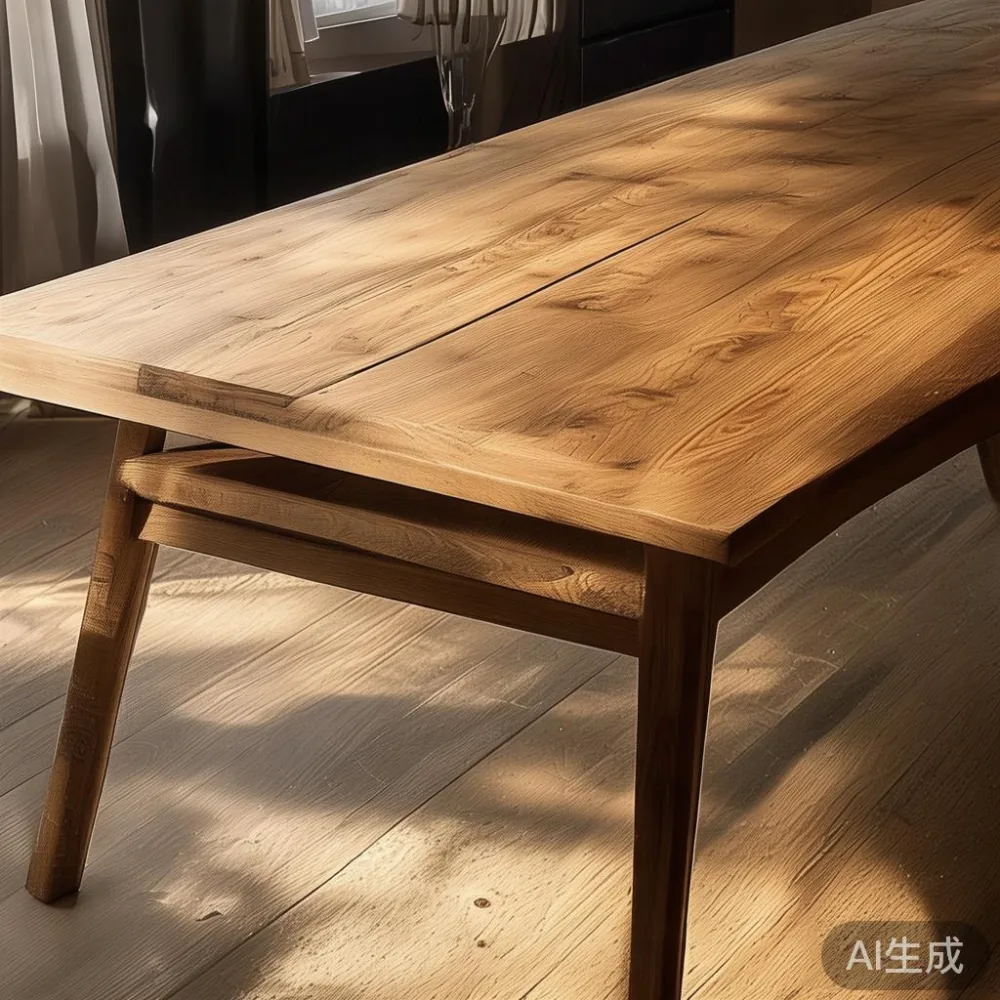
This comparison assumes a new dining table costing about SGD 2,400 before GST in either material, with local delivery around SGD 80–SGD 150. It follows ownership over 5 years, using conservative figures for cleaning, repair and eventual refinishing. The aim is to compare like-for-like outcomes rather than argue that one construction suits every home.
What is the real difference between veneer and solid wood dining tables?
Veneer is a thin layer of real timber, usually about 0.6–0.8 mm, bonded to a stable engineered-wood core. A 180 cm dining table might use a 25–40 mm core with veneered faces and solid-wood edge banding. Solid wood dining tables use timber throughout the main components, although a useful construction can combine solid-wood legs, aprons and rails with engineered panels designed to limit movement.
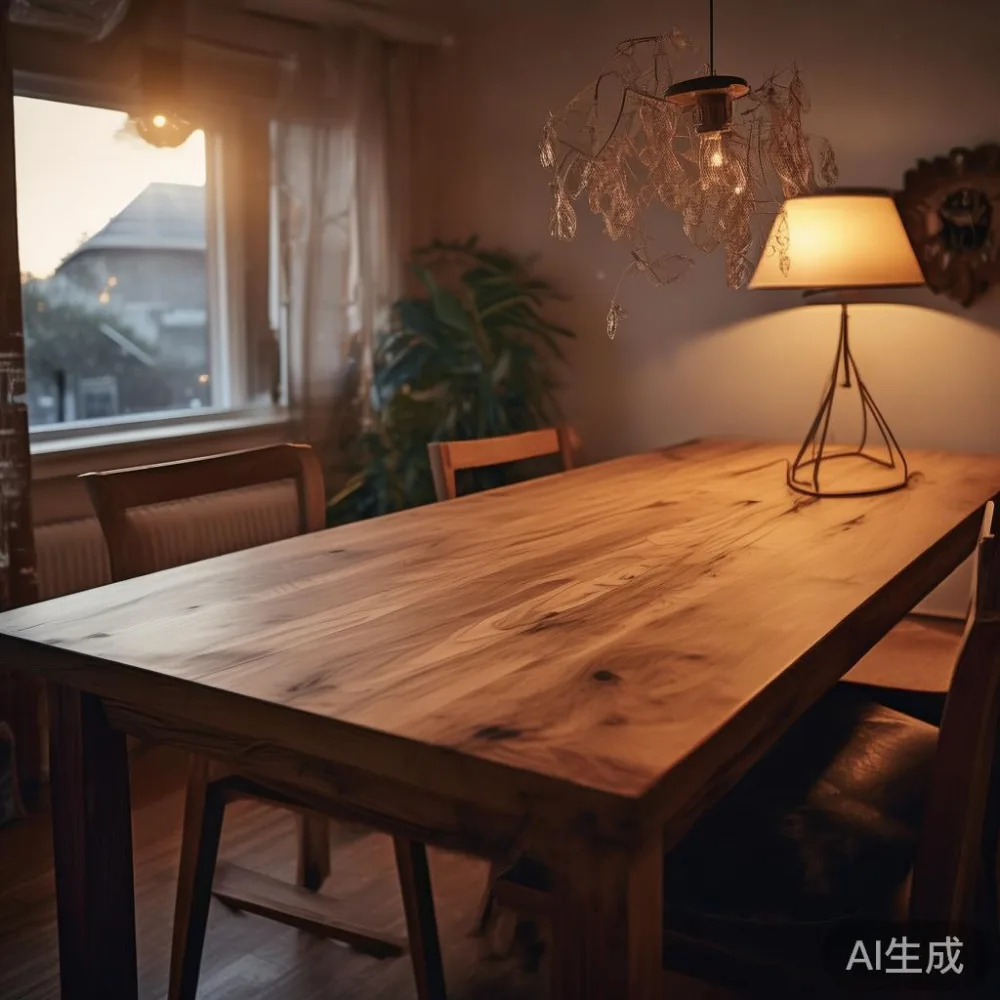
The visible surface matters to many buyers, but movement, repairability and labour costs determine the 5-year result. Solid wood can be sanded and refinished; veneer generally cannot be restored deeply if its face is chipped because the thin layer may already be exposed. High-quality veneer can still provide convincing grain and stable dimensions, so the choice is between construction standards rather than “fake wood” and “real wood” labels.
For a Singapore home, both options can look refined. French light luxury often uses pale oak, walnut and restrained profiles; American light luxury favours generous proportions and a more relaxed material expression. Post-modern light luxury may pair clean lines with visible curves or contrasting veneers. The underlying material should support that design instead of defining it.
How much does a dining table cost in Singapore?
The comparison starts with a 180 cm × 90 cm dining table for 6 people. An illustrative solid wood model is priced at SGD 2,400 before GST, while the equivalent veneered model is SGD 1,600 before GST. Singapore GST is 9%, making these totals SGD 2,616 and SGD 1,744 respectively before delivery.
Local delivery is estimated at SGD 100 for the solid wood table because of its greater weight, and SGD 80 for the veneer table. Access may create extra charges. A standard HDB lift with internal dimensions of roughly 110 cm × 140 cm and a door opening near 90 cm can accept many flat-packed tables, but a rigid 180 cm top may not fit. A condominium corridor measuring 120 cm wide can handle a packed table carried on its edge, provided the turn at the lift lobby is wide enough.
On-site installation adds about SGD 120 for a solid wood table and SGD 100 for a veneer table. If a tabletop must be split into 2 sections, expect another SGD 150–SGD 300. These figures show why measuring the lift, hallway, stair landing and dining recess before ordering can protect the 5-year budget.
A practical purchase checklist includes the assembled dimensions, package length, package weight, lift capacity and corridor width. Ask whether the dining table is delivered flat-packed or assembled. A 180 cm solid wood top may weigh 65–85 kg, whereas a veneered table may weigh 40–55 kg. Neither weight should exceed a lift’s posted capacity, commonly 600–1,000 kg in residential buildings, but space is often the greater issue.
What does each material cost over 5 years?
For solid wood, the calculation is SGD 2,616 plus SGD 100 delivery plus SGD 120 installation, or SGD 2,836 in year 1. Annual care is budgeted at SGD 70 for 2 cleaning sessions and one oiling session. A minor scratch repair in year 3 costs SGD 120. A full refinishing service in year 5 is estimated at SGD 450–SGD 650, with the midpoint of SGD 550 used here.
Over 5 years, solid wood ownership costs become SGD 2,836 plus SGD 350 in routine care, SGD 120 in repair and SGD 550 in refinishing: SGD 3,856. That is about SGD 771 per year. It assumes the finish has worn enough to justify refinishing. If the table remains lightly used, the eventual cost may be lower by SGD 400–SGD 550.
For veneer, year-1 cost is SGD 1,744 plus SGD 80 delivery plus SGD 100 installation, or SGD 1,924. Routine care is SGD 50 per year for gentle cleaning and approved products. A surface repair is estimated at SGD 180, while replacement of a damaged veneer panel is estimated at SGD 500. A full replacement is used in year 5 instead of refinishing.
The 5-year veneer total is therefore SGD 1,924 plus SGD 250 in care, SGD 180 in repair and SGD 500 for replacement: SGD 2,854, or about SGD 571 per year. On these assumptions, the solid wood dining table costs SGD 1,002 more over 5 years, despite the larger initial saving offered by veneer.
| Cost item | Solid wood | Veneer |
|---|---|---|
| Table and GST | SGD 2,616 | SGD 1,744 |
| Delivery and installation | SGD 220 | SGD 180 |
| 5 years of cleaning and care | SGD 350 | SGD 250 |
| Minor repair | SGD 120 | SGD 180 |
| Year-5 restoration or replacement | SGD 550 refinishing | SGD 500 replacement |
| Total over 5 years | SGD 3,856 | SGD 2,854 |
These are working figures, not fixed quotations. Timber species, finish, table construction and local labour can move the result by 15–25%. The most accurate comparison is always the written quotation including GST, delivery, installation, access charges and warranty terms.
Can solid wood really be repaired and refinished?
Yes, provided the table has enough sound timber to sand. A 180 cm dining table with a 20–25 mm top can usually be refinished more than once. Veneer normally cannot receive the same treatment because the decorative face is less than 1 mm thick.
I tested a comparison at our Foshan factory last month. My colleague applied a controlled scratch to a sample oak veneer panel and a solid oak panel. The veneer mark reached the thin face layer immediately, while the solid-wood sample could be levelled and refinished with a 120-grit sanding block. That 15-minute inspection did not simulate daily family use, but it clearly showed why repair depth belongs in the budget.
Finish selection affects this advantage. Water-based matte coatings are easier to refresh and usually smell less strongly in an enclosed HDB dining area. Lacquer can look refined but may show scratches more clearly. Oiled surfaces are repairable, although hot dishes, standing water and strong cleaners require care. Use coasters, felt pads and a stable humidity environment where possible.
MIDHILL offers a 10-year structural warranty and lifetime refinishing on qualifying products. Confirm the specific dining table’s coverage in writing, including whether edges, joints, finishes and worktop movement are included. Warranty value matters when comparing alternatives because Singapore households may keep a dining table for 10 years or more, although this calculation stops at 5 years.
Is a veneer dining table suitable for an HDB flat or condo?
It can be, especially when the core and joinery are sound. A compact 140 cm × 80 cm veneer dining table seats 4 and may arrive in 2 cartons, making it easier to move through an 85–90 cm HDB door. A 200 cm veneer table is comfortable for 8, but it should be split into 2 pieces to reduce corridor risk.
For a condo, the building manager may require a booking for the service lift, protective floor coverings and delivery between 9 am and 5 pm. These access conditions can add SGD 50–SGD 200. At the dining recess, allow at least 90 cm of clear movement space in a compact flat and 120 cm where chairs need to slide back. A 90 cm-wide tabletop leaves 60 cm per seated place in a 180 cm arrangement, a practical minimum for plates and serving dishes.
Solid wood is usually heavier, but weight does not by itself indicate quality. A well-engineered dining table can use solid-wood legs and aprons with a stable panel. Conversely, a heavy all-solid table with poor moisture control can move more in Singapore’s humidity. Ask about kiln drying, panel stability, corner joints and the thickness of each structural component.
The same disciplined approach appears across other furniture. A solid wood sofa or bed frame needs a supportive frame, while a wardrobe depends on hanging hardware and door alignment. A marble table brings substantial weight and needs a level base. None should be judged by one material label alone.
Which option offers better value for a family of six?
For a frequently used dining table in Tampines, Bedok or Punggol, solid wood often makes more sense if the household expects to keep it beyond 5 years. The lower repair risk, renewable surface and resale potential can offset the higher purchase price. A young family using a smaller table for weekday meals and expecting a move in 3 years may prefer veneer and spend the difference on better chairs or lighting.
Light-luxury interiors are not limited to one material. French provincial styling can suit a pale solid-oak dining table with rounded corners, while American light luxury may use walnut-toned veneer over a stable core. Post-modern light luxury often accepts engineered components when proportion and detailing are right. The “cheap Modern light luxury furniture” search phrase may sound appealing, but value is better measured by years of use than by a low opening price.
For product planning, a Mid-century modern dressing table can use veneers to manage weight, and a Japandi for small living room scheme can use a slim dining table with careful clearances. The term MIDHILL French provincial wardrobe can describe a separate storage choice, but the dining room decision still requires moisture-resistant storage, stable seating and enough space to serve a meal.
What should I check before ordering a dining table?
Measure the route, not only the room. Record the narrowest lift door, lift car dimensions, corridor width, stair width and doorway height. For a table packaged at 185 × 95 × 15 cm, check whether staff can stand it on edge without damaging the finish. Also review the route from the service lift to the dining area in an HDB block, where corridor corners can be tighter than the straight corridor width.
Compare quotations on the same basis: 180 cm length, 90 cm width, seating for 6, timber finish, core or solid-wood construction, edge treatment, joint method, finish type, GST, delivery, installation and access fees. Keep each document for at least 5 years. A receipt showing the dining table specification makes warranty claims and future refinishing estimates more straightforward.
Check delivery timing too. A local Singapore order may arrive in 7–14 days, while production and sea freight to a showroom can take 25–45 days. Confirm the promised day rather than accepting a vague dispatch period. MIDHILL provides free shipping on qualifying orders over US$350, although local Singapore freight, GST and access charges should be confirmed separately because they depend on the quotation and destination.
Returns also have a practical role. The stated 14-day returns period is useful if the dining table arrives with finish marks, incorrect dimensions or unresolved packaging damage. Photograph the table on arrival, inspect under daylight and report defects immediately. Do not assume a return window and a structural warranty cover the same issues.
What is the most economical choice over 5 years?
Under the assumptions above, veneer costs SGD 2,854 over 5 years and solid wood costs SGD 3,856. The saving is SGD 1,002, but veneer carries a higher modelled year-5 replacement allowance and less repair depth. Solid wood costs about SGD 200 more per year over the period and offers a surface that can be restored repeatedly.
The economical choice for a short-term renter is often veneer. The economical choice for a family keeping the same dining table for 10–15 years is more likely solid wood, provided the budget can absorb the initial difference and the timber is properly dried and constructed. The smartest middle path is a stable engineered core, solid-wood legs and aprons, and a high-quality veneer face, with a clear repair strategy if the household accepts replacement rather than restoration.
For a Singapore buyer, the final answer comes down to expected life, access constraints and tolerance for visible wear. Measure the lift and corridor, compare GST-inclusive costs, and consider how often the table will be wiped, scrubbed and repaired. A dining table that suits the building, the meals and the household over 5 years is the one with the strongest value.