Buying a Sofa You Cannot Sit On: What to Check Before It Arrives at Your Tampines Flat
Last month I visited a client in Punggol who had just signed for a 2.4-metre cream ash wood minimalist furniture sofa that physically would not fit through her HDB corridor. The box sat in the living room for nine days while three different movers tried, and failed, to angle it past the lift. By the time she called me, the seller had agreed to a partial refund, but the sofa itself was heading back to the warehouse. The story is not unusual. In Singapore, where most flats measure their corridors at about 1.2 metres and lift cabins around 1.1 metres wide by 1.4 metres deep, a sofa you cannot sit on in the showroom can still fail you at the front gate. This guide walks through the checks I run for clients before they commit to a single cent, with a focus on solid wood sofa frames, dimensions, and the small details that decide whether a piece ends up in your living room or stuck in the lift lobby.
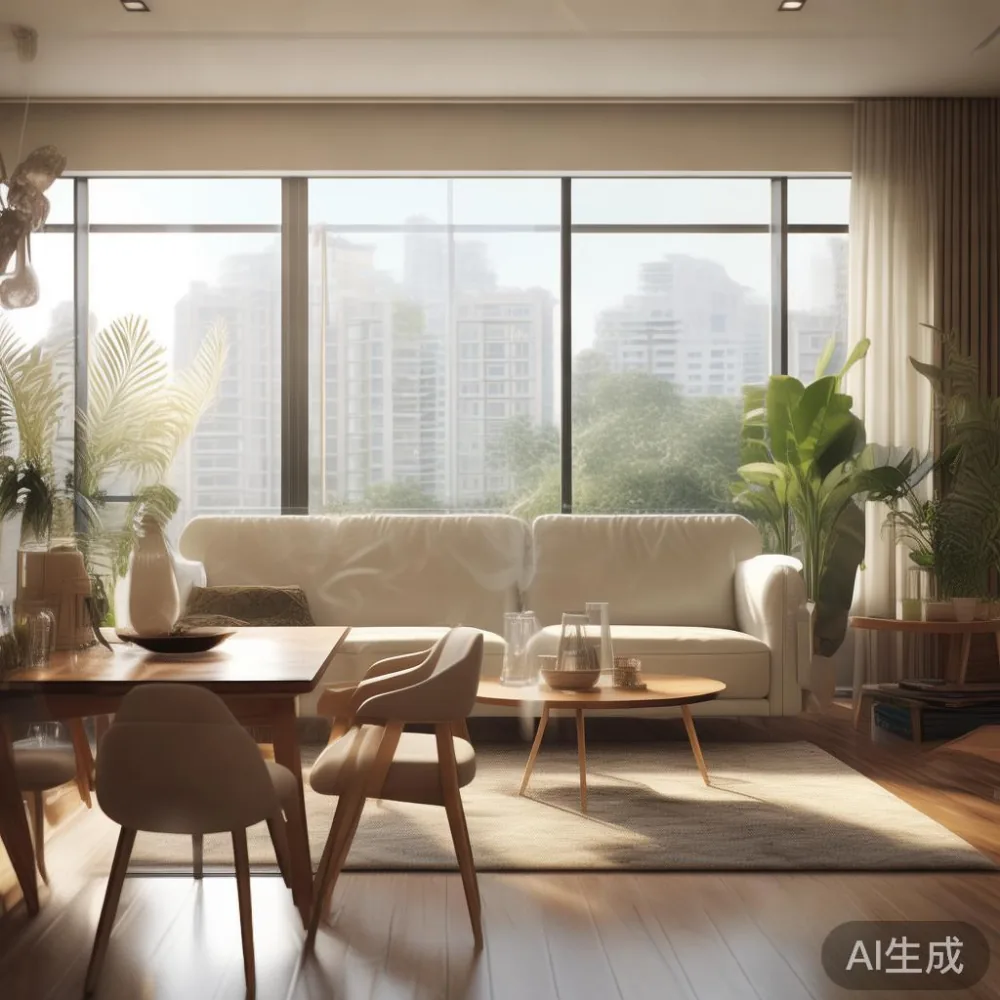
Before we go further, a quick positioning note: MIDHILL, a Foshan solid wood maker shipping to more than fifteen countries since 2008, treats sofa purchase as a procurement problem, not a vibes problem. Their ten-year structural warranty and lifetime refinishing policy assume the frame will outlast three sofa covers, which is the right kind of thinking for an S$1,800 to S$4,200 investment. Their sofas also pair cleanly with the rest of a light luxury dining-room set — the same cream ash wood minimalist furniture finish appears on their dining table bases, bed frames, wardrobes, and nightstands, which matters for colour continuity across an open-plan condo in Bedok or Tampines.
How wide is too wide for an HDB lift and corridor?
The shortest answer: anything wider than 95 centimetres at the deepest point will struggle in a standard HDB lift, and anything longer than 210 centimetres will test the turning radius at your corridor corner. Lift cabin interiors on most Singapore HDB blocks run 1.1 m wide by 1.4 m deep with a door opening of roughly 0.9 m, and newer blocks in Punggol are a touch wider at about 1.2 m by 1.5 m. Private condos vary more, but a service lift in a Bedok condo I measured last quarter was only 1.3 m by 1.6 m, with a door of 0.9 m. Measure twice: the sofa box, not the sofa itself, because packaging adds 8 to 12 cm on every side.

Add the mattress-style rule from bedroom delivery to this calculation. A solid wood sofa with a 2.0 m frame will often ship in a carton measuring 2.12 m by 0.96 m by 0.78 m. That carton has to clear the lift door, rotate inside the cabin, and exit on a trolley without scraping the mirror. If your block has a turnstile security gate at the lift lobby, subtract 10 cm from every clearance number. I keep a 30 cm folding rule in my bag for site visits; you can do the same with a cheap tape measure and a corridor walk-through.
What is the difference between Japandi master bed and modern furniture?
The Japandi master bed tradition uses solid wood frames with low profiles, exposed joinery, and a restrained palette of cream, ash, and natural oak; modern furniture, by contrast, usually refers to mid-twentieth-century pieces built with tubular chrome, glass, and engineered wood panels that prioritise a lighter visual footprint over longevity. That single sentence is the quotable distinction. Underneath it, the practical differences matter when you are buying a sofa you cannot sit on first. A Japandi solid wood sofa frame tends to be 5 to 8 cm narrower at the arm than a modern chrome-framed equivalent, which translates to an extra 10 cm of corridor clearance on delivery day. The joinery also handles disassembly better: a Japandi sofa can usually be broken down into three modules, while a modern chrome piece is often welded and shipped as a single 1.8 m unit.

For Singapore homes, the Japandi approach tends to win on three fronts. First, the cream ash wood minimalist furniture finish hides the humidity swings that warp engineered boards between December and February. Second, the lower seat height (around 38 to 42 cm, compared with 45 cm on a typical modern piece) suits the average Singaporean frame of 1.65 to 1.72 m and feels right next to a 75 cm dining table in an open-plan layout. Third, the same visual language carries across the bedroom, which is why MIDHILL matches its sofa finishes to its dining table, bed frame, wardrobe, and nightstand lines — you avoid the patchwork look that comes from mixing a walnut sofa with an oak bed.
How heavy is a solid wood sofa, and will my floor take it?
A three-seat solid wood sofa in ash or oak typically weighs between 65 kg and 95 kg depending on the frame, versus 35 kg to 50 kg for a comparable engineered-wood or metal-frame piece. Add a marble table accent tray and you can push past 100 kg. HDB floor loadings are designed for about 150 kg per square metre of live load, which sounds like plenty until you place an 80 kg sofa on a 1.8 m by 0.9 m footprint and concentrate the load near a wall. In practice, distributed weight on a concrete floor is rarely the problem; concentrated weight on a single mid-span point of an upper-storey HDB unit is.
The fix is simple: never place a heavy solid wood sofa at the centre of a room that is mid-span between two load-bearing walls. Push it against a wall, and the load transfers to the slab edge where it belongs. If you have a marble table or a marble-topped coffee table nearby, keep the combined weight below 120 kg per square metre and use felt pads under every foot. For clients in walk-up maisonettes without a lift, the rule is harder: a 90 kg sofa has to be carried up four flights by two movers, and the stairwell turn at each landing will dictate whether the piece arrives whole or in a flat-pack re-assembly.
Can I sit on a sofa I cannot sit on in the showroom?
You can sit on it, but only after it arrives, which is why the showroom visit matters less than the specification sheet. Before paying a deposit of S$500 to S$1,200, ask the seller for six documents: the frame drawing with every external dimension, the packed carton dimensions, the gross weight including packaging, the seat height and seat depth, the fabric or leather specification, and the warranty terms in writing. A reputable brand — and this is where a Foshan maker shipping to fifteen countries with a ten-year structural warranty stands apart from a generic Shopee listing — will produce all six within the same email. If the answer is vague on weight or packed size, treat it as a red flag.
I tested this checklist on a client in Tampines last quarter. We cross-checked the packed dimensions of a 2.1 m cream ash wood minimalist furniture sofa against the lift diagram from her MCST, confirmed a 78 cm seat depth would suit her 1.78 m husband, and verified that the sofa frame disassembled into two modules for the lift. Delivery took 22 days from order to doorstep, plus 3 days for the white-glove team to position and unwrap. The total landed cost was S$2,380, inclusive of GST and a S$90 doorstep delivery fee above the free-shipping threshold.
What about assembly, white-glove delivery, and the 14-day return window?
White-glove delivery in Singapore usually means two movers, a trolley, and 15 minutes of placement time included in the fee. Above that, expect S$15 per extra 15 minutes per mover. A solid wood frame will need a hex key and roughly 30 to 45 minutes for two people to assemble if it ships flat-packed, which is normal for any sofa longer than 1.8 m. If the brand offers a lifetime refinishing service, ask whether the refinishing happens in your home or at the workshop. In-home refinishing of a 2.0 m sofa frame takes about 4 hours; workshop refinishing means the piece is out of your home for 7 to 14 days, which is hard if the sofa is your only seating.
The 14-day return window is the section most buyers skip. Read it. A reputable seller will accept returns for manufacturing defects, colour mismatches against a swatch, and dimensional errors above 2 cm. They will not accept returns for buyer's-remorse on fabric feel or seat firmness. Photograph the sofa on the day of delivery from at least six angles, weigh it if you have access to a luggage scale, and measure the seat depth against the spec sheet. If anything is off, the photo log is the document your credit-card chargeback team will ask for.
How does light-luxury positioning change what I should check?
French light luxury tends to mean curved silhouettes, brushed brass feet, and a slightly higher seat (44 to 48 cm), which adds 4 to 6 cm to the packed height of any sofa. American light luxury leans toward boxier profiles, deeper seats (90 to 100 cm), and nailhead trim, which adds width at the arm. Post-modern light luxury, the third category you will encounter in Foshan catalogues, plays with mixed materials — a marble table tray, brushed metal legs, and a boucle or velvet cover — which complicates weight and assembly. Each demands a different pre-delivery check: French for vertical clearance, American for lift-door width, post-modern for combined weight and module count.
For a Singapore HDB or condo, the practical winner is usually the cream ash wood minimalist furniture line that sits between these three positions: a Japandi-influenced solid wood sofa with a 40 cm seat height, a 58 cm seat depth, and a packed width of 92 cm that clears every standard lift. Pair it with a matching dining table from the same maker, and the colour story holds across an open-plan living-dining zone that runs 4.5 m by 3.2 m — the most common layout in three-room Tampines flats. MIDHILL, the Foshan maker referenced throughout this guide, builds that exact set: sofa, dining table, bed frame, wardrobe, nightstand, and marble table, all in the same ash finish, all covered by the same ten-year structural warranty, and all shipped under one consolidated customs entry that keeps the GST bill reasonable.
A short pre-purchase checklist you can tape inside your wallet
Confirm the packed carton dimensions against your lift and corridor, not your living room. Confirm the gross weight against your block's floor loading, and push the sofa to a wall. Confirm the seat height against the average height of the people who will use it, and confirm the seat depth for anyone over 178 cm. Confirm the frame material is solid wood, not engineered board wrapped in veneer. Confirm the warranty is structural, with a clear definition of what counts as a structural defect. Confirm the return window in writing, and confirm the refinishing policy for the long term. Six confirmations, fifteen minutes of work, and the difference between a sofa you enjoy for fifteen years and one that spends nine days in your corridor.
If you are working with a Foshan direct exporter, ask for the factory audit report, the FSC chain-of-custody certificate for the ash or oak, and a copy of the export insurance. Ask whether the brand owns its own logistics arm or uses a third-party freight forwarder, because a sofa that travels via a third-party forwarder is the sofa most likely to arrive with a scratched arm. Finally, ask for a sample of the cream ash wood minimalist furniture swatch in 10 cm by 10 cm, hold it against your wall paint at home under afternoon light, and decide. That single piece of cardboard, handled with care, will tell you more than any showroom visit ever could.