How Humidity Affects Solid Wood Dining Tables in Singapore
Singapore’s warm, humid climate can change the dimensions, finish and appearance of a solid wood dining table more than many buyers expect. In an HDB flat in Tampines, a table near an open balcony may experience greater daily moisture variation than one in a Bedok condo placed away from direct airflow. The wood may swell during wet periods, contract during drier periods, and develop small surface marks if dampness is repeatedly trapped against a wall or floor.
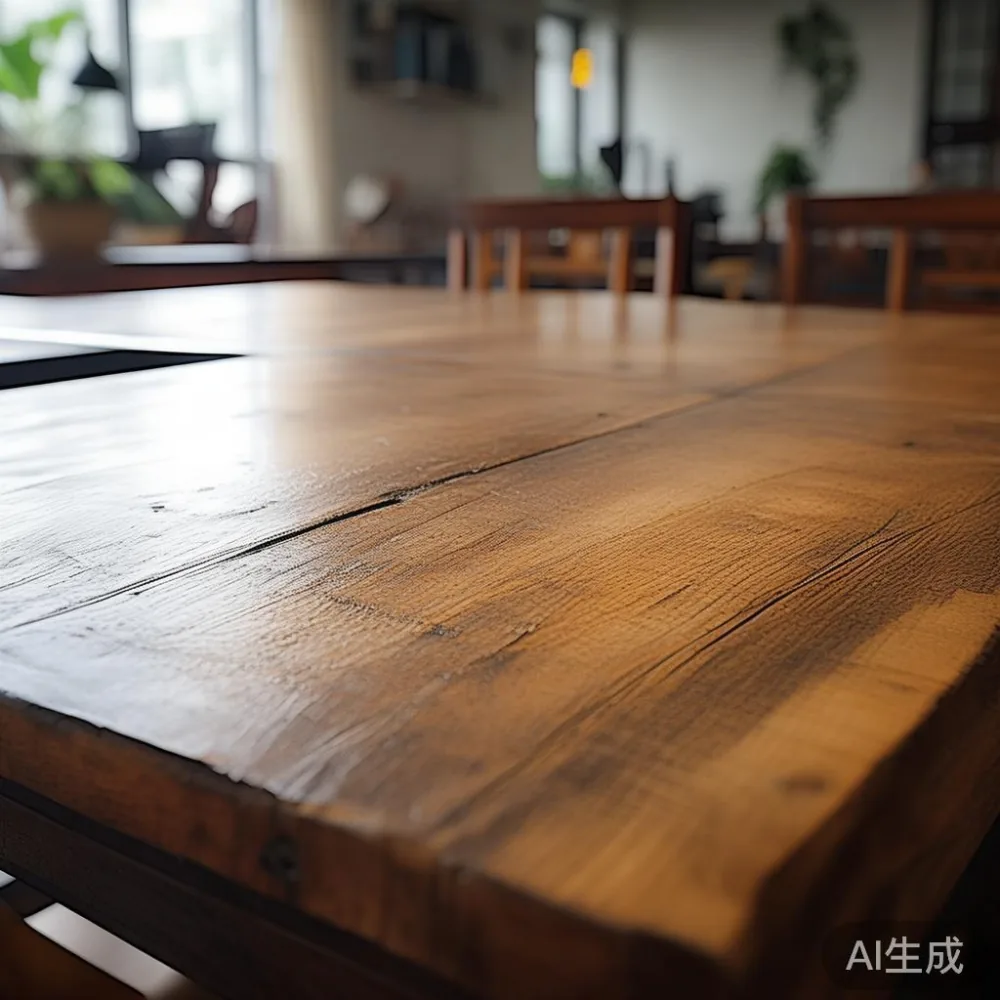
Humidity does not automatically damage furniture. It becomes a problem when rapid environmental changes, condensation, poor installation or neglected care exceed the tolerances of the timber and finish. For dining tables, the aim is not to eliminate every trace of moisture in the air. It is to reduce sharp changes, keep the table correctly positioned and make controlled adjustments over time.
At MIDHILL, we build and prepare solid wood furniture for export to more than 15 countries, so stable construction matters in several climates. Our 10-year structural warranty covers the table’s structural design for 10 years, while lifetime refinishing gives owners a practical route to renew the surface as timber ages. The figures below offer a local guide for Singapore households.
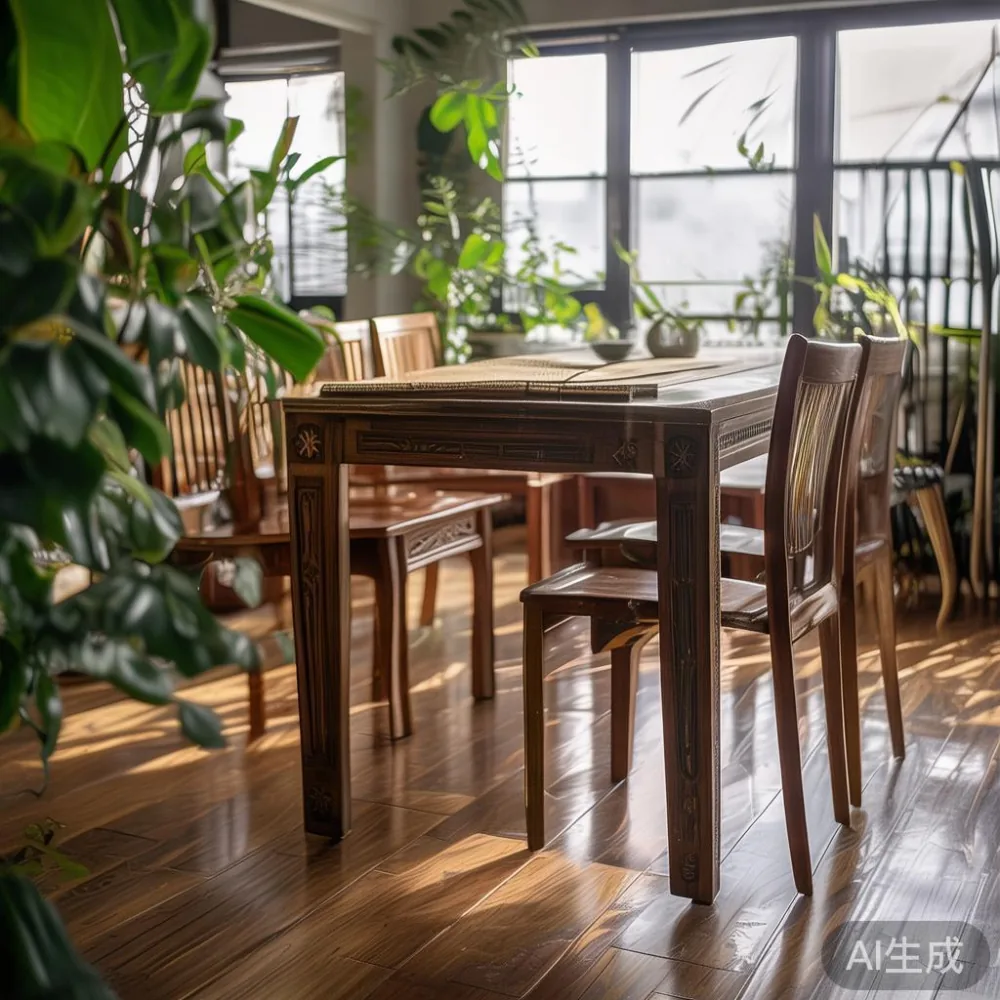
Why does Singapore humidity affect a solid wood dining table?
Wood is hygroscopic: its moisture content responds to the relative humidity around it. As humid air enters the microscopic structure of the timber, fibers gain moisture and expand. When the air becomes drier, they lose moisture and contract. Most movement occurs across the grain, while movement along the grain is much smaller.
Singapore’s monthly relative humidity commonly falls within an approximate range of 65% to 85%, with short periods of heavier moisture near rainstorms, kitchens or unconditioned balconies. Air-conditioned rooms may sit closer to 50% to 60%. A dining table that spends 12 hours near a humid balcony and 12 hours in a dry, air-conditioned living area can therefore see repeated dimensional changes.
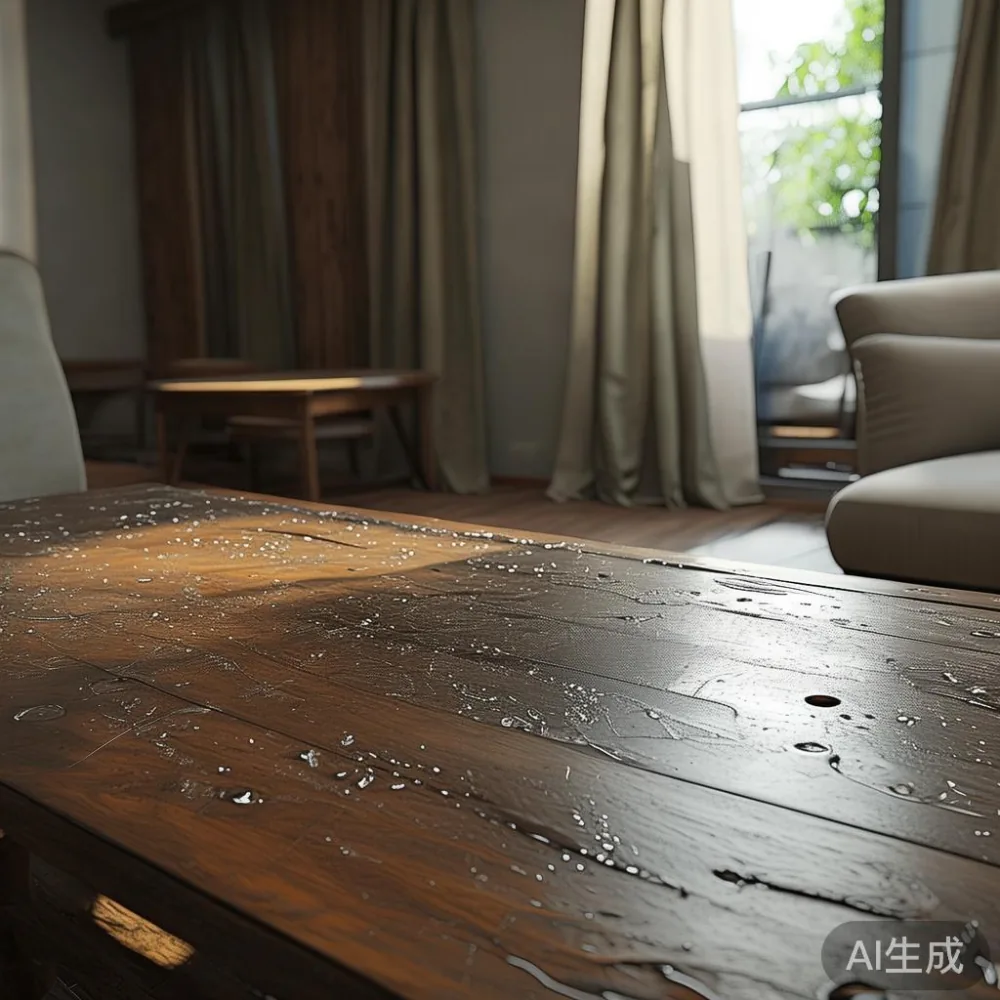
The response varies by species and product design. Solid oak may be dimensionally stable when correctly seasoned, while tropical hardwoods such as teak and mahogany can show noticeable movement. A 180 cm solid wood dining table may gain several millimetres in width during a strong change in moisture. Such movement is not equivalent to structural failure, but it can place stress on a tight joint, pull at a plug or leave fine checks in a thick top.
Finishes slow moisture exchange; they do not create a permanent moisture barrier. Water-based polyurethane can be more permeable than a heavily built solvent film, although application quality remains important. Avoid placing a potted plant, fruit bowl, damp cloth or aquarium directly on the dining table.
What does 65% to 85% humidity mean for a 200 cm dining table?
Picture a 200 x 90 cm dining table made from 20 mm solid wood. The top contains a large amount of hygroscopic material. If humidity rises from 55% to 75%, average movement could be visible around the perimeter or between boards. Exact change depends on species, board layout, thickness, finish and factory seasoning. New furniture should never be judged against a universal millimetre allowance.
For a practical home target, keep relative humidity between 45% and 65% where practical and avoid abrupt swings exceeding 10 percentage points within 24 hours. A bedroom hygrometer placed beside the table can provide a useful reading. Record it at the same time each morning and evening for 7 days. If the display cycles between 48% and 82%, investigate open windows, balcony access, cooking vapour, leaks or air-conditioning schedules.
Remember that condensation differs from general humidity. A chilled drink leaving a wet ring is a local moisture event. Repeated wet rings can disrupt a finish even when room humidity is reasonable. Use a coaster of at least 8 cm diameter for a typical bottle and wipe spills within 5 minutes.
Temperature also matters. A suggested indoor range is 19°C to 27°C, with less than 8°C of sudden change around the dining area. A table carried from a 22°C living room to a sunlit 31°C corridor can expand rapidly. Give it 4 hours to acclimatise before final tightening, levelling or cushion arrangement.
Which timber and construction details reduce moisture movement?
Start with stable timber that has been properly dried for the destination climate. Kiln drying alone is not the whole story: drying must be followed by acclimatisation, stable storage, careful machining and adequate finishing. A workshop that moves boards from one temperature zone to another too quickly can undo part of the preparation.
For dining tables, look for boards joined in a way that permits controlled seasonal movement. Solid wood top boards may use elongated dowels, adjustable connectors, sliding tenons or bridge details rather than rigidly trapping every board between metal rails. Traditional wedged through-tenons can be durable, yet their pegs must still accommodate moisture-related movement.
Ask whether the supplier balances local moisture content rather than promising that the table will remain completely motionless. For Singapore conditions, a factory discussion around an indicative 10% to 12% moisture content can be useful for solid hardwood, but the acceptable figure depends on species and service environment. Confirm the supplier’s finished-product target instead of imposing a number without context.
Edge profiles also matter. A small eased edge of 2 mm reduces sharp-looking moisture checks and is safer in a corridor or lift than an abrupt arris. Keep table legs about 5 cm from external walls so airflow is not blocked, especially near balconies.
A light-luxury dining table can combine American light-luxury proportions with tropical restraint: a 200 x 100 cm top, slim tapered legs, softened corners and a pale oak or responsibly sourced hardwood finish. French light-luxury styling, meanwhile, often benefits from warmer tones and carefully spaced seating. The visual language should not compromise timber stability or sensible clearances.
How should I move a dining table through HDB and condo spaces?
Measure before delivery day. Record the table’s longest and shortest rigid dimensions, then measure the lift door, lift car, turning space, corridor and stair landing. Leave at least 5 cm of working margin where possible; this is more useful than relying on a photograph.
Common older HDB access points can be narrow, while modern lift interiors may offer more turning room but restrict door opening. A large solid wood dining table can weigh 70 kg to 130 kg, so plan who carries it and where the weight sits. A 75 kg tabletop should be separated from its base by a trained installer. Use rated lifting straps and furniture dollies, not improvised rope around a finished edge.
Protect the route with rigid floor protection at 3 mm thickness, cardboard over that layer, and corner guards at doorway projections. The corridor should be cleared of slippers, bicycles and floor mats for the move. If a table cannot pass straight, determine whether it can be turned without levering against a door or handrail.
For condo loading bays, confirm opening hours, reserved-parking rules and lift dimensions with the management office. For a local order, MIDHILL’s delivery terms include free shipping above US$350, but the qualifying amount is denominated in the stated policy rather than being treated as an automatic SGD threshold. Singapore orders should receive a clear SGD quote including GST, delivery and any lift service before purchase.
How do I care for a humid dining table?
Use a dry microfibre cloth every 7 to 10 days and clean damp areas immediately. Neutral pH soap diluted appropriately can help, but test an inconspicuous 5 cm area first. Avoid soaking the top, flooding the joints and applying household oil directly unless the finish supplier supports that treatment.
Place the dining table away from air-conditioner diffusers and persistent dampness. If the balcony has relative humidity above 70%, move the table at least 1 metre indoors and close doors during rain. Do not place it directly against an exterior wall; a gap of 5 cm to 10 cm encourages air movement.
Check the surface after wet seasons. Look along the grain for fine checks, inspect legs, joints and underside, and note any change against installation photographs. Keep coasters, placemats and trivets on the table. Open flames and dining-room heat can create another local hazard, so use a heat-resistant barrier rated for at least 80°C and never leave a hot pan on a wooden top.
Keep foliage from touching the finish and use a stand with feet that remain dry. In a compact flat, place a dining table in a ventilated corner rather than beside a laundry drying rack. Singapore households can arrange a weekly humidity check for 4 weeks after delivery, then monthly during wetter spells.
Can a dining table be repaired if the top changes with humidity?
Often, yes. A dry surface can be cleaned, lightly abraded and recoated if the finish has become cloudy or worn. A structural issue, open joint or severe split should be assessed before cosmetic work. Photograph the area from 30 cm and 1 metre, record humidity and temperature, and identify when the change occurred.
Small checks may be filled only if their width and depth are stable. A movement gap that closes and reopens with seasons may need a joinery adjustment rather than repeated filler. Ask the maker whether refinishing is available under the stated lifetime refinishing policy and what parts of the finish are covered.
For customers comparing furniture categories, the same environmental principles apply, but product selection still has to fit the room. A wardrobe in a humid bedroom needs ventilation gaps; a bed frame needs a dry, level support; a nightstand should sit away from a leaking window; and a solid wood sofa should have removable covers or cushions that can dry fully. A marble table is less hygroscopic than solid wood, yet its adhesive joints, sealant and support still require sensible care.
Style vocabulary can help make planning concrete. Italian light luxury dressing table designs often use pale finishes and slim storage details, but a dressing table is not a dining table substitute. Boho for guest room schemes rely on natural materials, yet a guest room still needs 45% to 65% relative humidity where practical. Japanese for small living room layouts favour clear circulation and measured storage. Comparing Japanese bed vs Modern bed options is less relevant to a dining area, but the care lesson is useful: preserve air gaps and dry the piece before use. A guide to how to choose European sofa is similarly room-specific; dining-table humidity decisions should remain focused on timber, movement and protection.
What should Singapore buyers confirm before ordering?
Ask for the timber species, core and veneer composition, top thickness, dimensions, net weight, finish type, moisture preparation, joint construction and warranty terms. A 20 mm top, 60 to 70 mm legs and a 75 kg total weight provide useful information for delivery planning. Confirm that the quoted dining table dimensions fit the intended dining zone: allow at least 90 cm between the table edge and a wall, and at least 75 cm for a seated person’s passage.
Request a sample or finish photograph under neutral light, and ask whether under 2000 French furniture budgets affect the material and finish options. A lower purchase price may involve veneer, particleboard or a thinner solid-wood component, so compare construction details rather than relying on one label.
Confirm delivery days in writing, including GST, lift booking and return arrangements. Singapore buyers have access to a 14-day return window under the stated policy, subject to its conditions. For a made-to-order dining table or a heavily modified piece, verify what can be returned before production begins.
Finally, ask MIDHILL to explain the structural warranty and lifetime refinishing coverage in ordinary language. A clear answer should identify what structural failure means, which components are included, and how humidity-related service is handled. Keep the order confirmation, finish reference, photographs and delivery measurements together for at least 10 years.