Small-Apartment Dining Tables: How to Style a Singapore Home Without Making It Feel Crowded
A dining table can make a compact HDB flat feel larger, warmer, and more intentional—but only when its dimensions, finish, and placement work with the room rather than against it. In a 3-room BTO in Tampines, a 120 cm dining table may sit comfortably where a 180 cm model makes the eating zone feel pinched. In a newer Bedok condo with an open kitchen, a slim 140 cm solid wood dining table can define the dining area without adding another visual wall. The goal is not simply to fit more furniture into less space; it is to create a dining zone that feels calm from the doorway and comfortable during a 4-person meal.
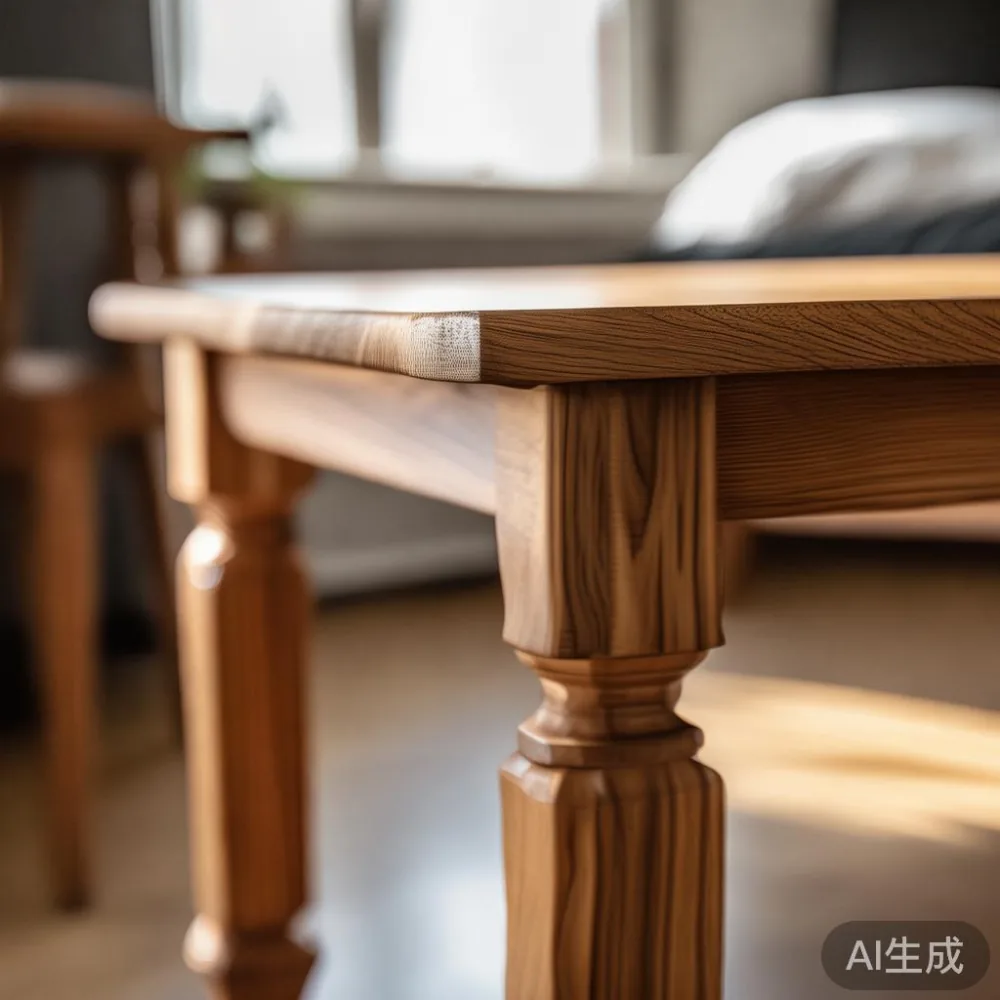
Singapore makes this exercise unusually practical. HDB corridors and common lifts often determine how large a boxed dining table can be delivered, while narrow HDB dining areas leave little room for a bulky cabinet or oversized rug. GST adds 9% to displayed prices, and the cost of damaging walls or forcing a table through a tight access route can erase a modest saving. This guide uses measurements in centimetres, prices in SGD, and delivery planning based on the access conditions common around Tampines, Bedok, and Punggol.
How do you choose a dining table for a small Singapore apartment?
Begin with the usable footprint, not the catalogue photograph. Measure the dining zone at its narrowest and allow at least 90 cm from the table edge to a wall, cupboard, or window ledge. A chair pulled back for a guest needs approximately 60 cm of movement space, so 90 cm gives the chair room to operate without striking the wall. For everyday family dining, aim for 70–75 cm of clear space around the table wherever possible. That may sound demanding in a compact flat, but it prevents the common problem of chairs scraping plaster and people reversing into the kitchen counter.
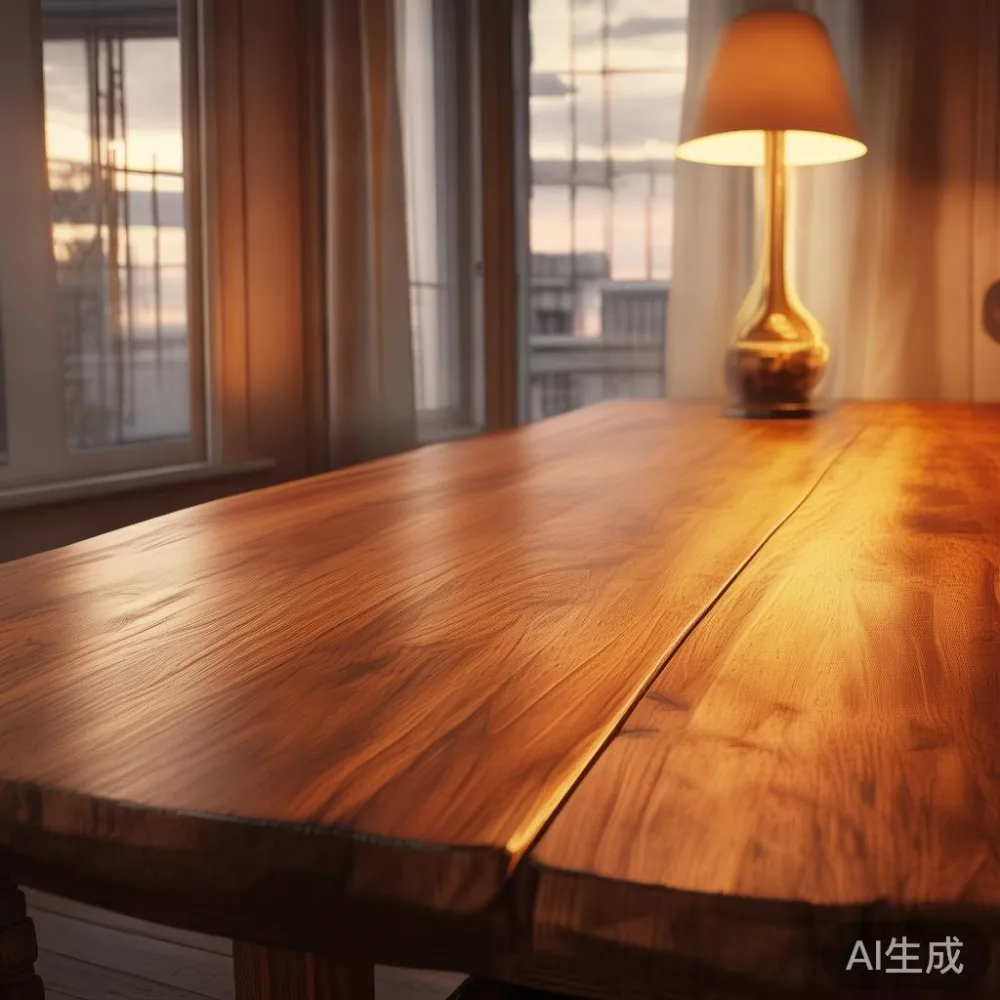
Table size should follow the number of people who genuinely need to sit. A 100 × 60 cm dining table comfortably accommodates 4 smaller diners, while a 120 × 70 cm model gives 4 people more elbow room. A 140 × 80 cm dining table suits 6 people in a wider dining area, but in a small apartment it can dominate the room unless paired with a bench or slim, armless chairs. Check the opposite wall before ordering: a table extending beyond a sideboard or console can make the route from the lift feel narrow.
Next, consider eating habits. A round 100 cm dining table works well for 3 people and leaves the centre of a square room visually open because its edges are less intrusive. It is also useful beside a straight kitchen run, where a rectangular table could create a bottleneck. For daily meals, solid wood gives warmth and durability, but the species and construction affect care, weight, and price. MIDHILL builds solid wood furniture in Foshan and supports its dining tables with a 10-year structural warranty, while lifelong refinishing is available for customers who want to maintain the surface over time.
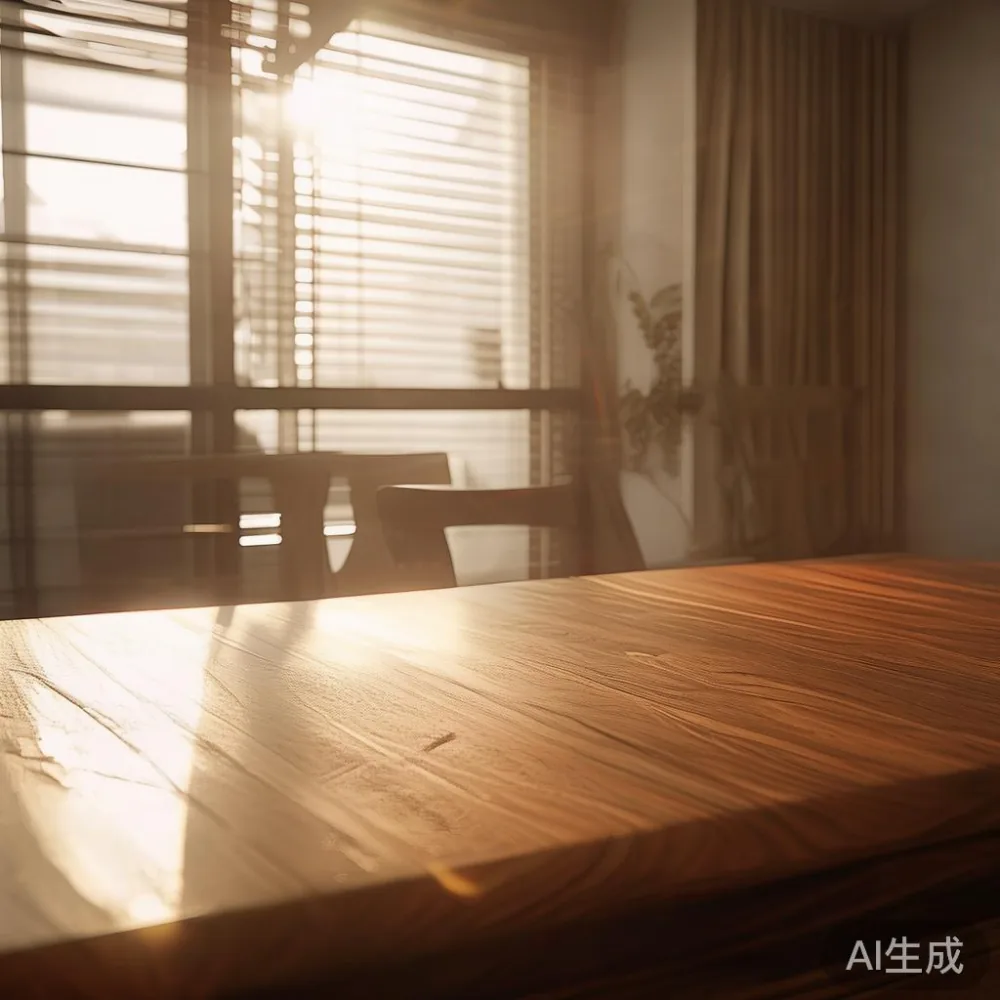
Do not measure only the table. Record the doorway, lift car, lift opening, corridor turns, and stair width if there is no lift. A dining table with a 140 cm top may have to enter as separate components, so ask for the assembled dimensions, package dimensions, and the number of cartons. In many Singapore condos, the delivery route is manageable once the top and legs are separated; in an older HDB block, a 90 cm door and a 100 × 200 cm lift interior can be the deciding constraint.
Which shape makes a small dining area feel larger?
Rectangular tables are efficient because they fit long walls and align with the architecture of most HDB dining spaces. A 120 × 70 cm rectangle creates a clear place for 4 without demanding a large separate dining room. The top should look slim in proportion to the floor. A thick, heavily carved centre can visually weigh down a modest space, while tapered legs and restrained aprons preserve the feeling of openness. This is where post-modern light luxury becomes relevant: clean geometry, gentle curves, and crafted timber can make a useful table feel refined without ornamental excess.
Round tables suit square or irregular rooms. A 100 cm diameter provides useful seating for 3, and a 110–120 cm diameter can accommodate 4 if the surrounding clearance is adequate. Place the centre about 60–75 cm from the nearest wall so chairs can move, then check whether the route to the kitchen or balcony remains direct. Avoid buying a round table only because its dimension sounds smaller; a 130 cm round top still occupies a broad circle and may make a narrow rectangular bay awkward.
Oval tables offer another useful middle ground. A 140 × 80 cm oval dining table gives 4 or 6 diners a formal layout with softer edges than a rectangle. Its rounded ends are helpful beside a glazed partition or a traffic route because there is no sharp corner to catch clothing. Choose an oval model when the room is wide but has a straight kitchen wall on one side and a walkway on the other.
French light luxury styling also favours proportion over visual clutter. Pale oak, natural ash, and warm walnut can complement Singapore homes, but the wall colour matters. A pale timber table disappears slightly against warm cream walls and reads more clearly against muted green, dusty blue, or soft clay. Dark walnut looks richer against off-white paint, though a black or very dark table in a dim dining bay can make the space appear smaller.
What size should I leave around a dining table?
Use 90 cm as the preferred clearance for occupied chairs and 75 cm as a workable minimum in a tightly planned HDB dining zone. This clearance is measured from the chair back, not the table edge, during use. Leave another 100–120 cm between the table and kitchen counters so a person carrying a hot dish can pass safely. If the table is opposite a service counter, keep a clear route of at least 90 cm. A cramped 60 cm passage may look acceptable in an empty room but feel frustrating at dinner time.
Consider whether the table will also function as a homework or laptop surface. A 120 × 70 cm dining table gives each of 4 children or adults a 30 cm-wide section before cups, serving bowls, and chargers are added. If the table doubles as a study desk during the day, stools can be tucked under it more easily than dining chairs with high backs. However, a 75 cm-high table is above the usual 72–74 cm writing desk height, so add 25–30 cm cushions if prolonged laptop work is expected.
Ceiling height should not be ignored. HDB flats and most Singapore condos have a ceiling height of roughly 2.4–2.7 m, and a broad dark top can visually lower a room with a low beam. A light finish, slim edge, and open under-table area will keep the dining zone light. If a pendant hangs over the table, install it about 70–80 cm above the tabletop and use a shade wide enough to spread even light across the surface rather than producing a bright spot in the centre.
How should I style a small dining table without adding clutter?
Keep the centre usable. A fruit bowl of 24–30 cm, 2 small candle holders, and one low vase are enough for a 120 cm table. Avoid tall arrangements above eye level, because they interrupt conversation and create another vertical obstacle in a compact room. A narrow bud vase with 3–5 stems is more suitable than a large floral display. Hang art rather than leaning multiple frames against the wall, and keep the frames within a consistent width so the wall feels composed.
Coordinate chairs with the table but do not make everything identical. Light upholstered chairs can soften solid wood, while slim timber chairs preserve circulation space. For 4 seats, look for chairs no wider than 45–48 cm across the frame. Fully upholstered dining chairs may project by 5–8 cm farther when pulled out, making the 90 cm clearance rule especially important. Arms add roughly 5–7 cm per side and can be inconvenient in a narrow bay, although they provide a more relaxed, American light luxury character.
Textiles should be repeatable rather than numerous. One table runner of about 30 cm width and 180–220 cm length works on a 120–140 cm table, but it should not overhang enough to catch a chair. Two or three placemats, each about 30 × 45 cm, provide order without filling every inch. Choose 2 contrasting colours and repeat them elsewhere—such as in a cushion or a small artwork—instead of adding 5 or 6 competing patterns.
For nearby furniture, consider a slim sideboard no deeper than 35–40 cm if the room permits. It can hold table linens, serving boards, and dinnerware without becoming a bulky second cabinet. A French provincial TV console could work in a living room, but it should not be treated as an oversized dining-room sideboard. Keep the primary dining table visually connected to the kitchen or living zone through timber tone, chair design, or repeated accessories rather than through a large matching suite.
Will a solid wood dining table fit through the lift and corridor?
Yes, if the delivery team checks the route and the table is designed to disassemble. Before purchase, provide the block number, floor, lift opening, lift car size, corridor width, and the nearest turning point. Ask whether the tabletop, apron, and legs arrive as separate pieces. For example, a 120 × 70 cm solid wood dining table may be delivered in 2 cartons, with the top weighing 22–30 kg and the complete set weighing 35–45 kg depending on the design.
Lift interiors in many Singapore buildings are around 100–140 cm deep and 90–110 cm wide, though newer developments vary. A large carton must fit through the opening diagonally; the quoted lift capacity may exceed the space available at the entrance. Older walk-up HDB blocks may also have narrow corridors around 90–120 cm, turns, and a 2.7–3 m flight of stairs. A lift-friendly product is not automatically a corridor-friendly product.
Local delivery may take 5–10 working days after the order is confirmed, with longer periods around public holidays or during peak renovation seasons. Insist on a delivery appointment rather than relying on a courier to arrive whenever convenient. The installer should carry the carton to the flat, assemble the dining table if required, remove the packaging, and check the surface for transit marks before leaving.
MIDHILL provides free shipping for orders over US$350, which includes qualifying international purchases, while Singapore delivery terms should be confirmed at checkout. Prices in this guide are shown before 9% GST unless stated otherwise. Because local access can affect the final configuration, request the package dimensions before paying. This simple check prevents the costly scenario of choosing a 160 cm dining table that cannot pass the corridor.
How do I make a compact dining area feel polished rather than crowded?
Use one dominant material, one supporting colour, and no more than 3 visible accessories on the table. A timber dining table establishes the material; the wall and chairs can support the palette; the accessories then add warmth. This restrained approach suits French light luxury, where carved character and pale finishes are balanced by clear space. It also reflects the clean discipline of American light luxury: proportioned furniture, durable fabrics, and practical storage.
Lighting can change the perception of space more than another small accessory. Aim for 300–400 lux across the dining surface, using a warm-white bulb around 2700–3000K. If replacing a ceiling fitting, select a flush-mounted fixture no more than 15–20 cm above the ceiling plane. A central pendant may create focus, but 2 smaller lights over a long table are often more comfortable for 6 diners.
Mirrors can amplify light, yet avoid covering the full wall opposite a window with a glossy, framed surface. A single mirror of 60 × 90 cm, placed beside artwork rather than directly opposite, can still reflect greenery or a pendant. Keep the lower wall visually quiet, and use 1 large rug rather than several small ones. Choose a rug at least 60 cm wider and 80 cm longer than the dining table so that front chair legs remain on it when pulled out.
When shopping beyond the dining zone, browse for sale Mid-century modern furniture with accurate dimensions rather than relying on style labels. Comparisons such as American bed vs French provincial bed can help with bedroom planning, but the measurement rules remain the same. Buyers researching the best European light luxury bed for 2026 should compare the frame footprint, headboard thickness, and lift access, just as they would for a dining table. Searches for under 2000 European light luxury furniture should likewise include package size and structural warranty, not only visual finish.
What should I check before ordering a compact dining table?
Check 6 practical points: the finished size, the room clearance, the delivery route, the material, the maintenance arrangement, and the return terms. For the dining table, confirm the top dimensions and height—usually 72–75 cm—and the number of diners. For clearance, measure 90 cm around at least 3 sides. For access, record every narrow point from the street or service entrance. For material, confirm that the construction is solid wood where the listing specifies it and ask about grain variation, moisture movement, and care.
Price should be compared on the same basis. A dining table listed at SGD 1,280 before 9% GST costs SGD 1,395.20 after tax. Another model at SGD 1,150 becomes SGD 1,253.50 after GST. Add local delivery if it is not included, along with any stair-carry or extra-access charge disclosed before dispatch. A table that is 20% less expensive but arrives in 2 oversized cartons may be a poorer fit for the home.
Service terms matter for long-term ownership. MIDHILL has operated since 2008 and exports to more than 15 countries, with a 10-year structural warranty and lifetime refinishing available on qualifying furniture. Its return window is 14 days, subject to the stated condition requirements. Review these terms before ordering and retain the invoice, package details, and delivery photographs.
Last month, I visited a colleague’s 3-room flat in Punggol with a dining bay measuring 230 × 185 cm. She had been considering a 160 cm dining table, but a 90 cm cupboard projected into one side and reduced the usable width to 140 cm. We placed a tape measure on the floor and tested a 120 × 70 cm dining table with 4 slim chairs. The final distance to the cupboard was 78 cm on the busiest side and 92 cm on the other. The table seated 4 comfortably, left a direct route to the kitchen, and the delivery carton fitted through the lift on the scheduled day. That 20 cm reduction in table width made the room feel more relaxed, not less functional.
The most successful small-apartment dining arrangement is often the one that removes visual and physical obstruction. Measure the room, respect the lift, choose a table for 4 rather than 6 if only 4 people eat there, and let light timber, restrained decoration, and clear circulation do the rest. A well-proportioned dining table can make a compact Singapore home feel composed while still handling weekday meals, homework, and relaxed weekend hosting.